

Executive Overview
At 2:00 a.m. on a brisk July night in the South Korean port city of Busan, two Indonesian fishermen reached the absolute limits of human endurance. Locked inside an eighth-floor motel room overlooking a dark alleyway, they fashioned a makeshift lifeline out of tied bedsheets, dangling precariously from a window frame as the coastal wind whipped the improvised rope from side to side. They had been held captive in that room for nearly 24 hours, desperate to escape a nightmare of confinement and exploitation.
As the men lowered themselves into the dark, the crude rope unraveled. Both plunged toward the pavement. One fisherman died instantly upon impact; the other survived with a shattered leg.
This tragic midnight escape was not an isolated aberration. Instead, it served as a brutal catalyst, laying bare the dark underbelly of South Korea’s $7.5 billion fishing industry. For years, human rights advocates have raised alarms over the systemic abuse, debt bondage, physical violence, and slave-like working conditions endured by migrant fishers who form the backbone of the nation’s distant-water fishing (DWF) fleet.
In response to mounting domestic pressure and international scrutiny—including pointed rebukes from the United States State Department—the South Korean government introduced revised national guidelines on September 2, aimed at cracking down on human trafficking in the maritime sector. Jointly announced by the Ministry of Gender Equality and Family and the Ministry of Oceans and Fisheries, the new frameworks provide law enforcement with specific behavioral indicators to spot forced labor.
Yet, as Seoul celebrates these regulatory updates, a chorus of legal experts and human rights defenders argues that the measures are fundamentally reactive and toothless. Without addressing the perverse economic incentives driving labor recruiters to lock up workers—or enforcing existing statutes with genuine political will—the systemic roots of maritime human trafficking in South Korea remain firmly anchored.
Detailed Chronology of a Crisis: The Busan Tragedy and Its Aftermath
The events leading up to the July 21 tragedy in Busan reflect a coercive system designed to prevent migrant workers from escaping exploitative contracts. According to Lee Han-sook, director of the Busan-based civic group Migration and Human Rights Institute, the two Indonesian men had attempted to break away from their designated employers due to intolerable conditions.
Recruitment firms and vessel operators in South Korea frequently employ draconian measures to control foreign laborers. Because migrant visas tie workers strictly to a single employer, any attempt to leave a vessel or workplace instantly transforms the individual into an undocumented immigrant under South Korean law. Terrified of losing their workforce, local agencies often resort to unlawful confinement. The two Indonesian men were locked in a motel room—a modern form of imprisonment used to deter flight—when they made their desperate bid for freedom via the eighth-floor window.

Following the fatal plunge, Lee Han-sook was briefed on the incident by the surviving fisher. The details of the escape galvanized local labor advocates, who leveraged public outrage to demand immediate state intervention.
The pressure yielded historic, albeit belated, administrative actions:
- August: In a landmark decision ahead of regulatory reforms, the South Korean government designated the surviving Indonesian fisher as an official trafficking victim—the first time a worker in the commercial fishing sector received this formal classification. This designation unlocked vital state subsidies for medical care, housing, and legal assistance.
- September 2: Bowing to external and internal pressure, the Ministry of Gender Equality and Family, alongside the Ministry of Oceans and Fisheries, officially announced overhauled anti-human trafficking guidelines. These updated protocols explicitly target the fishing industry, offering law enforcement clear thresholds to intervene when human rights violations are suspected.
Despite these milestones, activists emphasize that the path from policy formulation to genuine on-the-ground liberation remains perilously steep.
Supporting Context & Metrics: The Anatomy of Maritime Exploitation
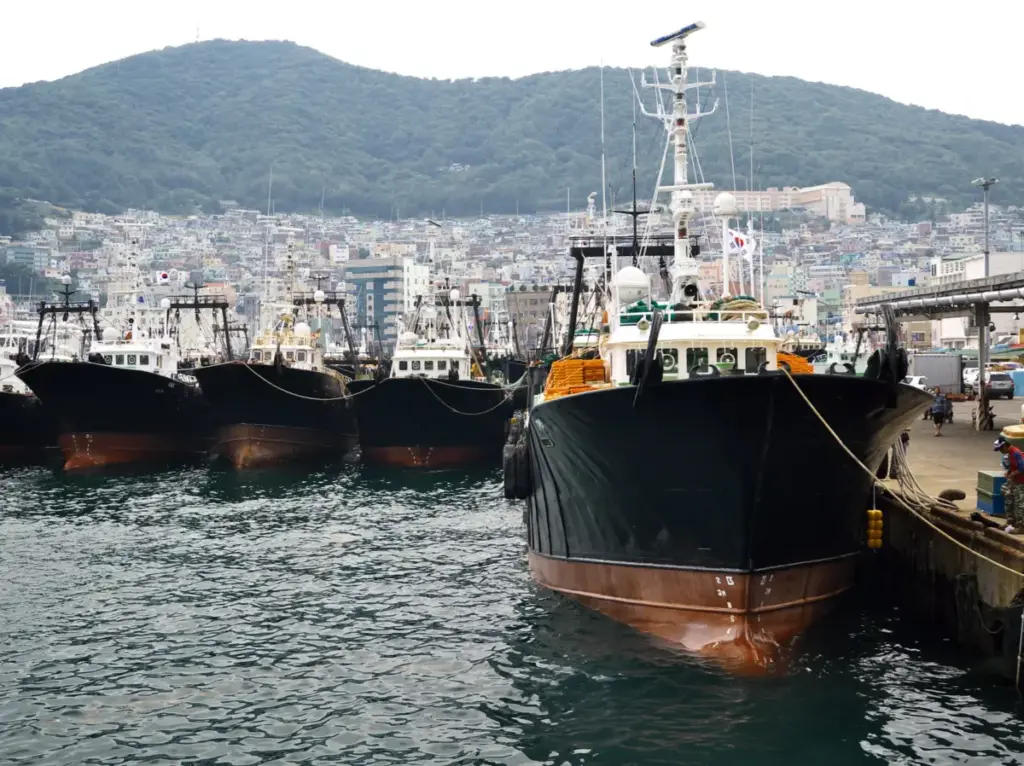
South Korea operates one of the largest distant-water fishing fleets in the world, traversing the globe to supply seafood to domestic and international markets. However, this multi-billion-dollar enterprise is heavily reliant on foreign labor. According to government data published in July, an astonishing 80.5% of all fishers working onboard South Korean DWF vessels are migrant workers. The overwhelming majority hail from Indonesia, supplemented by contingents from Vietnam and the Philippines.
The Isolated Workplace
The nature of distant-water fishing exacerbates the vulnerability of these workers. Operating across the Pacific and Indian oceans, these vessels represent "probably the most isolated workplace on the planet," according to press releases from environmental organizations like Greenpeace. Far from regulatory oversight, human rights and environmental standards are easily skirted.
Migrant fishers routinely face a litany of abuses:
- Exhausting Shifts: Workdays routinely stretch between 14 and 18 hours, leaving crews sleep-deprived and physically broken.
- Economic Exploitation: Workers frequently endure below-minimum-wage pay, delayed compensation, and debilitating debt bondage stemming from exorbitant recruitment fees paid to agencies in their home countries.
- Total Isolation: Companies routinely confiscate passports and cellphones, severing communication lines with families and outside support networks.
The Institutional Incentive to Detain
To understand why companies resort to locking workers in motel rooms, one must examine South Korea’s regulatory framework governing migrant labor. Under current rules, fisheries companies are held directly responsible by the Ministry of Oceans and Fisheries if workers under their care "escape"—industry parlance for fleeing exploitative conditions and going off the grid.

Recruitment firms, typically small and operating on thin margins, face severe financial penalties if workers abscond. These penalties include "de facto" fines extracted from security deposits worth tens of thousands of dollars paid directly to the government, as well as administrative sanctions that bar them from securing future government contracts to manage migrant labor. Consequently, these agencies are financially incentivized to adopt extreme custodial measures, treating human beings as commodities that must be guarded at all costs.
While South Korean authorities occasionally prosecute egregious crimes such as physical assault or abduction, these enforcement actions remain the exception rather than the rule.
Official Statements and Regulatory Debate
The South Korean government has defended its September 2 regulatory overhaul as a vital leap forward in maritime human protection.
“We believe the new guidelines will greatly help prevent labor abuse and protect human rights in the fishing industry because the new guidelines contain specialized clauses focused on the fishing sector,” declared Kim Hye-jeong, a director at the Ministry of Oceans and Fisheries, during a September press conference.
The updated guidelines outline concrete "red flags" that should prompt immediate law enforcement action, including:
- Workers exhibiting physical injuries that have been intentionally left untreated.
- Systematic confiscation of personal mobile devices.
- Living accommodations characterized by restricted or blocked internet access.
While these indicators provide practical thresholds for police and labor inspectors, civil society organizations argue they fall frustratingly short of systemic reform.
Critiques from the Legal Front
Wee Seo-hyun, a lawyer at the Gwangju-based legal nonprofit Lawyers for Public Interest, expressed deep skepticism regarding the impact of the new administrative guidelines.

“We agree with the spirit of the new guidelines,” Wee noted, acknowledging the government’s rhetorical shift. However, he added bluntly, they “don’t really mean much. Nothing’s going to really change on the ground, because the guidelines were not the root problem.”
According to Wee, the core issue is not a lack of interpretive guidance, but a systemic failure in the enforcement of existing labor laws and anti-trafficking statutes. Furthermore, he argued that keeping the guidelines broadly worded—rather than creating rigid, sector-specific checklists—would have lowered the procedural threshold for law enforcement to intervene. He also lamented the absence of mandatory enforcement clauses compelling authorities to act upon receiving reports of abuse.
International Pressure and Legislative Lag
South Korea’s legislative framework surrounding human trafficking is comparatively young. The country’s foundational Act on Prevention of Human Trafficking and Protection of Victims did not enter into force until January 1, 2023—years behind regional peers such as Japan (2005), Taiwan (2009), and Singapore (2015).
This delayed legislative birth has resulted in a critical scarcity of legal precedents and robust protective mechanisms for whistleblowers. Lee Han-sook points out that workers who step forward to report trafficking frequently find themselves vulnerable to severe reprisals, as witness protection frameworks remain underdeveloped.
International watchdogs have repeatedly underscored these vulnerabilities. In its annual Trafficking in Persons Report, the U.S. State Department ranked South Korea as a Tier 1 country, signaling a generally serious and sustained effort to combat human trafficking. Yet, the report highlighted glaring weaknesses within the nation’s maritime fleets.
The U.S. State Department noted that the South Korean government has prosecuted and convicted relatively few labor trafficking cases involving migrant workers, has never prosecuted a case involving human trafficking in the distant-water fishing sector, and had previously failed to identify confirmed forced labor victims among migrant fishers.
The U.S. report issued 16 policy recommendations, explicitly urging Seoul to develop a specialized victim identification index in coordination with civil society organizations. South Korean officials cited this exact recommendation as the primary justification for crafting the September fishing-specific guidelines. Yet, activists maintain that bureaucratic checklist updates cannot substitute for aggressive criminal prosecutions and systemic labor inspections.
Future Outlook: Will Guidelines Translate to Liberation?
As South Korea attempts to reconcile its status as an economic powerhouse with its human rights record in the maritime sector, the core question remains: Will the new guidelines change daily realities on the docks of Busan and out on the high seas?
Activists, legal scholars, and survivors agree that paper policies are meaningless without rigorous, unannounced workplace inspections, the abolition of employer-tied visa restrictions that trap workers in abusive jobs, and the severe penalization of recruitment agencies that use confinement and debt bondage as management tools.
For now, the ghost of the July tragedy hangs heavy over South Korea’s ports. The surviving Indonesian fisher has received much-needed state assistance, but thousands of other foreign crew members remain isolated on distant waves, cut off from communication, burdened by debt, and vulnerable to the whims of employers desperate to prevent their escape.
“In the end,” Lee Han-sook reflected, “what matters is how we apply the anti-trafficking guidelines.” Until South Korean prosecutors begin treating labor trafficking in the fishing fleet as a major criminal enterprise rather than an administrative nuisance, the shadows over the nation’s multi-billion-dollar maritime industry will persist.



