As the global community grapples with the cascading crises of rapid climate change and unprecedented biodiversity loss, scientists are increasingly looking backward to move forward. Historical ecological data—often trapped in fragile, handwritten field journals, notebooks, and archival logs—holds the baseline metrics necessary to understand how ecosystems have shifted over centuries. For two decades, the Biodiversity Heritage Library (BHL) has stood at the vanguard of this effort, evolving into the world’s largest open-access digital library for biodiversity literature and archives. Boasting a staggering corpus of over 64 million pages, the BHL acts as an invaluable time capsule of life on Earth.
However, digitizing the physical pages of historical texts is only half the battle. Transforming dense, handwritten archival manuscripts into machine-readable, searchable, and globally shareable datasets has long been a monumental bottleneck for researchers.
Enter a groundbreaking pilot project spearheaded by Harvard University’s Ernst Mayr Library (EML) and the BHL. Utilizing cutting-edge artificial intelligence—specifically advanced models like ChatGPT and Claude—researchers have successfully unlocked thousands of pages of historical ornithological observations penned by 19th-century zoologist Walter Faxon. This initiative not only bridges the gap between physical archives and modern global biodiversity databases like the Global Biodiversity Information Facility (GBIF), but it also establishes a replicable framework for leveraging AI to parse complex, historical manuscripts. This report explores the intersection of historical ecology, artificial intelligence, and open-access data infrastructure, detailing how the painstaking work of a Victorian-era Harvard curator is helping modern scientists combat ecological collapse.
Detailed Chronology
To understand the magnitude of the Faxon project, one must trace a timeline that spans nearly 150 years—from the Victorian era of field observation to the modern frontier of generative AI.
1848–1920: The Life and Legacy of Walter Faxon
February 4, 1848: Walter Faxon is born in Massachusetts, setting the stage for a lifelong devotion to the natural sciences.
1871–1886: Faxon graduates from Harvard College and embarks on an academic career, serving as an Assistant Professor of Zoology at Harvard University from 1872 to 1886.
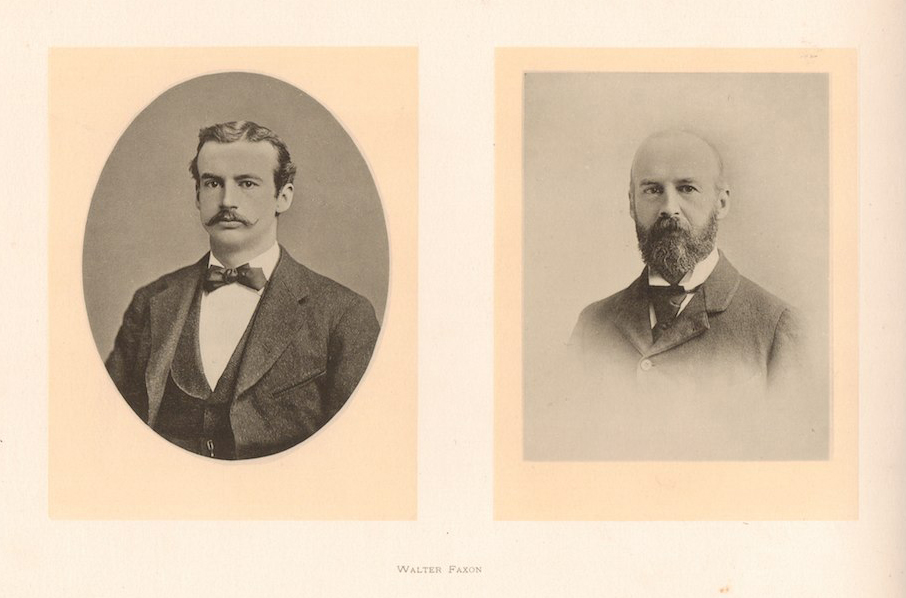
1874–1920: Faxon begins his remarkable 46-year tenure as Curator of the Invertebrate Department at Harvard’s Museum of Comparative Zoology (MCZ). While his professional career focuses heavily on crustaceans and mollusks (Crustacea and Mollusca), he nurtures a profound, highly disciplined avocation for ornithology.
1901–1904: Recognizing his peerless field skills and rigorous attention to detail, the American Ornithologists’ Union elects Faxon as a Fellow. Historians note that his nearly 60 years of field experience yielded bird identifications of unassailable accuracy.
August 10, 1920: Walter Faxon passes away, leaving behind a rich legacy of manuscripts, field notebooks, and specimen drawings housed within Harvard’s archives.
2006–2025: Building the Digital Infrastructure
2006: The Biodiversity Heritage Library is founded, with Harvard’s Ernst Mayr Library serving as a founding member. Over the next twenty years, BHL expands globally, aggregating tens of millions of pages of biodiversity literature.
2025: Benefiting from the Harvard Library Collections Digitization Program—with a specific thematic focus on Climate Change—Faxon’s ornithological collection (encompassing field journals, bird lists, and notebooks) is officially digitized, making its raw imagery accessible through the BHL.
2026: The AI Transcription Breakthrough
June 1, 2026: Harvard PhD candidate in Anthropology Mohit Mandal steps into the role of the 2026 Pforzheimer Fellow at the EML, tasked with solving the challenge of transcribing Faxon’s notoriously difficult handwritten manuscripts using AI.
June–July 2026: Mandal evaluates leading large language models (LLMs), including ChatGPT and Google Gemini. Finding Gemini constrained by file upload limits and ecosystem inflexibility, he selects ChatGPT for primary transcription due to its adaptability and trainable prompt consistency. He subsequently pairs it with Claude to cross-verify transcripts and maximize accuracy.
August 31, 2026: Mandal concludes his fellowship, having successfully transcribed nearly 2,000 manuscript pages, preserved complex interlinear notations, and pushed the BHL one step closer to automated GBIF data integration.
September 2026: The project findings are formally published, shedding light on both the incredible potential and current limitations of deploying AI for historical ecological transcription.
Supporting Context & Metrics
The integration of Walter Faxon’s archives into the BHL is much more than an archival exercise; it is a vital injection of high-resolution ecological data into modern climate science.
The Faxon Collection Metrics
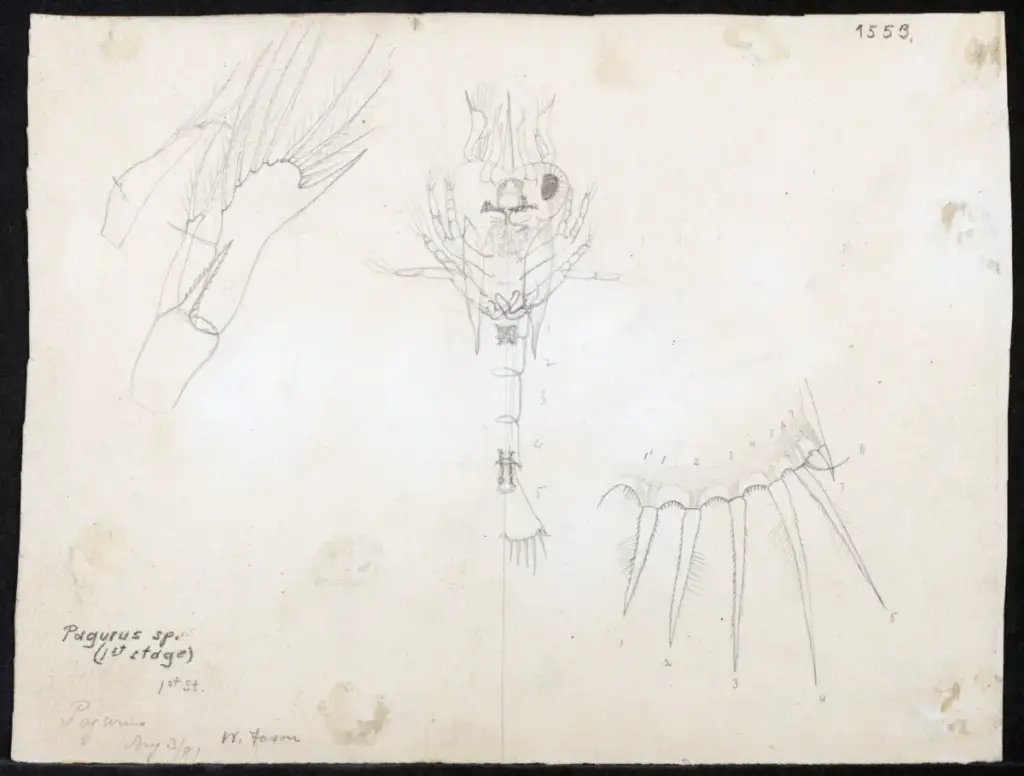
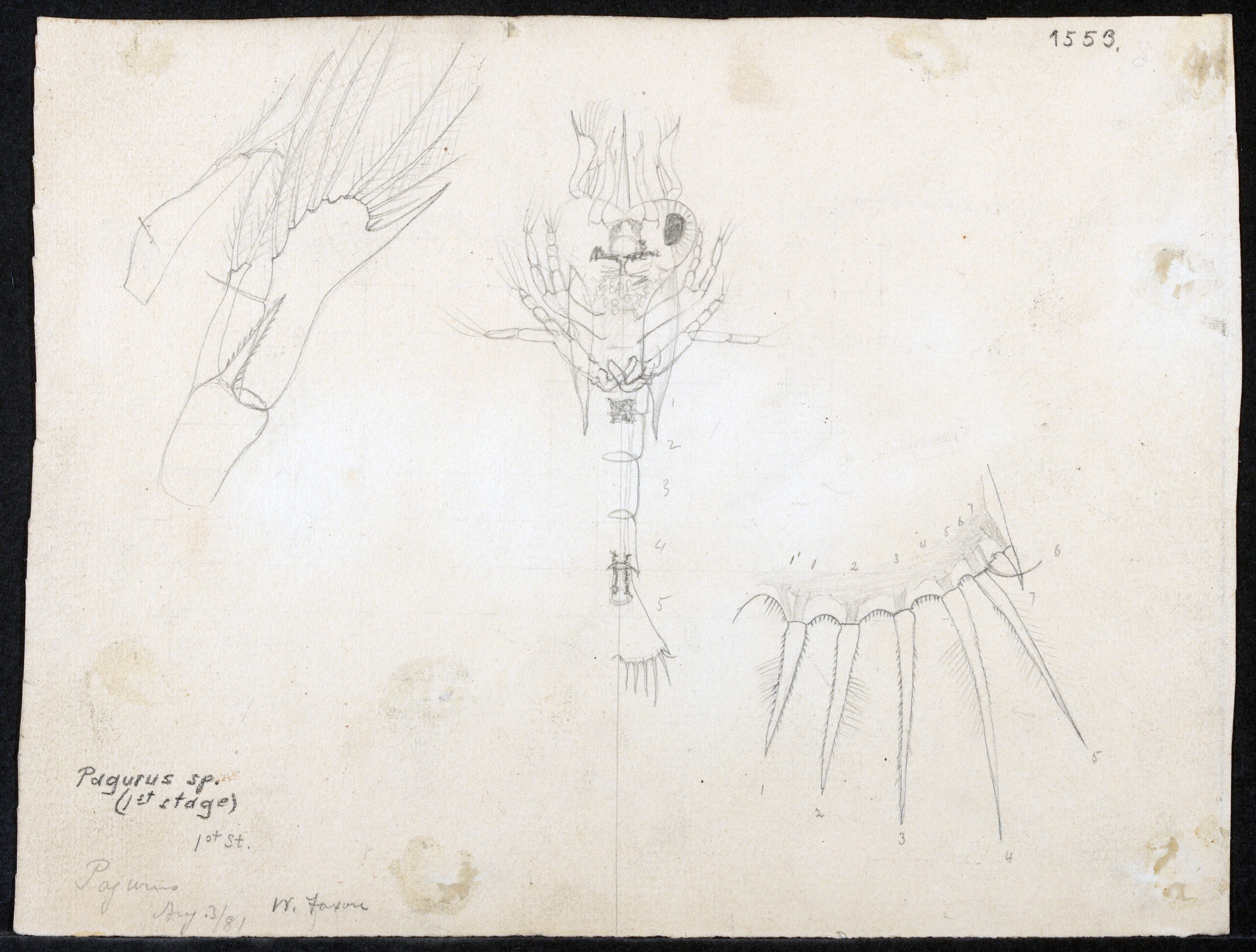
Total Manuscript Pages: Just over 2,200 pages, including field journals, bird lists, field notebooks, correspondence, and eight detailed pencil drawings of Arthropoda and Crustacea.
Core Observational Data: 1,640 pages dedicated specifically to field journals, bird lists, and notebooks compiled over a 33-year span (1886–1919).
Granular Detail: Thousands of individual bird observations detailing species names, exact dates, localities, and population counts, frequently accompanied by metadata regarding sex, life stages, and vocalization behaviors.
Technological Hurdles and AI Performance
The transcription phase exposed both the miraculous capabilities and the persistent quirks of current generative AI models. While ChatGPT and Claude excelled at recognizing standard cursive scripts and systematic species lists, several distinct hurdles emerged:
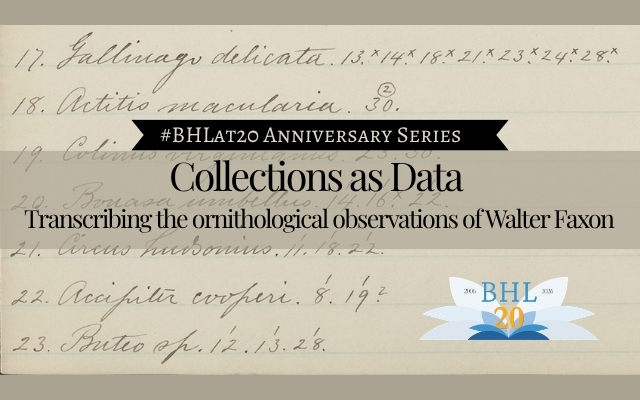
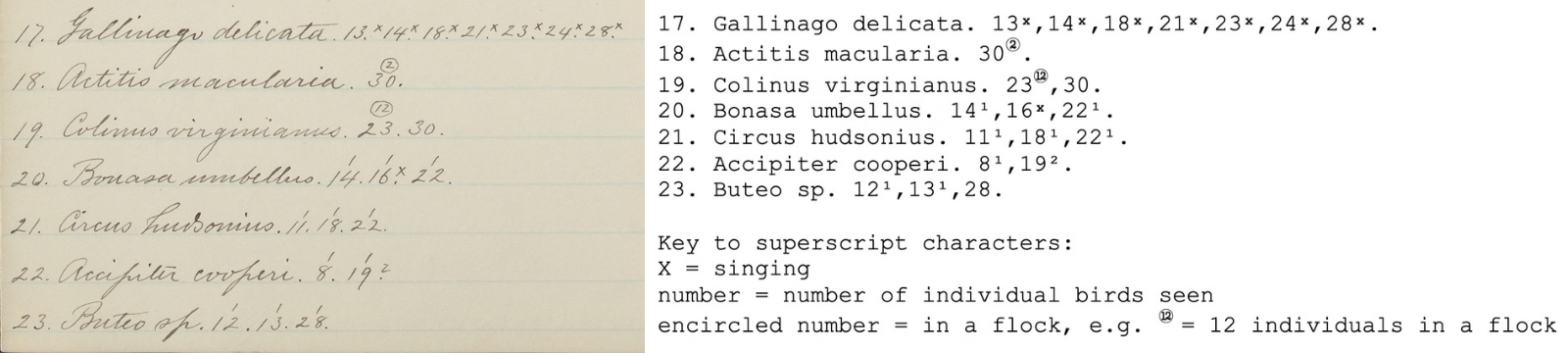
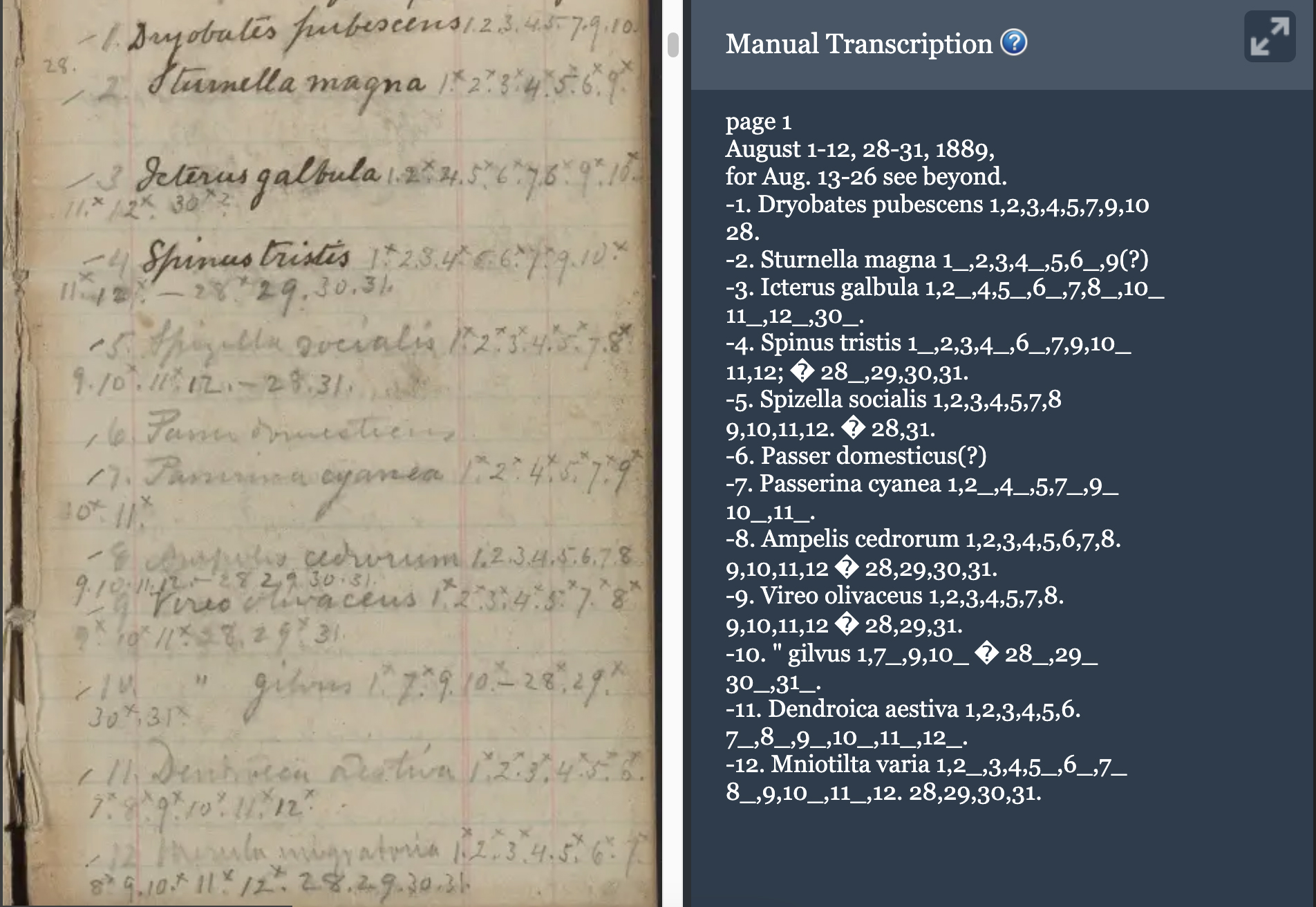
Interlinear Markings: Faxon frequently utilized tiny numbers and symbols placed between lines of text to denote flock sizes, singing behavior, or specific dates. Standard word processors and basic AI prompting initial attempts flattened or ignored these interlinear notations. Mandal ultimately preserved them by training the model to format them as superscript text.
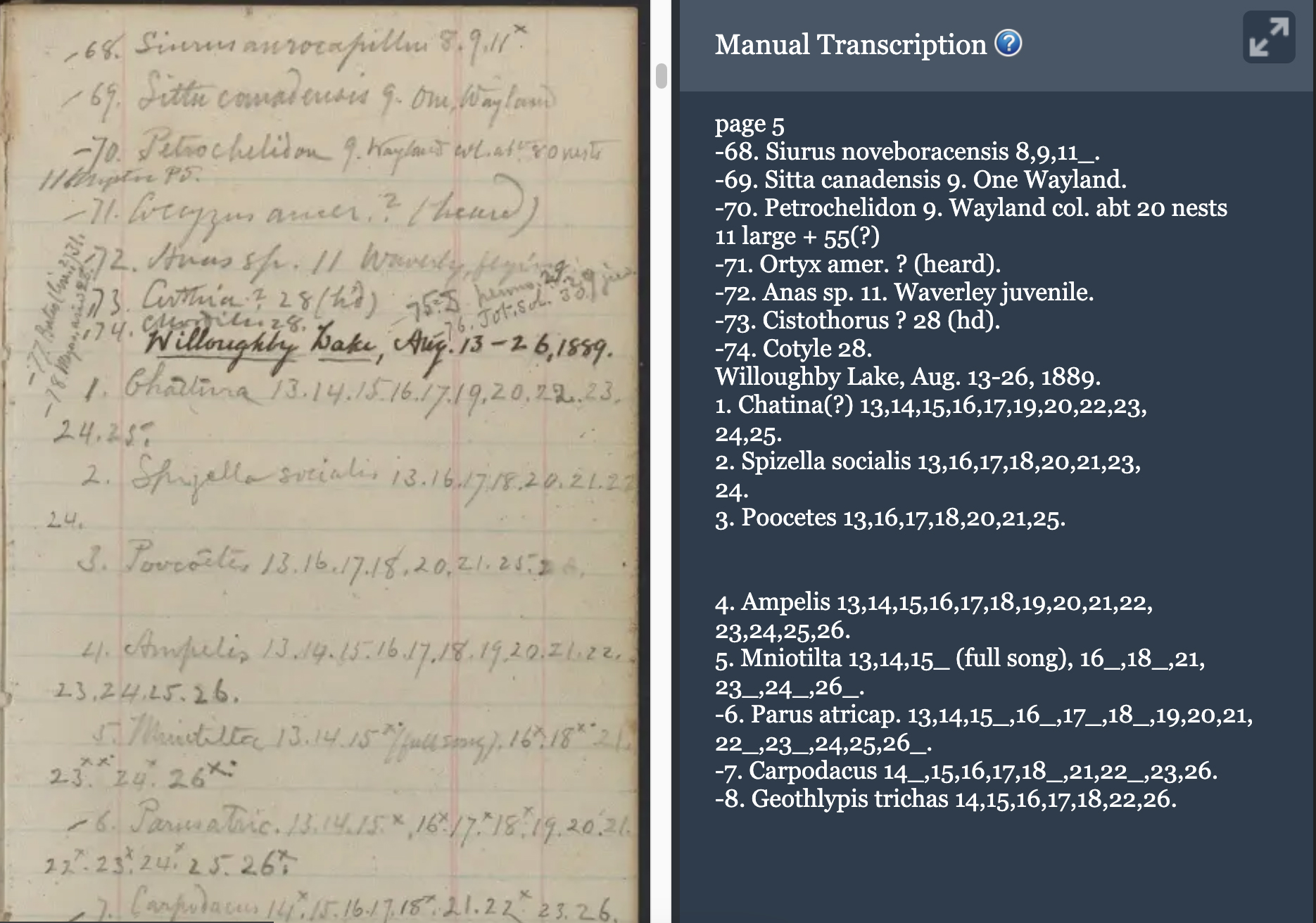
Visual Degradation: Faded pencil smudges, marginalia scrawled at severe angles, and paper degradation routinely tripped up the models, occasionally leading to untracked text omissions.
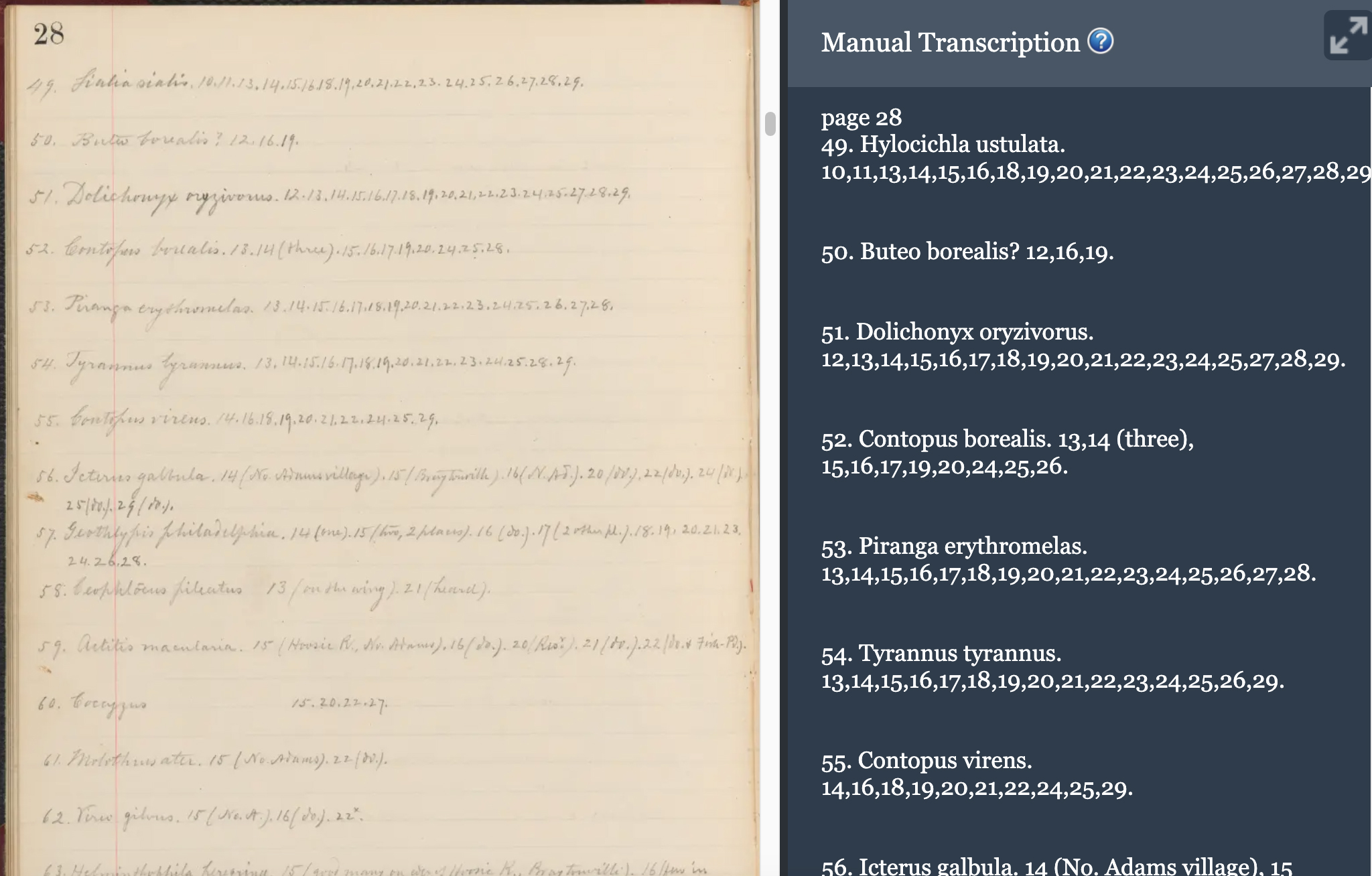
AI Hallucinations: In isolated instances, the models substituted legitimate scientific names with phonetically or contextually similar errors (e.g., mis-transcribing Sialia sialis as Hylocichla ustulata, or Merula migratoria as Mniotilta varia).
These findings underscore a central reality of modern digital humanities: while AI drastically accelerates the timeline of archival processing, human oversight remains non-negotiable.
Official Statements
Reflecting on the milestone 20-year legacy of the BHL and the recent breakthroughs with the Faxon collection, project leaders emphasize the profound symbiosis between historical preservation and cutting-edge technology.
Joe deVeer, Co-Secretary of the BHL Executive Committee and Digital Projects Manager at the Ernst Mayr Library, highlights the broader mission of the institution:
"With the world facing the dual crisis of climate change and biodiversity loss, the emergence of the Biodiversity Heritage Library 20 years ago was timely. Over that 20-year span, BHL has grown to become the world’s largest open access digital library for biodiversity literature and archives. This vast corpus is also a repository of historical biodiversity data waiting to be extracted and used to inform a better understanding of anthropogenic effects on climate, the environment, and life on Earth."
Detailing the realities of working with artificial intelligence on complex archival materials, 2026 Pforzheimer Fellow Mohit Mandal emphasizes the irreplaceable value of human guidance:
"The human element remains central to guide the goals and direction of the project, without which AI tools—at least at this stage of their development—often falter in accuracy, especially when handling complex page layouts and difficult handwriting."
Reflecting on Walter Faxon’s scientific rigor, archival historians note:
"His long experience in the field [nearly 60 years] and his alertness of eye, ear and mind, as well as his scrupulous care to avoid error, combined to make him one of the best equipped and accurate of field ornithologists—the identification of a bird by him was never questioned."
Future Outlook
As the Biodiversity Heritage Library looks beyond its twentieth anniversary, projects like the digitization and AI-assisted transcription of the Walter Faxon collection illuminate the roadmap for the future of historical ecology.
The primary objective moving forward is the seamless export of these newly liberated transcripts into the Global Biodiversity Information Facility (GBIF). By transforming static handwriting into machine-queryable biodiversity occurrence data, researchers can run complex longitudinal analyses. These datasets will allow conservation biologists to track shifts in avian migration patterns, arrival dates, and population densities across Massachusetts and the broader northeastern United States from the late 19th century to the present day.
Furthermore, as AI architectures rapidly evolve and the BHL platform undergoes upcoming modernization phases, the workflows developed by Mohit Mandal and the Ernst Mayr Library will serve as a blueprint. The automation of manuscript transcription will no longer be an insurmountable barrier, but a streamlined pipeline.
Ultimately, the rescue of Walter Faxon’s field notes demonstrates that the solutions to our environmental future may very well be scribbled in the margins of our past. Through the collaborative efforts of Harvard Library, the Ernst Mayr Library, dedicated fellows, and the global BHL community, centuries-old ink is being translated into actionable data to safeguard life on Earth.