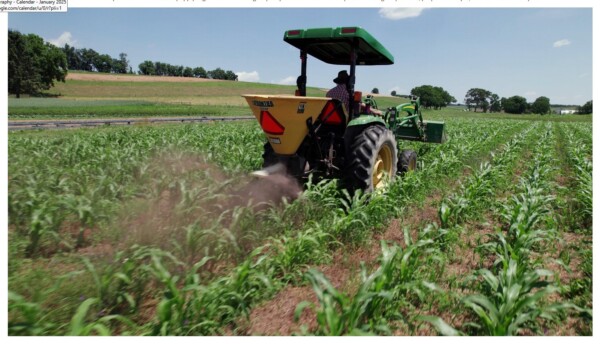
In modern agriculture, knowledge is just as vital as fertile soil, reliable rainfall, and robust equipment. For decades, transitioning to and sustaining an organic operation has required an intricate mastery of diverse scientific and commercial disciplines. Farmers must balance soil science, entomology, advanced crop rotations, and pest management with rigorous federal compliance standards, cost accounting, and strategic marketing. Yet, acquiring this specialized expertise has historically been hindered by a fundamental barrier: geography and time.
For more than 15 years, the acclaimed Rodale Institute Farmer Training (RIFT) program has served as a crucible for agricultural entrepreneurs on its foundational Pennsylvania campus. However, its immersive, nine-month, in-person model could only accommodate a select dozen or so aspiring producers each year.
Recognizing an urgent industry-wide need to democratize access to world-class agricultural education, the Rodale Institute has officially launched a robust virtual platform. By harnessing decades of peer-reviewed research, practical fieldwork, and modern educational technology, this initiative transforms the Institute’s rigorous curriculum into a scalable digital resource. Designed to support up to 6,500 producers nationwide, the platform bridges the gap between scientific innovation and daily farm execution. By bringing university-level instruction directly to tractors, kitchen tables, and mobile devices across the United States, the Institute is effectively building the "regenerative organic agriculture YouTube"—anchored by scientific integrity, peer connection, and long-term economic viability.
Detailed Chronology: The Evolution of Rodale’s Training Paradigm
To understand the magnitude of the Institute’s digital pivot, one must examine the timeline of agricultural education development and the specific operational bottlenecks that necessitated a virtual overhaul.
Phase 1: The Foundation of Hands-On Pedagogy (Pre-2010 to 2020)
For over three quarters of a century, the Rodale Institute has stood as a global pioneer in organic agriculture research. Its physical campus in Pennsylvania became a mecca for agricultural innovation, proving that regenerative methods could match—and often outperform—conventional chemical-heavy farming, especially during times of drought.
To pass this knowledge down to the next generation, the Institute established the RIFT program. This intensive, nine-month, in-person residency immersed a tiny cohort of trainees in daily farm operations. While extraordinarily effective for those few fortunate enough to relocate to Pennsylvania, the model was inherently exclusionary. It demanded total physical presence, rendering it impossible for mid-career conventional farmers looking to transition, or family operators unable to step away from active homesteads.
Phase 2: Capturing the Curriculum (2020–2023)
Recognizing that the traditional model could not scale to meet the accelerating demand for sustainable food systems, Institute leadership initiated a multi-year multimedia documentation effort. Over the course of three years, educators, researchers, and videographers systematically captured every core component of the RIFT syllabus.
Rather than recording casual smartphone tutorials, the team engineered a comprehensive suite of high-definition video modules, instructional diagrams, and modular lesson plans. Every piece of content was vetted against 75 years of empirical data generated at Rodale’s long-term trials. This painstaking process ensured that the translation from physical dirt to digital pixels did not dilute the academic rigor of the instruction.
Phase 3: Integrating the Virtual Campus (2023–Present)
The final technical hurdle involved selecting a framework capable of delivering a rich, interactive educational experience without requiring advanced computer literacy from its users. The Institute integrated its newly minted content library into Canvas, a robust and widely adopted Learning Management System (LMS).
This integration marked the official birth of Rodale Institute Farmer Training Online. The platform introduced asynchronous coursework, automated assignment tracking, quiz modules, and dedicated peer-to-peer discussion boards. Today, the virtual campus operates as a dynamic, nationwide digital extension office, serving as a lifeline for independent growers, institutional apprenticeships, and non-profit agricultural incubators alike.
Supporting Context & Metrics: The Realities of Modern Farming
The shift toward digital extension services is not merely a technological convenience; it is an urgent economic and ecological imperative driven by systemic industry pressures.
The Time and Labor Crunch
Farming is notoriously unforgiving. Unlike corporate or white-collar sectors that operate on standard five-day workweeks, agricultural producers face relentless biological realities. Crops grow, livestock feeds, and equipment breaks down according to nature’s schedule, leaving virtually no room for traditional classroom attendance.
Renée Baran, Rodale Institute Dean of Education, highlights this structural challenge:
"Farming is a unique way to make a living because farmers don’t get vacations or even weekends off when they can take time to focus on learning. But new farmers and many experienced ones have gaps in their knowledge they need to fill."
These knowledge gaps frequently center on complex business mechanics rather than just agronomy. While learning how to brew compost tea or manage beneficial insect populations is critical, many organic startups fail not due to poor crop yields, but because of deficiencies in cost accounting, balance sheet management, and enterprise budgeting.
Scaling Up: From Dozens to Thousands
The mathematical contrast between Rodale’s legacy offerings and its new digital capacity underscores a monumental leap in potential impact:
In-Person RIFT Cohort Capacity: Approximately 12 to 15 students per year.
Virtual Campus Capacity: Designed to absorb up to 6,500 active learners simultaneously.
Research Heritage: Backed by 75+ years of continuous soil and crop experimentation.
Depth of Content: Spanning foundational soil microbiology to advanced organic fertilizer application and audit-ready certification preparation.
This 500-fold increase in educational throughput addresses a critical demographic shift. As an aging generation of conventional farmers approaches retirement, a younger, highly motivated wave of agricultural entrepreneurs is stepping up. These emerging growers are eager to adopt regenerative practices, yet they often lack the multigenerational mentorship network that guided past generations.
Official Statements and Industry Perspectives
The value proposition of Rodale Institute Farmer Training Online is best articulated by the leaders spearheading the initiative and the strategic partners leveraging it on the ground.
Bridging the Gap Between Fieldwork and Business Strategy
Dr. Jason Slipp, Director of Education at Rodale Institute, emphasizes that the platform avoids the superficiality often found on public video-sharing sites.
"At Rodale Institute, we have accumulated more than 75 years’ worth of knowledge, and for the past three years, we’ve been capturing much of our RIFT curriculum on video," Dr. Slipp explains. "We’re now offering it to farmers who are not able to enroll in our nine-month, in-person program. These are university-level classes based on proven instructional principles."
Regarding usability, Dr. Slipp notes that the technological architecture was intentionally designed to eliminate friction for busy growers:
"This is easy for everyone to use, even if they’re not too tech-savvy."
The Collaborative Ecosystem: Partnering with Good Roots
The impact of the virtual campus extends far beyond independent study; it is actively transforming how regional agricultural support organizations execute their missions. One prominent early adopter is Good Roots, a non-profit dedicated to helping organic farmers build durable, wealth-generating enterprises.
Rebecca Frimmer, partner and principal consultant for Good Roots, underscores the acute need for business acumen among emerging producers:
"Farmers need training in business management and finance to ensure they are profitable and viable for the long term. The biggest challenge for farmers is finding the time to balance all that must be done. It’s essential to carve out the space to work on the farm business and not just in the business."
Frimmer points out that smaller-scale producers are often priced out of specialized auxiliary services, making digital tools invaluable:
"Smaller-scale producers may not have the resources to access consulting services or other professional services like bookkeeping and marketing. The self-paced educational resources and interactive support offered by Rodale Institute open up effective ways for Good Roots to ensure the next generation of farmers can scale up with strong financial and marketing foundations."
Future Outlook: Democratizing Regenerative Agriculture for Consumers and Growers
As Rodale Institute Farmer Training Online gains momentum, the organization’s vision extends well beyond commercial crop producers. The leadership team views the virtual campus as an expansive ecosystem capable of educating every link in the food chain—from the tractor operator to the dinner table consumer.
Expanding Beyond the Farm Gate
While the core curriculum remains meticulously tailored for beginning, transitioning, and scaling farmers, the platform also hosts targeted modules for everyday citizens. Courses such as "Being a Regenerative Consumer" and "Regenerative Health: The Power of the Plate" translate complex ecological science into actionable consumer choices. Furthermore, hobbyists interested in backyard gardening or sustainable beekeeping can access professional-grade instruction previously locked inside institutional walls.
Renée Baran summarizes the ultimate trajectory of the initiative:
"We want to be the ‘regenerative organic agriculture YouTube’ where farmers can find the information they’re looking for, but with real scientific integrity and a community of others to connect to and learn with."
The Broader Economic and Environmental Impact
By equipping thousands of growers with the tools to master soil biology, minimize external chemical inputs, pass organic certification audits, and manage healthy profit margins, the Rodale Institute is directly addressing climate volatility and rural economic decline. Healthy regenerative soils capture carbon, retain water during droughts, and reduce runoff pollution—all while producing nutrient-dense foods that support human health.
Through the strategic deployment of its virtual campus, the Rodale Institute has ensured that geography is no longer destiny for those who wish to heal the land. By placing university-grade agricultural extension services directly into the hands of 6,500 learners, the organization is laying a resilient, highly educated foundation for the next century of American agriculture.
For detailed course catalogs, enrollment schedules, and partnership inquiries, interested growers and community members can visit RodaleInstitute.org/education.