From the bustling streets of Bangkok to the rising tides of the South Pacific, the past week has underscored an escalating global mobilization for environmental preservation, economic fairness, and human rights. Across continents, frontline communities, youth activists, Indigenous leaders, and civil society organizations have united under the banner of Greenpeace and allied coalitions to confront systemic ecological degradation.
This week’s protests, cultural actions, and community-led relief efforts captured a profound global sentiment: the intersectional crises of climate breakdown, militarization, socioeconomic inequality, and unchecked corporate pollution require immediate, structural transformation. Whether demanding legally binding caps on plastic production outside United Nations offices, holding the line against global heating thresholds in Fiji, or camping out in the historic plazas of Madrid for fair housing, citizens are stepping into the void left by political inertia.
This dispatch provides an exhaustive, multi-regional overview of the key actions taken by Greenpeace and its partners over the past seven days. Through striking visual documentation and grassroots mobilization, these events illustrate the resilience of communities standing at ground zero of the modern socio-ecological crisis.
Detailed Chronology of Global Actions
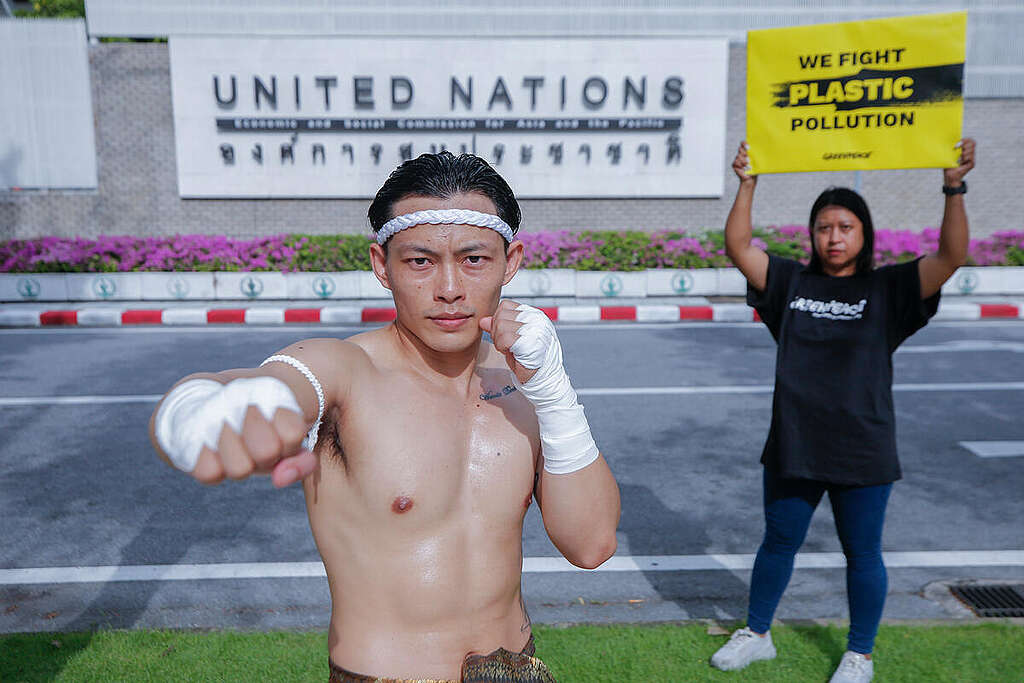
1. Bangkok, Thailand: Striking at the Source of Plastic Pollution
The Action: Activists from Greenpeace Thailand, joined by a professional Muay Thai fighter, staged a high-profile symbolic demonstration outside the United Nations regional offices in Bangkok.
The Context: The demonstration coincided with a critical meeting of Heads of Delegation (HODs) from Member States deliberating the terms of the upcoming Global Plastics Treaty.
The Message: By utilizing the traditional martial art of Muay Thai, the action visually communicated the absolute necessity of "fighting" plastic pollution at its very source. Greenpeace is forcefully urging world governments to reject weak, downstream mitigation strategies and instead mandate aggressive, legally binding cuts in virgin plastic production at the heart of the treaty.
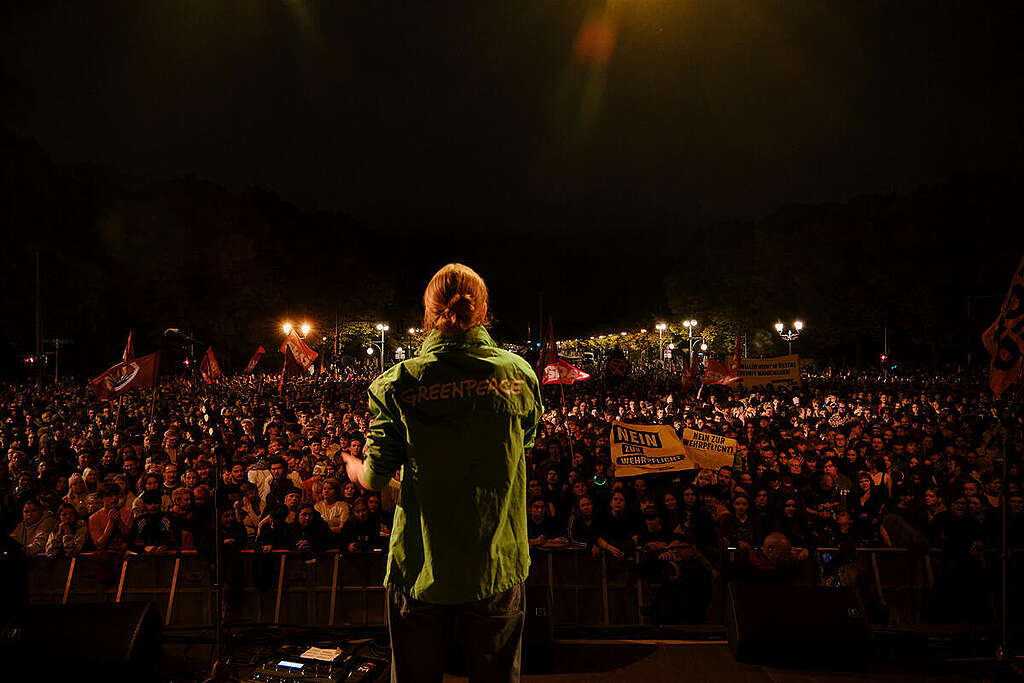
2. Berlin, Germany: Rallying Against Conscription and Unchecked Rearmament
The Action: Under the banner "Unzwingbar – kein Bock auf Krieg und Wehrpflicht" (“Indomitable – No Interest in War and Conscription”), thousands gathered at Berlin’s iconic Brandenburg Gate for a massive concert and protest rally. Prominent musical acts, including K.I.Z., Disarstar, and Apsilon, performed alongside speeches from civil society and youth leaders.
The Context: Organized alongside a broad coalition of youth, peace, and human rights groups, Greenpeace Germany used the platform to sound the alarm against the potential reintroduction of compulsory military service and a broader national trend toward unchecked militarization.
The Message: Speakers emphasized the disproportionate socio-economic consequences of these policies on younger generations. Activists demanded a redirection of political priorities—advocating instead for a security framework that invests in social stability and climate resilience rather than ballooning defense budgets.
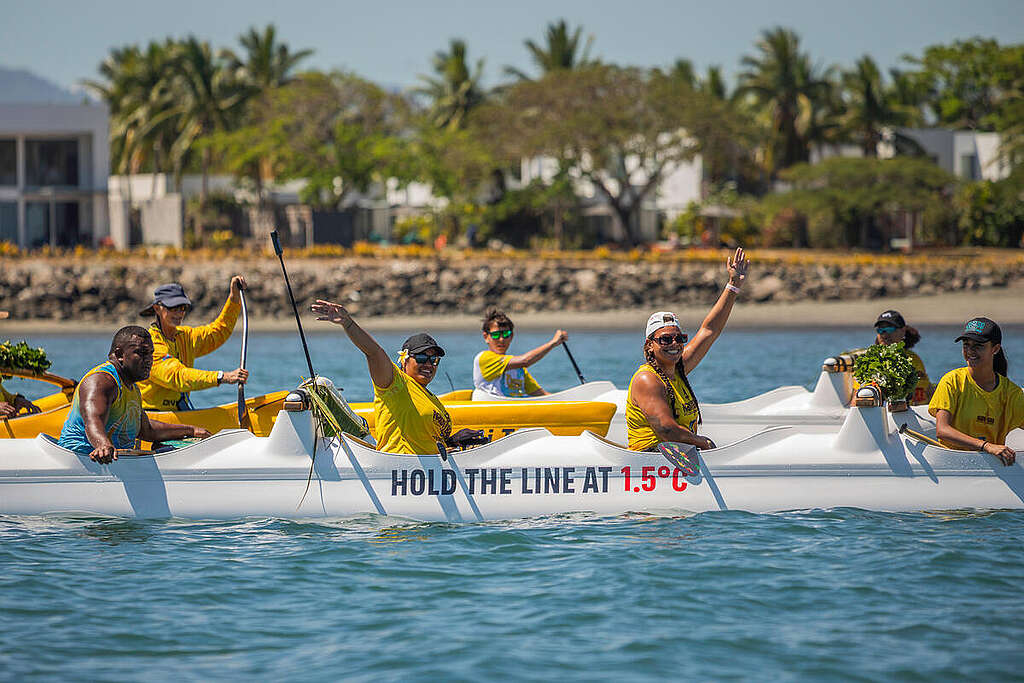
3. Nadi, Fiji: A Pre-COP Flotilla Holding the Line at 1.5°C
The Context: As delegates gathered in Nadi, Fiji, for the official Pre-COP climate summit ahead of COP31 (to be presided over by Australia in Türkiye this November), approximately 80 participants staged a vibrant maritime flotilla.
The Action: Comprising Pacific and Torres Strait Islander community members, Indigenous Elders, and youth activists aboard the vessel SV Oceania and a fleet of traditional outrigger canoes, the flotilla sailed directly past official Pre-COP venues.
The Message: Banners and sail markings boldly declared "Hold the Line at 1.5°C" and "Keep 1.5°C Alive." The participants delivered an uncompromising message to international negotiators: the 1.5°C warming limit enshrined in the Paris Agreement is not an arbitrary political target, but a non-negotiable threshold for human survival—particularly for low-lying island nations facing existential displacement.
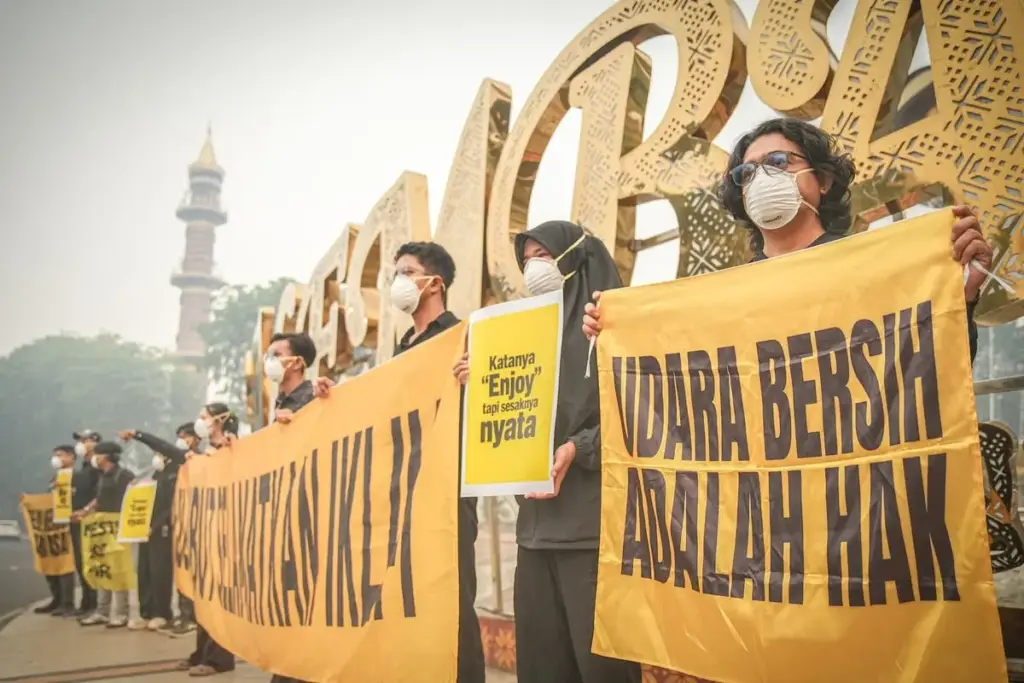
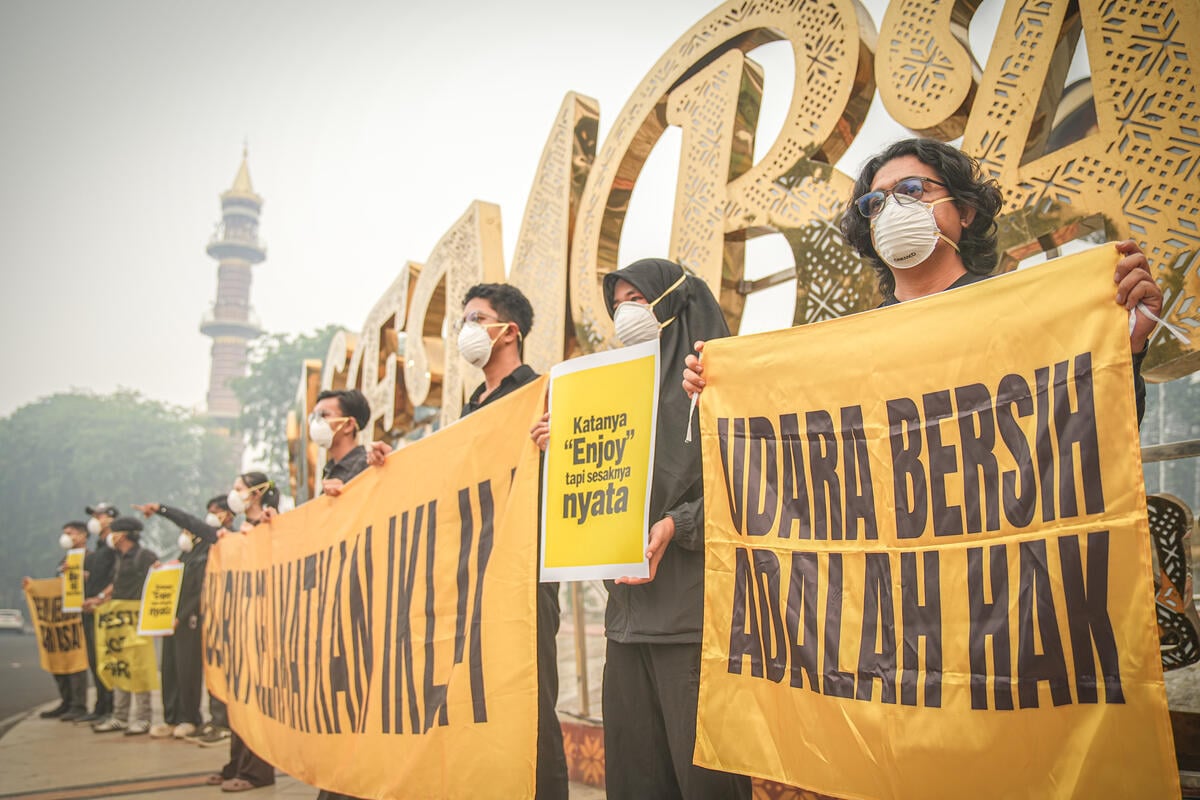
4. Palembang, Indonesia: The Fight for Clean Air Amid Hazardous Haze
The Context: For nearly two months, the city of Palembang in South Sumatra has been choked by a dense, toxic blanket of wildfire haze. The crisis has driven local air pollution to hazardous levels and cast a pall across neighboring nations, including Singapore and Malaysia.
The Action: Members of the Greenpeace Indonesia Forest Fires Prevention Team (Tim Cegah Api) staged a peaceful protest in Palembang, hoisting banners and distributing informational posters demanding immediate intervention and accountability.
The Message: The action highlighted the recurring failure of industrial forestry and agricultural governance to prevent devastating peatland and forest fires. Greenpeace called for rigorous enforcement of environmental protections and greater accountability for corporations driving deforestation.
5. Zurich, Switzerland: Demanding "No 50°C Summers!"
The Context: Extreme heatwaves are rapidly altering European ecosystems and threatening public health. In response, a coalition of more than 70 civil society, environmental, health, and agricultural organizations mobilized in Switzerland.
The Action: Greenpeace marched through the streets of Zurich alongside approximately 7,000 citizens under the rallying cry: "No 50°C summers!"
The Message: The coalition demanded that policymakers implement immediate, legally binding municipal and national adaptation measures to combat urban heat islands, protect vulnerable populations, and aggressively curb greenhouse gas emissions.
6. Madrid, Spain: Reclaiming the Right to Decent Housing
The Context: Across major European metropolitan areas, skyrocketing rental costs, speculative real estate practices, and housing shortages have driven urban populations into severe economic precarity.
The Action: Greenpeace Spain joined forces with housing rights advocates for a high-visibility sit-in at the historic Puerta del Sol plaza in Madrid.
The Message: By embedding environmental advocacy within the broader struggle for socioeconomic justice, participants underscored that the right to a safe, stable, and affordable home is inextricably linked to the broader fight for sustainable, equitable communities.
7. Chachoengsao Province, Thailand: Dual Crises of Flooding and Fossil Gas
The Context: Severe seasonal flooding, which began on September 25, has wreaked havoc across 11 districts in Thailand’s Chachoengsao Province, directly impacting more than 23,790 households.
The Action: Greenpeace Thailand staff and volunteers mobilized on the ground to provide direct humanitarian support and emergency relief to affected communities.
The Message: Beyond immediate disaster relief, local communities and Greenpeace highlighted a cruel irony: even as residents struggle with the escalating impacts of climate-fueled extreme weather, authorities are pushing forward with plans to construct the massive 540-megawatt Burapha fossil gas power plant in the province. Local residents voiced profound concerns over the plant’s anticipated toll on local water resources, air quality, and regional carbon emissions. Greenpeace urged the Thai government to halt fossil fuel expansion and pivot toward a just transition to renewable energy.
Supporting Context & Metrics
The convergence of these events highlights a systemic global crisis where ecological boundaries and social safety nets are failing simultaneously. Understanding the scale of these actions requires examining key operational metrics from the past week:
International Coalitions: Over 70 diverse organizations participated in the Zurich climate march alone, demonstrating the broad multi-sectoral appeal of modern environmentalism.
Community Scale: In Chachoengsao, Thailand, floods severely impacted 23,790 households across 11 distinct districts, illustrating the hyper-local human cost of climate instability.
Global Reach: Actions spanned 7 countries across Europe, Asia, and Oceania, connecting localized grievances—such as urban housing in Madrid and wildfire haze in Palembang—to overarching global treaties and international policy negotiations.
Official Statements
"The science is unequivocal, and the human suffering on our frontlines is undeniable. Whether we look at the toxic haze choking Palembang or the unprecedented floods submerging Chachoengsao, it is clear that our current path is unsustainable. Governments meeting at international summits can no longer hide behind empty rhetoric. We must hold the line at 1.5°C, cut plastic production at its source, and transition away from fossil fuels immediately."
— Representative, Greenpeace International
"Young people are being asked to inherit an unstable climate while simultaneously being told to prepare for militarized conflicts fueled by the very resource competition that causes environmental collapse. We reject a security policy based solely on defense spending. True security means stable housing, clean air, a livable climate, and peace."
— Greenpeace Youth Spokesperson (Berlin Rally)
Future Outlook
As the global community looks ahead to the upcoming COP31 climate negotiations under Australia’s incoming presidency, the trajectory of international environmental policy hangs in the balance. The actions coordinated by Greenpeace this week serve as both a warning and a roadmap for the months to come.
Key milestones to monitor include:
The Global Plastics Treaty Negotiations: The outcomes of the ongoing UN consultations will determine whether world leaders have the political courage to enforce binding limits on plastic manufacturing.
Pre-COP and COP31 Preparations: Pacific and Indigenous communities have drawn a red line at 1.5°C; international pressure will mount on Australia and other major emitters to abandon fossil fuel expansion plans.
Intersection of Social and Climate Justice: As demonstrated in Madrid, Berlin, and Zurich, the future of climate activism is deeply intersectional—binding ecological preservation directly to housing rights, peace initiatives, and economic equity.
Greenpeace remains steadfast in its mission. For over five decades, photo-activism and direct witnessing have served as powerful tools to expose injustice and catalyze public mobilization. As these global struggles intensify, the images captured this week will stand as historical proof of a world fighting relentlessly for its own survival.
To explore more high-resolution photography, video archives, and real-time updates from Greenpeace campaigns worldwide, visit the official Greenpeace Media Library.