

Executive Overview
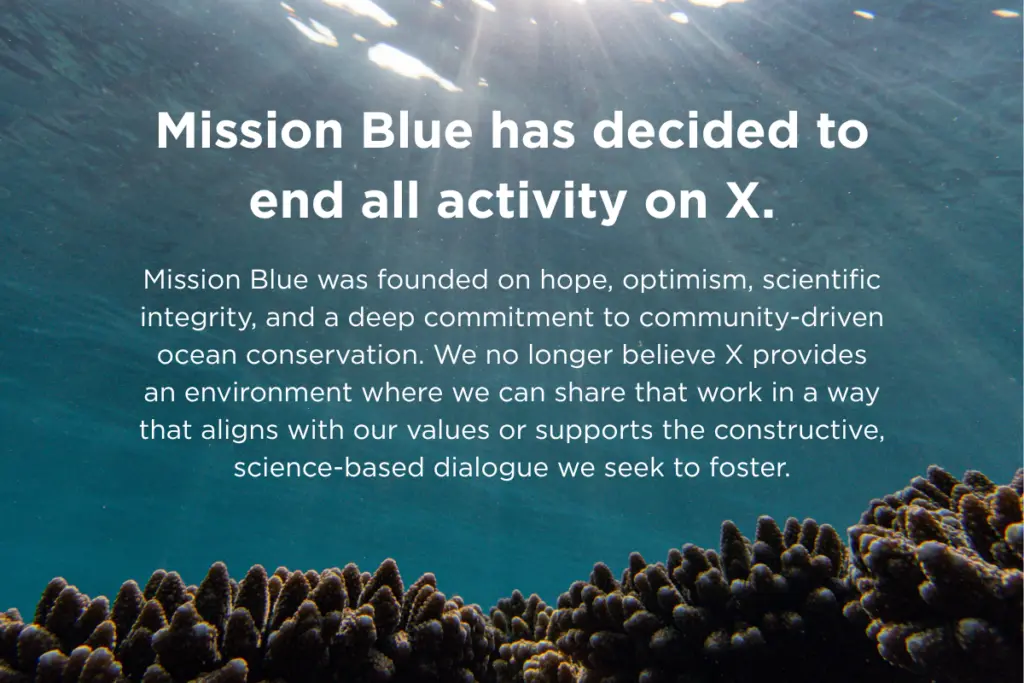
In an era defined by rapid digital transformation and shifting communication paradigms, organizations dedicated to global advocacy face complex decisions regarding where and how they allocate their resources. On [date/recent context], Mission Blue—the globally renowned ocean conservation foundation established by legendary oceanographer Dr. Sylvia Earle—announced a definitive shift in its digital strategy. The organization officially decided to terminate its active engagement on X (formerly Twitter), redirecting its energy, resources, and community-building initiatives toward platforms that better align with its foundational values of hope, scientific integrity, and constructive dialogue.
This strategic departure is not merely an isolated PR decision; it represents a growing trend among scientific bodies, environmental NGOs, and non-profit institutions that find the operational culture of X increasingly incompatible with fact-based advocacy. Mission Blue, celebrated for its establishment of "Hope Spots"—special places that are critical to the health of the ocean—built its reputation on optimism, inclusive community engagement, and rigorous marine science. Over time, however, the foundation’s leadership observed a stark degradation of the digital discourse on X, characterized by rising tides of misinformation, hostility, and organized skepticism toward established scientific consensus.
Rather than expending finite organizational energy to combat toxic algorithms and polarized discourse, Mission Blue has chosen to pivot. The organization will maintain its existing account strictly as a read-only historical archive while channeling its active social media footprint into platforms such as Instagram, Facebook, LinkedIn, and YouTube. Furthermore, the organization is doubling down on direct-to-audience channels, including its official newsletter, ensuring that its community of ocean champions, marine biologists, and passionate advocates remain informed without the interference of sensationalized online noise.
This comprehensive report examines the drivers behind Mission Blue’s departure from X, evaluates the broader context of scientific communication in the modern digital age, outlines the foundational metrics and strategic pivots informing the decision, and explores the future outlook for digital advocacy within the global environmental movement.
Detailed Chronology: The Evolution and Exit of an Ocean Conservation Pioneer
The Early Days: Optimism and Community Building on Twitter
When Mission Blue first established its presence on the platform then known as Twitter, the digital landscape was markedly different. Founded on Dr. Sylvia Earle’s unwavering philosophy of "hope," the foundation sought a dynamic, real-time medium to bridge the gap between field scientists, marine conservationists, policymakers, and the global public.
In its formative years on the platform, Twitter served as a vital digital conduit. It allowed Mission Blue to broadcast live updates from oceanic expeditions, share breaking news regarding newly designated Hope Spots, and coordinate rapid-response advocacy campaigns. For marine biologists operating in remote oceanic regions—from the Galápagos to the high seas—the platform offered a low-bandwidth, text-friendly lifeline to colleagues and supporters around the world. The interactions were largely collaborative, fostering a digital ecosystem where curiosity, peer-reviewed findings, and environmental stewardship could intersect productively.
The Turning Point: Shifts in Platform Governance and Cultural Climate
As the years progressed, structural and cultural changes began to sweep across the platform. Following significant shifts in corporate ownership, internal staffing, and content moderation policies (particularly after the platform’s rebranding to X), the operational environment transformed radically.
For science-based organizations, the changes were palpable. The relaxation of content guidelines and the algorithmic elevation of divisive, sensationalized, and controversial content created a volatile digital public square. Mission Blue’s leadership team began noticing a disturbing rise in hostility, bad-faith engagement, and coordinated campaigns of misinformation specifically targeting environmental science. Claims regarding climate change, marine biodiversity loss, and ocean acidification—phenomena backed by decades of empirical research—were increasingly met with targeted harassment, climate denialism, and anti-science rhetoric amplified by platform algorithms designed to maximize engagement through outrage.
The Breaking Point and Strategic Pivot
By [recent timeframe], the leadership of Mission Blue reached a definitive crossroads. An organization whose core mission is to inspire public affection and protection for the ocean cannot effectively operate in an environment where constructive, solutions-oriented dialogue is systematically drowned out by hostility and fabricated controversies.
The decision-making process was methodical. Leadership weighed the visibility offered by X against the foundation’s core values. Ultimately, the calculation was clear: the psychological and communicative cost of maintaining an active presence in a toxic digital arena far outweighed the diminishing returns of platform reach. Mission Blue chose to protect its brand integrity, honor the scientific community it represents, and transition its digital capital to environments designed for community nurturing rather than polarization.
Supporting Context & Metrics: The Crisis of Science Communication on Modern Social Media
The Algorithm of Outrage: Why Scientific Institutions are Fleeing X
Mission Blue’s departure is far from an isolated incident. Over the past twenty-four months, a quiet exodus of academic institutions, public health organizations, meteorological agencies, and environmental NGOs has been underway.
Independent digital media studies and academic research into platform dynamics reveal a concerning trend: algorithmic architectures that prioritize high-velocity engagement inadvertently favor misinformation. In the realm of environmental science, falsehoods regarding climate change and ecological collapse travel faster and wider than nuanced, evidence-based reports. For organizations like Mission Blue, this creates an asymmetrical communication trap. Fact-checking and correcting pervasive environmental falsehoods requires time, nuance, and verified data—assets that are systematically undervalued by engagement-driven recommendation engines.
The Shift Toward Intentional Communities
In response to the deteriorating utility of open-broadcast networks, forward-thinking NGOs are restructuring their digital strategies around the concept of "intentional communities." Rather than casting wide nets in polluted digital waters, organizations are investing in platforms that foster deeper, more respectful engagement.
- Instagram: Prized for its visual storytelling capabilities, Instagram allows Mission Blue to showcase the breathtaking beauty of Hope Spots through high-resolution photography and video reels, connecting emotionally with audiences.
- Facebook: Facilitates robust community discussions, enabling localized marine conservation groups and global supporters to coordinate grassroots action.
- LinkedIn: Serves as the professional nexus for policy engagement, corporate partnerships, and scientific collaboration with institutional stakeholders.
- YouTube: Acts as the foundational repository for long-form educational content, documentary-style deep dives into marine expeditions, and lectures by Dr. Sylvia Earle.
- Direct-to-Inbox (The Newsletter): Represents the ultimate reclamation of audience agency. By prioritizing email subscriptions, Mission Blue ensures that its message bypasses third-party algorithmic gatekeepers entirely, landing directly in the inboxes of dedicated ocean champions.
Official Statements and Organizational Philosophy
The transition away from X underscores Mission Blue’s unwavering commitment to its foundational ethos. In its formal announcement, the organization reflected deeply on the intrinsic connection between humanity and the global ocean:
"We are all connected to the same ocean. Through our digital strategy, we seek to build a curious, welcoming online community. We cannot, in good faith, continue to use the X platform."
This statement speaks volumes about the evolving responsibilities of modern non-profits. Digital platforms are not neutral tools; they shape the psychological and cultural environment in which civic discourse occurs. When an environment ceases to be conducive to truth, mutual respect, and collaborative problem-solving, ethical organizations face a moral imperative to withdraw their participation and validation.
Dr. Sylvia Earle’s life work has always emphasized that hope is a deliberate, active choice rooted in knowledge and collective action. By refusing to engage with an ecosystem that commodifies cynicism and anti-science rhetoric, Mission Blue is practicing what it preaches. The organization is safeguarding its communication channels to ensure that the message of ocean hope remains pure, uncorrupted, and empowering.
Future Outlook: Charting a Course for Modern Environmental Advocacy
Redefining Digital Stewardship in the Post-X Era
As Mission Blue closes the chapter on X, the foundation’s strategic pivot offers a masterclass for the broader environmental and scientific advocacy community. The traditional playbook of social media management—which dictated that organizations must maintain a ubiquitous presence across every emerging platform regardless of cost—is rapidly giving way to a more discerning, values-driven approach.
Moving forward, the success of marine conservation will increasingly rely on depth of engagement rather than breadth of exposure. By consolidating its energies into platforms that support constructive visual media, educational deep-dives, and direct subscriber communication, Mission Blue is positioning itself for resilient, long-term advocacy.
How Supporters Can Stay Connected
While the Mission Blue X account will remain frozen as a digital archive, the foundation’s vital work supporting Hope Spots around the globe accelerates unabated. Ocean lovers, scientists, and advocates are invited to join the thriving, hopeful communities being cultivated across alternative channels:
- Follow the Visual Journey: Engage with stunning marine life and expedition updates on Instagram.
- Join the Community Discussion: Connect with fellow ocean advocates on Facebook.
- Engage with Professionals and Partners: Network with institutional and scientific allies on LinkedIn.
- Watch and Learn: Immerse yourself in documentaries and scientific briefings on YouTube.
- Subscribe for Direct Updates: Ensure you never miss a Hope Spot announcement, ocean story, or call to action by subscribing directly to the official Mission Blue newsletter.
Conclusion: Hope as an Actionable Strategy
The digital tide is turning. As institutions large and small reckon with the realities of modern social media infrastructure, Mission Blue has boldly demonstrated that integrity matters more than algorithmic reach. By stepping away from the hostility of X and doubling down on spaces designed for genuine community, education, and hope, Mission Blue ensures that its voice—and the voice of the ocean—remains clear, strong, and uncompromised for generations to come.



