

Executive Overview
The American renewable natural gas (RNG) and biogas sectors are undergoing a quiet yet structural transformation. While early capital investments heavily targeted landfill-gas-to-energy pathways—commitments that major waste management conglomerates are now bringing to fruition—the broader landscape is diversifying.
According to a comprehensive new report released by the American Biogas Council (ABC), wastewater treatment plants (WWTPs) continue to anchor the North American biogas industry. Accounting for nearly half of all operational anaerobic digesters across the United States, wastewater facilities represent both the historical backbone and the most fertile ground for future industry expansion.
Concurrently, the market is witnessing strategic deployments across agricultural and landfill sectors. Multi-million-dollar swine waste projects are coming online, private equity-backed developers are expanding their geographic footprints through municipal-waste partnerships, and energy operators are securing long-term contracts to supply both electricity and upgraded RNG.
Yet, these infrastructure milestones occur against a backdrop of shifting environmental credit markets and regulatory compliance values. As developers navigate fluctuations in federal Renewable Identification Number (RIN) pricing and state-level carbon reduction frameworks, operational efficiency and product diversification remain paramount. This report explores the state of wastewater anaerobic digestion, details key corporate movements from September 2026, examines underlying macroeconomic metrics, and outlines the sector’s trajectory as it looks beyond traditional compliance paradigms.
Detailed Chronology: Key September 2026 Industry Developments
The month of September 2026 brought a flurry of operational breakthroughs, municipal contract renewals, and strategic developmental milestones across the North American biogas sector.
Mid-September: Montauk Renewables Unveils Major Swine Waste Facility in North Carolina
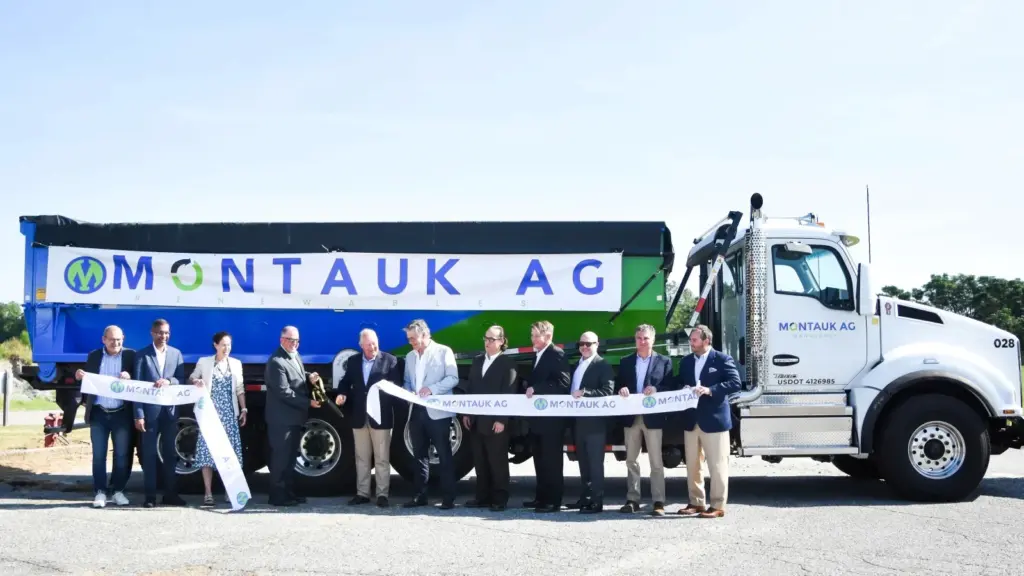
On September 15, executives from Montauk Renewables, alongside local dignitaries and agricultural stakeholders, celebrated the official ribbon-cutting of a flagship anaerobic digestion facility in Turkey, North Carolina. Representing a staggering $200-million capital investment by Montauk, the facility is engineered to harvest biogas derived from regional swine manure to generate utility-scale electricity.
The project relies on long-term feedstock supply agreements secured across more than 80 distinct farming operations in the region, underscoring the logistical complexity and collaborative nature of large-scale agricultural biogas projects. According to disclosures within Montauk Renewables’ corporate filings, the facility operates under a 10-year power purchase agreement, alongside a companion agreement to sell approximately one-third of the facility’s generated renewable energy certificates (RECs) to Duke Energy.
At peak operational capacity, the Turkey, North Carolina installation is projected to yield up to 41 megawatt-hours of electric power annually, while simultaneously producing roughly 870 tons of high-grade organic fertilizer alternatives per year—creating a closed-loop economic model for local agricultural producers dealing with high nutrient-load waste streams. This milestone complements Montauk’s broader financial momentum; the company reported a year-over-year second-quarter revenue increase of 19.7% to reach $54 million, paired with a 3% bump in quarterly RNG production to 1.5 million mmBtus.
Mid-September: Waga Energy Expands Landfill Portfolio with LRS Partnership
On September 15, French RNG developer Waga Energy—bolstered by substantial private equity backing—announced a major municipal-solid-waste partnership in the Midwest. Leading regional waste and recycling firm Lakeshore Recycling Systems (LRS) selected Waga to design, finance, construct, own, and operate a state-of-the-art RNG production facility at the Eco-Hill Landfill.
Situated in Atkinson, Illinois, the Eco-Hill site is LRS’s sole landfill asset and serves as a vital environmental and waste-disposal hub for the greater Chicago metropolitan area. The planned facility is engineered with an initial gas-processing capacity of 3,000 standard cubic feet per minute (scfm), which is expected to yield up to 610,000 mmBtus of pipeline-quality RNG annually. Under the structural parameters of the agreement, LRS will retain a fixed share of the revenues generated from the commercial sale of the on-site RNG. Construction is currently slated to begin with an anticipated commercial launch in 2028.
Early September: Waga Energy and Casella Bring Third Joint RNG Facility Online
Earlier in the month, on September 3, Waga Energy and Casella Waste Systems jointly announced the operational commencement of their third collaborative landfill gas project. Located at Casella’s McKean Landfill in Mount Jewett, Pennsylvania, the facility represents the continued maturation of a multi-site partnership between the two waste management and energy entities.
The McKean facility is designed to process 2,000 scfm of raw landfill gas, translating to a projected annual output of up to 407,000 mmBtus of RNG once full run rates are achieved. Production at the site is actively ramping up. The underlying partnership framework dictates that Waga Energy provides 100% of the capital expenditure for construction, retaining ownership and operational control of the assets for a 20-year term, while revenue from downstream gas sales is split between Waga and Casella.
Mid-September: Opal Fuels Secures Long-Term Municipal and Commercial Upgrades in California
Opal Fuels made waves in California’s clean transportation and municipal energy markets through a series of operational updates finalized in mid-September. On September 16, Opal announced the official five-year renewal of its operating agreement with the City of San Diego, securing its continued stewardship of the landfill-gas-to-energy project at the Miramar Landfill. Operating continuously since 1998, the Miramar installation generates approximately 400,000 megawatt-hours of electricity annually, serving as a cornerstone of San Diego’s municipal renewable energy procurement strategy.
This municipal announcement closely followed an August-into-September operational push that saw Opal complete major capacity upgrades at its compressed natural gas (CNG) fueling station in Goshen, California. Following comprehensive capital improvements, the Goshen station expanded its throughput capacity by 1.7 million gasoline gallon equivalents (GGE) annually, incorporating a steady supply of low-carbon RNG. Opal acquired the Goshen facility in 2025 and has funneled approximately $52.7 million into its broader project portfolio during the first half of 2026. Despite a slight 5% dip in first-half revenues compared to the previous year, Opal’s total RNG production ticked upward by 6% to 2.4 million mmBtus, reflecting underlying volume growth across its national asset base.
Supporting Context & Metrics: The Wastewater Baseline and Market Valuations
While high-profile private-equity-backed landfill projects and agricultural manure operations capture significant media attention, the American Biogas Council’s landmark 2026 wastewater report illuminates where the true bedrock of the biogas sector resides: wastewater treatment plants.
Wastewater Treatment Facilities: The Indisputable Giants of Biogas
WWTPs were the earliest pioneers of anaerobic digestion technology, utilizing closed-vessel digestion primarily for sludge stabilization, pathogen reduction, and volume minimization. Over the decades, these facilities evolved from disposal-cost centers into net energy recovery assets.
According to the ABC’s report, wastewater treatment plants currently operate an overwhelming 47% of all installed anaerobic digesters in the United States. Since 2020 alone, 29 new wastewater digester facilities have come online nationwide, bringing the cumulative total of operational wastewater plants utilizing digestion to 1,213.
Despite this dominance, substantial untapped potential remains. Industry benchmarks indicate that wastewater treatment plants with average daily flow rates of 1 million gallons or greater are prime candidates for economically viable anaerobic digestion. Currently, only about 24% of such qualified facilities operate digesters. If the remaining 76% of eligible plants were to adopt anaerobic digestion, the municipal wastewater sector could unlock vast quantities of untapped renewable energy.
The nature of these wastewater digesters has similarly evolved. Historically configured merely to burn biogas on-site for low-grade thermal energy or basic electricity, modern wastewater installations are increasingly investing in gas-upgrading infrastructure. Since 2018, an escalating number of WWTPs have integrated equipment to:
- Upgrade raw biogas to pipeline-specification RNG.
- Implement combined heat and power (CHP) systems to maximize thermal efficiency.
- Engage in codigestion—introducing high-strength organic wastes (such as food waste, fats, oils, and grease) alongside domestic sewage sludge to boost gas yields and tipping-fee revenues.
Collectively, existing wastewater digesters capture in excess of 100 billion cubic feet of biogas annually. The ABC estimates that aggressive, widespread industry adoption across remaining eligible facilities could yield an additional 70 billion cubic feet of biogas per year.
Environmental Credit and Carbon Market Dynamics
The financial viability of constructing and operating biogas and RNG infrastructure is inextricably linked to regulatory compliance markets and environmental credit pricing. Below is the snapshot of key carbon and renewable fuel credit benchmarks as of October 7, 2026, compiled via EcoEngineers Carbon Market Data:
- D3 RIN Prices ( cellulosic biofuel): $2.294 per gallon-equivalent. This represents a minor contraction compared to the $2.380 average recorded in 2025, reflecting shifting supply-demand dynamics under the federal Renewable Fuel Standard (RFS).
- D5 RIN Prices (advanced biofuel): $2.085 per gallon-equivalent, marking a slight upward tick from the 2025 average of $2.060.
- Oregon Clean Fuels Program (CFP): $81 per metric ton of carbon dioxide equivalent ($/MT CO2e).
- California Low Carbon Fuel Standard (LCFS): $88 per metric ton of carbon dioxide equivalent ($/MT CO2e).
These pricing vectors dictate project finance terms, debt-service coverage ratios, and the pace at which developers commit capital to capital-intensive gas upgrading and compression infrastructure.
Official Statements and Industry Insights
The release of the American Biogas Council’s 2026 wastewater report sparked industry-wide dialogue regarding the strategic roadmap for municipal and private biogas developers.
Patrick Serfass, Executive Director of the American Biogas Council, emphasized that the industry’s primary objective moving forward must be twofold: expanding physical footprint where economically feasible, and extracting higher-value products from existing infrastructure.
"Our survey shows there are opportunities to do more — by expanding anaerobic digestion where it makes sense and getting more value from the digesters already in place," Serfass stated in an official release accompanying the report.
Serfass’s comments mirror a broader strategic pivot within the waste and energy sectors. As major waste management firms approach the completion of their initial, highly publicized landfill-gas-to-RNG development commitments made earlier in the decade, industry stakeholders are intensely focused on optimizing end-use pathways. Rather than viewing biogas merely as a compliance mechanism to generate D3 RINs, operators are increasingly exploring localized microgrids, direct-to-industry thermal sales, specialized agricultural fertilizer coproducts, and heavy-duty transportation fueling contracts.
Corporate leadership echoes this sentiment of operational refinement. Sean McClain, CEO of Montauk Renewables, highlighted the structural integration of agricultural projects during the deployment of their North Carolina swine waste facility:
"By building long-term collaborative frameworks with over 80 distinct farming locations, we are not only capturing fugitive methane emissions that would otherwise enter the atmosphere, but we are also delivering predictable, baseload renewable electricity and valuable organic fertilizer alternatives to regional partners who desperately need nutrient management solutions."
Future Outlook: The Next Frontier for Biogas and RNG
As the North American biogas industry navigates the closing quarters of 2026, the strategic horizon is defined by maturation, consolidation, and technological diversification.
1. The Municipal Wastewater Awakening
The immense untapped reserve identified by the American Biogas Council—specifically, the 76% of eligible wastewater treatment plants lacking anaerobic digestion—represents the next great frontier for municipal infrastructure spending. As local governments face tightening state-level carbon reduction mandates and rising costs for traditional biosolids disposal, wastewater treatment authorities are increasingly treating sludge as an undervalued energy asset. Municipal-private partnerships (P3s), where private capital finances the installation of advanced gas-upgrading equipment in exchange for long-term revenue sharing, are expected to accelerate.
2. Diversification Beyond Landfill Gas
While landfill-gas-to-RNG projects will remain a dominant volume driver due to the sheer scale of municipal solid waste landfills, the growth vectors are clearly shifting toward agricultural codigestion and specialized organic waste streams. Facilities like Montauk’s swine waste plant in North Carolina demonstrate that decentralized, agricultural biogas operations can successfully scale when backed by sophisticated multi-farm aggregation agreements and long-term utility power purchase agreements.
3. Navigating Credit Volatility and End-Use Flexibility
With D3 RIN prices hovering near $2.29 and state-level LCFS credits in California and Oregon trading around $88 per metric ton, developers are engineering projects with maximum operational flexibility. The ability to pivot between electricity generation, pipeline injection (RNG), and compressed natural gas (CNG) vehicle fueling allows operators to insulate themselves against short-term regulatory shifts and carbon market price volatility.
Ultimately, the biogas industry has successfully graduated from its infancy as a niche waste-disposal mechanism. Today, it stands as an essential pillar of the North American circular economy—simultaneously decarbonizing transportation fleets, stabilizing municipal utility grids, and transforming society’s most challenging waste streams into high-value renewable energy.



