


By Tristan Bronca
With reporting additions from national energy markets analysts.
Executive Overview
Today, approximately 80% of Canada’s electricity is derived from emissions-free sources, placing the nation in a formidable position globally as the energy transition gathers speed. According to the 2026 levelized-cost-of-energy report published by global accounting firm Lazard, wind and solar power remain, by far, the cheapest new sources of electricity that can be added to the grid. Yet, achieving a net-zero carbon economy requires far more than maintaining the status quo.
As Canada’s transportation networks, residential housing, commercial complexes, and heavy industries steadily reduce their dependence on fossil fuels, overall demand for electricity is poised to skyrocket. Projections from the federal government indicate that the widespread adoption of electric vehicles (EVs), residential and industrial heat pumps, data centres, and other electrified applications will require the national grid to double its current electricity production capacity in less than 25 years.
According to the comprehensive Corporate Knights Climate Dollars analysis—which evaluates the capital investments needed to decarbonize Canada’s economy sector by sector—this monumental shift will require approximately $2.17 trillion in capital investment over the next quarter-century. Of that total, $1.26 trillion must be directed toward grid modernization and expansion, while $915 billion is earmarked for end-use sectors. For the electrical grid alone, this translates to average capital investments of roughly $50 billion per year over 25 years.
While this financial mountain may seem daunting, the long-term payoff is staggering. Strategic investments in transmission and generation are projected to yield hundreds of billions of dollars in fuel and infrastructure savings, ultimately driving down electricity rates for millions of Canadians. However, navigating this transition requires overcoming fragmented regulatory regimes, shifting public perceptions around green infrastructure, and mobilizing a blend of public capital and private retail investment through innovative financial instruments like community bonds.
Detailed Chronology of Canada’s Electrification Push
To understand how Canada arrived at this critical juncture in its energy evolution, it is helpful to examine the historical and policy milestones that have shaped the modern grid:
- 2009 (The Green Energy Act Era): Ontario enacts the Green Energy Act, sparking a wave of renewable energy development across rural farmlands. While it rapidly expanded wind and solar capacity, the legislation stripped municipalities of their zoning powers regarding renewable projects. This top-down approach resulted in a sharp political backlash, with 155 municipalities formally denouncing wind turbines—creating an enduring cautionary tale about the perils of alienating local communities.
- 2010 (The Rise of Renewable Co-ops): Amid a flourishing ecosystem of guaranteed, long-term fixed-price energy contracts, grassroots organizations began forming across the country. SolarShare, which would eventually grow to become Canada’s largest renewable-energy co-op, was founded this year, laying the groundwork for citizen-led clean energy finance.
- 2016 (The Policy Turning Point): Canada’s renewable energy co-op sector reaches its historical peak in terms of active entities. However, the subsequent phase-out or scaling back of lucrative, guaranteed fixed-price energy contracts by provincial governments triggers a massive contraction. Over the next decade, the number of active energy co-ops across Canada is cut in half due to compliance hurdles, restrictive regulations on selling power back to the grid, and burdensome fundraising restrictions.
- 2024–2025 (Ramping Up Baseline CapEx): Capital investments in Canadian grids—covering new power generation projects, storage solutions, and transmission network upgrades—reach $32 billion in 2024, climbing to $34 billion in 2025. During this period, grid infrastructure commands the largest baseline capital expenditure in the nation’s energy sector, second only to oil and gas extraction ($42 billion).
- May 14, 2026 (The National Strategy Announcement): Prime Minister Mark Carney’s government formally unveils its long-awaited national electricity strategy, accompanied by sweeping new federal commitments to enhance interprovincial grid connections and accelerate decarbonization pathways.
Supporting Context & Metrics: The Scale of the Challenge and Opportunity
Transforming a continental power grid over 25 years is an engineering and financial challenge of historic proportions. The data underscores both the magnitude of the investment needed and the substantial financial dividends it promises.
Financial Breakdown of the Transition
- $2.17 Trillion: Total capital investment required over 25 years to fully decarbonize Canada’s economy.
- $1.26 Trillion: The specific portion of capital dedicated to upgrading, expanding, and greening the national electrical grid (averaging $50 billion annually).
- $915 Billion: Capital required for investments in end-use decarbonization sectors (such as building retrofits, industrial electrification, and clean transit).
- 20% to 25%: The share of grid-related funding that will stem directly from government sources, including direct allocations via programs like the Smart Renewables and Electrification Pathways Program (SREPP), tax credits, and public financing.
- 75% to 80%: The heavy lifting expected from private capital markets, institutional investors (such as major pension funds), and private utilities.
The Dividend of Integration
Far from being a fiscal drain on public coffers, scaling up grid investments unlocks monumental cost efficiencies. According to estimates by Corporate Knights researchers, building a trans-Canada transmission line would cost an estimated $100 billion, yet it would generate up to $255 billion in net savings.
Additional system-wide improvements—such as advanced localized storage, smart-grid routing, and interprovincial power-sharing agreements—promise to save hundreds of billions more in displaced fossil fuel costs and redundant local infrastructure development. Ultimately, these savings will protect consumers from volatile global oil and gas markets, translating directly into lower, more stable electricity rates for households and businesses from coast to coast.
Official Statements and Policy Responses
The unveiling of the national electricity strategy in mid-2026 marked a profound pivot in federal-provincial relations regarding energy infrastructure. For decades, Canada’s electricity systems have operated as isolated provincial silos, optimized for regional self-sufficiency rather than continental resilience.
"Electric vehicles, heat pumps, data centres, and more will require the Canadian grid to double the amount of electricity it produces in less than 25 years," federal energy documents note, underscoring the urgency behind the Carney government’s initiatives.
Complementing the national framework, Natural Resources Canada rolled out targeted measures aimed at advancing a stronger grid and increasing reliable, affordable energy. These measures prioritize interprovincial tie-lines—vital corridors capable of moving surplus clean energy across provincial borders. For instance, a robust trans-Canada transmission line could shuttle offshore wind power generated in the Maritimes to help meet peak winter energy demand in southern Ontario, balancing the natural intermittency of regional renewable resources.
However, federal ambitions continue to clash with local realities. Canada’s fragmented regulatory landscape remains a persistent hurdle, given that individual provinces maintain constitutional jurisdiction over their own electricity generation and distribution systems. Furthermore, the sheer physical scale of the country poses unique distribution challenges: more than 200 remote, off-grid communities across Canada’s northern and rural expanses still rely on diesel generators year-round, requiring targeted microgrid solutions to transition away from high-carbon fuels.
Democratizing Capital: The Role of Community Bonds
While massive institutional backing and government tax credits will provide the foundational capital for utility-scale projects, financial inclusion is increasingly proving to be a powerful catalyst for local adoption. Community bonds are emerging as an innovative tool to bring everyday retail investors directly into the funding equation.
How Community Bonds Work
For a relatively small investment—frequently with a minimum threshold of just $1,000—community bonds allow individual retail investors to become direct stakeholders in local renewable energy projects. These initial investments function as private loans extended to the cooperative administering the project, which are then repaid over time with fixed interest.
While these investments often offer returns that outpace traditional government-issued bonds or guaranteed investment certificates (GICs), financial advisors caution that higher returns inherently reflect additional risks. These include the absence of a robust secondary market for community bonds—making them difficult to sell prior to maturity—as well as the baseline risk of issuer default.
Nevertheless, for renewable-energy initiatives specifically, this cooperative financing model delivers distinct structural advantages:
- Fixed-Income Stability: Bonds provide predictable, agreed-upon repayment rates that are completely decoupled from the speculative fluctuations of corporate stock valuations.
- Risk Mitigation via Outsourcing: Successful cooperatives, such as SolarShare, often conduct thorough feasibility analyses before outsourcing initial construction, subsequently buying project ownership back at a premium once operational risks have been mitigated.
- Democratic Governance: Unlike traditional corporate stock purchases—where voting power is strictly proportional to the size of one’s financial stake—energy cooperatives operate on an egalitarian principle. "If you invest in a solar company, you also don’t get much say," explains Brian Chang, general manager of SolarShare. "Here, every member gets one vote. It doesn’t matter if you’ve invested $1,000 or $100,000."
The Co-op Movement: Canada vs. Europe
Despite the proven success of community financing models, Canada’s cooperative energy sector remains relatively nascent compared to its international peers. Research out of Royal Roads University estimates there are currently just 82 active energy cooperatives across Canada, collectively owning or co-owning a mere 214 renewable-energy projects.
By comparison, European nations have embraced decentralized ownership far more aggressively: Germany boasts 847 energy co-ops, while the Netherlands supports 713.
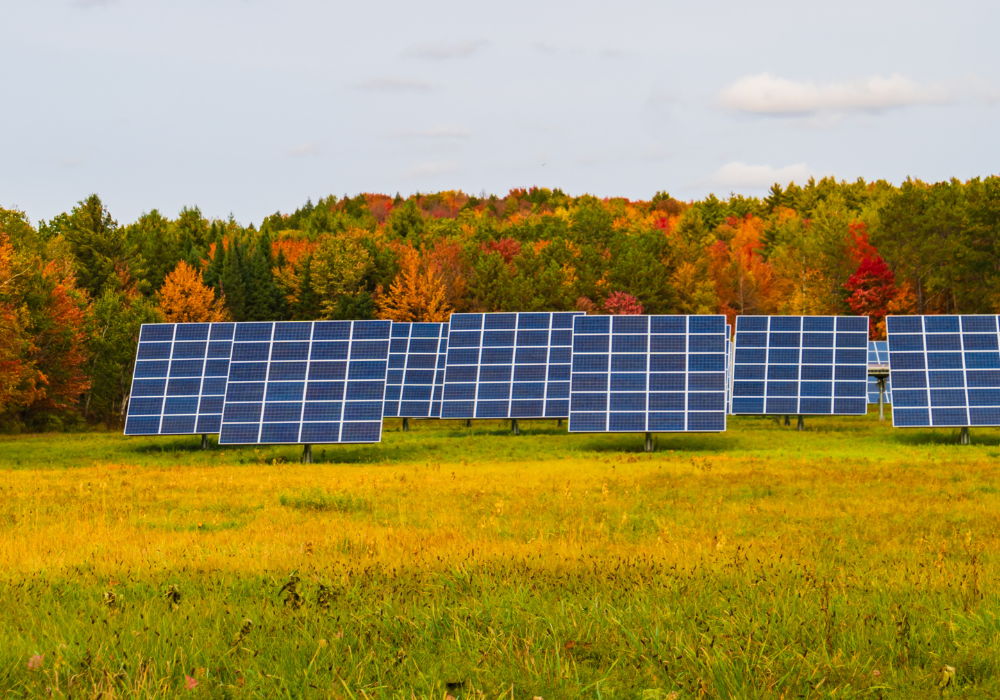
SolarShare itself serves as a shining example of what is possible. Founded in 2010, the co-op has grown to include more than 2,000 investor-members who have collectively earned upward of $17 million in interest on a total capital deployment of roughly $80 million. Operating 51 solar installations across Ontario—ranging from rooftop arrays on Greater Toronto Area factories and community centres to massive "Sundance" installations on non-arable agricultural fields in Timiskaming, north of Sudbury—the co-op generates enough clean electricity to power approximately 2,000 homes annually while offsetting roughly 560 tonnes of carbon dioxide equivalent each year.
Future Outlook: Decentralization and the Path Ahead
As Canada looks toward its 2050 net-zero targets, the trajectory of the national grid is undergoing a fundamental philosophical shift. Historically, Canadian energy systems prioritized centralized generation—massive hydroelectric dams, nuclear power stations, and large fossil-fuel plants—paired with top-down distribution networks.
Today, however, policymakers and industry leaders increasingly recognize that a truly resilient grid must embrace decentralization. While megaprojects like trans-provincial transmission lines are vital for moving bulk power, they must be continuously fed by a decentralized web of local power-generating nodes and community-scale storage solutions.
Overcoming the lingering hurdles—such as the regulatory fragmentation between provinces, the legal and financial compliance burdens facing micro-cooperatives, and local skepticism born of past top-down policy missteps—will require sustained political will and finely tuned public policy alignment.
If governments can successfully lower regulatory barriers, streamline interprovincial cooperation, and empower citizens through inclusive financial mechanisms like community bonds, Canada will not only achieve its ambitious electrification goals. It will construct a cleaner, more affordable, and fundamentally democratic energy future for generations to come.



