From the bustling political epicenters of Southeast Asia to the island nations of the Pacific, and across the historic plazas of Europe, grassroots mobilization and environmental advocacy reached a critical crescendo this week. Greenpeace and its allied international coalitions orchestrated a series of high-profile interventions, bearing witness to interconnected ecological, economic, and social crises.
This week’s actions encapsulate the multifaceted nature of modern environmentalism. Activists are no longer merely campaigning against single-issue polluters; they are confronting systemic failures that link climate breakdown to militarization, economic inequality, and public health disasters. Whether through the traditional outrigger canoes of Pacific Islanders demanding climate survival, the striking imagery of Muay Thai practitioners symbolizing the fight against plastic pollution, or tent encampments demanding fair housing in Madrid, the message is unequivocal: systemic change is no longer optional—it is an immediate prerequisite for human survival.
This report provides a comprehensive, chronologically detailed investigation into Greenpeace’s global operations over the past week. It examines the socio-political contexts of these actions, evaluates the hard metrics and human toll of the environmental catastrophes driving them, highlights key perspectives from civil society leaders, and maps out the future outlook for the global environmental movement as critical international summits approach.
Detailed Chronology of Global Actions
1. Bangkok, Thailand: Striking at the Source of the Global Plastics Crisis
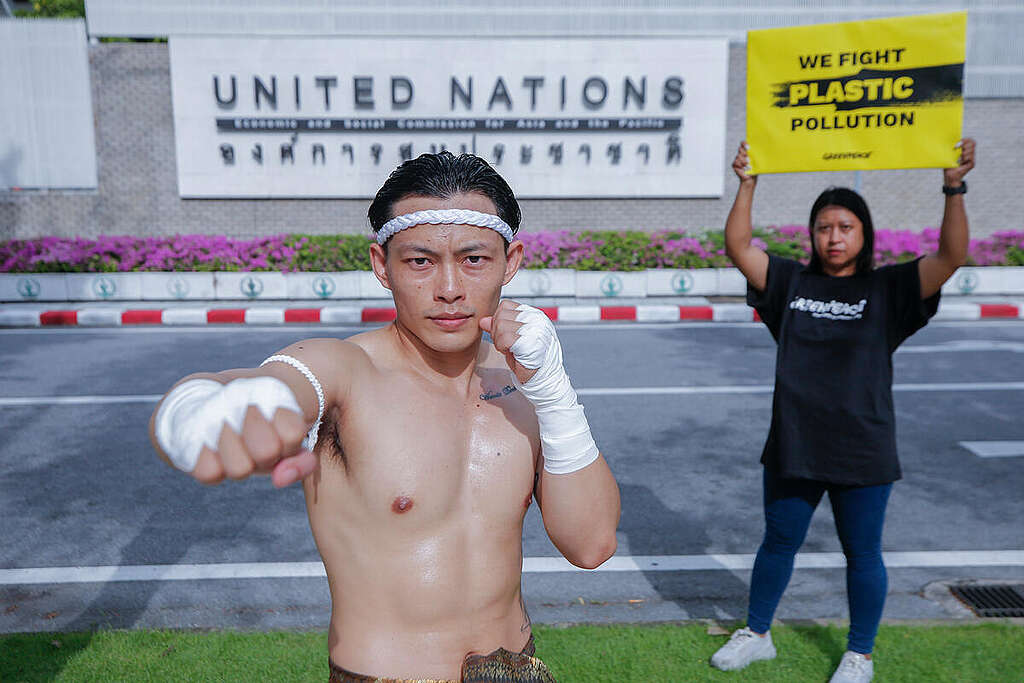
Date/Location: United Nations Regional Headquarters, Bangkok, Thailand Action: Symbolic Muay Thai protest outside the Heads of Delegation (HODs) meeting.
As delegates from Member States convened at the United Nations offices in Bangkok to negotiate the terms of an international agreement, Greenpeace Thailand activists delivered a visceral and culturally resonant message. Accompanied by a professional Muay Thai fighter, the demonstrators staged a high-impact symbolic action right at the doorstep of global diplomacy.
The choice of discipline was deeply deliberate. Muay Thai—Thailand’s revered combat sport—relies on striking opponents at their source rather than merely blocking incoming blows. Activists transposed this philosophy onto the planetary crisis of plastic pollution, arguing that global negotiations have historically focused too heavily on downstream waste management, recycling theater, and consumer-end mitigation.
The demonstration directly targeted the root of the problem: unchecked petrochemical and plastic production. Greenpeace Thailand called upon international governments to place mandatory, legally binding cuts in virgin plastic production at the heart of a robust Global Plastics Treaty. Without addressing production caps, environmental advocates warn that recycling initiatives will remain entirely futile against the exponential rise of synthetic waste choking global ecosystems.
2. Berlin, Germany: The Frontlines of Peace, Climate, and Militarization
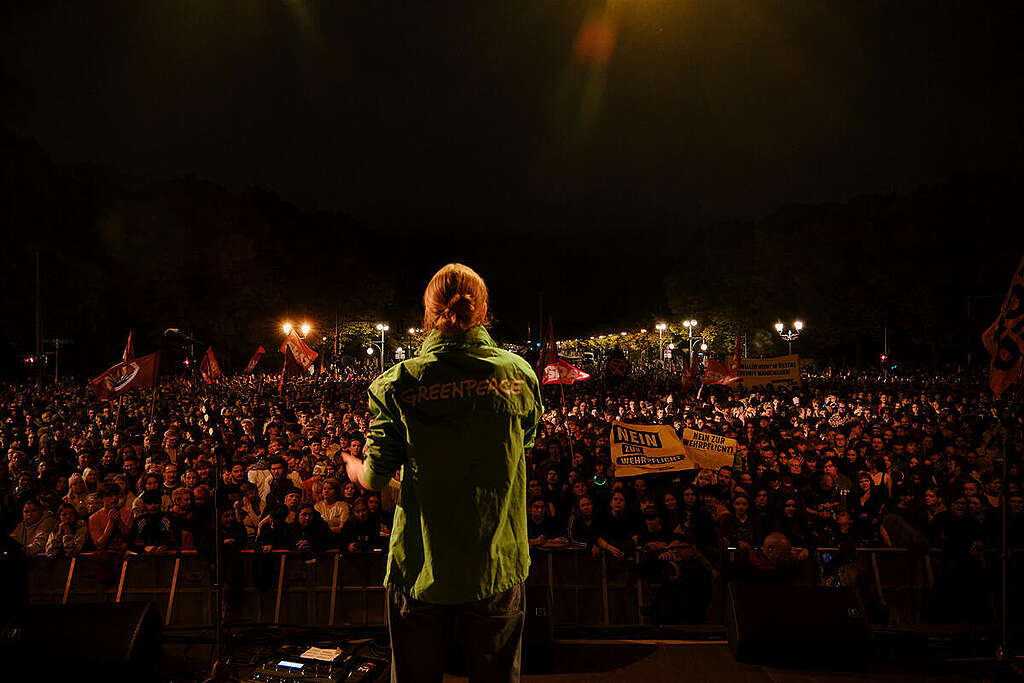
Date/Location: Brandenburg Gate, Berlin, Germany Action: "Unzwingbar" concert and protest against compulsory military service and unchecked rearmament.
Shifting focus to Europe’s political core, the iconic Brandenburg Gate in Berlin served as the backdrop for a massive youth-led rally and musical convergence under the banner "Unzwingbar – kein Bock auf Krieg und Wehrpflicht" ("Indomitable – No Interest in War and Conscription"). Featuring prominent musical acts such as K.I.Z., Disarstar, and Apsilon, the event brought together a broad coalition of youth, peace, and civil society organizations, with Greenpeace Germany playing a central organizing role.
The demonstration served as a fierce public pushback against the potential reintroduction of compulsory military service and escalating militarization across Germany and the broader European Union. Speakers, including representatives from Greenpeace Youth, argued that an over-reliance on swelling defense budgets diverts critically needed public funds away from the socio-ecological transformation required to combat the climate crisis.
Activists maintained that true human security cannot be achieved through traditional martial rearmament while ecological life-support systems collapse. The Berlin mobilization successfully highlighted the intersectional anxieties of the younger generation, who find themselves facing both the threat of renewed conscription and the compounding horrors of climate breakdown.
3. Nadi, Fiji: Holding the Line for Human Survival in the Pacific
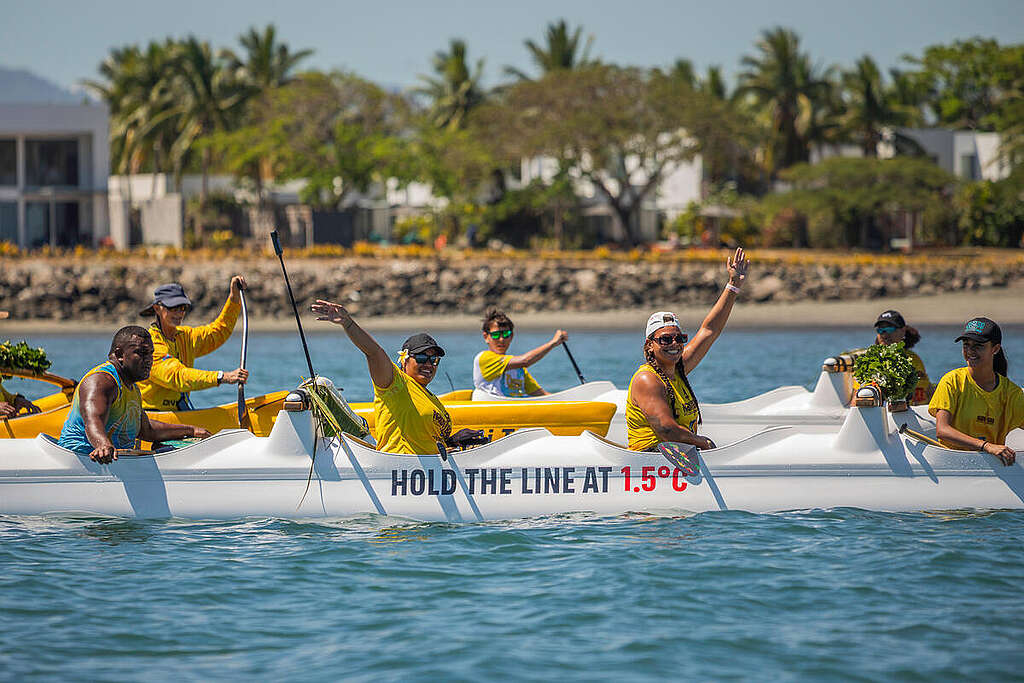
Date/Location: Pre-COP Climate Summit, Nadi, Fiji Action: Pacific Pre-COP flotilla featuring the SV Oceania and traditional outrigger canoes.
In the South Pacific, where the existential threat of sea-level rise is an immediate lived reality rather than a distant abstraction, approximately 80 community members, Torres Strait Islanders, Indigenous Elders, and youth activists launched a vibrant and defiant maritime flotilla. Sailing past the official venues of the Pre-COP climate summit in Nadi, Fiji, the fleet utilized traditional outrigger canoes alongside the SV Oceania to deliver a stark warning to global policymakers.
Adorned with banners reading "Hold the Line at 1.5°C" and "Keep 1.5°C Alive," the flotilla acted as a floating reminder that the warming threshold established under the Paris Agreement is a non-negotiable survival line for low-lying island nations and coastal communities worldwide.
The timing of the action was strategically significant. Australia is preparing to assume the reins of COP31 negotiations in Türkiye, placing immense pressure on Canberra to abandon its expansive fossil fuel projects. The Pacific coalition used the Fiji gathering to demand that regional powers immediately halt fossil fuel expansion, warning that any policy compromise on the 1.5°C target amounts to a death sentence for vulnerable island states.
4. Palembang, South Sumatra, Indonesia: Choking Under the Haze
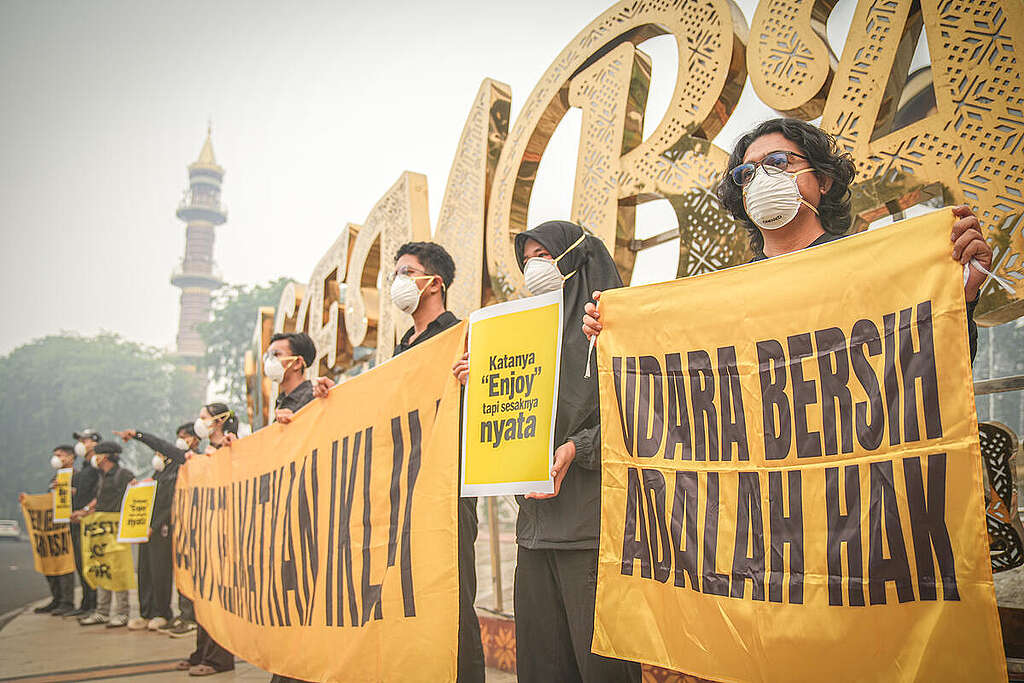
Date/Location: Palembang, South Sumatra, Indonesia Action: Greenpeace Indonesia Forest Fires Prevent Team (Tim Cegah Api) peaceful protest.
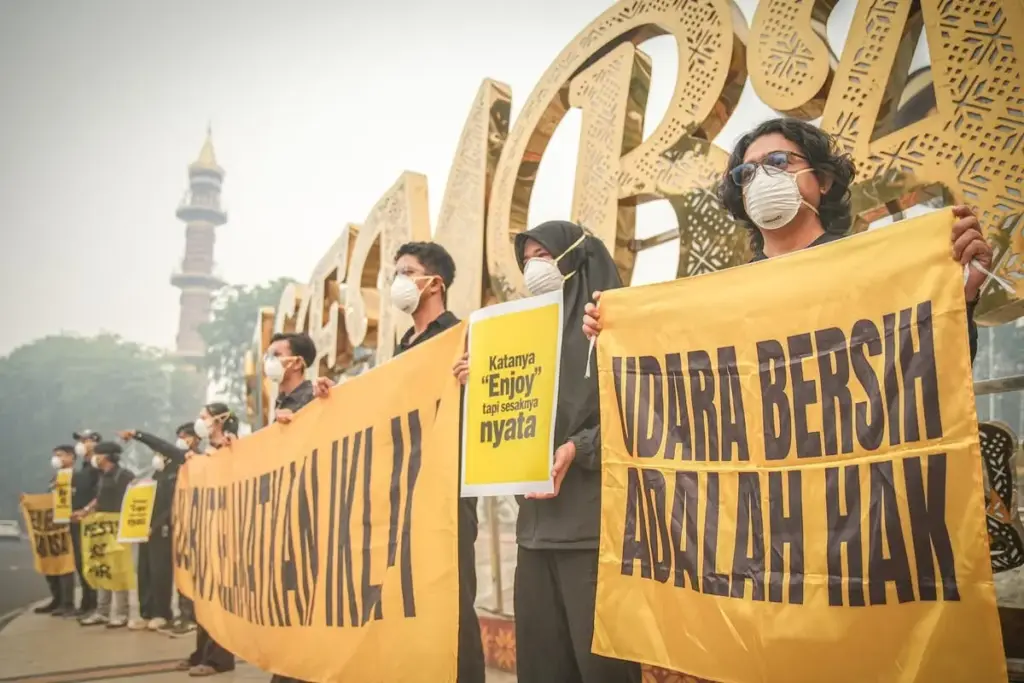
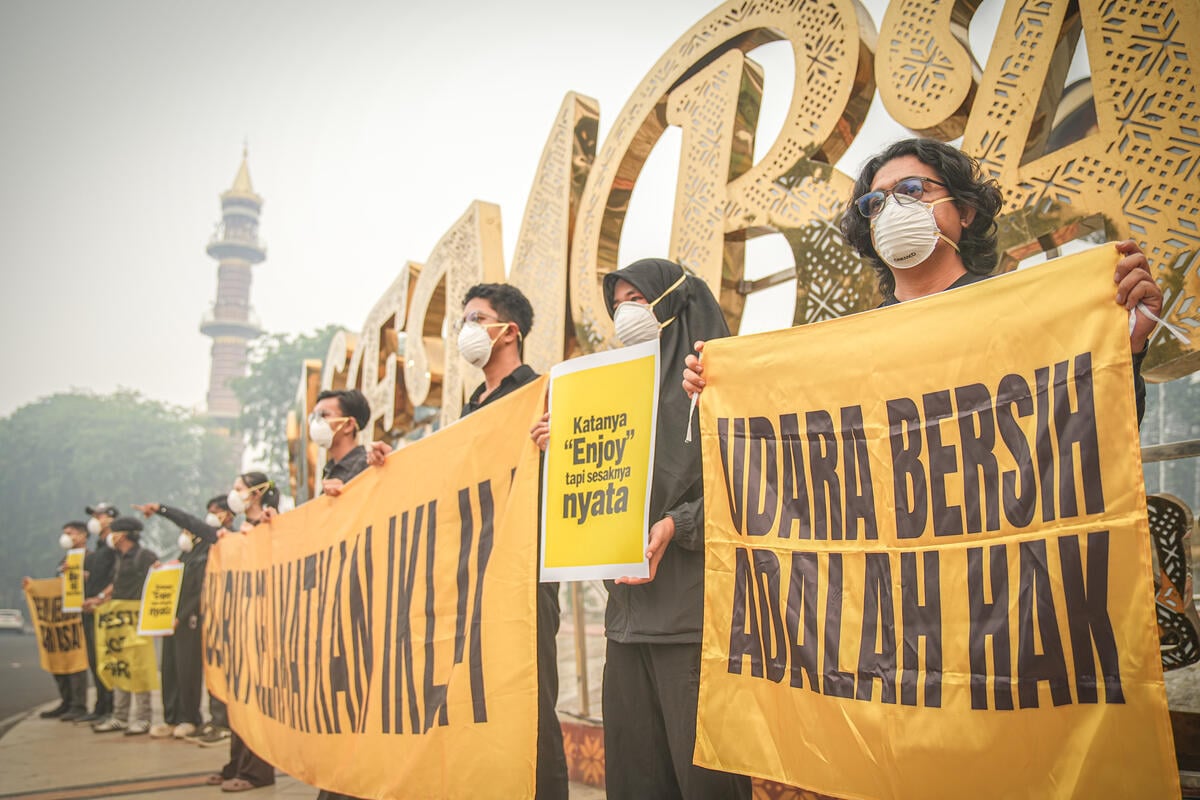
Moving to Southeast Asia’s vast tropical landscapes, members of the Greenpeace Indonesia Forest Fires Prevent Team (Tim Cegah Api) staged a peaceful protest in Palembang, South Sumatra, demanding immediate action against the toxic haze that has blanketed the region.
For nearly two months, toxic smoke from forest and peatland fires has choked Palembang, driving air pollution to hazardous, health-threatening levels. The crisis has not remained localized; cross-border winds have carried the dense smog across national boundaries, severely degrading air quality in neighboring Singapore and Malaysia.
The Greenpeace forest defense team utilized the demonstration to highlight the systemic failures of corporate land clearance and inadequate governmental wildfire prevention. The action underscored the urgent need for strict corporate accountability, robust peatland restoration programs, and a complete overhaul of enforcement mechanisms governing agricultural burning practices in the region.
5. Zurich, Switzerland: Rejecting a Boiling Planet
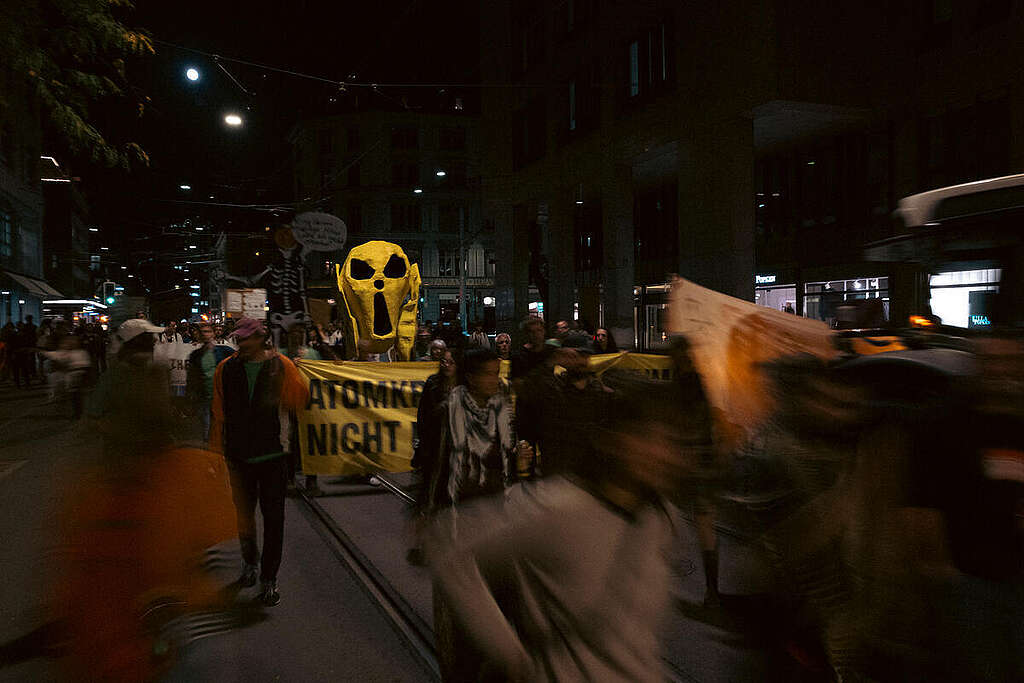
Date/Location: Zurich, Switzerland Action: Mass climate march under the banner "No 50°C Summers!"
In the heart of Europe, an estimated 7,000 demonstrators took to the streets of Zurich, led by Greenpeace Switzerland and a formidable coalition of over 70 civil society organizations spanning the climate, health, environmental, and agricultural sectors.
Marching under the provocative and urgent banner "No 50°C Summers!", the coalition demanded immediate, legally binding municipal and national measures to combat extreme urban heat and accelerate climate adaptation strategies. Switzerland, warming at roughly twice the global average rate, has seen its alpine glaciers retreat precipitously while urban centers experience lethal heatwaves.
Speakers at the Zurich march emphasized that extreme heat is not merely an environmental inconvenience but a profound public health crisis that disproportionately affects the elderly, outdoor workers, and marginalized socio-economic groups. The protest served as a powerful demand for political courage in reshaping urban infrastructure, expanding green spaces, and phasing out fossil fuels to prevent catastrophic global thermal escalation.
6. Madrid, Spain: Reclaiming the Right to Decent Housing
Date/Location: Puerta del Sol, Madrid, Spain Action: Sit-in for housing justice and socio-ecological equity.
Urban justice and climate justice collided in the Spanish capital this week as Greenpeace Spain joined forces with housing rights advocates for a high-visibility sit-in at the historic Puerta del Sol in Madrid.
The demonstration directly addressed the spiraling housing affordability crisis gripping Spain and urban centers across Europe. Activists emphasized that the climate crisis cannot be decoupled from socio-economic inequality. Soaring housing costs, gentrification, and speculative real estate practices force lower-income populations into energy-inefficient housing, leaving them deeply vulnerable to both economic precarity and extreme weather events, such as urban heat islands and unmitigated flooding.
By participating in the housing sit-in, Greenpeace underscored its evolving operational mandate: that environmental organizations must stand in fierce solidarity with movements demanding basic human rights, including access to safe, dignified, and sustainable shelter.
7. Chachoengsao Province, Thailand: Dual Crises of Flooding and Fossil Gas Expansion
Date/Location: Chachoengsao Province, Thailand Action: Flood relief and community support operations combined with anti-fossil fuel advocacy.
Closing the week’s chronological overview, Greenpeace Thailand staff and volunteers were deployed on the ground in Chachoengsao Province to provide direct humanitarian and logistical support to communities reeling from catastrophic flooding. Beginning on September 25, the severe inundation crippled 11 districts, directly impacting more than 23,790 households.
Amidst the immediate trauma of the disaster, local communities found themselves fighting an additional front: corporate encroachment. Even as families waded through floodwaters, plans advanced for the construction of a massive new 540-megawatt fossil gas power plant known as the Burapha Power project within the province.
Local residents and Greenpeace volunteers voiced fierce opposition to the project, highlighting its impending threat to local water security, its contribution to regional air pollution, and the sheer hypocrisy of developing new fossil fuel infrastructure while climate-induced floods ravage the local populace. Greenpeace Thailand reiterated its call for the Thai government to halt all fossil fuel expansions immediately and redirect national resources toward a just, renewable energy transition.
Supporting Context & Metrics
The disparate actions captured across seven countries this week are manifestations of deeply interconnected global crises. Quantitative data from international scientific bodies reveals the staggering scale of the emergencies driving these grassroots mobilizations:
The Plastic Burden: Global plastic production continues to surge past 400 million metric tons annually. Without a legally binding Global Plastics Treaty featuring production caps, output is projected to double over the next two decades, locking in petrochemical dependencies that dwarf global municipal recycling capacities.
Pacific Vulnerability: Sea-level rise in the western Pacific Ocean has outpaced the global average by two to three times over the past thirty years. For nations like Fiji and Tuvalu, every fractional increase above the 1.5°C pre-industrial baseline directly accelerates land loss, saltwater intrusion into agricultural freshwater lenses, and the forced displacement of entire communities.
The Health Toll of Haze: In Southeast Asia, recurring peatland and forest fires—often illegally ignited for palm oil and pulpwood plantation clearance—release gigatons of carbon dioxide while generating hazardous particulate matter ($PM_2.5$). Prolonged exposure to these toxins, as witnessed in Palembang, drastically increases regional rates of cardiovascular disease, acute respiratory infections, and infant mortality.
European Warming Trends: According to European climate monitoring agencies, the continent is warming at twice the global mean rate. Urban areas like Zurich face severe heat-stress vulnerabilities, with urban heat island effects regularly pushing local temperatures far above rural baselines, threatening public health systems and labor productivity.
Socio-Economic Precarity: In Spain, housing cost burdens have reached historic highs, with a significant percentage of urban households spending over 40% of their disposable income solely on rent and basic utilities. This economic squeeze directly curtails the financial capacity of working-class citizens to invest in household energy retrofitting or adapt to escalating climate shocks.
Thai Flood Impacts: The floods in Chachoengsao Province—affecting nearly 24,000 households—illustrate the intensifying frequency of extreme precipitation events linked to disrupted monsoon patterns and atmospheric destabilization in Southeast Asia.
Official Statements
The urgency of the week’s events drew sharp commentary from environmental leaders, youth activists, and community representatives across the globe:
"We cannot fight plastic pollution with one hand while shaking hands with petrochemical giants with the other. Just as a Muay Thai practitioner strikes at the source to neutralize a threat, governments meeting in Bangkok must target production caps, not downstream waste management, if we are to survive the plastic deluge."
— Greenpeace Thailand Campaign Spokesperson
"Young people across Europe are told to prepare for war while our planetary life support systems are actively burning. We refuse to accept a future built on endless defense spending and militarization. True security means a livable climate, social justice, and peace—not more weapons."
— Greenpeace Youth Representative, Berlin Mobilization
"The 1.5°C limit is not a flexible political negotiation point; it is our red line between life and death. As Australia prepares to lead the COP31 negotiations, Pacific communities send a clear message: stop expanding fossil fuels, or face the moral and historical condemnation of an entire sinking region."
— Pacific Island Community Leader, Nadi Pre-COP Flotilla
"While our homes are submerged under floodwaters driven by the climate crisis, corporations have the audacity to push for new fossil gas plants like Burapha Power. We demand that major polluters pay for the damage they have caused, and we call on the Thai government to accelerate our transition to renewables immediately."
— Affected Resident and Community Advocate, Chachoengsao Province
Future Outlook
As the dust settles on a week defined by unprecedented global mobilization, the environmental movement faces a decisive crucible. The upcoming international diplomatic calendar—anchored by upcoming COP negotiations, the finalization of the Global Plastics Treaty, and crucial national policy debates across Europe and Asia—will determine whether global leaders continue down a path of incremental failure or pivot toward systemic transformation.
Greenpeace remains steadfast in its mission. For more than half a century, the organization has pioneered photo-activism and direct-action reporting, serving as an unyielding witness to environmental injustice. The images captured this week in Bangkok, Berlin, Nadi, Palembang, Zurich, Madrid, and Chachoengsao are not merely records of protest; they are historical markers of a global populace refusing to accept ecological collapse as inevitable.
In the months ahead, the convergence of housing justice movements, anti-militarization coalitions, Indigenous land defenders, and climate strikers will continue to challenge the entrenched power structures driving ecological breakdown. Whether holding the line at 1.5°C in the Pacific, demanding breathable air in Sumatra, or fighting for housing rights in Madrid, the global resistance is unified by a singular, unshakeable truth: another world is not only possible—it is an absolute necessity.
To explore more high-resolution photography, documentary footage, and investigative media documenting Greenpeace’s global actions, please visit the official Greenpeace Media Library.