From the bustling corridors of international diplomacy in Southeast Asia to the frontline climate vulnerabilities of the Pacific Islands, and from the historic plazas of Madrid to the smoke-choked skies of Indonesia, the global fight for environmental and social justice intensified over the past week. Greenpeace activists, alongside allied youth groups, indigenous leaders, and civil society coalitions, staged high-impact demonstrations, cultural protests, and humanitarian relief efforts across multiple continents.
This wave of mobilization highlights an escalating friction point between corporate and state actors pursuing business-as-usual policies—such as militarization, fossil fuel expansion, and unchecked plastic manufacturing—and a unified global populace demanding urgent structural reform. Whether confronting the existential threat of a warming planet or fighting for foundational human rights like decent housing, these localized actions share a singular, interconnected message: the time for incrementalism has long passed.
This report provides a comprehensive breakdown of Greenpeace’s global operations this week, examining the tactical deployments, localized impacts, policy demands, and broader socio-economic contexts driving these historic mobilizations.
Detailed Chronology of Global Actions
1. Bangkok, Thailand: Muay Thai and the Battle at the Source of Plastic Pollution
Date/Context: Coinciding with the Heads of Delegation (HODs) meetings for the Global Plastics Treaty. Location: Outside the United Nations Regional Office, Bangkok.
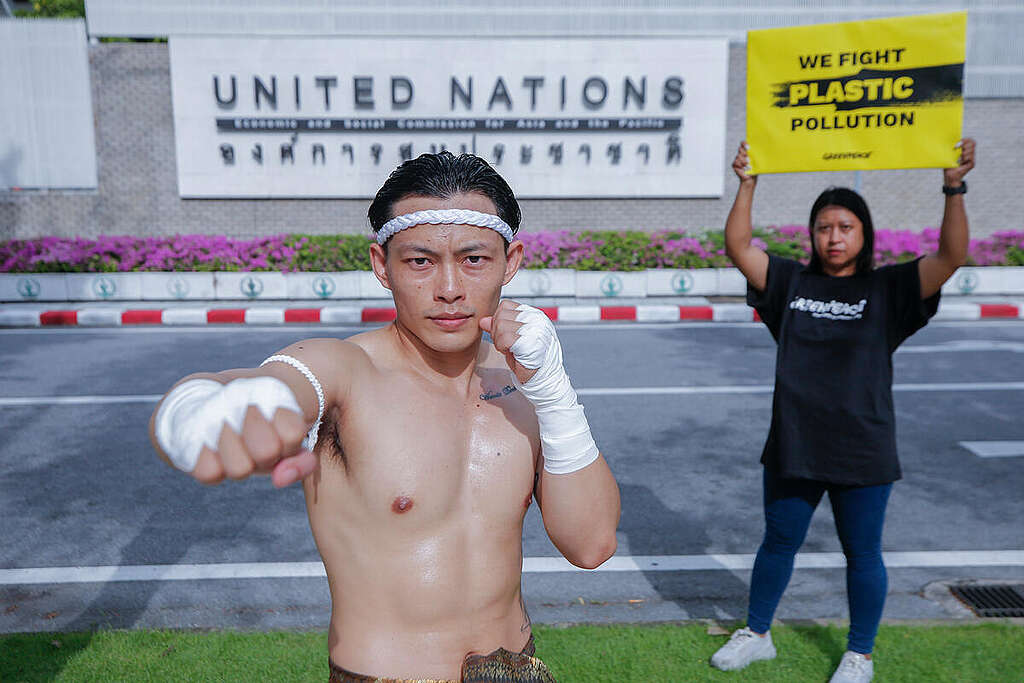
As delegates gathered behind closed doors to negotiate the framework of a legally binding Global Plastics Treaty, Greenpeace Thailand brought the fight directly to the doorstep of international diplomacy. In a striking visual demonstration, activists partnered with a professional Muay Thai fighter to stage a symbolic martial arts action outside the UN office.
The messaging was explicit: plastic pollution cannot be managed solely through waste collection or recycling downstream; it must be “fought” and dismantled at its very source. Greenpeace is calling upon world governments to anchor any effective Global Plastics Treaty on mandatory, ambitious cuts to virgin plastic production. Without capping production at the manufacturing level, developing nations and global ecosystems will continue to suffocate under an unmanageable tide of petrochemical waste.
2. Berlin, Germany: "Unzwingbar" — Rallies Against Re-militarization
Date/Context: Youth-led peace coalition event at the Brandenburg Gate. Location: Berlin, Germany.
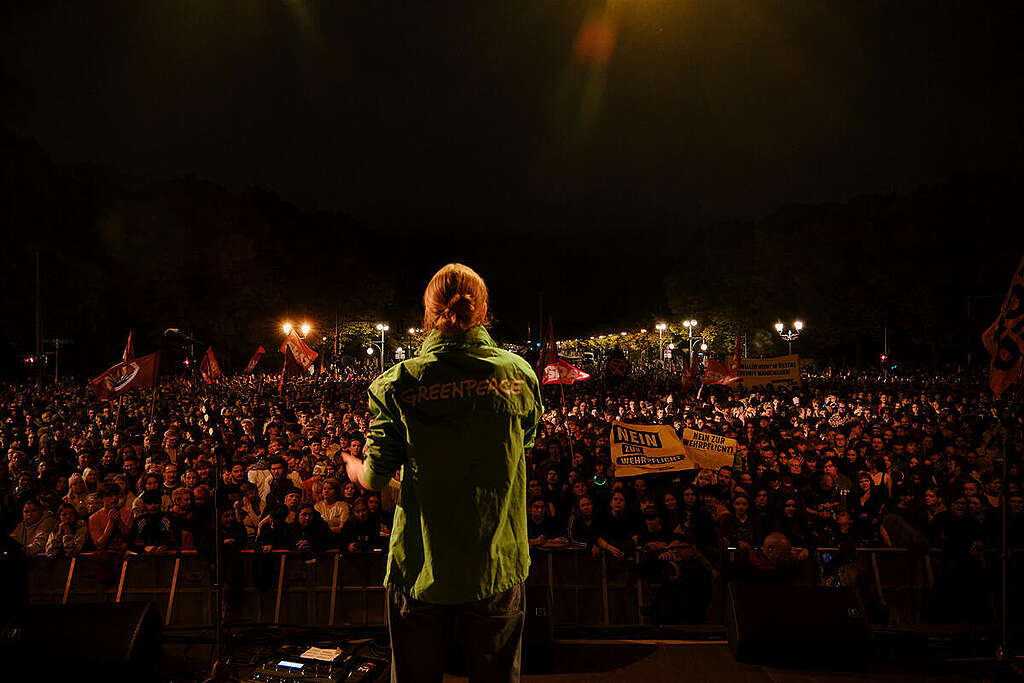
Shifting focus from ecological to geopolitical security, Greenpeace Germany joined forces with a broad coalition of youth, peace, and civil society organizations under the banner “Unzwingbar – kein Bock auf Krieg und Wehrpflicht” ("Indomitable – No Interest in War and Conscription"). Against the backdrop of the iconic Brandenburg Gate, thousands gathered for a massive rally and concert featuring prominent musical acts such as K.I.Z., Disarstar, and Apsilon.
The demonstrations targeted potential policies moving toward the reintroduction of compulsory military service and accelerating militarization across the nation. Speakers from Greenpeace Youth and allied peace organizations emphasized the disproportionate impacts of these policies on younger generations. The coalition put forward a progressive counter-narrative: true security policy cannot rely indefinitely on soaring defense budgets and arms proliferation at the expense of social welfare, climate mitigation, and international cooperation.
3. Nadi, Fiji: The Pacific Pre-COP Flotilla and the 1.5°C Survival Line
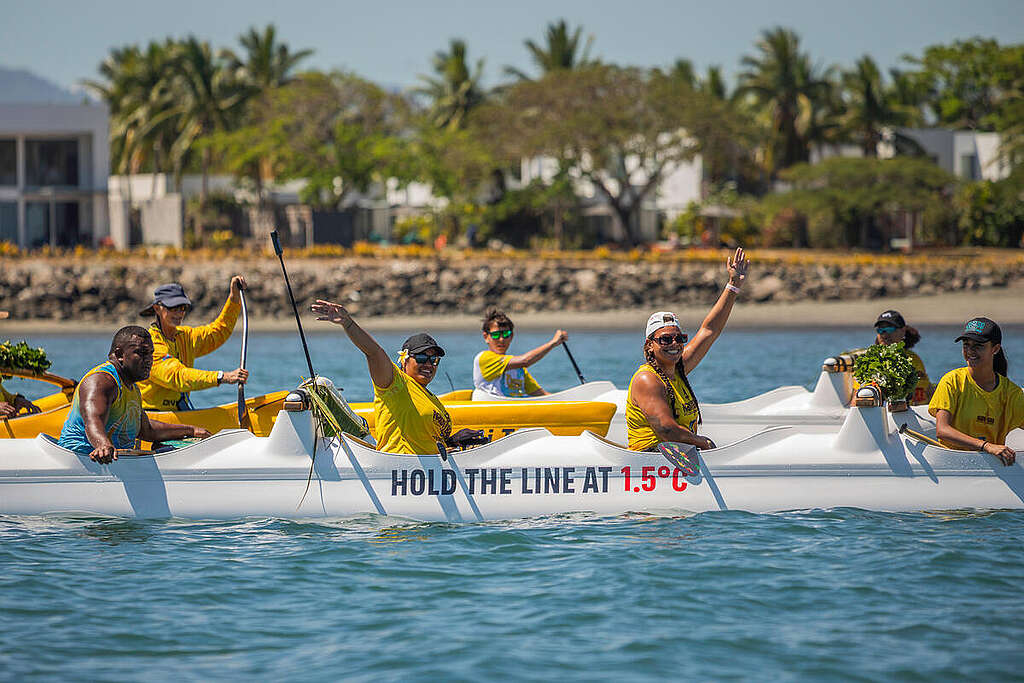
In the heart of the Blue Pacific, approximately 80 participants—including Indigenous Torres Strait and Pacific community members, traditional Elders, and youth climate activists—took to the water in a vibrant, determined flotilla. Aboard the vessel SV Oceania and traditional outrigger canoes bearing banners that read "Hold the Line at 1.5°C" and "Keep 1.5°C Alive," the delegation sent an unyielding message to international climate negotiators gathered for the Pre-COP summit.
With Australia slated to assume the presidency of the COP31 climate negotiations in Türkiye next November, Pacific leaders are stepping up pressure to halt the relentless expansion of fossil fuels. For island nations, the 1.5°C threshold established under the Paris Agreement is not a flexible political target; it is a strict, non-negotiable survival line for humanity.
4. Palembang, Indonesia: Tim Cegah Api and the Suffocating Haze Crisis
Date/Context: Continuous emergency response, October 7. Location: Palembang, South Sumatra, Indonesia.
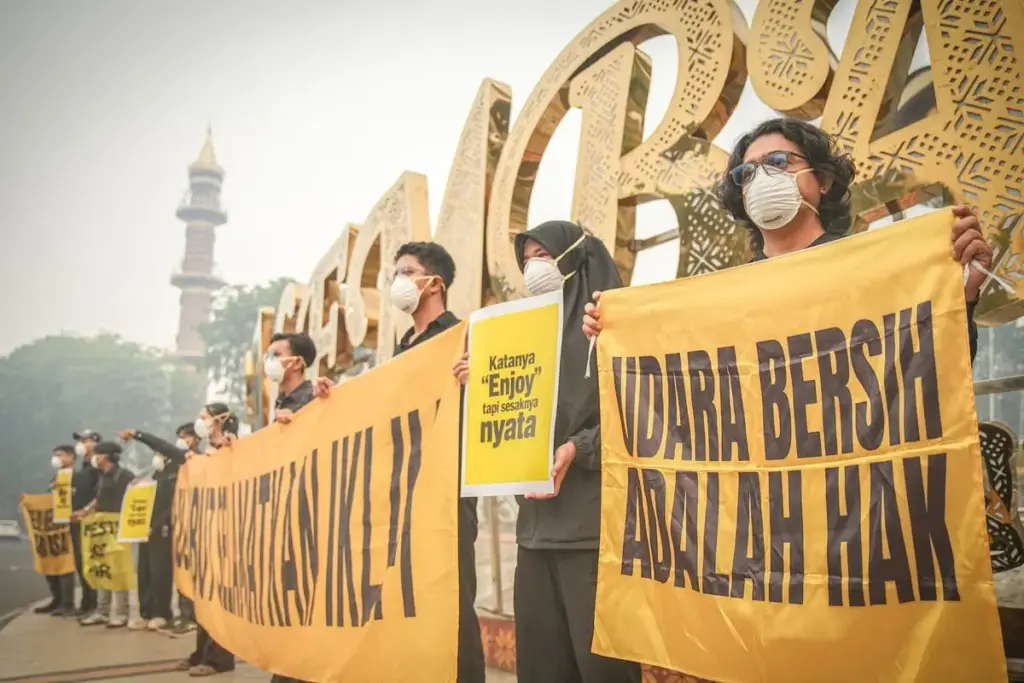
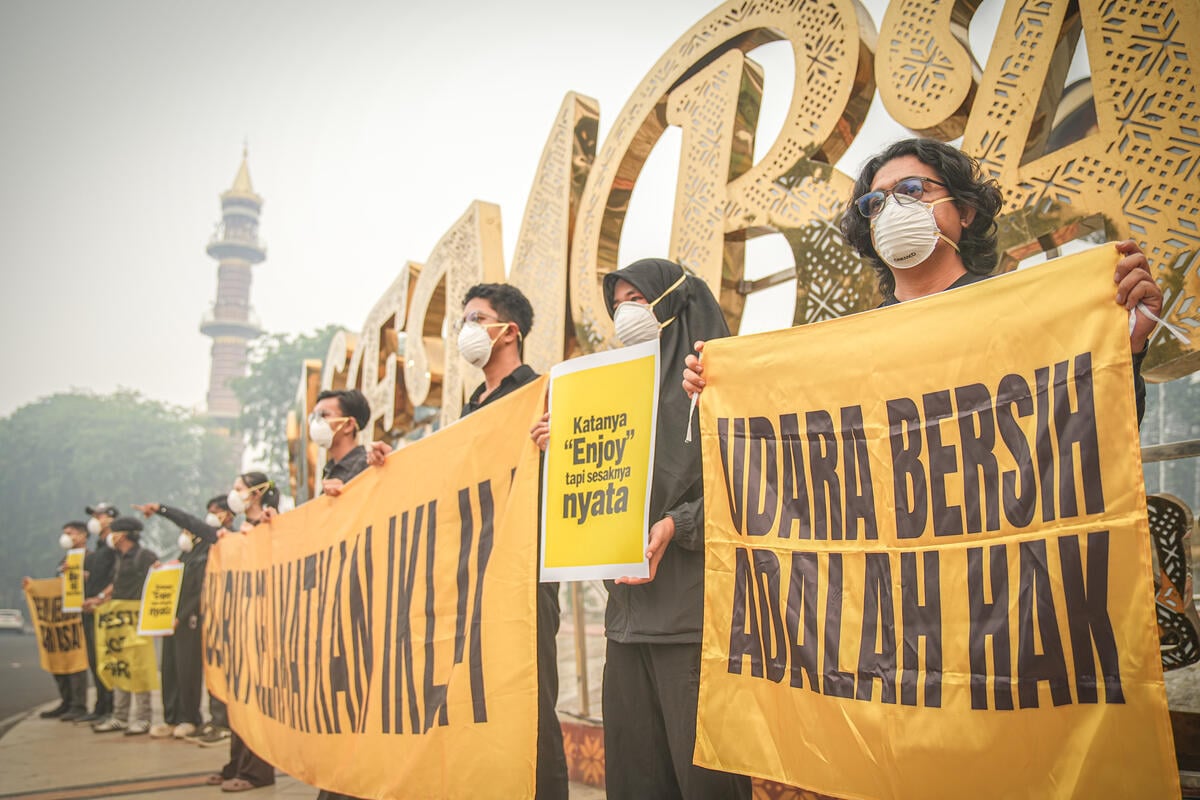
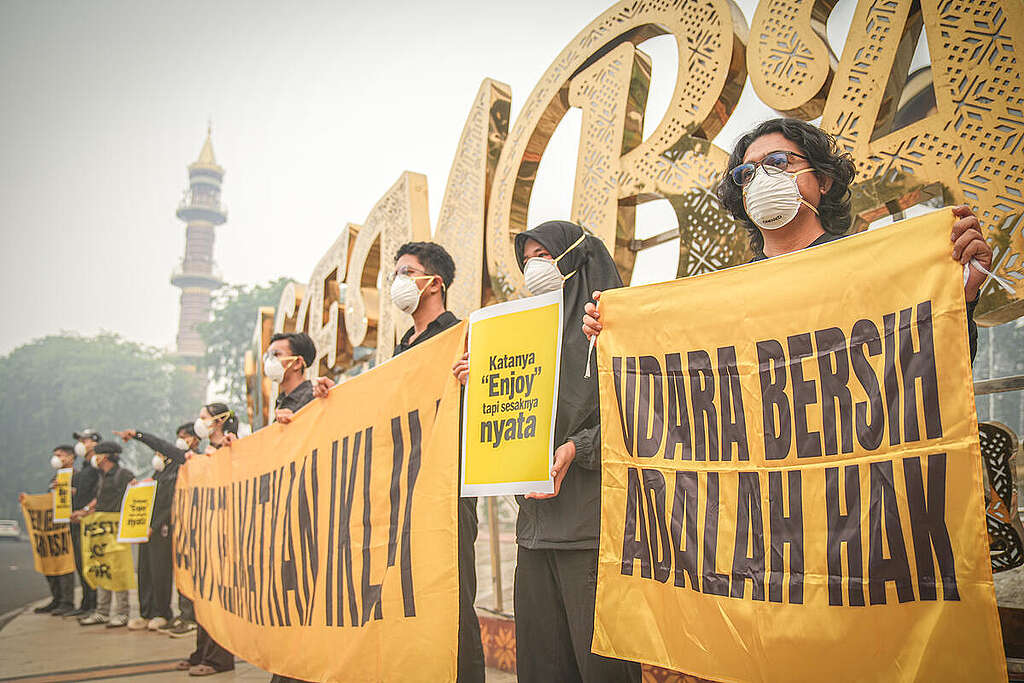
In South Sumatra, members of the Greenpeace Indonesia Forest Fires Prevention Team (Tim Cegah Api) unfurled banners and posters during a public protest against the persistent wildfire haze that has choked Palembang for nearly two months. Air pollution levels in the region have plummeted into hazardous territory, severely threatening public health and daily life.
The catastrophic agricultural and peatland fires driving the haze have not only crippled local visibility and respiratory health in Indonesia but have also crossed international borders, significantly degrading air quality in neighboring Singapore and Malaysia. The action underscores the urgent need for stricter corporate accountability and robust enforcement against illegal land-clearing and monoculture palm oil expansion.
5. Zurich, Switzerland: The March Against 50°C Summers
Date/Context: Mass civil mobilization by a 70-organization coalition. Location: Zurich, Switzerland.
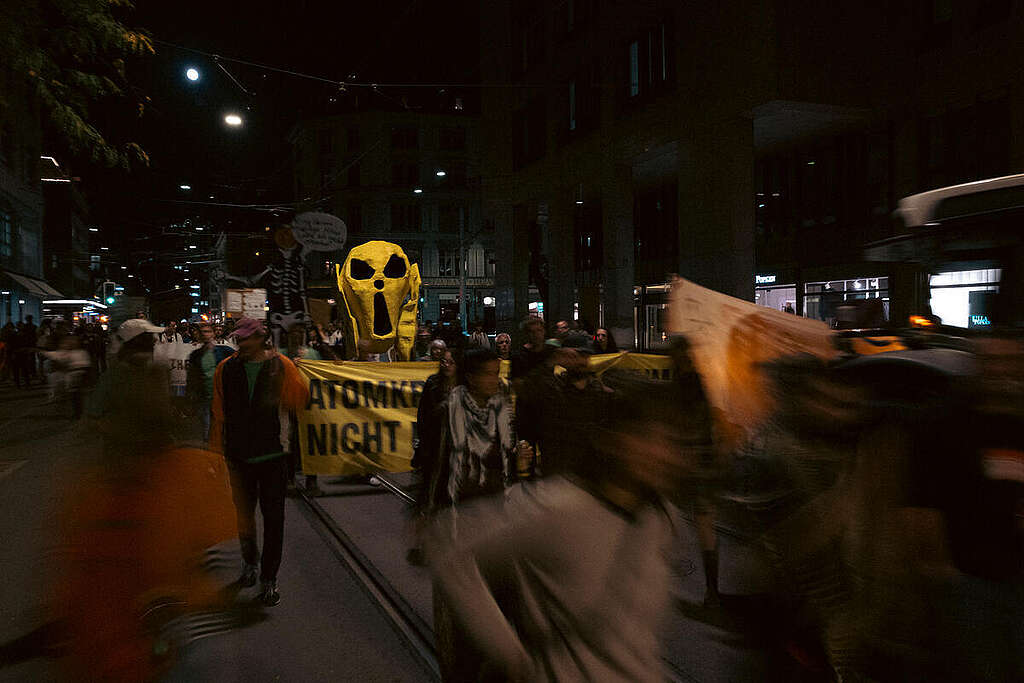
Echoing the alarm bells sounding across the European continent regarding accelerating thermal extremes, approximately 7,000 people marched through the streets of Zurich. Operating under the stark rallying cry "No 50°C summers!", the demonstration was organized by an expansive civil society coalition comprising over 70 organizations spanning the environmental, climate, public health, agricultural, and humanitarian sectors.
The protesters demanded that Swiss authorities implement immediate, legally binding adaptation and mitigation measures to protect vulnerable populations from deadly urban heatwaves, safeguard agricultural stability, and aggressively curb greenhouse gas emissions.
6. Madrid, Spain: Reclaiming Puerta del Sol for Decent Housing
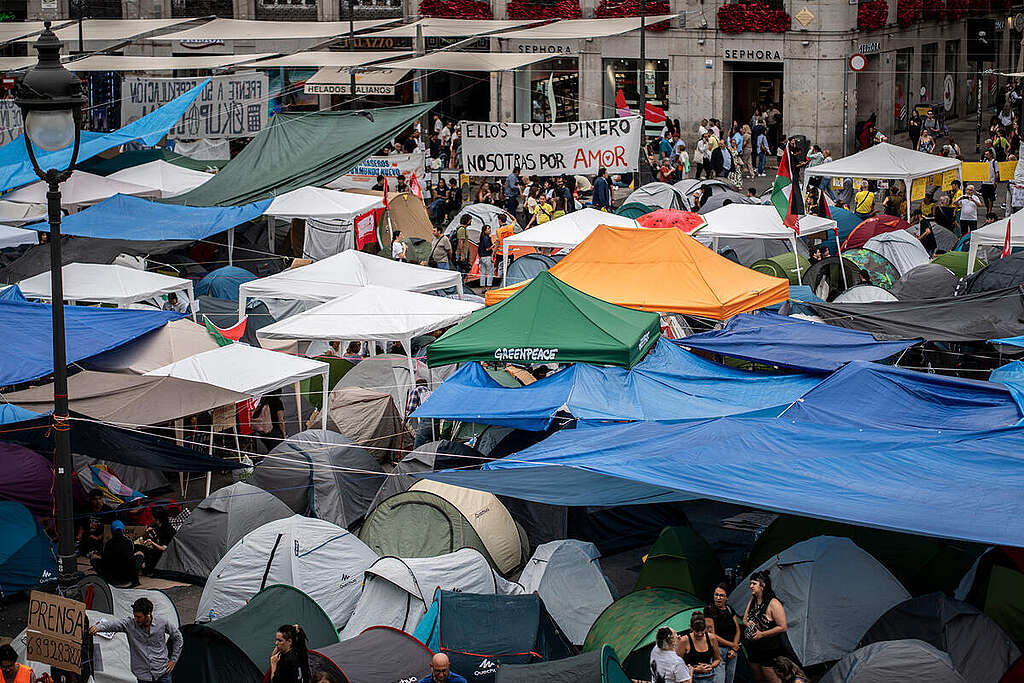
Environmental justice is inextricably linked to social equity. In Spain, Greenpeace activists and urban housing advocates staged a high-visibility sit-in at Madrid’s historic Puerta del Sol. The action drew critical attention to the spiraling housing affordability crisis, surging rental costs, and the rampant commodification of urban spaces that pushes working-class families and youth to the margins. By participating in the demonstration, Greenpeace underscored that a livable future requires not only a stable climate, but secure, dignified, and accessible living conditions for all.
7. Chachoengsao Province, Thailand: Dual Crises of Flooding and Fossil Gas Expansion
Date/Context: Ongoing community support operations starting September 25. Location: Chachoengsao Province, Thailand.
While international diplomacy unfolded in Bangkok, the domestic reality of the climate crisis was starkly evident in Chachoengsao Province. Severe, prolonged flooding has impacted 11 districts and disrupted more than 23,790 households. Greenpeace Thailand staff and volunteers mobilized on the ground to deliver essential relief supplies and support to stranded communities.
Compounding this climate disaster is a proposed industrial betrayal: the planned construction of the 540 MW Burapha fossil gas power plant in the province. Local communities have mounted fierce opposition, warning of compounded risks to vital water resources, localized air quality, and the global carbon budget. Greenpeace Thailand has firmly demanded that the Thai government abandon fossil fuel expansion and pivot toward a just, renewable energy transition.
Supporting Context & Metrics
The convergence of these diverse actions illustrates a systemic global crisis. To contextualize the scale of the challenges addressed by Greenpeace this week, consider the following metrics and systemic pressures:
Plastic Production vs. Waste Management: Global plastic production continues to surge past 400 million tonnes annually. Scientific consensus, echoed by Greenpeace’s Bangkok action, confirms that recycling rates remain below 10%, making upstream production caps the only mathematically viable solution to ocean and land pollution.
The 1.5°C Carbon Budget: According to the Intergovernmental Panel on Climate Change (IPCC), global greenhouse gas emissions must peak before 2025 and decline by 43% by 2030 to maintain any realistic prospect of keeping global warming within the 1.5°C limit emphasized by the Pacific flotilla in Fiji.
Southeast Asian Haze Economics: Peatland and forest fires in Indonesia release billions of tonnes of carbon dioxide equivalent into the atmosphere during intense dry seasons, accounting for significant spikes in regional pediatric and elderly respiratory hospitalizations across Indonesia, Malaysia, and Singapore.
Urban Housing Pressures: In major European urban centers like Madrid, housing price appreciation has vastly outpaced median wage growth, forcing millions of households into severe housing cost overburden and catalyzing direct actions like the Puerta del Sol sit-in.
Official Statements and Policy Demands
Across every theatre of operation, Greenpeace representatives and allied leaders issued clear, unyielding policy demands directed at corporate executives and state legislators:
"Plastic pollution is a systemic violence against our oceans, our bodies, and our future. We cannot sweep this crisis under the rug or rely on corporate greenwashing. Governments meeting in Bangkok must look past industry lobbying and place mandatory cuts in plastic production at the absolute heart of the Global Plastics Treaty."
— Greenpeace Thailand Delegation
"For the Pacific, 1.5°C is not a negotiating chip; it is our heartbeat. As long as wealthy nations and fossil fuel exporters like Australia continue to subsidize and expand coal, oil, and gas, they are writing a death sentence for island nations. We will hold the line."
— Pacific Climate Activist Collective
"We are marching today in Zurich because our children will inherit a planet of unlivable extremes if we delay action by another election cycle. A warming world amplifies health crises, destroys harvests, and breaks communities. We demand immediate, binding adaptation and climate protection laws now."
— Swiss Climate Coalition Representative
Future Outlook
As the international community prepares for upcoming diplomatic milestones—including the finalization of the Global Plastics Treaty and the road toward COP31 negotiations—the momentum generated by this week’s actions establishes a clear trajectory for global civil society.
Greenpeace remains steadfast in its 50-year legacy of photo-activism and peaceful direct action, committed to bearing witness, documenting environmental injustice, and amplifying the voices of marginalized communities on the frontlines. The convergence of anti-militarism rallies in Berlin, climate flotillas in Fiji, wildfire protests in Indonesia, and housing sit-ins in Madrid proves that the struggles for ecological preservation, human rights, and social equity are indivisible.
To explore more high-resolution photo documentation, video archives, and real-time dispatches from ongoing actions worldwide, please visit the official Greenpeace Media Library.