

Executive Overview
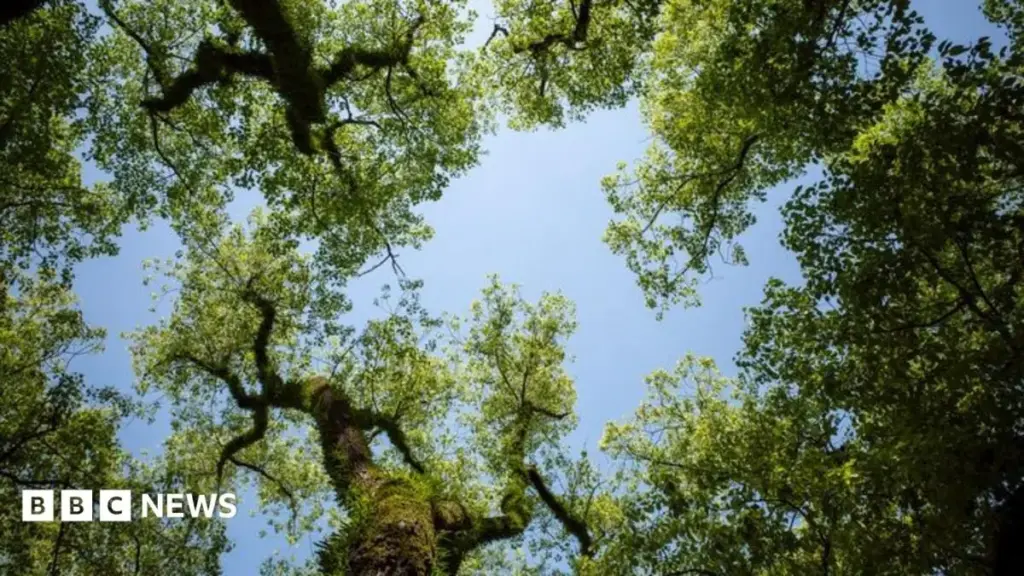
Surrey County Council stands at a critical juncture in its environmental trajectory. Marking the midpoint of its ambitious decade-long climate strategy, the local authority has released a comprehensive progress report detailing the successes, setbacks, and realities of its journey toward carbon neutrality by 2030. At the heart of this strategy is a symbolic and ecological commitment: the planting of 1.2 million trees across the county by the end of the decade—matching the population head-for-head and ensuring a living legacy of climate resilience for every resident.
The newly published audit reveals a mixed yet broadly encouraging landscape. According to the data, Surrey County Council is "broadly on track" to hit its overarching 2030 net-zero targets. Most notably, the authority has successfully slashed its internal carbon emissions by approximately 60% over the past five years. This significant reduction reflects a concerted push toward municipal energy efficiency, fleet electrification, and infrastructural overhauls.
However, the path to decarbonization has not been without its hurdles. The report transparently addresses the headwinds that have buffeted the delivery programme, citing severe external market conditions, volatile supply chain constraints, and broader economic pressures that have strained budgets and delayed implementation timelines. Despite these obstacles, the council’s targeted interventions—particularly in supporting vulnerable and low-income households through fuel-poverty and energy-efficiency schemes—have yielded tangible social and environmental dividends.
This article provides an in-depth examination of Surrey’s climate strategy, dissecting the milestones achieved, the socioeconomic impacts of local green policies, the structural challenges ahead, and the strategic outlook as the county races toward its 2030 deadline.
Detailed Chronology: The Five-Year Evolution of Surrey’s Climate Strategy
To fully understand Surrey County Council’s current standing, it is necessary to retrace the chronological evolution of its climate policy framework over the past half-decade. The strategy has transformed from a high-level political aspiration into an operational, data-driven delivery programme.
2019–2020: Declaration and Baseline Establishment
Following declarations of a climate emergency by local authorities across the United Kingdom, Surrey County Council formally committed to achieving net-zero carbon emissions by 2030. This initial phase was characterized by baseline auditing. The council commissioned comprehensive carbon footprint analyses to identify its primary emission sources, which predominantly stemmed from operational buildings, street lighting, fleet transport, and outsourced procurement contracts. During this foundational period, the 1.2-million-tree initiative was conceived as a cornerstone flagship policy designed to capture carbon while simultaneously enhancing local biodiversity and public green spaces.
2020–2021: Pandemic Disruption and Strategic Alignment
As the global COVID-19 pandemic paralyzed traditional economic activity, Surrey’s climate team utilized the period to refine its delivery mechanisms. Rather than shelving environmental targets, the council integrated green recovery principles into its post-lockdown economic stimulus plans. This era saw the initial rollout of bidding strategies for national decarbonization grants, setting the stage for domestic energy retrofit programs aimed at fuel-poor households. Initial pilot schemes for tree planting were launched in partnership with local landowners, community groups, and parish councils.
2021–2022: Scaling Up and Supply Chain Pressures
Entering the execution phase, the council scaled up its capital investments in green technologies. Solar panel installations on corporate and educational estates accelerated, and LED street lighting conversions neared completion. However, this period also marked the first major encounters with macroeconomic instability. Global supply chain bottlenecks—exacerbated by geopolitical conflicts and post-pandemic demand surges—began to inflate the costs of raw materials, heat pumps, and insulation supplies. Timelines for major infrastructural retrofits faced localized delays, forcing the council to adopt a more agile, risk-mitigated approach to project management.
2022–2023: The Energy Crisis and the Human Element of Decarbonization
With the onset of the European energy crisis and soaring utility bills, Surrey’s climate delivery programme pivoted to address the intersection of climate action and social justice. The council aggressively pursued funding streams such as the Home Upgrade Grant (HUG) and the Social Housing Decarbonisation Fund. By targeting low-income and hard-to-heat properties, the administration demonstrated that decarbonization could directly alleviate the cost-of-living crisis. Simultaneously, large-scale woodland creation initiatives gained momentum, with thousands of whips planted across council-owned agricultural estates and urban fringes.
2023–2025: Mid-Term Auditing and Strategic Realignment
The release of the latest five-year progress report represents a vital milestone of accountability. Having achieved a 60% reduction in direct carbon emissions, the council is now shifting its focus from "low-hanging fruit" operational efficiencies to more complex, systemic transformations. The emphasis has turned toward residual emissions, Scope 3 supply chain decarbonization, and scaling up private-sector and community engagement to ensure the remaining 40% reduction target is methodically dismantled before the 2030 deadline.
Supporting Context & Metrics: Data Behind the Decarbonization Drive
Quantitative accountability is essential for any modern municipal climate strategy. Surrey County Council’s recent audit provides a granular look at the metrics defining its progress, highlighting both triumphs in energy efficiency and the complex realities of economic constraints.
The 60% Carbon Reduction Milestone
A reduction of approximately 60% in corporate carbon emissions over a five-year period is a notable achievement for a local authority governing a population of 1.2 million. This reduction has been achieved through a multi-pronged operational overhaul:
- Estate Rationalization: Closing inefficient administrative buildings and modernizing retained office spaces with smart HVAC systems and advanced building management software.
- Fleet Electrification: Transitioning council-operated service vehicles and social care fleets toward ultra-low emission and electric vehicle (EV) models, supported by the rollout of depot-based charging infrastructure.
- Public Lighting Upgrades: Completing the borough-wide transition of thousands of streetlights to high-efficiency LED technology, drastically cutting municipal electricity consumption.
Empowering Low-Income Households
Beyond municipal operations, the council’s strategy places heavy emphasis on community-level impact. The report highlights that more than 1,438 low-income households have received targeted energy efficiency improvements. These interventions are critical in a county where a significant portion of the housing stock consists of older, thermally inefficient properties.
The packages delivered to these households included:
- Advanced Cavity and Solid Wall Insulation: Preventing heat loss in older, hard-to-treat properties.
- Solar Photovoltaic (PV) Arrays: Generating on-site renewable electricity to lower day-to-day energy bills.
- Low-Carbon Heating Measures: Replacing legacy fossil-fuel boilers with modern air-source heat pumps and efficient hybrid heating systems.
These upgrades have not only lowered carbon footprints but have also provided vital financial relief to vulnerable families grappling with generational fuel poverty, proving that environmental policy can act as an effective social safety net.
The 1.2 Million Trees Initiative
The pledge to plant 1.2 million trees by 2030—one for every resident—serves as the emotional and visual anchor of Surrey’s green campaign. Trees play a dual role in municipal climate strategy: they act as long-term carbon sinks while enhancing urban cooling, reducing flood risks, and supporting local biodiversity.
Achieving this target requires a collaborative framework involving:
- Landowner Partnerships: Working with farmers, private estates, and Surrey Wildlife Trust to identify suitable agricultural and marginal land for afforestation.
- Community Involvement: Engaging schools, volunteer groups, and local charities in community planting days to foster a sense of shared ownership.
- Urban Greening: Integrating tree planting into urban regeneration projects, highway corridors, and school grounds to maximize public exposure and localized air quality improvements.
Despite these successes, the report is candid about the challenges. External market conditions—such as fluctuating inflation rates, labor shortages in the green technology sector, and supply chain bottlenecks for specialized heat pump components—have forced the council to constantly recalibrate its financial modeling and project delivery schedules.
Official Statements and Stakeholder Perspectives
The release of the climate delivery report has sparked discussions among local leaders, environmental stakeholders, and community representatives regarding the trajectory of Surrey’s sustainability initiatives.
In an official statement accompanying the report, a spokesperson for Surrey County Council emphasized the duality of progress and pragmatism:
"We are immensely proud of what our teams and communities have achieved over the past five years. Cutting our direct carbon emissions by 60% proves that rigorous, sustained action yields results. Reaching our 1.2 million tree milestone will leave a permanent green legacy for future generations. However, we are under no illusions. The economic headwinds, supply chain disruptions, and global market pressures we have faced underscore the fact that the road to net zero is complex. We must remain adaptable, resilient, and collaborative if we are to cross the finish line by 2030."
Environmental advocacy groups have offered a nuanced response to the findings. While welcoming the tangible progress in domestic retrofitting and municipal emission reductions, watchdogs have urged the council not to lose momentum on the harder-to-reach sectors.
Dr. Aris Thorne, a regional coordinator for sustainable urban development, noted:
"Surrey County Council’s achievement in retrofitting over 1,400 low-income homes is a commendable social victory; it demonstrates that climate policy can directly alleviate poverty. Furthermore, a 60% reduction in internal emissions shows real administrative commitment. Yet, the true test lies ahead. The remaining 40% of emissions—tied up in complex supply chains, transport networks, and commercial partnerships—will require far more aggressive regulatory frameworks and financial incentives. The 1.2 million trees initiative is a fantastic public-facing goal, but the county must match its ecological ambitions with uncompromising structural changes in how residents move, build, and consume energy."
Community leaders in rural and semi-urban districts have likewise praised the collaborative nature of the tree-planting initiatives, emphasizing that local volunteerism has been the secret engine driving the green transformation forward despite municipal budget constraints.
Future Outlook: The Road to 2030 and Beyond
As Surrey County Council looks past the five-year milestone toward the ultimate 2030 horizon, the strategic focus is shifting from foundational setup to accelerated execution and long-term resilience. The next five years will determine whether the authority can successfully navigate the remaining barriers to complete decarbonization.
Overcoming Economic and Supply Chain Realities
To safeguard the climate programme against future macroeconomic shocks, the council is modernizing its procurement and partnership strategies. By diversifying supply chains and fostering closer relationships with regional green-tech innovators, Surrey aims to insulate its capital projects from global volatility. Securing multi-year funding settlements from central government will also be essential in providing the financial predictability needed for large-scale retrofitting and infrastructure overhaul.
Scaling Up Domestic and Commercial Retrofits
While assisting over 1,438 low-income households is a strong achievement, the scale of the challenge across the entire county requires exponential scaling. The future strategy involves:
- Expanding Grant Access: Streamlining application processes for middle-income households to encourage private investment in home insulation and renewable energy generation.
- Commercial Sector Engagement: Partnering with Surrey’s business chambers to drive decarbonization across commercial estates, office parks, and industrial hubs.
- Green Skills Training: Collaborating with local further education colleges to train the next generation of technicians, installers, and engineers specialized in green heating and building technologies.
Completing the Woodland Vision
The drive toward 1.2 million trees will enter its most intensive planting phase between 2026 and 2029. Future efforts will focus on species diversity to ensure resilience against climate change-induced pests and diseases, as well as optimizing the spatial distribution of woodlands to maximize carbon sequestration and public accessibility.
Conclusion
Surrey County Council’s five-year climate report paints a picture of a local authority navigating unprecedented global challenges while maintaining an unwavering commitment to its environmental mandate. By balancing ecological stewardship—symbolized by 1.2 million trees—with pragmatic social investments in fuel-poverty alleviation, Surrey has built a resilient foundation. As the county marches toward 2030, its ability to tackle the remaining 40% of emissions and adapt to economic realities will serve as a defining benchmark for municipal climate leadership across the United Kingdom.



