

Published: September 3, 2026
Author: Megan Quinn | WasteDive
Enriched & Expanded Editorial Feature
Executive Overview
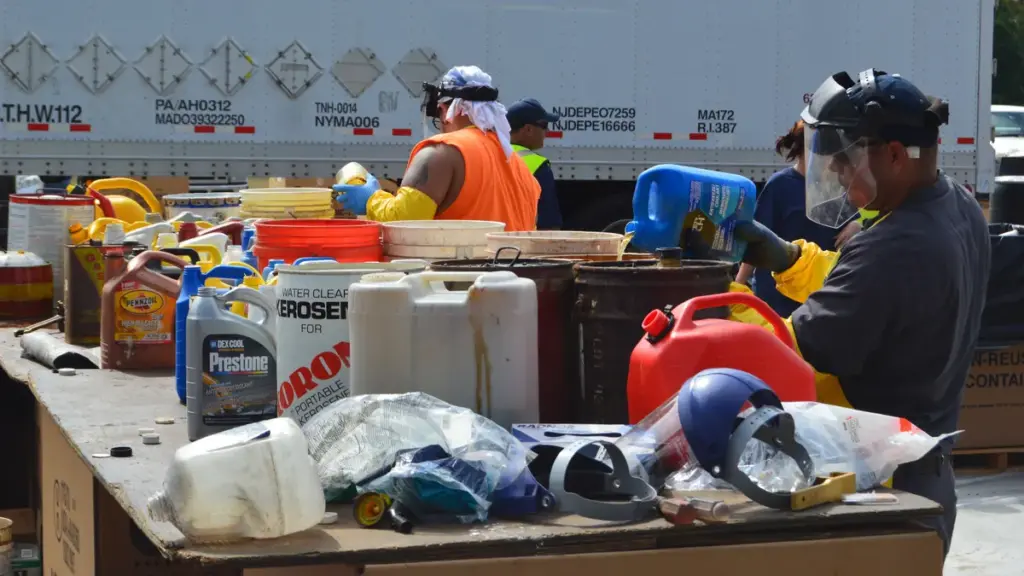
Vermont is charting a bold, unprecedented course in environmental governance. Following the enactment of the nation’s first Extended Producer Responsibility (EPR) law for household hazardous waste (HHW) in 2023, the state’s Agency of Natural Resources (ANR) has confirmed it will directly operate and administer the foundational program itself.
Because the sweeping legislation encompasses an expansive array of everyday consumer and industrial goods—including adhesives, lubricants, degreasers, automotive chemicals, non-refillable propane cylinders, aerosols, and specialized cleaning solutions—regulators faced a structural hurdle: the distinct lack of a consolidated, pre-existing trade group or Producer Responsibility Organization (PRO) capable of managing such a diverse category of products.
To bridge this operational divide without delaying environmental protections, ANR has partnered with the Reverse Logistics Group (RLG), a global regulatory compliance and environmental logistics firm. RLG will provide critical infrastructural support, handling data collection, administrative billing, and producer outreach.
While state-run EPR programs are rare, Vermont regulators view this arrangement as an agile, pragmatic starting point. Supported by fresh legislative tweaks signed by Governor Phil Scott in June 2026, the state is purposefully laying the groundwork for a transition toward private, sector-specific PRO stewardship in the years to come. As Vermont opens public commentary on its draft EPR framework, waste management professionals, environmental advocates, and manufacturing executives nationwide are closely watching to see if this hybrid model will serve as a blueprint for other states grappling with complex product stewardship.
Detailed Chronology: From Legislative Genesis to Program Rollout
The 2023 Legislative Milestone
Vermont’s journey toward comprehensive household hazardous waste management began in earnest with the passage of its landmark 2023 EPR law. Lawmakers designed the statute to shift the financial and physical burden of managing toxic or hazardous post-consumer products away from local municipalities—which have historically shouldered the high costs of collection, safe storage, and hazardous disposal events—and back onto the manufacturers who profit from them.
However, writing the law was simpler than engineering its practical execution. Unlike paint, electronics, or mattresses—established product categories that feature robust, single-focus trade associations ready to step up as PROs—the HHW sector represents a fragmented matrix of unrelated industries. Producers of automotive lubricants share little to no operational overlap with manufacturers of aerosol air fresheners or industrial adhesives.
The 2025 Determinations and the RLG Partnership
By 2025, after extensive market evaluations and stakeholder consultations, ANR officials arrived at a sobering reality: no comprehensive, multi-industry PRO existed to shoulder the immense administrative scope mandated by the statute. Rather than allowing the program to stall, the agency elected to step into the vacuum, resolving to run the baseline program under state authority.
To ensure the state-run mechanism operates with private-sector efficiency, ANR enlisted the Reverse Logistics Group (RLG). As Andriana Kontovrakis, RLG’s Director of EPR Solutions, noted, managing modern environmental regulations requires deep technical capacity. RLG was brought in to establish the operational scaffolding necessary for long-term viability.
June 2026: Legislative Adjustments and Flexibility
Recognizing the structural limitations placed upon a monolithic state-run model, the Vermont Legislature passed a critical amendatory law, signed by Governor Phil Scott in June 2026. This legislation introduces structural flexibility designed to encourage private entities to take over portions of the HHW burden over time.
Under the new statutory provision, manufacturers will eventually be permitted to form targeted PROs dedicated exclusively to specific sub-sections of products covered under the overarching HHW umbrella, provided those specific products are collected and managed cohesively. While the state will strictly maintain a "one PRO per product class" rule to avoid administrative overlap, this evolution paves the way for a decentralized, multi-PRO ecosystem.
The enabling provisions of the June 2026 law are slated to officially take effect in July 2027, with formal, multi-PRO operational plans permitted to launch on or before July 1, 2030.
Supporting Context & Metrics: The Mechanics of Modern EPR
The Scope of Vermont’s HHW Challenge
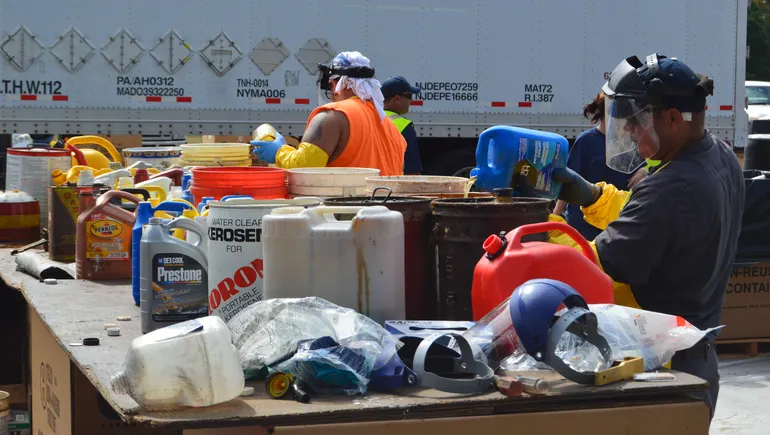
To understand the magnitude of ANR’s undertaking, one must look closely at the materials targeted by the 2023 statute. Household hazardous waste has historically represented one of the most dangerous components of the municipal solid waste stream. When improperly discarded in standard trash or municipal recycling bins, these items pose severe threats:
- Automotive Chemicals & Degreasers: Contain heavy metals, petroleum distillates, and toxic solvents that can leach into groundwater tables if landfilled improperly.
- Aerosols & Non-Refillable Propane Cylinders: Pose extreme explosion and fire risks at material recovery facilities (MRFs) when subjected to the compaction forces of sorting equipment.
- Adhesives & Specialized Cleaners: Release volatile organic compounds (VOCs) and hazardous chemical vapors that endanger sanitation workers and degrade air quality.
By bringing these items under an EPR framework, Vermont aims to drastically increase diversion rates, ensure safe handling, and incentivize manufacturers to redesign product formulations toward less toxic, more easily recyclable components.

RLG’s Global Footprint and Administrative Expertise
RLG’s involvement in Vermont is part of a broader, international portfolio of compliance management. Brad Wright, RLG Executive Vice President for the Americas region, emphasizes that modern product stewardship laws are growing increasingly intricate.
"EPR laws often have incredibly complex regulations and requirements, and RLG has been working globally within these frameworks in dozens of regions to facilitate EPR programs," Wright stated.
In addition to its high-profile engagement with the Vermont ANR, RLG manages crucial elements of EPR-related operations across several North American jurisdictions, including:
- California: Navigating sweeping packaging and specialized waste mandates.
- Connecticut: Supporting state-level product stewardship implementations.
- Massachusetts & Minnesota: Advising on emerging producer accountability frameworks.
- Ontario, Canada: Assisting with mature, highly regulated provincial diversion frameworks.
RLG’s suite of services in these regions spans producer engagement, precise logistics coordination, data analytics, billing administration, and rigorous supplier auditing—capabilities that Vermont’s ANR requires to maintain transparency and fiscal responsibility while overseeing the state-run model.
Official Statements and Stakeholder Engagement
The State’s Call for Public Input
As part of its administrative due diligence, the Vermont Department of Environmental Conservation (DEC)—a division of ANR—has actively sought public participation. The agency established a public comment period running through September 10, 2026, inviting critique, insights, and recommendations regarding its comprehensive draft EPR program plan. Furthermore, DEC scheduled a series of high-stakes stakeholder meetings designed to gather feedback from retailers, municipal leaders, chemical manufacturers, and environmental organizations.
The draft collection plan outlines how collection sites will be distributed geographically across the Green Mountain State, how transportation logistics will be managed safely, and how costs will be apportioned back to liable producers through RLG’s billing architecture.
Industry and Compliance Perspectives
Industry observers have praised Vermont’s pragmatism. Rather than abandoning the EPR mandate due to the absence of a ready-made PRO, the state constructed a transitional framework that balances immediate environmental necessity with long-term market flexibility.

Kontovrakis underscored the philosophy guiding their operational support:
"States and organizations are being required to take on more complex producer responsibility requirements, and so having reliable billing, data management, producer engagement, and program administration are essential to building effective systems."
By handling the friction points of data collection and financial reconciliation, RLG enables ANR regulators to focus on policy enforcement, environmental oversight, and consumer education rather than getting bogged down in day-to-day administrative billing mechanics.
Future Outlook: What’s Next for Vermont and American EPR?
The Road to 2027 and 2030
Vermont’s hybrid model—a state-operated program powered by private administrative infrastructure—will serve as a living laboratory for the waste management sector.
- Immediate Term (Late 2026): ANR will finalize its baseline collection plan based on public feedback gathered this September, formalizing collection protocols with RLG’s data architecture running in the background.
- Medium Term (July 2027): The statutory changes enacted by Governor Scott in June 2026 take effect. This milestone opens the legal window for producer coalitions to begin organizing targeted sub-sector PROs.
- Long Term (By July 1, 2030): Independent, sector-specific PRO operational plans may officially replace portions of the state-run framework, gradually shifting the program from public administration to producer-led stewardship—fulfilling the ultimate vision of traditional EPR.
National Implications
As other U.S. states draft increasingly complex product stewardship laws covering packaging, textiles, batteries, and hazardous materials, they face the same structural challenge Vermont confronted: the absence of mature, unified producer organizations for every material class.
If Vermont’s state-administered, vendor-supported model proves successful, it could provide a viable roadmap for states seeking to implement aggressive environmental policies without waiting for private industries to spontaneously organize. Conversely, if the transition from state-run operations to specialized PROs unfolds smoothly by 2030, it will demonstrate that temporary government intervention can effectively catalyze private-sector responsibility in fractured markets.
For now, all eyes remain on Montpelier as Vermont turns the page on household hazardous waste management, setting a new benchmark for regulatory innovation in the American circular economy.



