Executive Overview
Beneath the crashing waves off California’s iconic coastline lies a dynamic, fragile ecosystem that was once pushed to the brink of collapse. Decades of intensive commercial exploitation, unmitigated industrial pressures, and historical mismanagement transformed vibrant kelp forests into barren underwater wastelands. However, a sweeping conservation model introduced over two decades ago has demonstrated that damaged marine habitats possess a remarkable capacity to recover when afforded sanctuary.
Today, California stands at a monumental conservation crossroads. For the first time in 15 years, state officials are undertaking a comprehensive evaluation of the California Marine Protected Area (MPA) network. This multi-year review—culminating in decisive votes scheduled before the California Fish and Game Commission—carries profound implications for the state’s marine biodiversity. At the heart of this historic review are two pioneering, Tribally co-sponsored proposals for the Central Coast: the Point Sal and Mishopshno State Marine Conservation Area proposals.
These initiatives represent a paradigm shift in modern conservation. By centering Indigenous leadership, traditional ecological knowledge, and rigorous scientific data, the proposals offer a blueprint for reconciling modern ecological crises with ancient wisdom. As federal protections face rollbacks nationwide, California’s state-level jurisdiction provides a vital defensive shield for marine life. With the next comprehensive review cycle potentially decades away, the decisions made this October will dictate the trajectory of West Coast marine stewardship for generations to come.
Detailed Chronology
The Dark Era of Depletion and the Birth of MPAs (Pre-2003)
Long before the implementation of formal conservation networks, California’s coastal waters suffered acute ecological degradation. Archival documentary footage and oral histories from coastal communities paint a sobering picture of the late 20th-century ocean. Violet Sage Walker, chair of the Northern Chumash Tribal Council, vividly recalls historical records of the Channel Islands prior to legislative intervention: "It looked like Mars, like a dead planet."
Decades of unrestrained commercial fishing, coastal pollution, and seafloor disturbances had systematically dismantled complex food webs. Towering kelp forests—crucial carbon sinks and nurseries for native fish—were decimated, leaving behind impoverished, rocky seabeds devoid of structural complexity and biological abundance.
The turning point arrived in 2003 with the passage of the Marine Life Protection Act (MLPA) initiative, which catalyzed the establishment of California Marine Protected Areas. Conceived as a network of underwater state parks, these designated zones restricted extractive activities such as commercial and recreational fishing, oil and gas drilling, and other seafloor-disturbances. By carving out spatial sanctuaries, the state aimed to give fragmented habitats room to heal, allowing depleted fish stocks, marine mammals, and invertebrates to replenish.
The Decadal Evolution and the 15-Year Review Cycle (2011–2025)
Over the subsequent two decades, California’s MPA network expanded to encompass roughly 150 square miles of protected waters, evolving into a world-renowned model for marine conservation. Scientific monitoring consistently validated the efficacy of these zones, revealing larger fish, increased species diversity, and more resilient habitats within their boundaries.
Despite these successes, the state’s regulatory framework remained static for extended periods. Periodic management reviews were designed to occur roughly every decade to incorporate new ecological data, address shifting climate pressures, and adapt to emerging threats. However, it has been 15 years since the state last engaged in a structural expansion process of this magnitude.
Throughout the early 2020s, marine scientists, environmental organizations, and Indigenous nations collaborated to compile ecological assessments of the Central Coast. These efforts culminated in a rare policy window: a state-led call for proposals to alter, expand, and establish new MPAs. This process opened the door for unprecedented community-driven conservation models, moving away from top-down regulatory approaches toward collaborative co-stewardship.
The Present Watershed: The 2026 Policy Window
The current evaluation cycle represents an urgent convergence of ecological necessity and political opportunity. With final deliberations and votes scheduled before the California Fish and Game Commission, conservationists and policymakers recognize the gravity of the moment. Doug McCauley, a professor of marine science at the University of California, Santa Barbara, emphasizes the uniqueness of the moment: "This is a historic opportunity that we don’t want to miss."
Unlike federal marine policies that remain vulnerable to shifting partisan administrations, California’s state jurisdiction offers an enduring defensive framework. Because comprehensive network reviews occur only once every decade, missing this legislative window would leave vulnerable coastal habitats exposed to mounting industrial and recreational pressures for years to come.
Supporting Context & Metrics
The Science of Marine Sanctuaries
Marine Protected Areas function by establishing geographical boundaries where human extractive pressures are curtailed or completely eliminated. According to Sandy Aylesworth, director of the Pacific Initiative for Nature at the Natural Resources Defense Council (NRDC), the biological response to these sanctuaries is both rapid and profound. "When you remove these kinds of disturbances, you have larger fish, more abundant wildlife, and a healthier habitat," Aylesworth notes.
The ecological mechanics are straightforward: by halting the removal of apex predators and targeted breeding stocks, MPAs allow individual fish to grow larger and produce exponentially more offspring. These protected zones act as biological export engines—or "nurseries"—spilling over larval fish and mobile adults into adjacent unprotected waters, thereby sustaining surrounding commercial and recreational fisheries.
Empirical data underscores this spillover effect. A landmark 2021 study examining two Southern California MPAs established in 2012 revealed that commercial fishing boats operating in surrounding areas experienced a staggering 225% increase in lobster catches over a six-year period. This refutes the long-standing misconception that conservation inherently harms local economies, proving instead that ecological health and economic vitality are mutually reinforcing.
The Point Sal Ecosystem: A Tiny Paradise
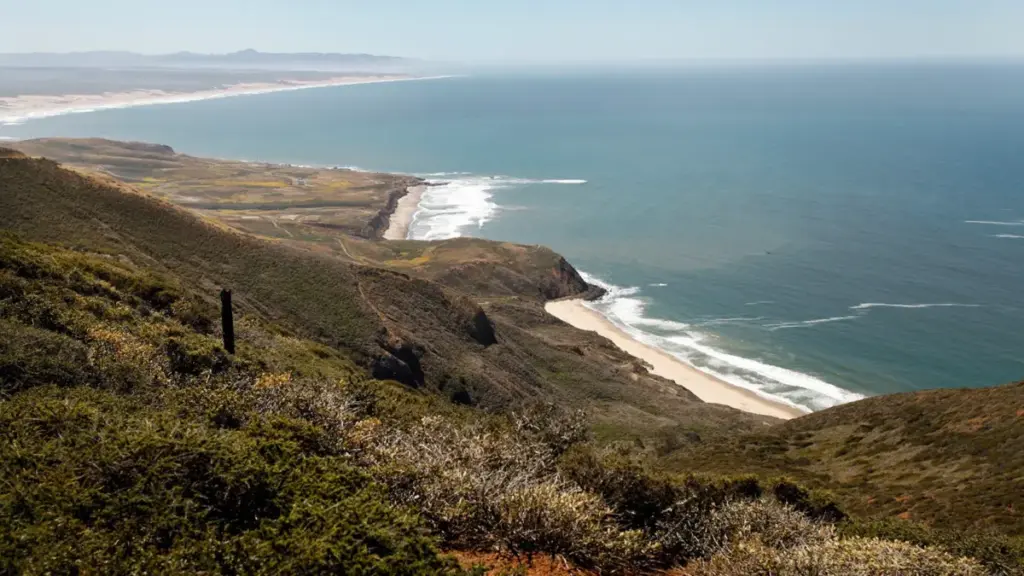
The proposed Point Sal State Marine Conservation Area encompasses approximately nine square miles off the rugged Santa Barbara County coast. Geographically positioned to maximize ecological resilience, the site features a prominent headland that shelters southern waters from relentless coastal winds. This hydrodynamic shelter creates calm, nutrient-rich environments where fish larvae can linger, settle, and mature safely.
Adjoining Point Sal is Lion Rock, a vital biological hotspot serving as a major rookery for seals, sea lions, and seabirds. Researchers have documented over 880 California sea lions utilizing the area in a single day. Interlaced with dense kelp forests and rocky reefs, the proposed sanctuary supports a dizzying array of marine life, including leopard sharks, rockfish, sea otters, and migrating cetaceans. "It’s a little tiny paradise," remarks Tribal Chair Violet Sage Walker.
The Mishopshno Refuge: A Shark Nursery
Farther down the coast near Carpinteria, the proposed Mishopshno State Marine Conservation Area targets another rare convergence of coastal habitats. Named after a historic Chumash village, the proposed conservation area sits offshore from a 1.6-mile rocky reef supporting one of the Central Coast’s most enduring and resilient kelp forests.
Integrated with adjacent sandy-bottom habitats, sandy beaches, and protected salt marshes, the Mishopshno ecosystem forms a complex matrix of nurseries and feeding grounds. This rich environment sustains hundreds of bat rays, large teleost fish, and acts as a critical rearing ground for juvenile white sharks.
Documentarian and shark researcher Carlos Gauna, who has spent thousands of hours filming the area, describes it as a globally unique ecosystem. "I live and breathe sharks daily, and this is one of the most amazing spots in the world to see a great white shark," Gauna states. However, Gauna’s extensive fieldwork has also documented the dark side of human encroachment: illegal fishing, harassment from jet skiers, and direct vessel strikes. Formalizing the area as an MPA would establish critical legal buffers, signaling to the public that the zone is an inviolable sanctuary for marine wildlife.
Official Statements and Perspectives
The coalition backing the Point Sal and Mishopshno proposals represents a powerful convergence of Indigenous sovereignty, scientific rigor, and environmental advocacy.
Indigenous Stewardship and Co-Management
For California’s coastal Tribes, the current MPA review is not merely an environmental policy debate; it is a long-overdue reckoning with history. For more than 10,000 years, Indigenous nations acted as the primary stewards of the Central Coast, cultivating rich marine ecosystems through sustainable harvesting and profound ecological reciprocity. Despite this ancient legacy, contemporary MPA frameworks have historically lacked formal Tribal co-management structures.
The sponsorship of the Point Sal proposal by the Northern Chumash Tribal Council, and the Mishopshno proposal by the Santa Ynez Band of Chumash Indians—in partnership with the NRDC and the Environmental Defense Center—marks a watershed moment. These are the first Tribally sponsored MPA proposals in California history.
Violet Sage Walker emphasizes that restoring ocean health requires restoring Indigenous voices to management decisions. "Being able to reconnect and offer our vision and our help with dealing with climate resiliency and coastal stewardship is critical," Walker asserts. Her vision extends beyond basic conservation; she advocates for institutional pathways that guarantee Indigenous communities permanent access for cultural practices and active management roles. "The ocean, given the opportunity, will thrive. But we have to give it the space and the time to heal itself."
Scientific Consensus and Public Backing
From a scientific and public policy standpoint, the expansion proposals enjoy overwhelming backing. Polling data indicates that approximately 70% of California voters support expanding MPA protections at both Point Sal and Mishopshno, reflecting a deep, culturally ingrained appreciation for coastal preservation among the state’s citizenry.
While a small contingent of commercial fishing interests has voiced opposition to the new designations, environmental economists and marine biologists point out that scientific literature consistently invalidates claims of widespread economic harm. On the contrary, well-managed MPAs build climate resilience into fisheries, cushioning coastal economies against warming seas, ocean acidification, and stock collapses.
Shark filmmaker Carlos Gauna draws a compelling comparison to international conservation success stories, such as Cabo Pulmo in Baja California. Inside the Cabo Pulmo marine reserve, strict protection has fostered a thriving, abundant ecosystem described by Gauna as "one of the most stable and beautiful areas in the world for marine wildlife." Directly across the boundary line, where intensive fishing continues unchecked, the ecosystem resembles an "underwater desert." Gauna argues that California has the opportunity to replicate this success before localized pressures permanently degrade its remaining biological strongholds.
Future Outlook
As the calendar ticks toward the decisive October 14–16 Fish and Game Commission hearings, the stakes for California’s marine ecosystems could not be higher. The decisions rendered in this pivotal administrative proceeding will define the architectural integrity of the state’s marine protection network for the next decade.
If approved, the Point Sal and Mishopshno State Marine Conservation Areas will do much more than simply safeguard nine square miles of habitat or protect juvenile shark nurseries. They will establish a transformative precedent for state-Tribal co-management, proving that modern ecological governance can—and should—honor the deep-rooted knowledge of the Indigenous peoples who managed these waters since time immemorial.
In an era defined by federal environmental rollbacks and accelerating global climate disruption, California’s willingness to expand its underwater state parks sends a powerful message. It demonstrates that sub-national jurisdictions can act as bold, effective champions for biodiversity. As the public rallies behind the conservation proposals and the Commission prepares to cast its votes, the message from the coast is clear: given adequate space, legal protection, and respectful stewardship, the Pacific Ocean possesses an enduring, resilient capacity to regenerate, heal, and thrive.