By Tsering Lama, Storytelling Manager, Greenpeace International
Executive Overview
True environmental allyship can only take root when humanity recognizes a fundamental truth: Indigenous peoples’ struggles are intricately bound up with our collective fate. As the planetary crisis accelerates, our greatest hope against systemic ecological breakdown lies in fully supporting Indigenous sovereignty and actively joining the global resistance against extractive industries. This is not merely an act of solidarity; it is a matter of mutual survival and global liberation.
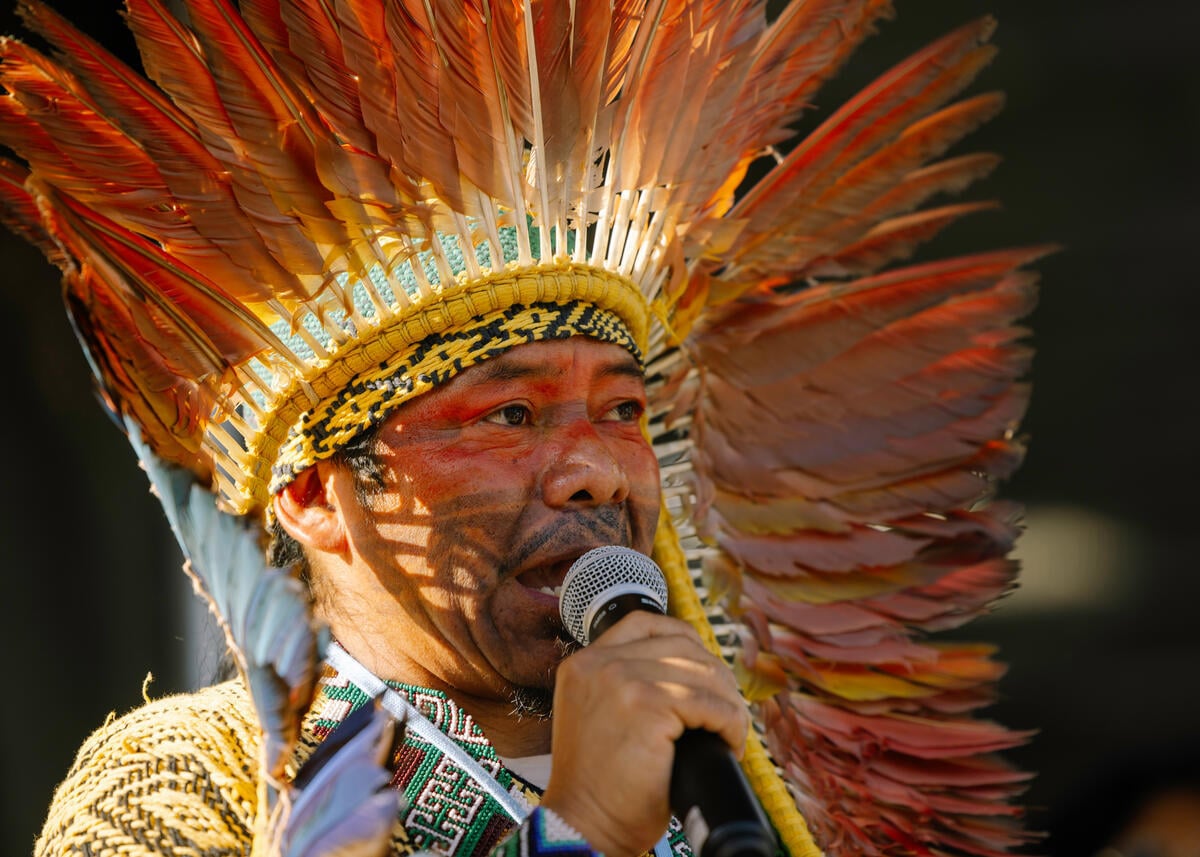
For centuries, industrial economies have treated the Earth as an endless, disposable warehouse of raw materials. Today, this destructive economic model—known as extractivism—continues to commodify nature at an unprecedented scale, devastating local communities while enriching distant corporate interests. Yet, across the globe, Indigenous frontline communities are proving that another way is possible. From the Amazon basin to the forests of West Papua, Indigenous-led resistance is not only defending ancestral territories but safeguarding the ecological foundations of the entire planet.
This article explores the anatomy of modern extractivism, the high cost paid by land defenders, the rising threat of "green extractivism" driven by the energy transition, and the urgent blueprint for a just, post-extractive future anchored in Indigenous leadership.
Detailed Chronology: Key Milestones in the Global Indigenous Resistance
To understand the resilience of modern Indigenous movements, it is vital to trace the historical and contemporary milestones that have shaped land defense, international law, and global mobilization.
- 1989 (ILO Convention 169): The International Labour Organization adopts Convention 169 concerning Indigenous and Tribal Peoples in Independent Countries. This landmark legally binding international instrument recognizes the rights of Indigenous peoples to land, self-determination, and the protection of their traditional ways of life.
- 2007 (Adoption of UNDRIP): After decades of tireless grassroots organizing, the United Nations General Assembly adopts the UN Declaration on the Rights of Indigenous Peoples (UNDRIP). This foundational framework establishes that Indigenous peoples have the right to self-determination, enshrining their authority to define their own institutions and relationships to their ancestral territories.
- 2021 (The IEN Emissions Milestone): A comprehensive report by the Indigenous Environmental Network (IEN) reveals that Indigenous-led resistance movements across North America have successfully delayed or halted greenhouse gas pollution equivalent to at least 25% of annual combined U.S. and Canadian emissions.
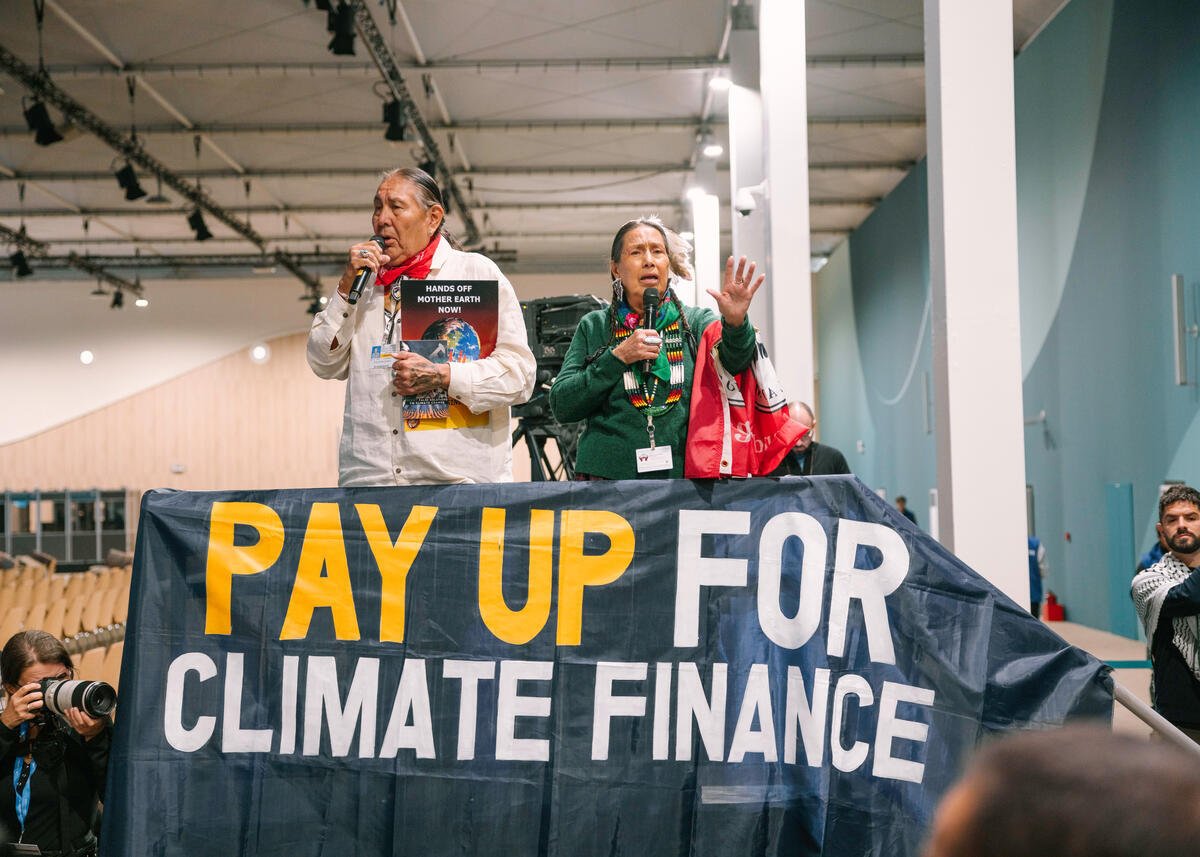
- November 2024 (COP29 Mobilization): Indigenous leaders converge at the 29th UN Climate Conference (COP29) in Baku, Azerbaijan. They demand accountability from world governments, insisting that fossil fuel polluters pay for the climate crisis and that fossil fuel phase-out plans form the absolute core of national climate policies.
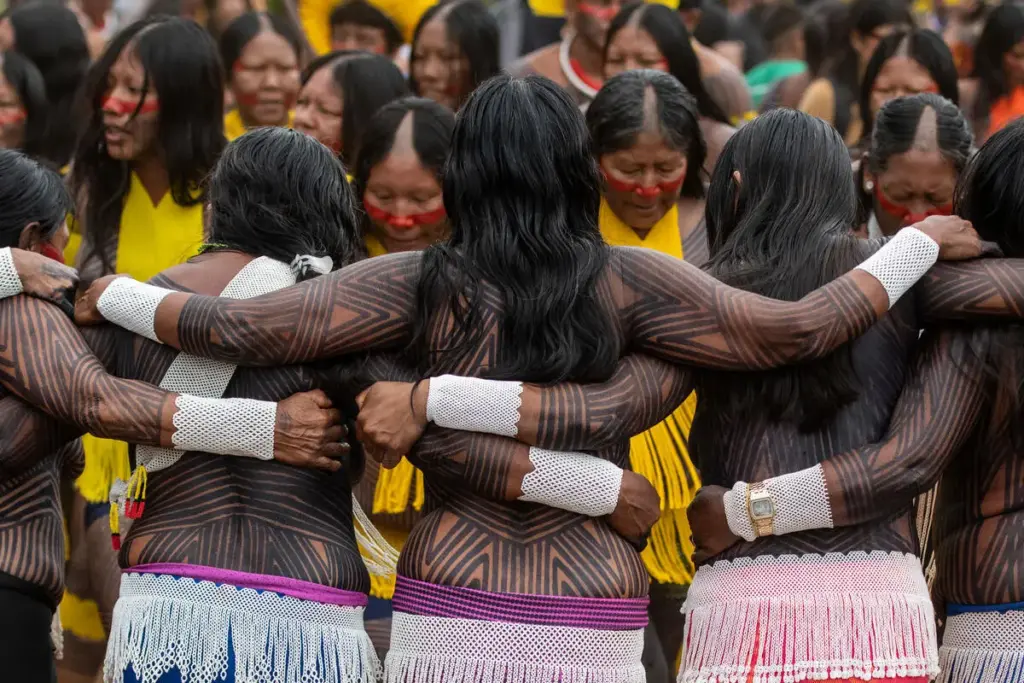
- April 2025 (The 21st Free Land Camp in Brasília): The 21st edition of the Free Land Camp (Acampamento Terra Livre—ATL) takes place at the Funarte Complex in Brasília. Marking the 20th anniversary of the Articulation of Indigenous Peoples of Brazil (APIB), thousands gather under the banner: “APIB is all of us: In defense of the Constitution and life.” Greenpeace Brazil plays an active support role, amplifying public demonstrations.
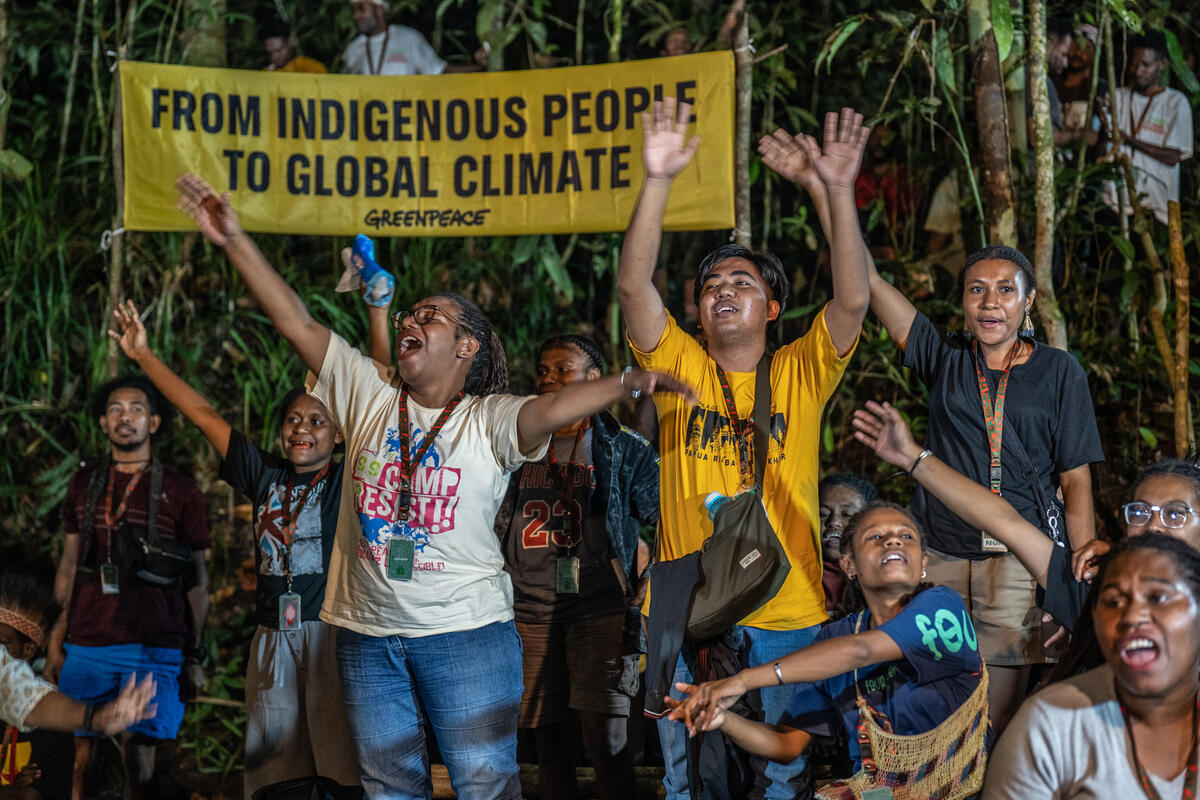
- September 2025 (The Sira Declaration and Forest Defender Camp): Greenpeace Indonesia hosts the second Forest Defender Camp (FDC) in the Sira village forest within the Knasaimos customary area of South Sorong, Southwest Papua. Attended by 89 participants—including Indigenous youth from seven customary areas across Papua Island alongside delegations from the Congo Basin, Amazon, and Borneo—the gathering yields the Sira Declaration, a united youth manifesto for global climate and biodiversity action.
- October 2025 (Global Public Opinion Shift): Greenpeace releases a sweeping 17-country, five-continent public opinion poll demonstrating overwhelming global trust in Indigenous communities as primary forest stewards, validating their leadership on the international stage.
Supporting Context & Metrics: The Mechanics of Extractivism and Its Costs
Defining Extractivism
To combat a disease, one must first diagnose it. Extractivism differs fundamentally from the sustainable harvesting of resources (such as gathering medicinal plants or selective tree felling). It is an economic paradigm that treats nature purely as an infinite commodity. Resources are extracted on an industrial scale, often stripped from the Global South, and exported to fuel consumption in wealthy nations. Local communities bear the brunt of the ecological degradation, poisoned waterways, and social displacement.
The very term extractivismo originated in Latin America—a region serving as ground zero for over 500 years of colonial plunder, yet remaining the beating heart of global Indigenous resistance.
The High Cost of Defense
Defending the Earth carries a lethal price tag. Frontline Indigenous defenders routinely face systemic intimidation, land theft, state-sponsored criminalization, and physical violence. Data compiled by Global Witness highlights a chilling disparity: while Indigenous peoples account for roughly 6% of the global human population, they consistently represent more than one-third of all land and environmental defenders murdered worldwide each year.

Colonial states frequently rely on racist narratives to delegitimize Indigenous claims, fostering a societal disconnection from ancient wisdom and ecological knowledge systems that modern industrial society desperately needs to survive.
Confronting "Green Extractivism"
As the world races to transition away from fossil fuels, a dangerous new phenomenon has emerged: green extractivism. Driven by soaring global demand for "critical minerals" (such as nickel, lithium, and cobalt) required for electric vehicles, AI data centers, Big Tech infrastructure, and defense manufacturing, a speculative mining rush is creating new sacrifice zones across the planet.
For instance, in the mega-biodiversity region of Raja Ampat, Indonesia, nickel mining concessions on islands like Kawe threaten pristine coral reefs and marine ecosystems with heavy machinery and toxic sedimentation.
Political scientist Thea Riofrancos, in her seminal book Extraction, highlights how frontline communities are organizing against this green rush. Riofrancos warns that simply swapping gas-powered cars for electric ones without changing consumption patterns risks repeating historic colonial harms. True sustainable solutions demand investments in robust public transit, circular material recycling, and an intentional reduction in overall material consumption.
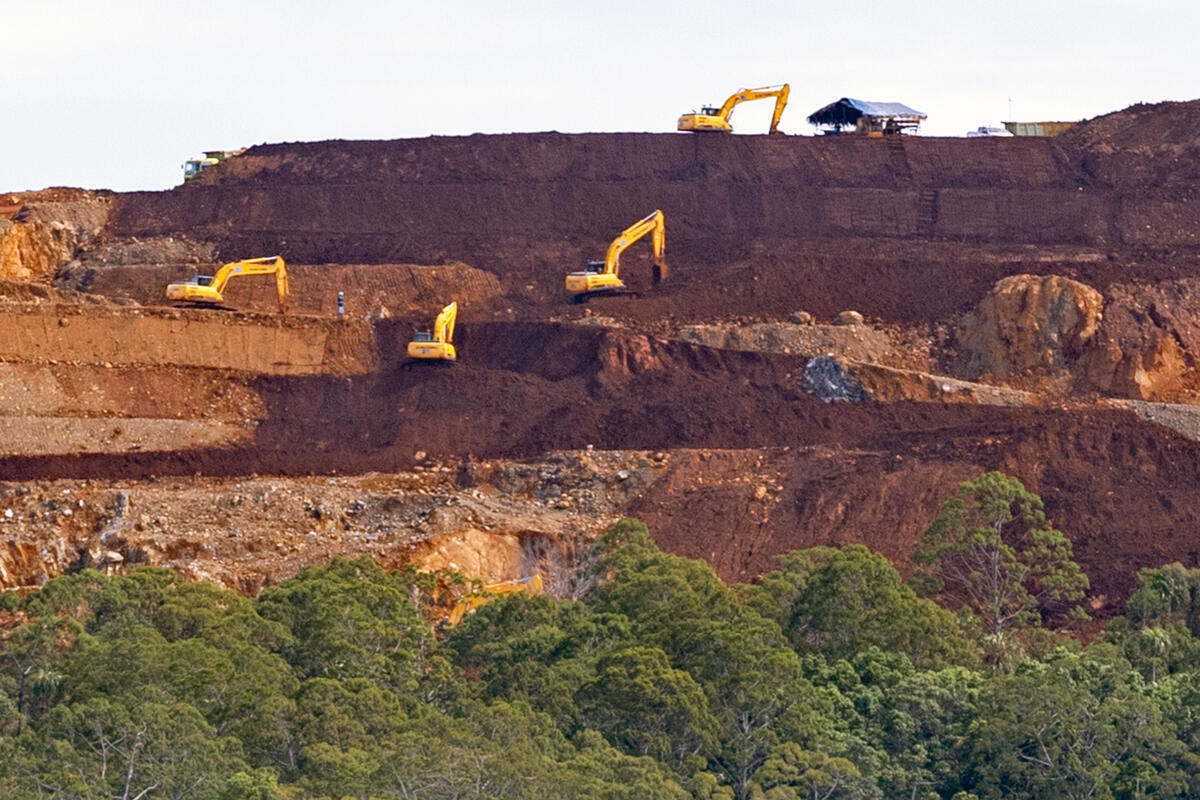
To counter this unchecked exploitation, Greenpeace and partner organizations have launched the Restricted Areas Map, identifying regions where mining poses unacceptable environmental, social, cultural, and rights-related risks.
Official Statements and Demands: The Sira Declaration
Across courtroom battles, frontline blockades, and international climate summits, Indigenous environmental movements have united around a clear, non-negotiable set of demands.
The voice of the next generation was forcefully articulated in 2025 when Indigenous youth representatives from the world’s primary tropical forest basins—the Amazon, the Congo Basin, Borneo, and West Papua—penned the Sira Declaration during the Forest Defender Camp in West Papua. This historic manifesto calls upon governments, corporations, and international institutions to:
- Recognize and Secure Land Rights: Legally demarcate and protect Indigenous and customary territories to prevent corporate encroachment and land grabbing.
- Ensure Free, Prior, and Informed Consent (FPIC): Respect the sovereign right of Indigenous communities to say "no" to industrial projects, mining concessions, and infrastructure developments on their lands.
- Direct Climate Funding: Channel climate finance directly to Indigenous communities and local stewards, bypassing bureaucratic intermediaries to empower grassroots conservation.
- Halt Criminalization: End the systemic persecution, surveillance, and violence directed against land and environmental defenders.
These demands are overwhelmingly backed by global public opinion. A comprehensive **Greenpeace poll spanning 17 countries across five continents*** revealed striking confidence in Indigenous leadership:
- 78% of respondents trust Indigenous peoples and local communities most to protect forests (compared to just 49% for governments and 42% for corporations).
- 75% of respondents agree that Indigenous peoples should receive direct climate funding to safeguard their ancestral territories.
Future Outlook: Building a Just, Post-Extractive World
Stopping destructive corporate projects and halting illegal mining concessions is only the first step. True ecological recovery requires a total reimagining of our global socioeconomic systems. A post-extractive future must inherently be a post-colonial future.
For non-Indigenous allies, this moment demands moving beyond passive observation into active decolonization. Settler-colonial populations must reject the foundational ideology of extractivism—the false premise that nature exists merely to be dominated, commodified, and consumed.
Indigenous leadership offers time-tested, practical blueprints for post-extractive societies founded on reciprocity, ecological balance, and generational well-being. As detailed in international Greenpeace research on community-led forest solutions, protecting the rights of Indigenous peoples in the Amazon, the Congo Basin, and Indonesia is not a charitable endeavor; it is the most effective climate policy humanity has left.
As Lilla Watson, a Gangulu woman and prominent Aboriginal activist, famously reminded the world:
"If you have come here to help me you are wasting your time, but if you have come because your liberation is bound up with mine, then let us work together."
In the face of ecological breakdown, our mutual liberation depends on standing shoulder-to-shoulder with the defenders of the Earth.
*Polling Methodology Note
The 17 countries surveyed in the Greenpeace public opinion poll include: Kenya, South Africa, Argentina, Brazil, Colombia, Canada, USA, Indonesia, Malaysia, South Korea, Australia, Denmark, France, Germany, Netherlands, Spain, and the United Kingdom.