Executive Overview
In an aggressive legal maneuver that highlights the escalating financial and environmental stakes of the "forever chemicals" crisis, utility giant Veolia filed a major federal lawsuit on Tuesday against a network of current and former manufacturing companies. The complaint targets operators at six industrial sites located upstream of the Stanton Water Treatment Plant in Wilmington, Delaware. Veolia alleges these entities are directly responsible for introducing hazardous per- and polyfluoroalkyl substances (PFAS) into the region’s drinking water source watershed.
The lawsuit seeks to recover the staggering capital expenditures required to construct a state-of-the-art, $35 million granular activated carbon (GAC) filtration facility completed last year, alongside ongoing annual operation and maintenance costs projected to exceed $3.5 million. According to the filing, the defendants manufactured, utilized, or distributed PFAS chemicals—or materials containing them—over the course of several decades, with current operations at the targeted sites allegedly continuing to contribute to the toxic load flowing toward Veolia’s intake pipes.
This litigation represents a critical flashpoint in the broader national battle over PFAS remediation liability. As downstream water utilities face increasingly stringent federal and state regulatory mandates to purge synthetic chemicals from public water supplies, utility operators are increasingly unwilling to shoulder the financial burden alone. Instead, companies like Veolia are pivoting toward aggressive upstream litigation, seeking to shift multi-million-dollar compliance costs back onto the industrial producers whose historical and ongoing operations polluted public watersheds. With the total national market for PFAS remediation estimated in the billions of dollars, the outcome of Veolia’s Delaware lawsuit could establish a powerful legal precedent for water utilities nationwide.
Detailed Chronology of the Crisis and Legal Action
The path leading to Veolia’s federal lawsuit is the culmination of decades of industrial activity, evolving environmental science, and regulatory tightening that has forced water treatment providers to rapidly adapt or face severe compliance violations.
Decades of Industrial Legacy (1980–2020s)
The roots of the contamination span nearly half a century. According to the lawsuit, the defendants—including corporate entities such as Ametek, Solvay, Edlon, Coherent, and FMC—operated industrial facilities upstream of the Stanton plant, producing a diverse array of materials ranging from Teflon tubing and phenolic resins to heat-resistant polymers, ceramics, and fungicides.
- The Ametek Facility (1980–2004): Ametek operated a manufacturing site in the watershed from 1980 until its closure in 2004, producing phenolic resins and Teflon tubing known to contain PFAS compounds. Following its closure, the site became the subject of long-running U.S. Environmental Protection Agency (EPA) corrective action proceedings due to severe groundwater contamination, including heavy metals, volatile organic compounds (VOCs), and elevated levels of PFOA and PFOS. Internal corporate friction recently erupted over these liabilities, with Ametek filing lawsuits against fellow Veolia co-defendants MRH, Niche Polymers, and Westchester Plastics regarding underfunded cleanup structures.
- The Solvay Operations (1998–2020): Solvay and its corporate affiliates operated a facility from 1998 to 2020 that processed PTFE (polytetrafluoroethylene), a heat-resistant fluoropolymer sold commercially as a fine powder. In February 2021, Solvay entered into a formal settlement agreement with the Delaware Department of Natural Resources and Environmental Control (DNREC) to investigate and remediate PFAS contamination originating from its closed property.
The Regulatory Catalyst (2021–2024)
As regulatory scrutiny intensified, state and federal agencies began closing the net on synthetic chemical pollution. In January 2021, DNREC’s enforcement actions against Solvay signaled a zero-tolerance approach to legacy contamination in Delaware watersheds.
The regulatory landscape shifted dramatically on a national scale in 2024, when the U.S. EPA established legally enforceable Maximum Contaminant Levels (MCLs) for six specific PFAS compounds under the Safe Drinking Water Act. The federal standards set strict limits of 4 parts per trillion (ppt) for PFOS and PFOA, and 10 ppt for PFNA, PFHxS, and HFPO-DA (commonly known as "GenX Chemicals"), alongside regulatory frameworks for complex chemical mixtures.
Delaware formally adopted these stringent thresholds on January 5, instantly subjecting Veolia’s Stanton Water Treatment Plant to rigorous compliance benchmarks. Although the EPA subsequently proposed regulatory adjustments in May regarding the 10 ppt category—a process that remains ongoing—water providers like Veolia have had to treat the existing baseline as an immediate operational reality.
Technological Adaptation and Legal Escalation (2022–2025)
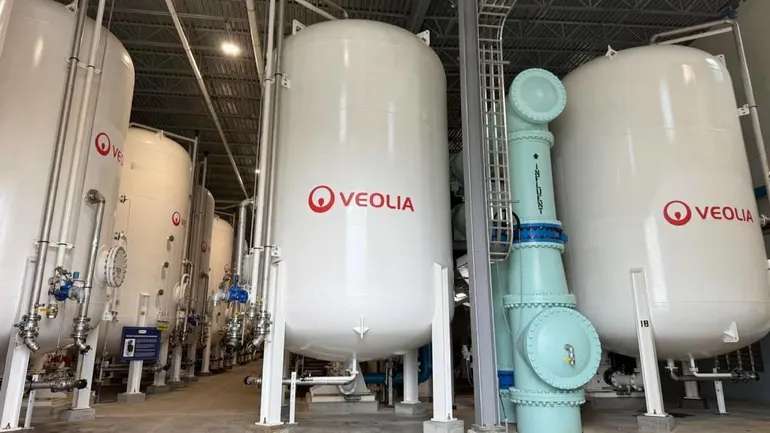
Recognizing the writing on the wall, Veolia initiated technical studies in 2022 to evaluate advanced treatment technologies capable of stripping minute concentrations of PFAS from raw water sources. These efforts culminated in the design, construction, and operation of a massive 17,600-square-foot granular activated carbon facility at the Stanton plant.
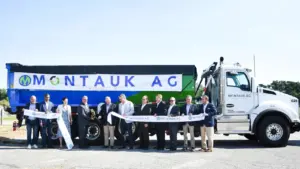
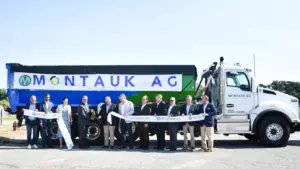
The state-of-the-art installation, which celebrated its ribbon-cutting ceremony in mid-2024, represents Veolia’s 34th dedicated PFAS treatment asset. The facility possesses the capacity to treat up to 30 million gallons of drinking water per day, safely securing the daily supply for more than 100,000 Delaware residents. However, the immense capital required to build and maintain the infrastructure prompted Veolia to take formal legal action, culminating in Tuesday’s federal complaint against upstream manufacturers.
Supporting Context and Financial Metrics
To fully understand the gravity of Veolia’s legal challenge, one must examine the staggering economic and physical realities of modern PFAS remediation. Often dubbed "forever chemicals" due to their extraordinarily strong carbon-fluorine bonds, PFAS compounds resist biological, chemical, and thermal degradation. They persist indefinitely in the environment, bioaccumulate in wildlife and human tissue, and are linked at minuscule concentrations to adverse health outcomes, including elevated cholesterol, reproductive complications, developmental delays in children, and an increased risk of certain cancers.
The Economics of Filtration
Removing these resilient compounds from millions of gallons of municipal drinking water requires capital-intensive, highly specialized infrastructure. Veolia’s financial ledger for the Stanton plant upgrade underscores the immense cost burden placed on utility providers:
- Capital Expenditure (CapEx): The construction and outfitting of the granular activated carbon facility demanded a direct investment of at least $34.6 million.
- Operational Expenditure (OpEx): Annual maintenance, media replacement, and ongoing facility management are projected to cost upwards of $3.5 million per year.
- Treatment Capacity: The facility processes up to 30 million gallons daily, making it a vital linchpin in the regional water supply network serving over 100,000 people.
A Multi-Billion-Dollar Remediation Market
Veolia’s legal strategy is situated within a rapidly expanding corporate and industrial sector focused entirely on environmental cleanup. In 2024, Veolia unveiled an ambitious corporate strategy aimed at doubling the size of its global operations by 2030, a goal anchored in the deployment of dozens of new PFAS management and treatment assets. Industry analysts estimate the total total addressable market for PFAS remediation—spanning municipal upgrades, industrial wastewater processing, and site cleanups—in the tens of billions of dollars.
Corporate giants who pioneered or extensively utilized these compounds are already feeling the financial pinch. Major chemical manufacturers such as 3M, DuPont, and Chemours have collectively agreed to multi-million- and multi-billion-dollar settlements to resolve widespread state and municipal liability claims. For instance, Chemours settled landmark claims for $450 million regarding PFAS releases, while states like South Carolina have secured substantial settlements from local industrial users to fund statewide water system overhauls.
Despite these massive settlements, thousands of miles of watersheds across the United States remain vulnerable. Smaller or regional manufacturers that operated without the global footprint of a 3M or DuPont have frequently avoided direct accountability—a gap that Veolia’s lawsuit aims to aggressively close by holding regional industrial neighbors legally and financially responsible.
Official Statements and Legal Arguments
The core of Veolia’s legal complaint rests on the legal doctrine of negligence, public nuisance, and strict liability, asserting that industrial operators failed in their basic duty of care to protect public natural resources.
The Plaintiff’s Position
In its federal court filing, Veolia argues that the named defendants acted unreasonably and imprudently by allowing toxic chemical discharges to enter the watershed that feeds the Stanton plant. The complaint states:
“[E]ach of the Defendants reasonably should have known that PFAS could harm the environment, but failed to take meaningful steps to prevent or mitigate the foreseeable contamination to Delaware’s natural resources and Veolia’s source watershed.”
Veolia’s water sampling data revealed multiple upstream locations where concentrations of PFOA and PFOS routinely exceeded strict state and federal regulatory thresholds. By failing to upgrade containment practices, capture wastewater, or remediate polluted soils, the defendants allegedly forced downstream utility operators to bear the exorbitant costs of treating contaminated intake water.
The Defendants’ Web of Liability
The lawsuit draws a complex web of corporate succession, operational overlap, and internal litigation among the defendants:
- Ametek: Implicated for decades of phenolic resin and Teflon manufacturing, Ametek has found itself embroiled in cross-claims with fellow defendants MRH, Niche Polymers, and Westchester Plastics over corporate restructuring and underfunded environmental liabilities.
- Solvay: Having previously settled with DNREC in 2021 regarding its PTFE powder processing operations, Solvay remains a central focus of state and federal regulators tracking historic fluoropolymer contamination.
- Edlon, Coherent, and FMC: These remaining corporate entities are accused of contributing to the chemical load through specialized manufacturing processes involving PFAS chemicals, technical ceramics, fungicides, and pharmaceutical intermediates.
Legal analysts note that naming a diverse cluster of current and former operators allows Veolia to bypass the defense of corporate insolvency or corporate shielding, targeting any entity that held operational control over the contaminated properties during the decades of heaviest chemical discharge.
Future Outlook: Implications for Utilities and Industry
As Veolia’s lawsuit proceeds through the federal court system, its implications will reverberate far beyond the borders of New Castle County, Delaware. The case serves as an early bellwether for how the water utility sector will manage the punishing financial realities of EPA compliance in the post-MCL era.
1. A New Precedent for Upstream Cost-Shifting
If Veolia succeeds in compelling upstream manufacturers to reimburse the multi-million-dollar capital and operational costs of the Stanton plant, it will validate a powerful legal blueprint. Rather than passing 100% of compliance costs onto residential ratepayers through soaring water utility bills, private and municipal water providers are likely to launch coordinated legal campaigns against industrial neighbors. This dynamic threatens to turn historical industrial parks into liability hotbeds as property owners and former tenants face retroactive cleanup demands.
2. Regulatory Volatility and Corporate Hesitation
The ongoing political and administrative debates surrounding federal PFAS standards—such as the EPA’s 2024 introduction of strict limits followed by proposed adjustments in 2025 and 2026—create a complex regulatory matrix. However, state-level adoption of stringent thresholds, particularly in proactive states like Delaware, ensures that water utilities cannot afford to delay infrastructure investments. Even if federal rules fluctuate, state environmental agencies and local water quality boards remain committed to enforcing rigorous safety standards.
3. The Growth of Remediation as Big Business
For environmental engineering and utility management conglomerates like Veolia, the PFAS crisis represents a paradoxical market opportunity. While bearing the immediate burden of building and maintaining complex filtration facilities, the firm is simultaneously positioning itself as an industry leader in hazardous chemical destruction. The commercial race to capture market share in water purification, membrane technology, and activated carbon management will continue to accelerate through the remainder of the decade.
Ultimately, Veolia’s lawsuit against Delaware’s upstream manufacturers brings a fundamental environmental question into sharp focus: when industrial chemistry compromises the commons, who pays to set it right? For the 100,000 residents relying on the Stanton Water Treatment Plant, clean water is now flowing through advanced carbon filters. But inside the courtroom, the fierce battle over who will foot the multi-million-dollar bill has only just begun.