

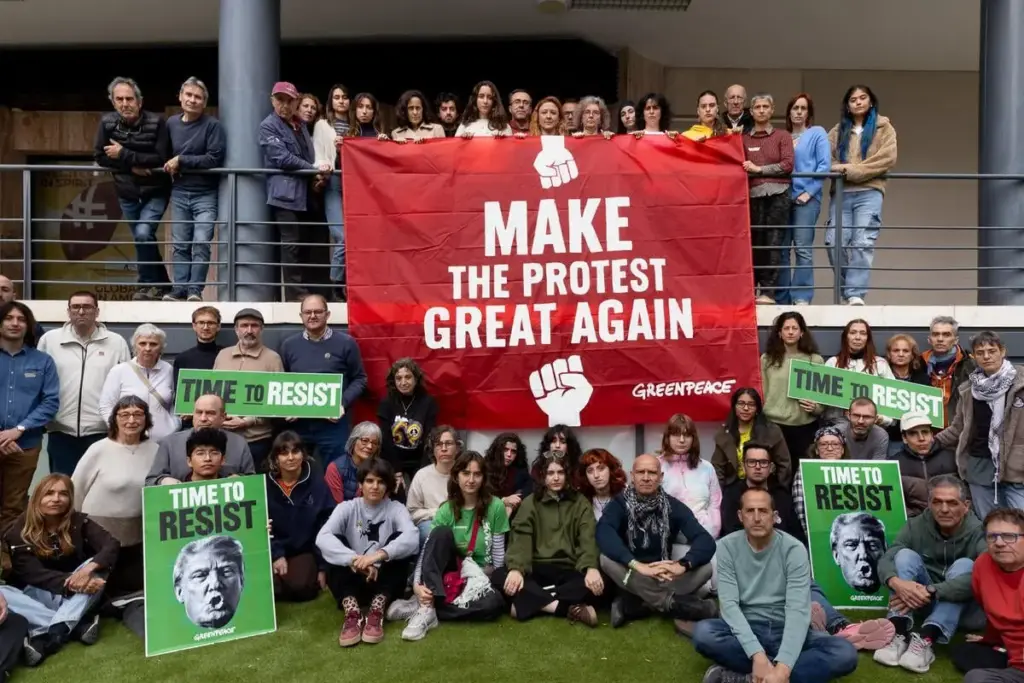
VALENCIA, SPAIN — In a landmark ruling that reverberates across European environmental circles, a Spanish court has decisively rejected severe criminal charges against 11 Greenpeace activists. The defendants had faced an unprecedented five-year prison demand from the Public Prosecutor’s Office following a peaceful 2021 protest against a massive fossil gas shipment at the Port of Sagunto.
The court’s definitive rejection of the state’s harshest punitive measures offers a vital reprieve for civil disobedience in an era of mounting institutional pressure. Yet, the case remains a watershed moment, underscoring the escalating global tension between corporate energy interests, state authorities, and the fundamental right to peaceful protest.
To unpack the legal intricacies, global ramifications, and historical context of the Sagunto trial, this report draws upon extensive interviews with Daniel Simons, Greenpeace International Senior Legal Counsel for Strategic Defence, alongside commentary from international human rights bodies.
Executive Overview
The trial, which concluded with a judgment delivered on October 6, 2026, centered on a high-profile direct action executed in October 2021. Armed with banners and utilizing disciplined maritime tactics, Greenpeace Spain intercepted the Merchant—an enormous liquefied natural gas (LNG) carrier loaded with 138,000 cubic meters of fracked methane from the United States.
Initially, the state levied administrative fines exceeding €160,000 against the organization. However, the legal battle escalated dramatically when the Public Prosecutor’s Office sought a staggering five-year prison sentence for aggravated public disorder—one of the most severe retributive demands ever levied against environmental protesters in European history.
Although the prosecution reduced its demand to two and a half years during the trial proceedings, the threat remained disproportionate. Ultimately, the presiding judge dismissed the charges, ruling that the prosecution failed to demonstrate any element of violence, intimidation, or disruption of the public peace.

Experts warn that while the verdict is a resounding victory for civil liberties, the mere existence of such trials signals a disturbing global trend: the criminalization of dissent to shield fossil fuel infrastructure from public scrutiny.
Detailed Chronology: From the Waters of Sagunto to the Courtroom
October 2021: The Blockade at the Port of Sagunto
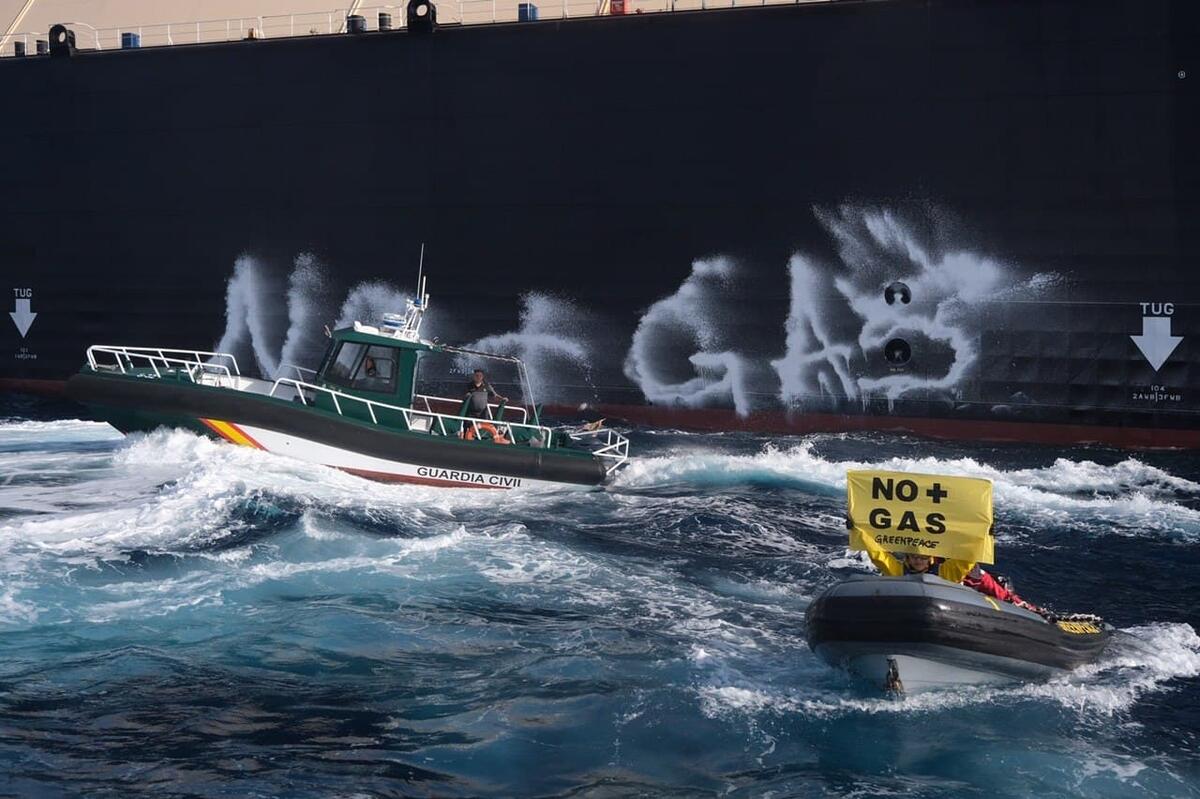
The catalyst for the legal confrontation occurred when Greenpeace’s flagship vessel at the time, the MY Esperanza, entered the Port of Sagunto. The mission: to highlight the catastrophic climate impacts of fracked fossil gas and disrupt the arrival of the Merchant, an LNG tanker carrying the energy equivalent of roughly 41 Olympic swimming pools’ worth of compressed methane.
The protest was meticulously organized. Activists from 18 different nationalities maintained transparent, calm communication channels with local maritime and port authorities. In a classic act of non-violent civil disobedience, a single activist chained himself to the Esperanza’s anchor, delaying the tanker’s port entry.
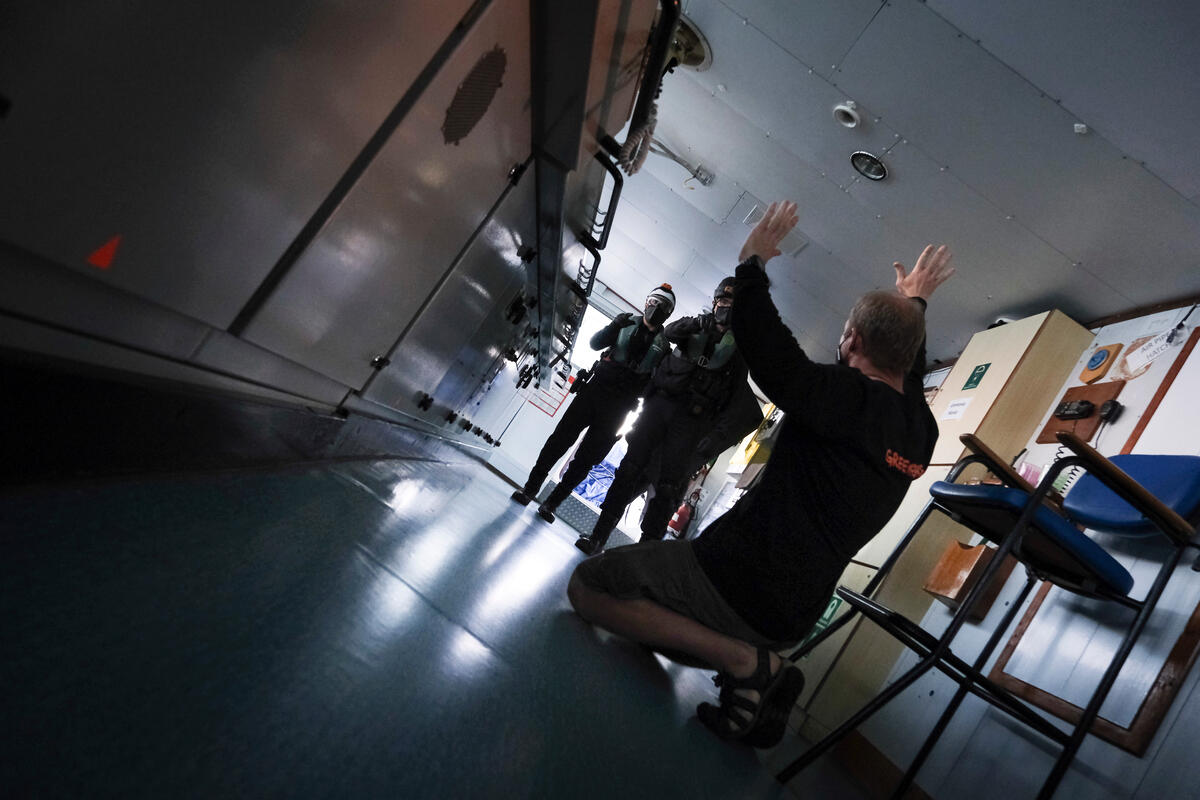
For 12 hours, the peaceful standoff held. No injuries were reported, and the activists operated under strict protocols of non-violence. Eventually, Spain’s Civil Guard boarded the vessel, severed the anchor chains, and forced the ship into port.
The Administrative Crackdown and Escalation
In the immediate aftermath of the 2021 action, the Spanish government imposed administrative fines totaling more than €160,000 against Greenpeace. These penalties targeted the obstruction of maritime traffic and alleged regulatory infractions, such as the Esperanza’s failure to request pilotage and towing services. Those financial penalties remain under active legal appeal.
However, the legal strategy took a chilling turn when prosecutors bypassed mere civil or administrative penalties, elevating the protest to the criminal sphere. The state charged the 11 participating activists with aggravated public disorder, initially demanding five years behind bars.
September–October 2026: The Trial and Acquittal
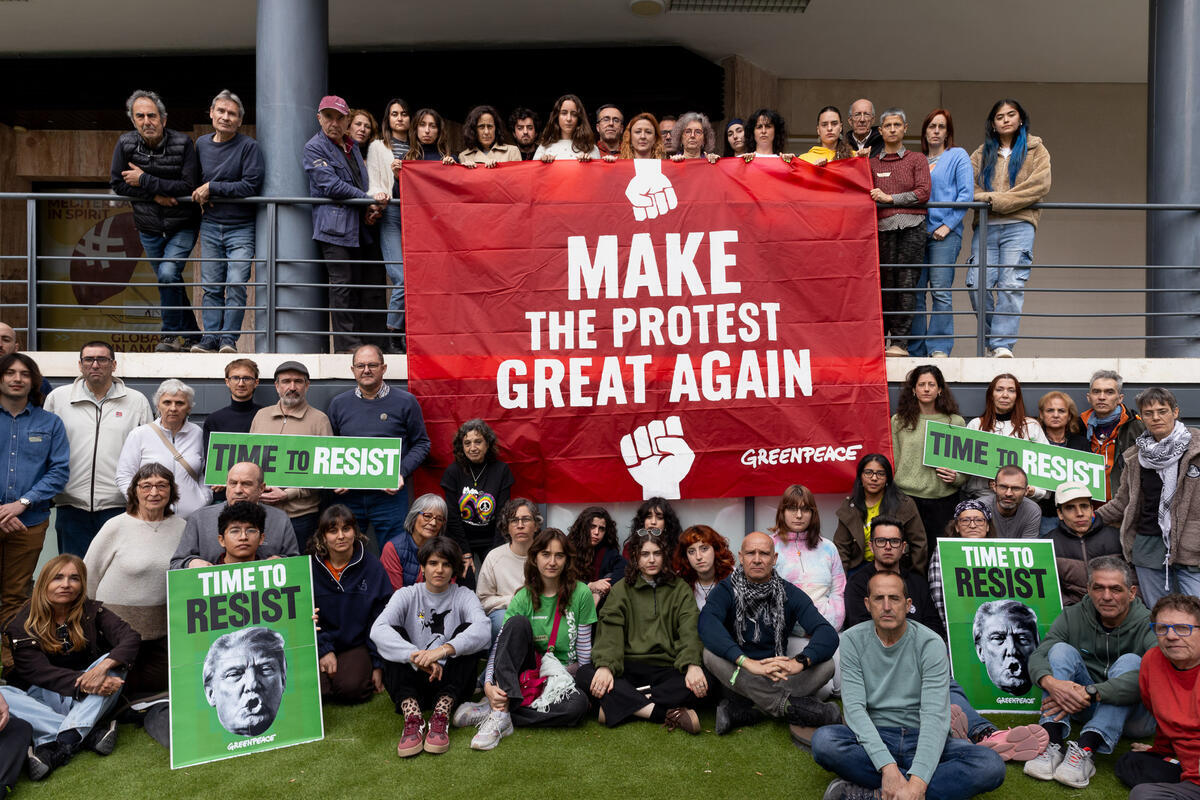
On September 23, 2026, the 11 defendants faced a single judge in Valencia, supported by an international crowd that included crews from the Greenpeace ship Arctic Sunrise, a global Greenpeace delegation, and United Nations monitors.
During the proceedings, testimonies from police officers and the shipping agent representing the tanker confirmed that the protest had been entirely peaceful. Furthermore, the prosecution conceded that its initial five-year prison demand was legally flawed, as it exceeded the maximum penalty permitted under the penal code active in 2021 (the relevant statute was amended in 2023).
On October 6, 2026, the court handed down its verdict. The judge formally rejected the charge of aggravated public disorder, ruling that the state had failed to provide any evidence of violence or intimidation capable of disrupting the public peace.
Supporting Context & Metrics: The Anatomy of a Global Crackdown
To understand why the Sagunto trial captured international headlines, it must be examined within the broader context of shrinking civic space across democratic nations.
The Scale of Criminalization in Spain
Greenpeace’s legal teams note that Spain has become an increasingly hostile environment for environmental defenders. More than 30 Greenpeace activists currently face various criminal proceedings across the country simply for participating in direct-action protests. This systematic use of the penal code reflects an aggressive deterrence strategy designed to exhaust civil society organizations financially and emotionally.
Historical Precedents of State Repression
While multi-year prison demands in Europe are rare, they are part of a historical playbook used against environmental movements globally.
- The Arctic 30 (2013): Thirty Greenpeace activists and journalists were detained for two months in Russian pre-trial detention following a peaceful protest against Arctic oil drilling. The global outcry over their detention galvanized international solidarity networks.
- Corporate SLAPP Suits: Beyond criminal prosecutions, fossil fuel conglomerates increasingly rely on Strategic Lawsuits Against Public Participation (SLAPPs). These multi-million-dollar civil intimidation lawsuits aim to bankrupt environmental organizations and silence public dissent.
Official Statements and Expert Perspectives
The implications of the Sagunto verdict extend far beyond the courtroom in Valencia. Legal experts and international monitors have seized upon the case to address the weaponization of judicial systems against climate defenders.
Daniel Simons, Greenpeace International Senior Legal Counsel
Reflecting on the verdict, Daniel Simons emphasized the absurdity of treating climate action as a criminal enterprise:
"In a functioning democracy, raising the alarm about climate collapse is a public service, not a crime. The court’s decision to throw out these absurd charges vindicates the peaceful nature of our activists’ actions. However, the fact that these individuals faced years in prison for trying to stop a fossil gas shipment reveals the extreme lengths to which authorities will go to protect fossil fuel interests."
Gina Romero, United Nations Special Rapporteur
The trial also drew sharp critique from United Nations human rights officials. Gina Romero, UN Special Rapporteur on the Rights to Freedom of Peaceful Assembly and of Association, whose representative attended the hearing, issued a stark warning regarding the global trajectory of protest rights:
"The Sagunto case demonstrates how easily the legal system can be used to deter people from exercising a fundamental right, even when the law agrees in the end they did nothing wrong. It’s part of a broader, global pattern of using the legal system, criminal charges, punitive fines, and restrictive laws to shrink civic space. I will continue to raise the alarm and raise my voice to ensure that peaceful protest is not treated as a crime — in Spain or anywhere else."
Future Outlook: What Lies Ahead for Climate Defenders?
Although the October 2026 judgment is a resounding victory for the 11 defendants, the legal battle is not definitively over. The Public Prosecutor’s Office retains the legal right to appeal the acquittal. Greenpeace legal teams remain on high alert, prepared to defend the activists through any subsequent appellate proceedings.
The Broader War on Dissent
Observers note that the "Cassandra complex"—wherein governments punish messengers who deliver uncomfortable, science-backed truths about climate change—is increasingly driving state policy. As ecological crises deepen, industries with entrenched economic stakes in fossil fuels are investing heavily in reframing climate protesters as national security threats.
For civil society, the Sagunto ruling serves as both a beacon of hope and a sobering reminder. It proves that independent judiciaries can still recognize the legitimacy of peaceful civil disobedience, even as executive powers and corporate lobbyists push for authoritarian crackdowns.
As Lindsay Bigda, Deputy Communications Lead for Greenpeace’s Time to Resist programme, notes:
"As more countries slide into autocracy, including some established democracies, repression of civil society becomes a central tool for government actors and the wealthy elites that back them to maintain their profits and power."
Ultimately, the acquittal in Valencia establishes a vital legal precedent in Europe: standing up for a habitable planet is not a threat to public order—it is an exercise of the highest civic duty.



