Executive Overview
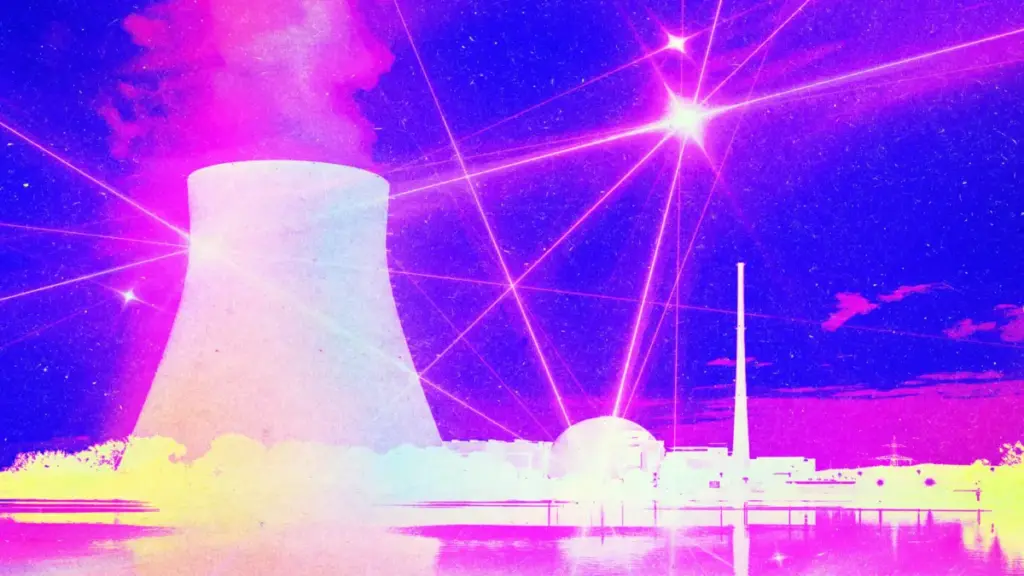
Outside the small, historic town of Paducah, Kentucky, a vast and silent architectural legacy of the Cold War sits encased in thousands of heavy steel storage cylinders. Within these metallic vaults rests a massive wealth of depleted and secondary uranium—waste material left behind from decades of nuclear enrichment operations at a now-defunct federal facility. For years, this material was written off as industrial surplus with minimal commercial value. Today, however, it represents a potentially lucrative bridge to a cleaner energy future.
The catalyst for this reassessment is an innovative, cutting-edge industrial approach known as laser uranium enrichment. Spearheaded by commercial ventures such as Global Laser Enrichment (GLE) and LIS Technologies, laser-based isotope separation promises to rewrite the economics of the nuclear fuel cycle. By deploying highly tuned beams of light to selectively target and separate specific uranium isotopes, these companies are positioning themselves at the vanguard of a global nuclear renaissance.
The timing could not be more critical. As major global powers—most notably the United States and China—accelerate efforts to build new nuclear capacity to meet ambitious decarbonization goals, the demand for reliable, cost-effective reactor fuel is soaring. Nuclear power currently accounts for approximately 9% of global electricity generation. That fraction is projected to climb as next-generation reactors, including advanced small modular reactors (SMRs) and high-temperature gas-cooled systems, transition from blueprints to operational grids.
Simultaneously, a profound geopolitical realignment has upended the international nuclear fuel market. For decades, Russia dominated the global enrichment ecosystem, flooding Western markets with relatively inexpensive enriched uranium and discouraging domestic infrastructure investments. Following the geopolitical fracture triggered by the war in Ukraine, the United States, the United Kingdom, and other Western allies have moved aggressively to ban or restrict Russian uranium imports. This strategic pivot has created a yawning supply gap.
Laser enrichment technologies have emerged as a direct response to this dual pressure of rising demand and supply chain vulnerability. By promising lower capital expenditures, reduced energy consumption, and the unique ability to mine above-ground nuclear waste repositories, laser isotope separation could fundamentally alter how the world powers its nuclear reactors. Yet, as the industry races toward commercialization, questions regarding regulatory approval, technical scaling, and market competition remain front and center.
Detailed Chronology of Laser Enrichment and the Paducah Reclamation Effort
To understand the current excitement surrounding laser enrichment, one must look back at the decades-long evolution of the technology and the specific milestones paving the way for commercialization in the 2020s.
The Decades-Long Quest for Laser Separation
The fundamental physics underpinning laser isotope separation have been understood by scientists for decades. As early as the late 20th century, researchers recognized that all molecules and atoms vibrate and rotate at an atomic scale in ways dictated by their precise composition. Even closely related isotopes—such as Uranium-238 and Uranium-235—possess distinct atomic fingerprints.
During the late 20th century, however, early attempts to harness lasers for commercial uranium enrichment stumbled against severe technological roadblocks. The lasers of the era were notoriously high-maintenance, thermally unstable, and notoriously difficult to operate continuously in heavy industrial environments. Consequently, the nuclear industry defaulted to proven, albeit energy-intensive, mechanical methods like gas centrifuges.
Recent Technological and Corporate Milestones
- The 2020–2023 Shift: Accelerated advancements in solid-state laser technology, optics, and photonics transformed laser systems from delicate laboratory curiosities into rugged, reliable industrial tools.
- The Founding of LIS Technologies (2023): Capitalizing on these technological leaps and the post-Ukraine war geopolitical landscape, LIS Technologies was founded in 2023. The firm swiftly acquired a 200-acre site in Oak Ridge, Tennessee, laying the groundwork for a domestic enrichment facility.
- GLE’s North American Testing (Fall 2025): Global Laser Enrichment achieved a critical operational milestone at its testing facility in Wilmington, North Carolina. The company successfully completed a demonstration pilot, processing several hundred kilograms of uranium. GLE subsequently decommissioned that specific system to construct a new, advanced demonstration unit designed to validate commercial-scale operations.
- Regulatory Milestones (2025–2030): GLE formally applied for an operating license with the US Nuclear Regulatory Commission (NRC) for its proposed processing facility in Paducah, Kentucky. Company leadership anticipates the final safety evaluation will conclude in November, with final licensing approval targeted for 2027. If these regulatory steps proceed on schedule, commercial processing at the Paducah site is slated to commence by 2030. Simultaneously, LIS Technologies is navigating the pre-application process with the NRC for its Oak Ridge campus.
Supporting Context & Technical Metrics: How Laser Enrichment Works
To appreciate why laser enrichment is generating such intense interest among nuclear engineers and energy economists, it is necessary to examine the physics of uranium and compare conventional enrichment methodologies with laser-based alternatives.
The Physics of Uranium: U-238 vs. U-235
Naturally occurring uranium is overwhelmingly composed of non-fissile material. Over 99% of mined uranium consists of Uranium-238 (U-238), while the fissile isotope—Uranium-235 (U-235)—accounts for a mere 0.7%.
U-235 is the critical engine of nuclear energy because, when struck by slow, low-energy neutrons, its nucleus undergoes fission, releasing massive amounts of heat and sustaining a self-generating chain reaction. Because natural ore contains too little U-235 to efficiently sustain commercial light-water reactors, raw uranium must be "enriched."
- Conventional Reactor Fuel: Typically enriched to approximately 5% U-235.
- Advanced Reactor Fuel: Next-generation and high-assay low-enriched uranium (HALEU) reactors often require fuel enriched up to 20% U-235.
Centrifuges vs. Lasers: A Technological Comparison
+---------------------------+-----------------------------------+-----------------------------------+
| Feature                   | Gas Centrifuge Technology         | Laser Enrichment Technology       |
+---------------------------+-----------------------------------+-----------------------------------+
| Primary Mechanism         | Mechanical spinning at extreme    | Optical resonance targeting atomic|
|                           | velocities (centrifugal force).   | fingerprints using laser beams.   |
+---------------------------+-----------------------------------+-----------------------------------+
| Infrastructure Footprint  | Massive facilities requiring tens | Significantly fewer units required|
|                           | of thousands of linked machines.  | (fewer than 1,000 for full scale).|
+---------------------------+-----------------------------------+-----------------------------------+
| Energy Consumption        | High continuous electrical draw   | Lower operational energy draw     |
|                           | to maintain high-speed rotation.  | per unit of separated material.   |
+---------------------------+-----------------------------------+-----------------------------------+
| Waste Management          | Processes natural ore; leaves     | Uniquely suited to reprocess      |
|                           | behind large depleted tails.      | historical depleted tails.        |
+---------------------------+-----------------------------------+-----------------------------------+
The Centrifuge Approach
For decades, gas centrifuges have been the undisputed industry standard. This equipment takes uranium in a gaseous form (uranium hexafluoride) and spins it at astronomical speeds. Because U-238 is marginally heavier than U-235, centrifugal force drives the heavier molecules toward the perimeter of the spinning cylinder, while the lighter U-235-bearing molecules concentrate near the center.
As Stephen Long, CEO of Global Laser Enrichment, notes, this process can be intuitively visualized by swinging a condiment bottle to force the remaining contents to the tip. However, scaling up centrifuge plants requires linking tens of thousands of delicate, high-speed machines in complex cascades, incurring substantial capital expenditure and high ongoing maintenance costs.
The Laser Approach
Laser enrichment discards mechanical separation in favor of photonics. Because molecules containing U-235 and U-238 possess distinct atomic-scale vibrational and rotational signatures, lasers can be engineered with extreme precision to target one specific molecular species.
When a laser beam of a specific frequency is directed into a uranium mixture, it selectively excites the targeted molecules containing U-235, imparting a localized burst of energy. This energetic boost alters the physical or chemical behavior of the target molecules, allowing engineers to separate them efficiently using electrostatic fields, magnetic deflection, or chemical reactions. While the precise proprietary details of GLE’s laser separation architecture remain classified, company officials emphasize that the physical plant footprint is dramatically smaller than a comparable centrifuge facility. A fully realized commercial laser plant is projected to operate with fewer than a thousand enrichment units.
Mining the Past: The Paducah Depleted Uranium Project
Rather than focusing exclusively on processing freshly mined natural ore, GLE’s immediate business model centers on environmental remediation and asset recovery. Under a landmark contract with the US Department of Energy, GLE has secured access to an estimated 200,000 metric tons of depleted uranium hexafluoride stored in steel cylinders at the Paducah site.
This material, generated during decades of Cold War enrichment, contains residual concentrations of U-235—often around 0.25%. GLE’s laser technology will reprocess this "tails" material, elevating the U-235 concentration back to approximately 0.7%, which matches the concentration of freshly mined natural uranium ore. This upgraded feedstock can then be fed into the standard commercial nuclear fuel supply chain.
"It’s kind of like a large aboveground uranium mine for us," explains Nima Ashkeboussi, vice president of government relations and communications at GLE.
By turning industrial waste into valuable fuel feedstock, GLE bypasses the environmental disruptions and geopolitical friction associated with opening new open-pit or underground uranium mines.
Official Statements and Industry Perspectives
The rapid commercial ascent of laser enrichment has drawn commentary from prominent figures across the nuclear science, regulatory, and corporate spheres. Their insights illuminate both the immense promise and the calculated risks of this emerging energy sector.
-
Charles Forsberg, Principal Research Scientist, MIT:
Forsberg emphasizes that geopolitical shifts are playing just as significant a role in driving laser enrichment as technical breakthroughs. Reflecting on Russia’s historical dominance of the global enrichment market, he observes:"Nobody in the West was going to build a new enrichment plant while the Russians flooded the world with enriched uranium."
However, with Western nations slamming the door on Russian imports following the outbreak of the Ukraine war, Forsberg notes that the strategic landscape has completely transformed, creating an unprecedented opening for innovative domestic enrichment technologies. -
Christo Liebenberg, President, LIS Technologies:
Highlighting the widening chasm between shrinking global supplies and soaring reactor demand, Liebenberg points directly to the urgency facing Western energy planners:"The gap is just becoming bigger and bigger, and this technology is right in the middle."
His company’s acquisition of a 250-acre footprint in Oak Ridge reflects this sense of urgency, as LIS Technologies moves toward submitting its formal NRC license applications. -
Stephen Long, CEO, Global Laser Enrichment:
Focusing on the operational efficiencies of laser isotope separation, Long points out that while individual laser units are undeniably complex and sophisticated, the sheer reduction in equipment count alters project economics. With a commercial-scale plant requiring fewer than a thousand units compared to the tens of thousands needed for a centrifuge cascade, upfront capital investment and ongoing energy expenditures are projected to drop significantly. -
Stephen Greene, Senior Fellow, Nuclear Innovation Alliance:
Offering a sober, realistic perspective on the transition from pilot plants to commercial realities, Greene strikes a note of cautious pragmatism common among energy analysts:"Laser enrichment plants could turn out to be cheaper than existing technologies… but as with most new technologies, you don’t really know until you try to build one."
Future Outlook: Navigating the Road to 2030 and Beyond
As the nuclear industry looks toward the middle of the 21st century, the integration of laser enrichment could prove to be a defining moment for global energy security. The long-term outlook for uranium reserves on Earth remains exceptionally robust; there is more than enough planetary uranium to fuel global nuclear fleets for generations. Yet, as recent history has demonstrated, resource availability does not guarantee supply chain stability.
In the near term, the nuclear renaissance faces acute bottlenecks. The construction of dozens of new commercial reactors—ranging from traditional gigawatt-scale light-water plants in Asia and Europe to advanced small modular reactors in North America—will require a steady, uninterrupted flow of specialized fuel. Any sudden geopolitical disruption, trade restriction, or mining delay can trigger severe price spikes and project cancellations. Laser enrichment facilities, by virtue of their ability to rapidly reprocess above-ground waste stockpiles and scale production with lower electrical overheads, act as a vital stabilizing buffer against market volatility.
Nevertheless, significant hurdles remain. Regulatory bodies like the US Nuclear Regulatory Commission must rigorously vet unproven commercial-scale laser facilities to ensure absolute adherence to non-proliferation, safety, and environmental protection standards. Furthermore, investor confidence must be sustained through successful pilot demonstrations, such as GLE’s ongoing testing programs in North Carolina and the subsequent construction of the Paducah commercial plant targeted for 2030.
If these technical and regulatory milestones are successfully met, laser enrichment will do much more than simply clean up Cold War nuclear waste. It will validate a smarter, cleaner, and more economically resilient nuclear fuel cycle—illuminating a clear pathway toward a secure, low-carbon energy future.