

Executive Overview
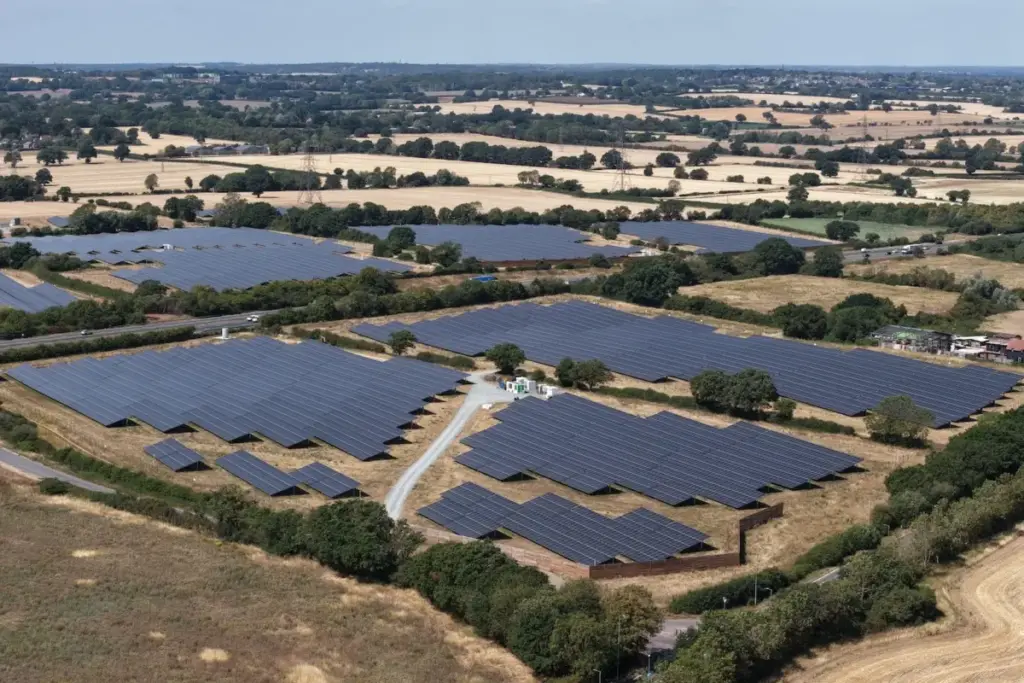
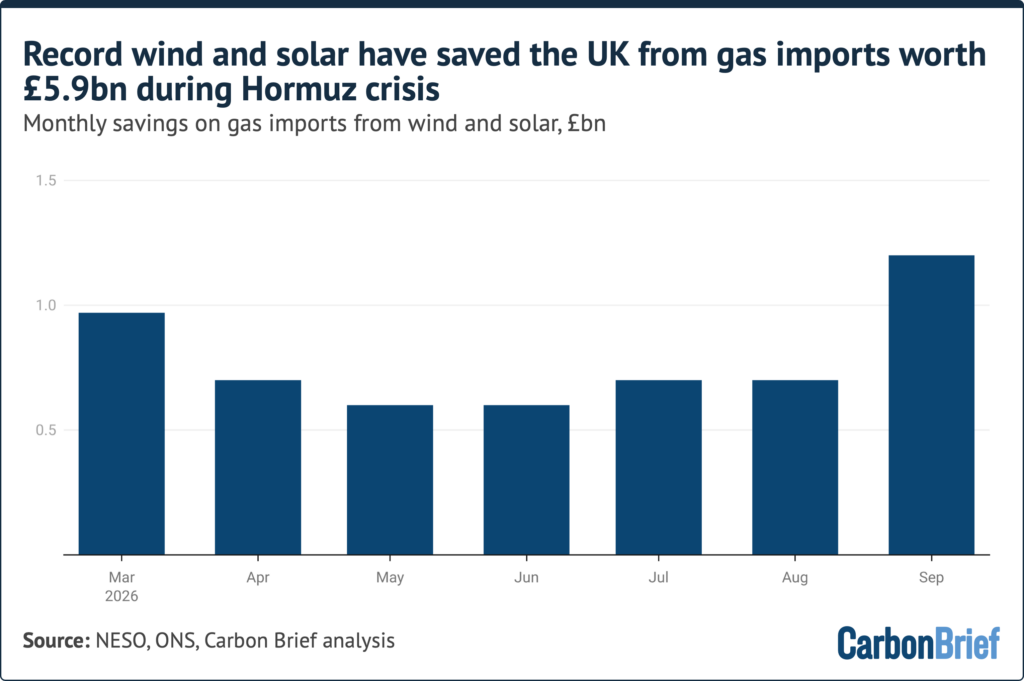
Amid growing instability in global energy markets triggered by the 2026 Strait of Hormuz conflict, the United Kingdom’s rapid transition toward renewable power generation has emerged as a critical macroeconomic cushion. According to an extensive analysis published by Carbon Brief, record-breaking output from domestic wind and solar infrastructure has enabled the UK to avoid importing an estimated £5.9 billion worth of natural gas since the outbreak of hostilties between the United States and Iran in early 2026.
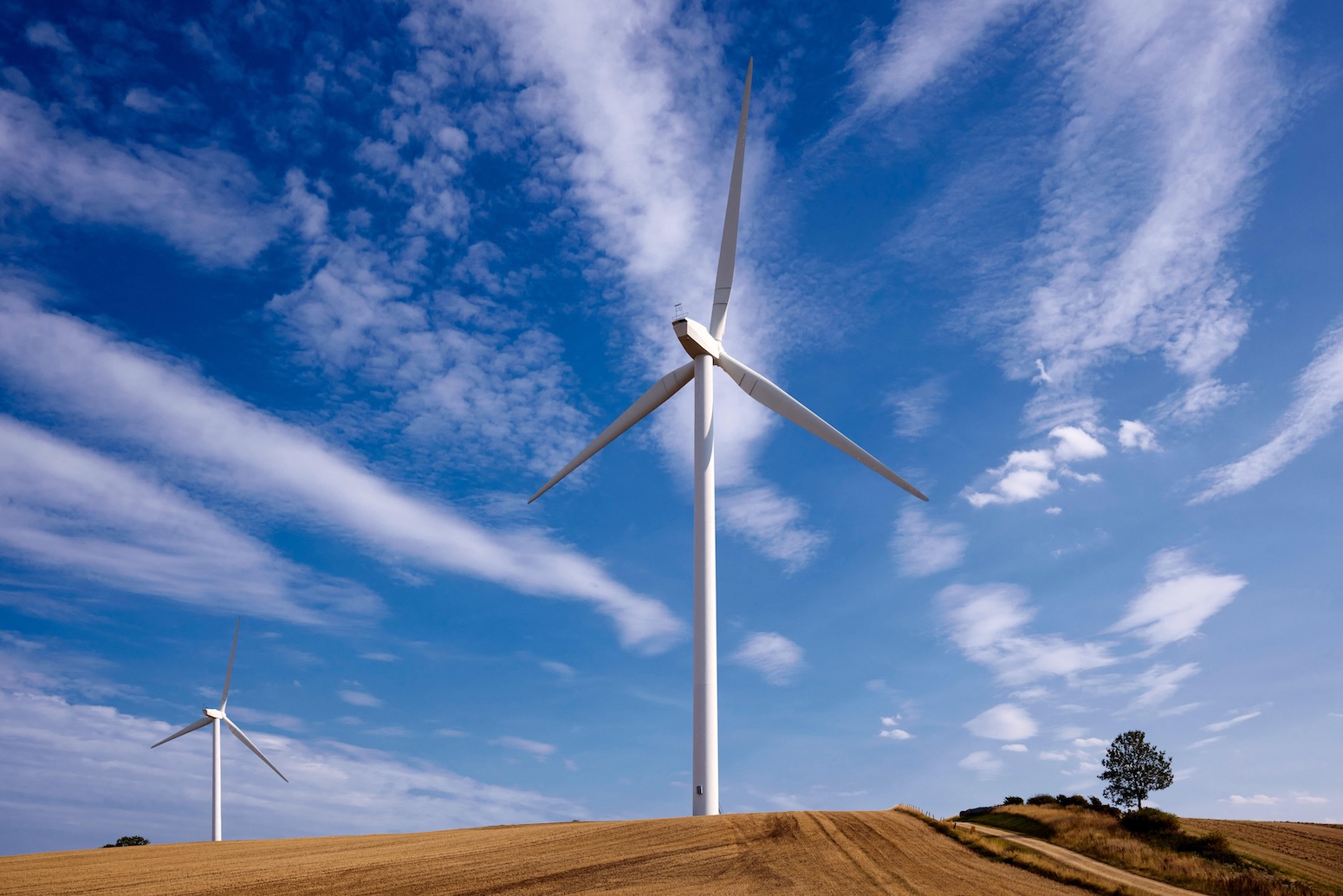
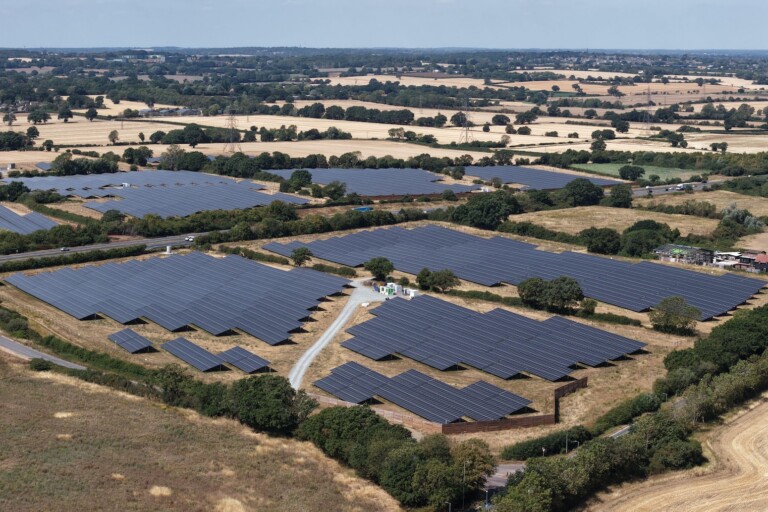
As international wholesale gas prices surge toward levels unseen since the historic energy shock of 2022, Britain’s clean-energy footprint has expanded at a unprecedented pace. Wind and solar facilities generated 41% of the country’s total electricity demand through the first three quarters of 2026—significantly outstripping natural gas, which plummeted to a 25% share of the power generation mix. This structural pivot has reduced gas-fired electricity generation by nearly 10% year-on-year, insulating the UK grid from physical supply shortages and mitigating the full force of a global fossil fuel crisis.
The financial and operational ramifications are profound. By displacing gas-fired generation with domestic zero-carbon electrons, the UK effectively canceled the need for more than 100 specialized liquefied natural gas (LNG) tanker deliveries during a period marked by severe maritime disruptions and intense international competition for uncommitted gas cargoes. While household heating bills remain heavily tethered to volatile fossil fuel pricing, domestic electricity tariffs have experienced remarkable stability, demonstrating for the first time that clean energy can decouple power markets from global commodity shocks.
Detailed Chronology
To understand the scale of the current market disruption and the buffering capacity of British renewables, the present crisis must be viewed through a multi-year timeline of structural vulnerability and geopolitical compounding.
       [Pre-2020]                [2022]              [2023 - Early 2026]           [March 2026]              [September 2026]
   Baseline Gas Prices      Russia invades Ukraine     Structural Elevation      US-Iran Conflict Begins       Autumn Supply Squeeze
   -------------------      ----------------------     --------------------      -----------------------       ---------------------
   Avg: ~30p per therm       Massive supply shock       Avg: ~90p per therm       Spike: 134p per therm        Peak: 189p per therm
                            Global LNG realigned       (3x pre-crisis baseline)  (Hormuz shipping constrained) (Winter demand & low storage)
The Pre-2020 Baseline and the 2022 Shock
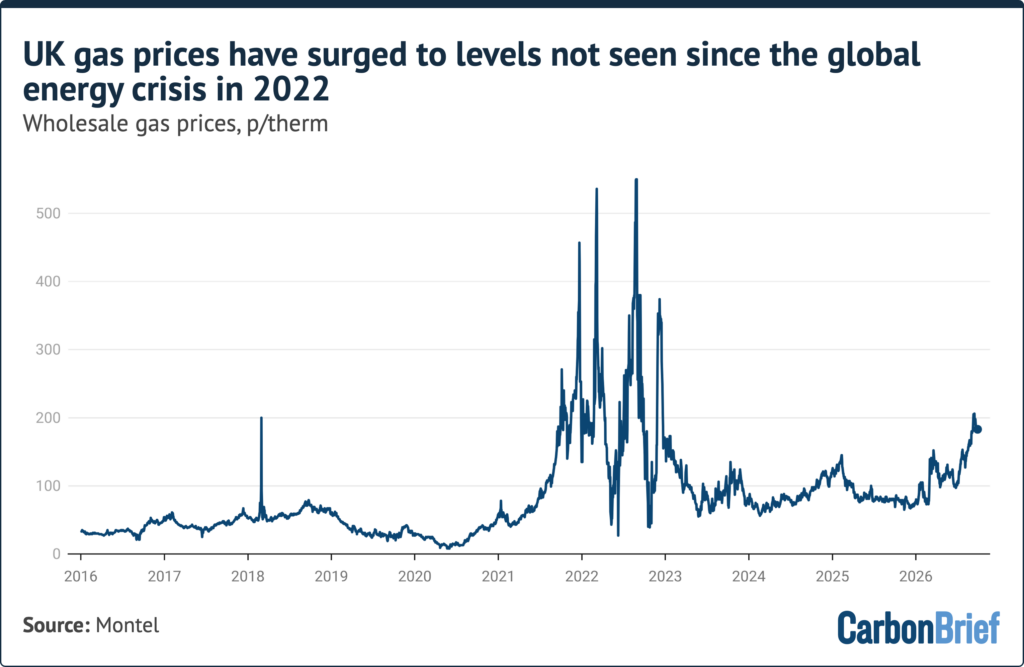
Prior to the global economic disruptions of the COVID-19 pandemic and Russia’s full-scale invasion of Ukraine in February 2022, wholesale natural gas in the UK traded at a stable baseline averaging roughly 30p per therm. The subsequent disruption of Russian pipeline gas to Western Europe transformed global energy dynamics, forcing European economies to rely heavily on seaborne LNG. This structural shock established a high baseline for wholesale fuel costs.
Elevated Post-Crisis Normalization (2023–Early 2026)
Between 2023 and early 2026, wholesale gas prices stabilized at a persistent floor of approximately 90p per therm—three times higher than pre-2020 averages. While energy markets adjusted to revised trade flows, European gas infrastructure remained vulnerable to supply chain disruptions, tight global margins, and sudden geopolitical friction.
Outbreak of the Hormuz Crisis (February–March 2026)
The fragile equilibrium shattered in February 2026 following the outbreak of direct military conflict between the US and Iran. As combat activity compromised safe navigation through the Strait of Hormuz—the world’s primary maritime choke point for oil and LNG transit—global energy markets reacted immediately. UK wholesale gas prices surged to an average of 134p per therm between March and August 2026, roughly four times the historic 2019 baseline.
The Autumn Supply Squeeze (September 2026)
By September 2026, compounding factors drove wholesale markets into acute distress. With European storage reserves dropping to historically low levels for late summer, panic buying set in ahead of the Northern Hemisphere winter. As European buyers entered into aggressive bidding wars with Asian utilities for scarce, non-Hormuz-dependent LNG cargoes, UK wholesale gas prices spiked to an average of 189p per therm—reaching their highest point since the multi-decade peaks recorded during the 2022 energy crisis.
Supporting Context & Metrics
The protective barrier provided by domestic clean generation during this crisis is underscored by operational statistics across the energy sector.
Grid Share and Generation Totals
During the first nine months of 2026, combined wind and solar generation expanded by 14% compared to the same period in 2025. In September 2026 alone, clean energy assets generated nearly 10 terawatt-hours (TWh) of electricity. This sustained operational performance allowed renewable assets to secure a dominant 41% share of total UK electricity generation, while natural gas dropped to 25%.
| Metric | Pre-Crisis / Baseline | 2026 Hormuz Crisis Period | Impact / Divergence |
|---|---|---|---|
| UK Wholesale Gas Price | ~30p / therm (2019 avg) | 189p / therm (Sept 2026 avg) | +530% increase |
| Wind & Solar Power Generation Share | ~30-35% historical range | 41% (2026 to date) | Record grid contribution |
| Gas-Fired Power Share | >35% historical range | 25% (2026 to date) | ~10% drop YoY in gas generation |
| Avoided Gas Import Value | N/A | £5.9 billion saved | Saved equivalent of 100+ LNG tankers |
| Monthly Import Savings (Sept 2026) | N/A | £1.3 billion saved | Driven by 10 TWh solar/wind output |
| Typical Household Gas Bill | Base tariff levels | +33% (~£200/yr rise) | Regulated under Ofgem Price Cap |
| Typical Household Electricity Bill | Base tariff levels | +4% | Minimal rise due to low-marginal-cost clean power |
Maritime Import Avoidance
The physical volume of natural gas displaced by clean power generation equates to over 100 conventional LNG carrier shipments. Had the UK grid required those additional cargoes during the Hormuz crisis, domestic utilities would have been forced to source them from an extraordinarily tight spot market, escalating global freight rates and deepening national trade deficits.
Transport and Broader Economic Spillovers
The ongoing fossil fuel squeeze has extended beyond gas distribution networks into liquid refined products. In the UK, roadside diesel prices reached record levels near £2.00 per liter during late summer 2026, penalizing logistics fleets and internal combustion engine owners. Conversely, Carbon Brief analysis reveals that operating an electric vehicle (EV) in the UK has become up to nine times cheaper per mile than running a petrol or diesel equivalent, owing directly to the low marginal cost of renewable-heavy grid electricity.
Across the continent, the economic consequences of fossil fuel dependency remain severe. European Union member states spent an estimated additional €100 billion on fossil fuel imports following the outbreak of the Hormuz crisis. Developing nations in Asia and Africa faced even greater hardship, frequently priced out of the spot market for LNG cargoes by wealthier European nations attempting to replenish depleted reserves.
       Displaced Demand            Avoided Supply Chain               Economic Protection
   ------------------------      -------------------------          -----------------------
   [10 TWh Monthly Clean]  --->  [100+ LNG Tankers Cancelled] --->  [£5.9bn Saved in Imports]
   [Generation Output   ]        [From Hormuz Choke Points  ]       [4% Electricity Rise vs 33% Gas]
Official Statements
The widening price divergence between gas and electricity has triggered intense debate among policymakers, market analysts, and energy experts regarding the structure of the UK energy market.
Domestic Tariff Divergence
The impact of current market conditions on consumers illustrates the distinct behavior of gas and electricity prices under heavy renewable integration. According to an evaluation by the independent think tank Nesta, typical household gas bills governed by energy regulator Ofgem’s price cap are set to rise by 33%—an annualized increase of approximately £200 per household. In stark contrast, typical household electricity bills will rise by just 4% over the same period.
Analyzing this trend, Andrew Sissons, Director for Sustainable Future at Nesta, noted on social media:

"The long-standing structural link between electricity and gas prices has finally begun to break. Because our electricity system is increasingly powered by zero-marginal-cost renewables, consumers are being shielded from the full brunt of international commodity spikes on their electricity bills, even as heating gas prices soar."
Ministerial and Executive Positions
Addressing delegates at the Labour Party Conference, Energy Secretary Miatta Fahnbulleh placed the blame for high domestic heating bills directly on historical reliance on international fossil fuels:
"The central reason British families remain exposed to volatile living costs is not the cost of building green infrastructure, but our persistent vulnerability to unhedged global fossil fuel markets. Every turbine we plant and every solar array we connect acts as an economic shield against foreign market shocks."
Endorsing this strategy, Prime Minister Andy Burnham reaffirmed his administration’s commitment to accelerating market reform and expanding nuclear and renewable generation to permanently lower consumer bills:
"We are already taking more control of our electricity prices through a massive expansion of home-grown renewables and nuclear energy. I have asked Miatta to speed up the breaking of the link between what we pay for power at home and the international gas market, to get bills down permanently."
Future Outlook
As the UK heads into the winter heating season under the cloud of the ongoing Hormuz crisis, the resilience of its energy system depends heavily on structural market reforms and aggressive infrastructure buildout.
Decoupling Electricity from Marginal Gas Pricing
The fundamental challenge facing UK energy policy remains the system of marginal pricing in the wholesale electricity market. Historically, the most expensive power generator required to meet real-time demand—frequently gas-fired peaking units—sets the clearing price for all market participants, regardless of how cheaply wind and solar assets produce electricity.
   TRADITIONAL MARGINAL PRICING
   [Solar / Wind Generation] + [Gas Peaking Plant (High Cost)]  ==>  ALL Power Sold at High Gas Rate
   (Low Marginal Cost)          (Sets Final Market Price)

   PROPOSED MARKET DECOUPLING
   [Solar / Wind Generation]  ===============================>  Sold at True Low Production Cost
   [Gas Peaking Plant]        ===============================>  Isolated to Marginal Reserve Uses
To deliver the full cost benefits of clean generation to consumers, the government is prioritizing market reform to uncouple renewable pricing from natural gas benchmark indexes. Successfully decoupling these markets could structurally reduce household electricity bills regardless of volatility in imported fossil fuel markets.

Expanding Infrastructure and Long-Duration Storage
While wind and solar have achieved record output, managing the intermittency of clean power requires rapid investment in long-duration energy storage (LDES)—such as pumped hydro, compressed air, and advanced battery systems—alongside expanded grid transmission capacity. Increasing storage capabilities will allow grid operators to capture surplus generation during high-wind and high-sun periods and dispatch it during low-generation lulls, further displacing the need for gas-fired backup power.
Strategic Energy Autonomy
The ongoing crisis in the Strait of Hormuz has demonstrated that clean energy deployment is as much a matter of national security and macroeconomic stability as it is an environmental imperative. By expanding domestic offshore wind, utility-scale solar, and nuclear power, the UK is establishing a self-sustaining energy posture. The £5.9 billion in avoided gas imports recorded during the 2026 crisis provides clear evidence that every megawatt of domestic renewable capacity strengthens the nation’s resistance against geopolitical energy shocks.



