
While the public and environmental regulators remain fixated on the soaring electricity demands of data centers and the new gas plants built to fuel them, a far more insidious and potentially catastrophic climate crisis is unfolding quietly in the background. According to landmark research published in the journal npj Climate Action, the primary threat of artificial intelligence to our climate does not stem from the power consumed by server racks, but rather from the productivity gains AI delivers directly to the oil and gas industry.
By supercharging fossil fuel extraction, exploration, and refining, artificial intelligence is poised to unlock massive new reserves of greenhouse gas emissions. The study reveals that at the high end, AI-driven fossil fuel optimization could add as much greenhouse gas pollution to the atmosphere annually as Russia—the world’s fourth-largest emitter. This stark reality completely upends the narrative pushed by tech evangelists that artificial intelligence will inherently solve the climate crisis. Instead, it exposes a symbiotic, self-reinforcing loop between the world’s most powerful technology companies and the traditional energy sector.
Executive Overview: The Blind Spot of Corporate Sustainability
For years, the technology sector has faced intense scrutiny over its carbon footprint. The massive data centers required to train and run complex large language models demand staggering amounts of electricity, frequently straining local power grids and leading tech giants to contract directly with fossil fuel generators. However, former Microsoft sustainability researchers Will and Holly Alpine argue that these operational emissions represent only the tip of the iceberg.
In their groundbreaking study, the Alpines introduce the concept of "enabled emissions"—the greenhouse gases pumped into the atmosphere not by the direct operations of tech companies, but by the third-party industries empowered by their software and algorithms. When applied to the oil and gas sector, AI acts as a potent productivity multiplier. It streamlines seismic data analysis, optimizes drilling trajectories, reduces exploratory dry holes, and accelerates refining processes.
The consequences of these efficiency gains are profound:
- Staggering Scale: The research estimates that AI-driven productivity enhancements in the fossil fuel sector could increase global energy-related emissions by 1.2% to 4.8%.
- National-Scale Pollution: At the low end, this increase equates to the total annual emissions of Mexico; at the high end, it matches the output of Russia.
- The Net Negative Balance: The massive surge in emissions unlocked by fossil fuel optimization vastly outweighs any carbon-reduction benefits AI provides to the wind, solar, and smart-grid sectors.
- Surpassing Data Center Projections: The emissions enabled by AI in the energy sector significantly outpace total projected emissions from the global data center buildout.
"The scale of this was staggering," says Will Alpine. "One of the key insights of our paper is that you cannot treat tech and fossil fuels independently. They are two sides of the same coin."
Detailed Chronology: From Big Tech Insiders to Climate Whistleblowers
The genesis of this research is deeply intertwined with a growing moral crisis within the technology sector. For years, major tech firms—including Microsoft, Google, Amazon, and others—have publicly burnished their green credentials, setting ambitious net-zero targets while simultaneously securing lucrative enterprise contracts with the world’s largest oil and gas conglomerates.
Early 2024: The Breaking Point at Microsoft
The turning point for the research came at the beginning of 2024. Will and Holly Alpine, who spent years working in corporate sustainability roles at Microsoft, reached a professional and ethical impasse. Despite their internal advocacy, they witnessed firsthand how their employer and other tech titans continued to aggressively court fossil fuel clients like Chevron, ExxonMobil, and BP, selling them cloud computing infrastructure and advanced machine learning models designed to maximize resource extraction.
Unwilling to be complicit in what they viewed as greenwashing on a corporate scale, the Alpines resigned from their positions in early 2024. Rather than exiting the tech-climate debate quietly, they pivoted to public advocacy, dedicating themselves to exposing the hidden alliance between artificial intelligence and the fossil fuel industry.
Mid-2024: Constructing the Macroeconomic Model
To transition their qualitative concerns into empirical science, the Alpines embarked on a rigorous academic endeavor. Recognizing that traditional corporate carbon accounting fails to capture indirect economic impacts, they deployed a complex computable general equilibrium (CGE) model. This sophisticated macroeconomic tool allows researchers to simulate how specific technological shocks ripple through the broader global economy over time.
By integrating empirical data and efficiency metrics published directly by oil and gas companies regarding their deployment of AI tools, the Alpines modeled artificial intelligence not merely as a tech-sector phenomenon, but as a cross-sector productivity shock. They tested its effects across exploration, extraction, logistics, refining, and electricity generation within the fossil fuel supply chain.
Late 2025 to Early 2026: Publication and Peer Review
The culmination of this research was published in npj Climate Action in late January 2026. The paper immediately drew global attention from energy economists, climate scientists, and policymakers. By providing the first comprehensive macroeconomic quantification of AI’s enabled emissions in the fossil fuel industry, the study dismantled the comfortable assumption that the digital economy and the carbon economy operate in separate spheres.
Supporting Context & Metrics: The Mechanics of "Enabled Emissions"
To understand how software can drive physical carbon pollution, one must look at how the oil and gas industry has quietly integrated artificial intelligence over the past several decades. Long before the public mania over generative AI, upstream oil companies were utilizing machine learning to interpret vast geological datasets, cutting exploration timelines from months to days and dramatically lowering the cost-per-barrel of finding untapped reserves.
The Productivity Trap
In standard economic theory, efficiency lowers costs, which in turn increases supply and lowers prices—a phenomenon known as the Jevons Paradox. When artificial intelligence makes oil and gas extraction cheaper, faster, and more precise, it breathes new economic life into marginal fields, deepwater drilling projects, and unconventional shale plays that would otherwise be economically unviable.
Jon Koomey, an independent energy researcher who was not involved in the study, validates the mechanics of the Alpines’ model. "Machine learning can make data center cooling 30 to 40 percent more efficient, but it can also make fossil fuel extraction much cheaper and faster," Koomey notes. "How that nets out nobody yet knows for sure, but this new research is a credible attempt to answer that question using a macroeconomic model."
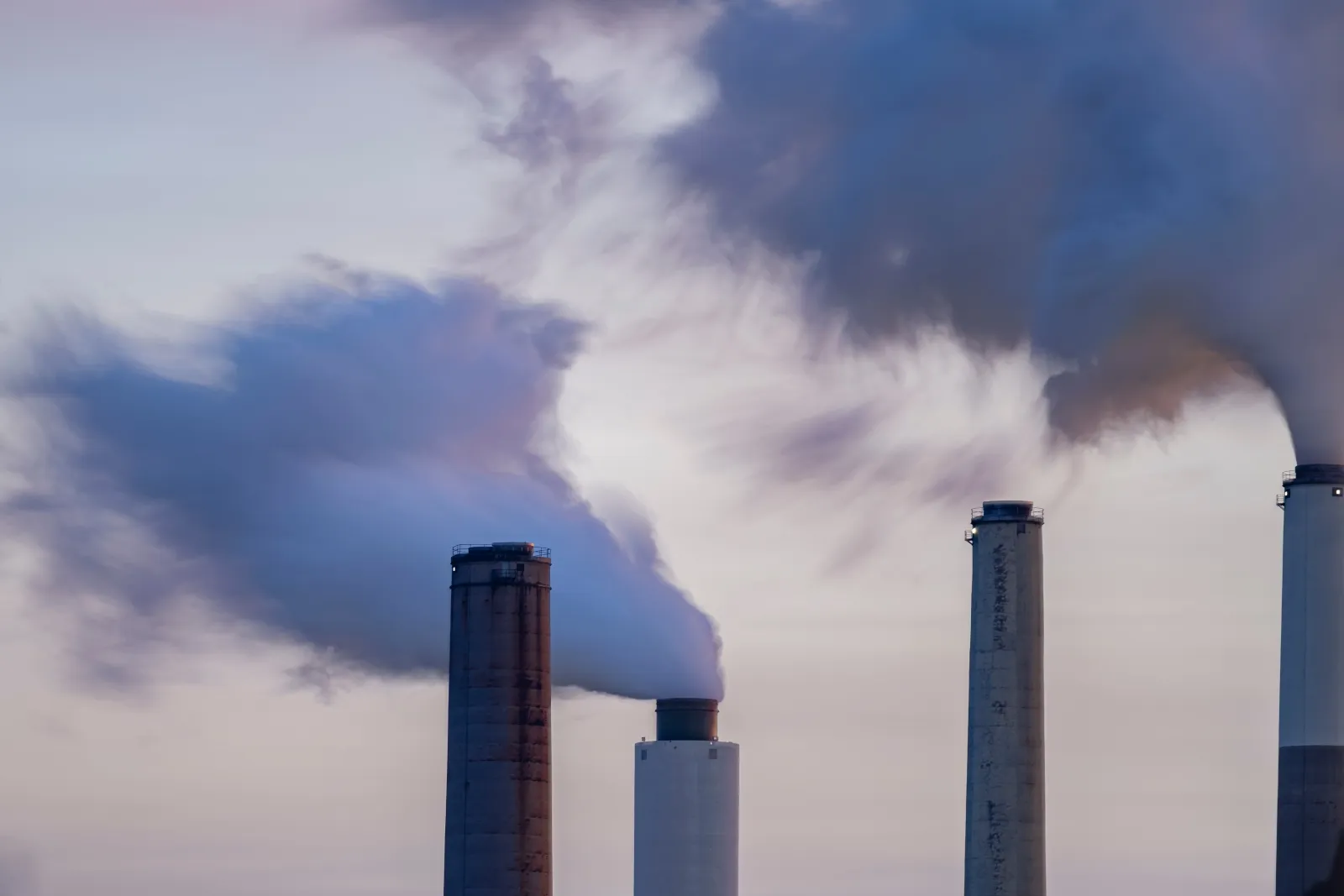
The Blind Spot of Corporate Accounting
Current corporate sustainability frameworks—such as the Greenhouse Gas Protocol—categorize emissions into three distinct scopes:
- Scope 1: Direct emissions from operations owned or controlled by a company.
- Scope 2: Indirect emissions from the generation of purchased electricity, steam, heating, and cooling.
- Scope 3: All other indirect emissions that occur in a company’s value chain (including upstream and downstream activities).
While tech companies have increasingly faced pressure to account for Scope 3 emissions—such as the lifecycle manufacturing emissions of their hardware or the electricity consumption of consumer devices—they completely ignore enabled emissions.
As Holly Alpine points out, "Sustainability measures [within tech companies] are very much focused on operational emissions" rather than the market-enabling effects of their algorithms. By selling high-performance computing power to an oil major to optimize hydraulic fracturing, a tech company registers zero direct carbon on its balance sheet, despite facilitating the extraction of millions of barrels of crude oil that will eventually be burned.
Official Statements and Industry Convergence: The Microsoft-Chevron Nexus
The theoretical framework established by the Alpines is vividly mirrored in real-world corporate partnerships. The line between Silicon Valley and the Houston petro-state has blurred into a transactional embrace, perfectly encapsulated by recent infrastructure deals.
The Texas Data Center Agreement
In late 2024 and 2025, energy giant Chevron and Microsoft confirmed a landmark infrastructure arrangement. To feed the voracious power demands of Microsoft’s expanding AI data center footprint in Texas, Chevron agreed to construct a massive, behind-the-meter natural gas power plant.
While the deal was initially framed through the lens of powering the digital cloud, subsequent disclosures revealed a reciprocal loop. During an investor call in June, Jeff Gustavson, president of Chevron’s New Energies division, explained that the arrangement was designed to benefit Chevron’s internal computational capabilities. According to Gustavson, Chevron would leverage a portion of the dedicated compute capacity generated by the gas plant "to actually power AI inside of our company."
When pressed by media outlets regarding the exact nature of this symbiotic relationship, Chevron spokesperson Paula Beasley offered a standard corporate defense via email:
"Chevron and Microsoft have worked together for years to accelerate digital transformation, leveraging the capabilities of a trusted cloud to generate insights, scale innovation, and unlock value across the organization."
For critics like Will Alpine, this quote says the quiet part out loud. "It’s perfectly illustrative of the relationship between AI and fossil fuels," he notes. The fossil fuel industry supplies the dirty baseline energy required to train AI models, while the tech sector supplies the algorithmic brainpower required to extract more fossil fuels.
Future Outlook: A Reckoning for Tech and Climate Policy
The publication of the Alpine study marks a critical inflection point in the global discourse on artificial intelligence and climate change. As governments worldwide grapple with how to regulate the explosive growth of AI while meeting Paris Agreement carbon-reduction targets, policymakers can no longer afford to view the tech sector through a localized lens.
The Fallacy of Tech-Driven Climate Salvation
Independent experts emphasize the danger of uncritical techno-optimism. As Jon Koomey warns, "There are many AI boosters who blithely claim that AI will solve the climate problem so we should go ahead and develop it as quickly as possible. Such hand-waving arguments ignore the effects that AI will have on ALL industries, not just renewable energy and efficiency."
While machine learning undoubtedly aids climate modeling, weather forecasting, and the optimization of solar farms, these incremental environmental gains are being swamped by the macroeconomic acceleration of fossil fuel extraction.
Imperatives for Reform
If the international community is serious about achieving net-zero emissions, the regulatory and corporate paradigms must evolve:
- Redefining Carbon Accounting: Regulatory bodies must expand carbon accounting standards to capture "enabled emissions," holding technology vendors accountable for the downstream extractive activities powered by their software tools.
- Scrutinizing Tech-Fossil Partnerships: Antitrust and environmental regulators should subject commercial partnerships between cloud computing giants and fossil fuel extractors to rigorous climate impact reviews.
- Internal Corporate Activism: The exodus of sustainability professionals like Will and Holly Alpine signals a growing cultural rebellion within tech companies. Employees are increasingly demanding transparency and ethical boundaries regarding which industries their technologies are allowed to empower.
Ultimately, the choice facing society is stark. Artificial intelligence is arguably the most powerful general-purpose technology invented since the industrial revolution. Whether it accelerates humanity’s transition toward a sustainable future or locks in decades of catastrophic warming depends entirely on whether we possess the regulatory courage to look past corporate greenwashing and confront the true carbon cost of the algorithm.