

Executive Overview
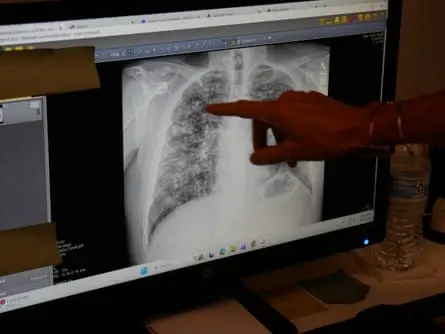
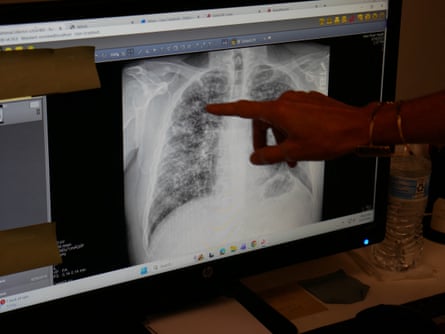
For 38 years, Josh Armes descended into the subterranean darkness of coal mines across West Virginia and Virginia, carving out a living in an industry that built the modern American economy. Today, at 74 years old, the resident of Grundy, Virginia, lives tethered to an oxygen tank. His lungs, irreversibly scarred by coal workers’ pneumoconiosis—commonly known as black lung disease—barely function. Albuterol inhalers and a grueling regimen of medical appointments dictate his daily existence, reducing his once-sturdy physical capacity to a fraction of its former self.
Yet, Armes’ physical suffering is only half of his burden. For the past dozen years, he and his family have been trapped in a bureaucratic and legal purgatory. In 2014, Armes received notice that a coal operator was appealing the federal black lung benefits he had already been receiving for more than three years. What followed was a Kafkaesque appeals process that has spanned over a decade, pitting a disabled, oxygen-dependent miner against well-resourced corporate legal teams.
Armes’ ordeal is far from an isolated incident. Across the Appalachian basin and the broader American coalfields, thousands of aging miners and their families find themselves locked in similarly punishing battles to secure the federal compensation and medical assistance they were promised. These systemic delays and appeals bottlenecks are colliding with a devastating public health crisis: cases of black lung disease are surging to levels not seen in nearly 50 years. Driven by exposure to toxic silica dust from modern mining practices, the disease is striking veteran miners at an alarming rate.
Compounding the crisis, regulatory protections are stalling. Amid a political push to revitalize the domestic coal industry, the federal Mine Safety and Health Administration (MSHA) has indefinitely frozen a critical silica dust rule, drawing fierce condemnation from labor unions, public health advocates, and lawmakers. As administrative hurdles mount and safety standards remain paralyzed in legal limbo, America’s coal miners are left facing a grim choice between earning a living in hazardous conditions and fighting an unyielding system for the care they have rightfully earned.
Detailed Chronology: The Armes Family’s Twelve-Year Battle
The timeline of Josh Armes’ struggle exposes the deep structural vulnerabilities of the federal black lung benefits program—a system originally established in 1969 to serve as a safety net for those who sacrificed their health for the nation’s energy supply.
- The Working Years (Decades Prior to Retirement): Josh Armes spends nearly four decades working underground in the coal mines of West Virginia and Virginia, inhaling microscopic coal and silica dust particles that gradually accumulate in his lung tissue.
- Retirement and Diagnosis: Following his retirement, Armes begins experiencing severe respiratory distress. Medical professionals diagnose him with coal workers’ pneumoconiosis (CWP), confirming that his decades underground have permanently destroyed his lung tissue.
- Initial Approval and the 2014 Turning Point: Armes successfully applies for and receives federal black lung benefits, securing critical financial and medical support. However, this relief is short-lived. In 2014, a coal operator files an appeal against his awarded benefits, abruptly triggering a protracted legal challenge.
- The Escalating Health Decline (Circa 2020): Around four years prior, Armes’ condition deteriorates to the point where he requires a permanent supplemental oxygen tank to breathe, alongside daily inhaler use and continuous medical supervision. Despite his worsening physical limitations, the legal battle drags on.
- Present Day (The Twelve-Year Mark): Twelve years after the initial appeal was filed, Armes remains without benefits, caught in an unending loop of administrative hearings, medical evaluations, and court filings.
The human toll of this protracted process is starkly articulated by Armes’ daughter, Crystal Armes, who has become her father’s primary advocate and caretaker. She details an exhausting system that forces disabled miners to bear the overwhelming burden of proof.
"When you’re awarded it, they can appeal it, get a different judge, and it’s stripped away from you, which I find absolutely insane," Crystal Armes explains. "They fight you at every single step of the way. They’ll send you from one doctor to another doctor to go do another test and another test. You got to go to this doctor. You got to travel over here, and it’s very costly. And some people don’t have the means to be able to do that. I don’t feel like the process should be this difficult."
Expressing her frustration with a system that demands unending validation of an incurable disease, she adds: "The burden of proof lies on the coalminer to prove that he has black lung. We have appealed it and appealed it and appealed it. Still appealing it. He does have black lung. Hopefully, soon we will be awarded the black lung benefits again. But I’m not holding my breath on that one."

Josh Armes echoes this institutional fatigue with blunt pragmatism: "I can’t figure out one thing. They sent me a paper that said I got first- and second-stage black lung. That ought to be enough, or do you have to be dead?"
Supporting Context & Metrics: A Systemic Breakdown
The struggles faced by the Armes family reflect broader, systemic deficiencies within the federal black lung program. A comprehensive May report by the Government Accountability Office (GAO)—requested in 2023 by Democratic senators Mark Warner, John Hickenlooper, Tim Kaine, and John Fetterman—has brought these systemic failures into sharp focus.
Key Data and Metrics on Black Lung Benefits and Appeals:
- Active Beneficiaries: In fiscal year 2024, approximately 7,709 direct miner beneficiaries were receiving black lung benefits. When including dependents, survivors, and miners, the total beneficiary count reached approximately 22,500 in fiscal year 2025.
- Dispute Rates: Between 2013 and 2024, a staggering 40% of all claims approved by the Department of Labor were subsequently disputed, overwhelmingly by coal operators seeking to overturn the rulings.
- The Cost of Appeals: The GAO report highlighted that between January 2013 and mid-August 2024, 390 beneficiaries whose claims had been initially approved ultimately had those claims denied on appeal, leaving them legally and financially responsible for paying back the benefits they had already received and spent on living and medical expenses.
- Prolonged Timelines: The median length for an appealed claim to move through the system is three years or more. Among 53,000 closed claims analyzed between January 2013 and August 2024, 11 individual cases took more than a decade to reach a final resolution.
- The "Wait-to-Die" Phenomenon: Miners across multiple interview groups consulted by the GAO expressed a widespread, bitter belief that mine operators deliberately prolong litigation—either "waiting for them to die" or "waiting for them to give up"—to evade their financial liabilities.
The Resurgence of Black Lung Disease
Compounding these administrative hurdles is a terrifying epidemiological trend. According to data published in the American Journal of Respiratory and Critical Care Medicine, researchers at the National Institute for Occupational Safety and Health (NIOSH) revealed that 32.5% of veteran underground coal miners in central Appalachia are now suffering from black lung disease—a prevalence rate not witnessed since 1978.
Between 2020 and 2023 alone, more than 1,700 coal miners across the United States died from black lung disease. Public health experts attribute this nearly 50-year high to the inhalation of respirable crystalline silica dust. Modern mining techniques often require cutting through rock strata surrounding coal seams, generating high concentrations of microscopic silica particles that are far more toxic and destructive to lung tissue than traditional coal dust alone.
Official Statements and Regulatory Stalemate
As black lung rates surge, regulatory efforts to protect miners from silica dust have become ensnared in political and legal battles.
In April 2024, the Mine Safety and Health Administration (MSHA) enacted a federal rule intended to mandate strict engineering and ventilation controls to limit silica dust exposure on the job. However, implementation was swiftly stalled. In June 2024, funding to enforce the rule was blocked by congressional Republicans. Subsequently, under the Trump administration, the MSHA announced it would "indefinitely delay" the silica dust rule pending judicial review—a review that has effectively been frozen due to the agency itself requesting an abeyance on court actions.
Labor organizations and advocacy groups have expressed outrage over the delay.
"Every day federal regulators drag their feet and sit on this rule, another working father, mother, husband, wife, sister or brother contracts an incurable, fatal disease," said Brian Sanson, president of UMWA International, in a sharp public statement. "Someone’s life is forever changed. A company’s profit margin cannot take precedence over a miner’s right to draw a breath."
Rebecca Shelton, Director of Policy for the Appalachian Citizens’ Law Center, offered an equally scathing critique of the administration’s legal maneuvers: "If the Trump administration actually cared about protecting coal miners from black lung, we’d have a strong silica rule in place right now. Instead, they are hiding behind a ridiculous legal process to delay action while miners get sick and die."
When pressed for comment, the White House deferred all inquiries to the Department of Labor. NIOSH declined multiple requests for comment. Meanwhile, an MSHA spokesperson defended the agency’s current posture in an email statement: "Until pending litigation and limited rulemaking on respirable crystalline silica are resolved, MSHA continues to vigorously enforce the permissible exposure limit of 100 micrograms per cubic meter."
Future Outlook: Legislative Reform and the Path Forward
The mounting convergence of surging disease rates, prolonged legal battles, and frozen federal safety rules has galvanized a legislative push from Capitol Hill. Senators Warner, Kaine, Hickenlooper, and Fetterman have introduced targeted legislation aimed at strengthening the black-lung benefits program, easing accessibility for disabled miners, and reforming an appeals process that critics argue heavily favors corporate defendants over ailing workers.
Yet, for families like the Armes, legislative reforms offer distant hope against an immediate, crushing reality. The structural imbalance—where multi-state coal corporations can leverage deep legal resources to challenge modest medical and financial benefits—remains fundamentally unchanged.
As Crystal Armes reflects on her father’s decade-long fight, her words serve as an indictment of a system that often forgets those who fueled the nation’s industrial rise:
"These people, like my dad, he gave his life to mining to support his family, and now you know we’ve been fighting this fight for over 10 plus years now. Everyone should be outraged by this. We’re hardworking, everyday Americans who go to work every day, pay our taxes, try to do the right thing, and then, we can’t get what was promised us."
Without aggressive enforcement of silica dust standards, expedited processing for benefit claims, and restrictions on endless corporate appeals, thousands of American miners will continue to face a tragic paradox: spending their final, breathless years fighting not just an incurable disease, but the very system designed to protect them.



