Executive Overview: The Unprecedented Bottleneck in British Decarbonisation
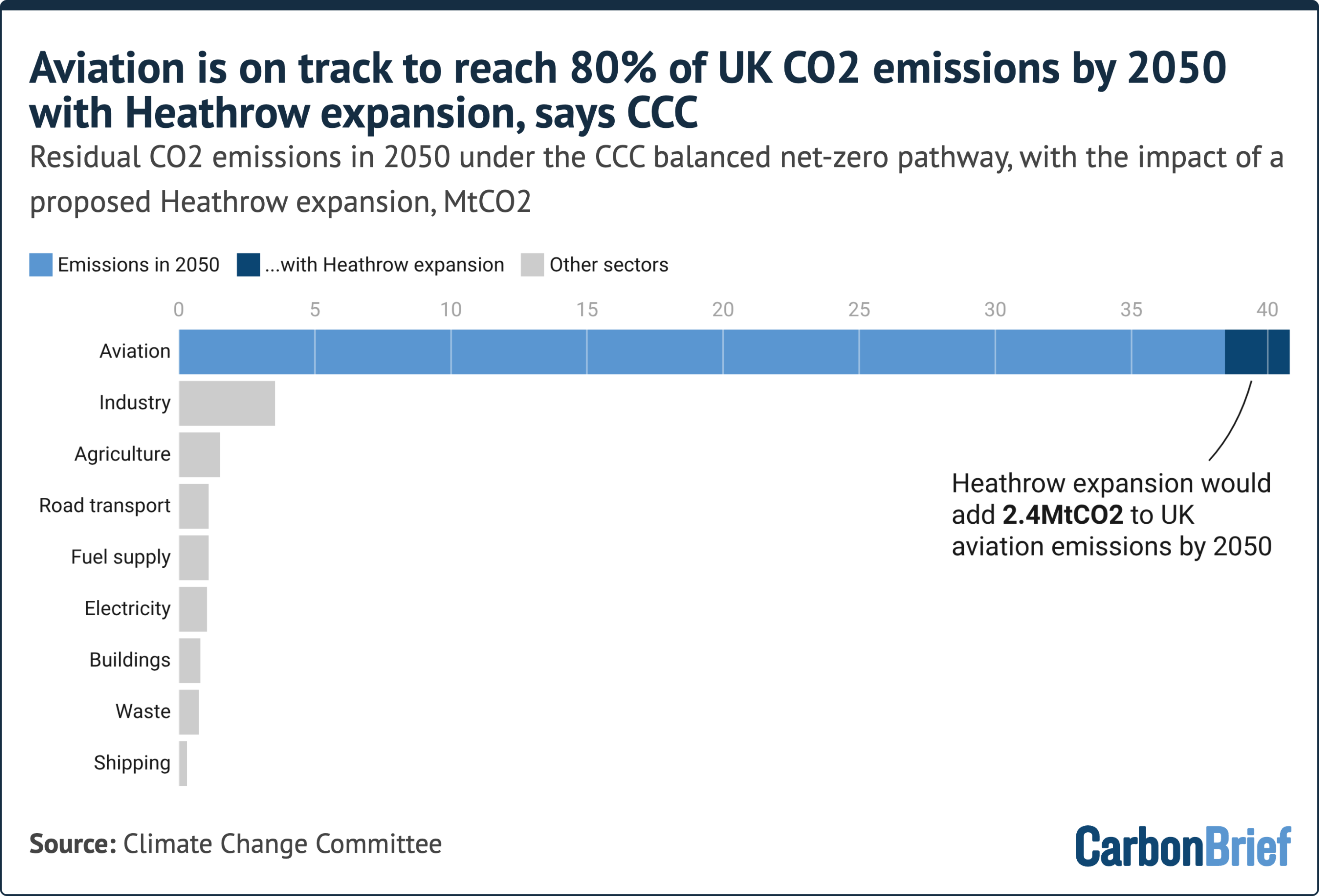
The United Kingdom’s statutory commitment to achieve net-zero greenhouse gas emissions by 2050 faces a critical structural threat from the aviation sector. According to official findings and advisory reports released by the Climate Change Committee (CCC), emissions from domestic and international flights departing the UK are on track to constitute up to 80% of the nation’s total residual carbon dioxide (CO2) emissions by mid-century.
While virtually every other primary sector of the British economy—including power generation, ground transport, and heavy manufacturing—has demonstrated sustained emissions reductions over the past three decades, aviation remains an anomaly. Driven by relentless growth in passenger traffic, aviation emissions have more than doubled since 1990.
The core of the challenge lies in a severe policy vacuum. The CCC has explicitly warned HM Government that the UK currently lacks a "credible or robust" regulatory framework to bend the curve of flight-related emissions downward. This framework gap is further exacerbated by national ambitions to expand infrastructure—most notably the proposed construction of a third runway at London Heathrow Airport, the country’s premier international hub.
The advisory body cautions that relying on technological remedies, such as Sustainable Aviation Fuels (SAFs) and unproven zero-emission aircraft, without demand-management mechanisms or strictly enforced financial accountability, threatens to derail the UK’s legal carbon budgets. To rectify this course, the CCC advocates for a rigorous application of the "polluter pays" principle, asserting that the commercial aviation industry—and by extension, air travelers—must directly finance expensive atmospheric carbon removal technologies rather than shifting the fiscal burden onto the non-flying public.
Detailed Chronology: From ‘Jet Zero’ Optimism to Policy Reckoning
  1990–2021: Passenger Demand Soars
  ├── Flight volumes expand rapidly.
  └── Aviation emissions more than double, diverging from rest of economy.

  2022: The "Jet Zero" Strategy Launched
  ├── Conservative government sets ambitious net-zero path.
  └── Relies heavily on high SAF adoption, electric aviation, and efficiency gains.

  2024–2025: Reality Check & Baseline Reset
  ├── Government admits Jet Zero techno-fix projections were overly optimistic.
  └── Emissions projections revised upwards by up to 50%.

  Present (2026): The CCC Intervention
  ├── Formal advice warns UK lacks credible policies to meet targets.
  ├── States Heathrow expansion will compound existing emissions deficits.
  └── Calls for mandatory industry funding of Direct Air Capture (DACCS).

  2027 (Target): Revised National Aviation Strategy
  └── Required policy overhaul ahead of expected 2029 Heathrow final decision.
1990–2021: Growth Unchecked and the ‘Jet Zero’ Strategy
Over the three decades leading up to the post-pandemic recovery, UK aviation experienced uninterrupted expansion. Between 1990 and 2019, passenger numbers at UK airports soared, pushing sector emissions to historic highs. While the broader UK economy reduced overall greenhouse gas emissions through coal phase-outs and renewable energy deployment, aviation enjoyed significant tax exemptions (such as duty-free fuel) and light-touch regulation.
In July 2022, the UK government launched its flagship "Jet Zero" strategy. The policy framework claimed that the UK aviation sector could achieve net-zero status by 2050 without restricting passenger growth, projecting that passenger numbers could increase by up to 70% relative to 2018 levels. The strategy anchored its projections on three major pillars:
Rapid commercial deployment of Sustainable Aviation Fuels (SAFs).
Accelerated breakthroughs in zero-emission flight technology (electric and hydrogen aircraft).
Systemic efficiency gains across airspace navigation and fleet management.
The Transition and Technological Reset
By late 2024 and through 2025, independent audits and official government concessions severely undercut the assumptions underpinning the Jet Zero strategy. Official data modeling revealed that the early projections regarding SAF production scaling, land-use availability for feedstocks, and high-density battery energy storage were far too optimistic. The government acknowledged that without market intervention, aviation emissions under the Jet Zero baseline would be up to 50% higher than originally estimated.
The CCC Intervention and the Road to 2029
The Climate Change Committee submitted formal advisory reports to Ministers evaluating the compatibility of current infrastructure proposals—specifically Heathrow Airport’s long-delayed expansion—with the UK’s Carbon Budgets and international climate commitments.
With a definitive ministerial decision on the Heathrow National Policy Statement anticipated by 2029, the CCC established a strict deadline: HM Government must formulate and pass a fully revised, legally enforceable aviation decarbonisation strategy by 2027. The committee maintained that until a comprehensive framework is established, any major capacity expansion at UK airports will directly undermine the state’s statutory climate targets.
Supporting Context & Metrics: Decoding the Emissions Baseline
To understand the systemic scale of the problem, the UK’s overall emissions trajectory must be analyzed alongside the specific impact of aviation expansion plans.
+-------------------------------------------------------------------------------+
|    ESTIMATED 2050 RESIDUAL UK CO2 EMISSIONS UNDER BALANCED PATHWAY (MtCO2)    |
+-------------------------------------------------------------------------------+
| Sector                                | Projected Residual CO2 Emissions      |
+---------------------------------------+---------------------------------------+
| Baseline Aviation (No Expansion)      | 38.0 MtCO2                            |
| Heathrow Expansion Increment (2050)   | +2.4 MtCO2 (reaches +4.5 MtCO2 2054)  |
| All Other UK Economic Sectors Combined| ~10.0 MtCO2                           |
+---------------------------------------+---------------------------------------+
| TOTAL UK RESIDUAL CO2 (2050)          | ~50.4 MtCO2                           |
+---------------------------------------+---------------------------------------+
  *Note: Baseline aviation alone accounts for ~75% of total residual CO2;
   adding Heathrow expansion brings the sector's share closer to 80%.
Mathematical Reality: The Residual Emissions Concentration
Under the Climate Change Act, the UK is legally bound to reduce overall net greenhouse gas emissions to zero by 2050. Achieving "net-zero" does not imply absolute zero emissions across all human activity; rather, it dictates that any remaining "residual" emissions must be matched equivalent-for-equivalent by negative emissions technologies (carbon removals).
Because sectors like electricity, domestic heating, light transport, and waste management possess viable pathways to achieve near-total decarbonisation using existing technologies (e.g., wind, solar, heat pumps, electric vehicles), their share of residual emissions in 2050 will drop dramatically.
Aviation, by contrast, is classified as a "hard-to-abate" sector. Even under optimistic technological adoption scenarios, baseline UK flight emissions are projected to remain at 38 million tonnes of CO2 (MtCO2) annually in 2050. Consequently, as other industries successfully eliminate their carbon footprint, aviation’s relative share of residual UK CO2 emissions inflates dramatically to roughly 80%.
The Heathrow Expansion Factor
The proposal to construct a third runway at London Heathrow introduces a significant additional carbon burden:
2050 Impact: Adding a third runway is estimated to generate an extra 2.4 MtCO2 per year by 2050.
Full Capacity Impact (2054): Once the third runway operates at complete operational capacity around 2054, it will generate an additional 4.5 MtCO2 annually.
National Share: The additional 2.4 MtCO2 produced by Heathrow expansion in 2050 alone would represent approximately 5% of the total allowable residual carbon footprint for the entire UK economy.
       Visualizing 2050 UK Residual CO2 Allocations
       +-------------------------------------------------------+
       | Aviation Baseline (38.0 Mt)                [ 75.4% ]  |
       | Heathrow Expansion (+2.4 Mt)               [  4.8% ]  |
       | ALL OTHER UK SECTORS COMBINED (~10 Mt)     [ 19.8% ]  |
       +-------------------------------------------------------+
Technological Feasibility: SAFs, DACCS, and the Limits of Offsetting
The central disagreement between environmental regulators and aviation proponents centers on the feasibility of technological fixes:
Sustainable Aviation Fuels (SAFs): Derived from waste oils, agricultural residues, or synthetic power-to-liquid processes, SAFs can lower lifecycle carbon emissions compared to conventional Jet A-1 kerosene. However, global SAF production faces severe supply-chain bottlenecks, land-use competition, high energy inputs, and exorbitant cost premiums (currently 2 to 4 times higher than fossil fuels).
Engineered Removals (DACCS): Direct Air Carbon Capture and Storage uses chemical industrial complexes to capture CO2 directly from ambient air and lock it permanently in deep geological formations. Unlike nature-based solutions (e.g., afforestation), which the CCC designates primarily to absorb non-CO2 agricultural methane emissions, DACCS offers permanent removal. However, DACCS is extremely capital-intensive and energy-demanding, currently operating at a tiny fraction of the multi-megaton scale required by 2050.
Economic Impact and the "Polluter Pays" Mandate
To compensate for unmitigated flight emissions, airlines will be required to fund engineered carbon removals. The CCC asserts that this requirement must follow the "polluter pays" principle to avoid regressive public subsidies.
Data from the UK National Travel Survey indicates a high degree of economic inequality in air travel behavior: approximately 50% of the UK population does not fly in any given year, while a small minority of frequent flyers accounts for the vast majority of international flights. If carbon removal costs were subsidized through general taxation, non-flying citizens would effectively subsidize high-carbon transport for high-income travelers.
Internalizing the full cost of engineered removals and SAF mandates onto airlines will directly alter the economics of commercial air travel:
Short-Haul Impact (e.g., Return Flight to Alicante, Spain): Airfares projected to rise by approximately £150 by 2050 (in 2024 real price terms).
Long-Haul Impact (e.g., Return Flight to New York, USA): Airfares projected to rise by approximately £400 by 2050 (in 2024 real price terms).
+---------------------------------------------------------------------------------+
|          PROJECTED FARE INCREASES UNDER "POLLUTER PAYS" MANDATE (2050)          |
+---------------------------------------------------------------------------------+
| Route                             | Estimated Additional Cost (Real 2024 Prices)|
+-----------------------------------+---------------------------------------------+
| European Short-Haul (Alicante)    | +£150 Return                                |
| Transatlantic Long-Haul (New York)| +£400 Return                                |
+-----------------------------------+---------------------------------------------+
Beyond funding removals, these cost increases serve a dual regulatory purpose: suppressing underlying consumer demand growth for air travel, which the CCC identifies as an indispensable lever for keeping aviation within safe environmental limits.
Official Statements: Industry, Regulators, and Government Alignments
The findings of the Climate Change Committee have provoked sharp responses across the political, regulatory, and industrial spectrum, highlighting the growing tension between economic growth and environmental legislation.
Speaking at a press briefing delivering the advisory findings, Nigel Topping, Chair of the Climate Change Committee, articulated the core challenge facing state planners:
"The UK does not currently have a credible plan to reduce aviation emissions in line with net-zero, so that creates a serious challenge for meeting our climate commitments. Expanding Heathrow would compound the problem unless a robust framework is established first. The sector must take structural responsibility for its emissions under the polluter-pays framework."
Reactions from government officials reflect an evolving recognition of previous policy overestimations. A spokesperson for the Department for Transport (DfT) acknowledged the necessity of updating baseline assumptions:
"We remain committed to securing the environmental and economic sustainability of the UK aviation network. The government recognizes that previous projections regarding the pace of technological deployment were highly ambitious. We are reviewing the Jet Zero roadmap to ensure that future policy updates, planned for 2027, reflect rigorous scientific realities while preserving vital national connectivity."
Meanwhile, representatives for Heathrow Airport Holdings defended the necessity of infrastructure expansion, emphasizing the hub’s critical role in national trade and trade linkages:
"Expanding Heathrow is vital for Britain’s long-term trade, economic competitiveness, and international connectivity. We remain confident that our growth plans can coexist alongside national decarbonisation goals through the aggressive scale-up of SAF mandates, modernized airspace architecture, and advanced carbon accounting mechanisms."
However, policy analysts from the Aviation Environment Federation (AEF) strongly endorsed the CCC’s strict line on structural demand management:
"For years, policy has relied on techno-fixes that are perpetually ‘just around the corner.’ The CCC’s assessment confirms what independent data has shown for a long time: you cannot expand airport capacity without expanding emissions. Forcing the industry to pay for its own direct air capture costs is the bare minimum required to prevent ordinary taxpayers from footing the bill for aviation’s carbon footprint."
Future Outlook: Navigating the Policy Gap to 2050
The UK aviation sector faces a decisive inflection point over the next decade. The transition from technological optimism to hard economic realities demands unprecedented structural reforms across policy, technology, and consumer behavior.
       Key Policy Milestones (2026–2050)

       2027  ──►  Publish Revised National Aviation Strategy
                  • Legally binding SAF blending mandates.
                  • Statutory Framework for DACCS integration.

       2029  ──►  Final Ministerial Decision on Heathrow Expansion
                  • Contingent on 2027 policy viability.

       2035  ──►  Interim Carbon Budget Assessment
                  • Market-driven ticket price adjustments take hold.
                  • Demand suppression metrics evaluated.

       2050  ──►  Statutory Net-Zero Target
                  • Aviation CO2 capped at residual limits (~38 MtCO2).
                  • Full operationalization of engineered removals.
The 2027–2029 Regulatory Hurdle
The immediate priority rests on the government’s ability to produce a revised, legally sound aviation strategy by 2027. This strategy will serve as the legal test against which any future planning applications for airport expansions—including Heathrow, Gatwick, or Luton—will be measured. To pass legal muster under the Climate Change Act, the 2027 strategy must integrate three key components:
Enforceable Carbon Caps: Setting explicit operational carbon ceilings for airports and airlines that decrease incrementally over time.
Financial Mandates for DACCS: Establishing mechanisms forcing airlines to pre-fund geological carbon removals years in advance to drive down technology costs and ensure supply capacity by 2050.
Formal Demand Management Frameworks: Preparing fiscal levers, such as reform of the Air Passenger Duty (APD) or a Frequent Flyer Levy, to systematically curb artificially high growth in passenger volumes.
The Long-Term Realities of Decarbonised Air Travel
If HM Government accepts the CCC’s advice, the basic economic model of commercial flying will undergo a permanent shift. The era of ultra-cheap, unconstrained long-haul travel is likely to give way to an operational paradigm where environmental externalities are fully priced into every ticket sold.
Ultimately, the UK’s handling of its aviation sector will serve as an international test case. As the first major economy to translate net-zero targets into statutory obligations, the decisions taken by UK policymakers ahead of the 2027 strategy and 2029 Heathrow deadline will signal whether advanced industrial nations can successfully reconcile global aviation growth with the imperative of climate stabilization.