

Published: September 23, 2026
Author: Jacob Wallace
Beat: Recycling Technology & Infrastructure Innovation
Executive Overview
In a milestone development for municipal solid waste management and automated material recovery, Circular Services is expanding its strategic deployment of Greyparrot’s advanced artificial intelligence software. The operational escalation—set to take effect this fall—will transition Greyparrot’s AI Analyzer platform from a passive monitoring tool into an active, decision-driving asset at Circular Services’ flagship Materials Recovery Facility (MRF) in Sunset Park, Brooklyn, New York.
Installed initially during the first quarter of the year, the computer vision systems have been quietly auditing the facility’s vast waste streams. The findings have been striking. According to preliminary analytical data released jointly by the two companies, approximately 89% of all aluminum passing through the Sunset Park sorting lines is recoverable. This represents an estimated volume of roughly 91,000 beverage cans daily that could otherwise escape traditional sorting mechanisms and end up in landfills.
This collaborative expansion arrives at a critical juncture for the North American recycling sector. Aluminum can recycling rates across the United States have hovered near decades-long lows, presenting both an environmental challenge and a significant economic loss for facility operators. By integrating real-time waste intelligence, Circular Services and Greyparrot aim to close the circularity gap, turning invisible supply chains into transparent, highly recoverable commodity streams. Furthermore, the success of the Brooklyn pilot sets the stage for a potential nationwide rollout across Circular Services’ extensive portfolio of 38 MRFs, establishing a new technological benchmark for the waste management industry.
Detailed Chronology of the Partnership
Q1 2026: Establishing the Foundation in Brooklyn
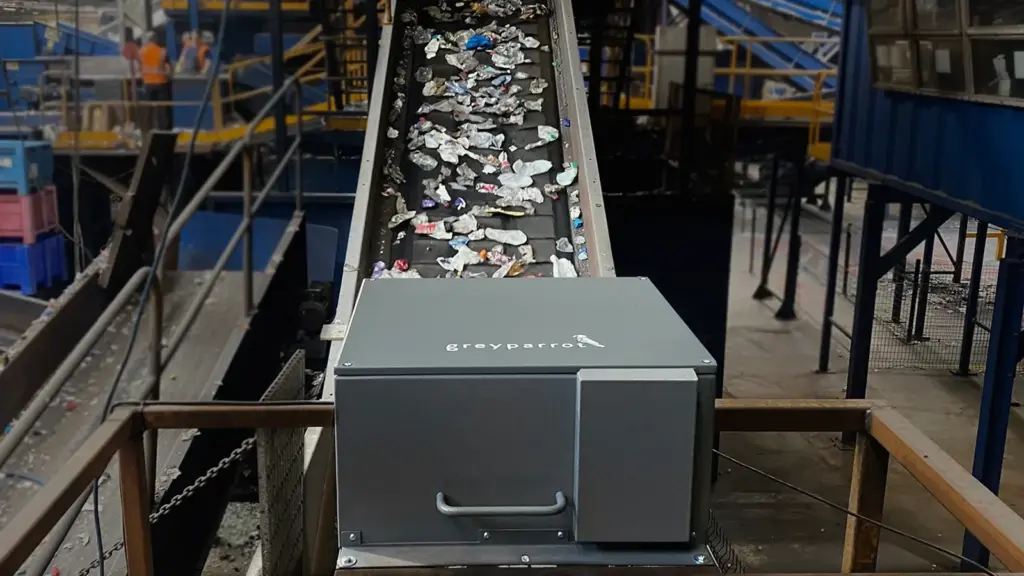
The operational partnership between Circular Services and Greyparrot formally commenced in the first quarter of 2026 with the strategic installation of Greyparrot’s AI camera systems above the sorting lines at the Sunset Park MRF in Brooklyn. For Circular Services, this marked the organization’s inaugural deployment of automated AI sorting software across its physical assets.
During this initial phase, the technology functioned primarily as a passive observer. Positioned directly over conveyor belts, the computer vision units continuously tracked, categorized, and quantified the heterogeneous waste streams rushing past at high speeds. Rather than directly controlling sorters or mechanical arms, the software gathered baseline composition data, mapping out material types, error rates, and commodity loss in real time.
July 2026: Financial Fuel and Industry Milestones
The backdrop of this collaboration has been heavily influenced by Greyparrot’s aggressive corporate and technological scaling. In July 2026, the artificial intelligence firm announced a major $27 million Series B funding round, led by prominent technology investor Omar Mir.
Greyparrot earmarked these funds specifically to expand its core AI, data science, and product development divisions. The objective: refine its real-time analytics to deliver even deeper insights to waste management clients. Around the time of the funding round, Greyparrot reported a monumental industry milestone, noting that its systems globally had identified over $2.5 billion in recoverable material value and surpassed 1 trillion individual waste detections across all deployed facilities. This capital injection provided the infrastructural and R&D muscle necessary to move projects like the Sunset Park pilot from experimental trials to active operational integration.
September 2026: Announcing the Active Fall Pilot
Building upon months of accumulated baseline data, the two companies officially announced on September 23, 2026, that they are escalating their partnership. Moving past passive monitoring, the upcoming autumn projects will test how real-time automated alerts impact operational management.
Instead of waiting for end-of-day reports, facility managers will receive immediate system alerts regarding commodity quality drops and nuanced production reports. This transition shifts the AI from a retrospective auditing tool to an active operational copilot. Concurrently, the partnership announcement dovetailed with Circular Services’ broader corporate expansion, which included the acquisition of reusable food service ware company Re:Dish, signaling a holistic push toward enterprise-wide circularity solutions.
Supporting Context & Metrics: The Aluminum Crisis and AI Efficiency
The Aluminum Recovery Deficit
The urgency of the Sunset Park project is underscored by macro-level headwinds in the metals recycling market. Recent comprehensive research published by the Aluminum Association and the Can Manufacturers Institute revealed that aluminum beverage can recycling rates in the United States have dropped to their lowest levels in decades.
At a time when consumer demand for sustainable packaging remains high, structural inefficiencies in collection and sorting have led to massive volumes of valuable aluminum slipping through the cracks of municipal recovery facilities. Millions of pounds of infinitely recyclable aluminum are prematurely discarded, forcing manufacturers to rely more heavily on carbon-intensive primary metal production.
Energy Savings and the Power of Waste Intelligence
The environmental calculus of recovering aluminum via automated sorting is overwhelmingly positive. According to industrial lifecycle analyses cited by Greyparrot, manufacturing products from recycled aluminum is up to 95% more efficient in terms of energy consumption compared to producing virgin material from bauxite ore. Every percentage point gained in recovery translates directly into substantial greenhouse gas reductions and energy savings for industrial manufacturers.
"Waste intelligence makes that visible for the first time, and what it shows is domestic supply hiding in plain sight," noted Ambarish Mitra, co-founder of Greyparrot, emphasizing how advanced computer vision uncovers hidden commodity value within complex, low-margin waste streams.

Quantifying AI Impact on MRF Operations
Greyparrot’s technology is engineered to tackle the fundamental human limitations of traditional manual and optical sorting lines. By capturing high-resolution imagery and applying deep-learning neural networks trained on over a trillion waste items, the software identifies materials based on brand, polymer type, form, and composition in milliseconds.
Key performance metrics associated with the deployment include:
- Efficiency Gains: Facilities utilizing Greyparrot’s camera-based sorting intelligence typically experience overall efficiency improvements ranging from 10% to 20%.
- Granular Composition Data: The software delivers unprecedented visibility into material streams, helping operators dynamically adjust mechanical sorters, reduce cross-contamination, and optimize labor allocation.
- The Sunset Park Benchmark: The revelation that 89% of aluminum at the Brooklyn facility is recoverable equates to roughly 91,000 cans per day—a staggering metric that illustrates the immediate financial and environmental upside of AI intervention.
Official Statements and Industry Perspectives
The partnership bridges the gap between traditional waste infrastructure and cutting-edge software engineering, drawing enthusiastic commentary from leadership teams on both sides.
Jamie Lowrey, Vice President of East Recycling Operations at Circular Services, emphasized the scalability of the initiative. In an emailed statement, Lowrey highlighted that while Sunset Park serves as the immediate testing ground, the success of these autumn projects could pave the way for a sweeping enterprise-wide rollout. With 38 MRFs currently operating under the Circular Services portfolio, the potential cumulative impact of implementing Greyparrot’s AI software nationwide is immense.
A spokesperson for Circular Services elaborated on the specific mechanics of the upcoming seasonal trials:
“[We] will be running several projects in partnership with Greyparrot this fall where we will assess the impacts from the system’s alerts to our facility management about commodity quality and its detailed reporting on production.”
The collaboration also builds upon a longstanding relationship between Greyparrot and Closed Loop Partners, the major investment firm backing Circular Services. The entities have a history of pioneering sustainable waste innovations together. Last year, the partners released an influential joint report examining the deployment of Greyparrot’s AI technology to identify and recover food-grade polypropylene within complex MRF environments, establishing a roadmap for safe plastics recycling.

Future Outlook: Scaling AI Across 38 MRFs and Beyond
As the waste management industry grapples with stricter environmental regulations, rising operational costs, and volatile commodity markets, the integration of artificial intelligence is rapidly transitioning from a novelty to an operational necessity.
The upcoming fall projects at the Sunset Park MRF will serve as a critical crucible for the future of AI-driven recycling. If the software successfully translates real-time alerts into actionable operational adjustments that reliably capture the identified 89% recoverable aluminum stream, Circular Services will possess a powerful blueprint for optimization.
Looking ahead, the implications extend far beyond the Brooklyn facility. Should Circular Services choose to integrate Greyparrot’s Analyzer software across its remaining 37 facilities, it would represent one of the most comprehensive deployments of computer vision technology in the North American recycling sector to date.
By converting millions of tons of previously invisible, lost commodities into high-purity secondary raw materials, initiatives like the Sunset Park partnership prove that the future of waste management lies not just in heavier machinery, but in smarter, data-driven vision. As the technology continues to evolve and capital investments flow into climate tech infrastructure, artificial intelligence is poised to redefine what is possible in the modern circular economy.



