

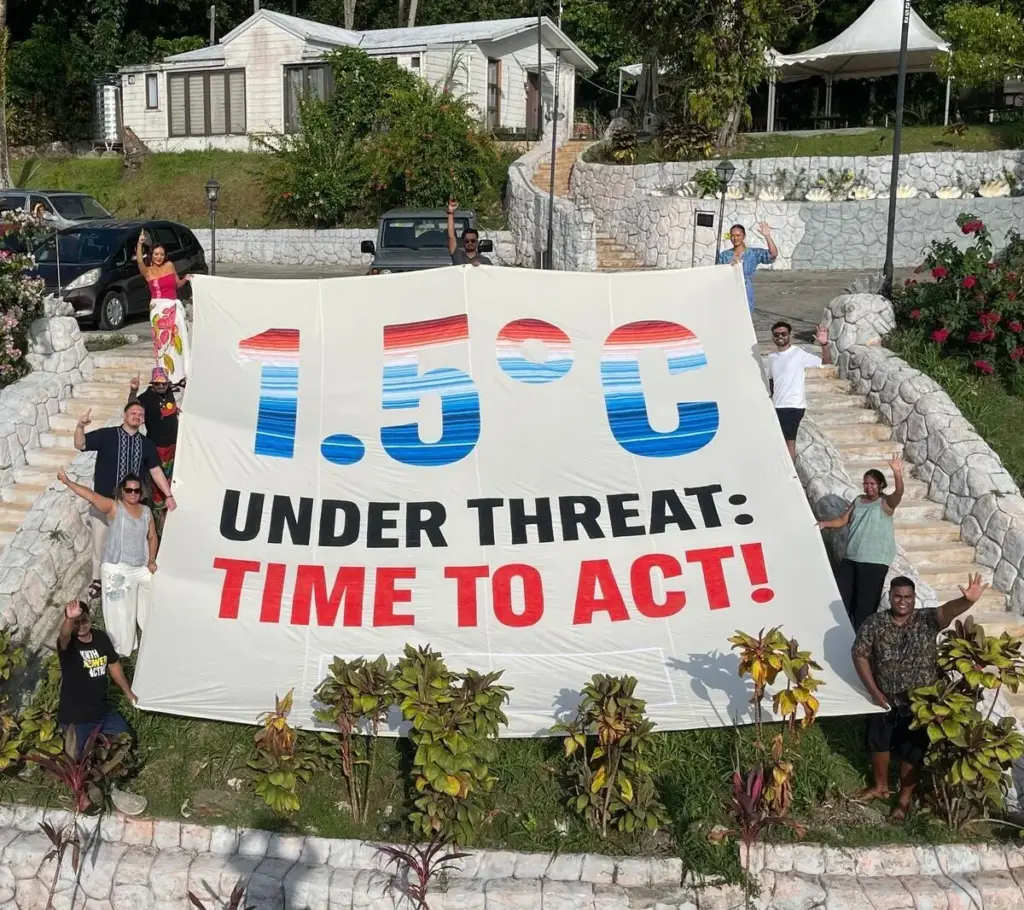
NEW YORK, UNITED STATES — As world leaders and diplomats converge in New York for the High-Level Event on Climate Action and the Just Transition, mounting pressure is facing the international community. Serving as a defining, final initiative for outgoing United Nations Secretary-General António Guterres—who has anchored his legacy to existential climate advocacy—this high-stakes gathering represents a critical juncture. It arrives at a time when global climate and energy crises are intersecting violently with economic instability, demanding a unified, aggressive multilateral response rather than hollow rhetoric.
The urgency of the summit is underscored by a sobering scientific reality. Earlier this September, the United Nations Environment Programme (UNEP) issued a stark warning: the global community has officially failed to limit long-term warming to the Paris Agreement’s optimal 1.5°C threshold. Instead, UNEP outlined an alarming "overshoot, peak and decline" trajectory.
Against this grim backdrop, international environmental NGO Greenpeace has issued an uncompromising challenge to governments worldwide. The organization is demanding that global leaders drastically accelerate their commitments made at COP28 in Dubai just two years ago—specifically targeting the phased transition away from fossil fuels and an absolute end to forest destruction by 2030. With pivotal international summits on the horizon—including the upcoming COP31 climate conference in Türkiye and the COP17 biodiversity conference in Armenia—the window to avert runaway ecological collapse is rapidly narrowing.
Executive Overview: The High Stakes of Guterres’s Final Climate Push
The High-Level Event on Climate Action and the Just Transition is much more than a routine diplomatic gathering; it is a litmus test for the credibility of international climate governance. Secretary-General Guterres has spent his tenure sounding the alarm against what he frequently terms "mutually assured destruction" via fossil fuel reliance. As he prepares to step down, this summit is designed to consolidate fragmented national policies into a coherent, enforceable roadmap.
However, the chasm between diplomatic promises and on-the-ground reality has never been wider. While corporate balance sheets in the fossil fuel sector bulge with historic profits, communities worldwide are left to grapple with record-shattering heatwaves, catastrophic floods, unprecedented wildfires, and soaring living costs driven by energy market volatility.
Greenpeace’s intervention at the UN General Assembly (UNGA) margins cuts straight to the heart of this systemic failure. Backed by a massive global petition bearing over 2 million signatures demanding that "Polluters Pay," the organization is framing the climate crisis not merely as an environmental challenge, but as an issue of profound global justice. The core message to world leaders is unequivocal: talk is cheap, incrementalism is fatal, and the financial burden of the climate emergency must be shifted away from ordinary citizens and onto the multinational corporations driving it.
Detailed Chronology: From Dubai Commitments to the 1.5°C Overshoot
To understand the gravity of the current negotiations, one must trace the timeline of commitments and systemic failures that have brought the international community to this precipice.
The COP28 Watershed and Its Unfulfilled Promises
In late 2023, COP28 in Dubai concluded with a historic, albeit compromise-laden, agreement. For the first time in the history of UN climate talks, the final text explicitly called on nations to contribute to "transitioning away from fossil fuels in energy systems, in a just, orderly and equitable manner." Concurrently, leaders reaffirmed commitments to halt and reverse forest loss and land degradation by 2030.
While heralded at the time as a paradigm shift, the agreement suffered from a fatal flaw: it lacked binding enforcement mechanisms and clear accountability frameworks. National contributions remained voluntary, allowing major emitters to pursue fossil fuel expansion under the guise of transition pragmatism.
The UNEP Awakening: Entering the "Overshoot" Era
The fragile optimism of COP28 was shattered in September of this year when the United Nations Environment Programme released its updated emissions gap assessments. The data confirmed what climate scientists had feared: global greenhouse gas emissions have not peaked rapidly enough to prevent the Earth from temporarily breaching the 1.5°C warming limit established by the 2015 Paris Agreement.
The UNEP report introduced the concept of an "overshoot, peak and decline" pathway—a perilous trajectory where global temperatures will temporarily exceed safe boundaries before technological and nature-based removals theoretically pull them back down. Climate scientists have repeatedly warned that relying on an overshoot is a dangerous gamble, risking irreversible tipping points, such as the collapse of major ocean circulation currents, runaway permafrost thawing, and the wholesale destruction of coral reefs.
The Groundswell at UNGA
Capitalizing on the spotlight of the UN General Assembly, civil society mobilization reached a fever pitch in New York. Greenpeace’s presentation of over 2 million petition signatures calling on world leaders to make polluters pay served as a stark reminder of public sentiment. Citizens are no longer willing to accept austerity and inflation caused by climate-fueled disruptions while fossil fuel conglomerates post record-breaking windfalls.
Supporting Context & Metrics: Profits, Polluters, and the Price of Delay
The socioeconomic architecture of the modern climate crisis is defined by a perverse paradox: the entities most responsible for destabilizing the planetary life-support system are simultaneously reaping the highest financial rewards in human history.
Record Profits Amid Global Disarray
Throughout the energy market turbulence of recent years—exacerbated by geopolitical conflicts, including tensions in the Middle East—major oil and gas corporations have amassed astronomical windfalls. Commonly referred to by economists and consumer advocates as "fossilflation," these inflated energy prices have directly translated into soaring costs at the gas pump, escalating grocery bills, surging insurance premiums, and crushing municipal budgets dedicated to disaster recovery.
According to global policy analysts, everyday citizens are effectively paying a double penalty: first, through hyper-inflated energy and living costs, and second, through taxes required to rebuild disaster-stricken communities. Meanwhile, the wealthiest polluters escape structural taxation, utilizing corporate lobbying and greenwashing campaigns to delay regulatory crackdowns.
The Biodiversity and Wildfire Nexus
The climate crisis cannot be decoupled from the ecological and biodiversity crises. The catastrophic wildfires that have ravaged North America, Southern Europe, the Amazon, and parts of Asia over the past year are both symptoms and accelerators of environmental breakdown.
High-integrity forests—the planet’s primary terrestrial carbon sinks—are being converted from carbon absorbers into massive carbon emitters as they burn. Protecting these ecosystems is not merely an aesthetic or conservation goal; it is a strict physical boundary for maintaining climate stability. As expert analyses indicate, failing to meet the 2030 target to halt forest destruction virtually guarantees that the 1.5°C threshold will transform from a temporary overshoot into a permanent, catastrophic new normal.
Official Statements: Voices from Greenpeace International
Senior leadership at Greenpeace International pulled no punches in their assessment of the current global trajectory, issuing pointed demands for structural reform, accountability, and the redirection of capital.
Jasper Inventor on Corporate Profiteering and Systemic Inaction
Jasper Inventor, Deputy Programme Director at Greenpeace International, placed the blame squarely on the shoulders of political leaders who have prioritized corporate appeasement over human survival:
"We are overshooting our climate limits while fossil fuel companies are overflowing with profits. As those most responsible for the climate crisis continue to cash in, this year’s repeated disasters pose a clear question: will politicians finally end the industry’s destruction? Talk is cheap, but life is priceless and our climate stability is disintegrating the longer we delay."
Inventor emphasized that the solutions are well-documented, requiring political courage rather than theoretical innovation:
"The answer is not found in discord or division, but urgent collective action for our mutual benefit. Governments must develop and implement national roadmaps that accelerate a fast, fair and funded just transition into renewable energy and ensure we hold fossil fuel polluters and forest destroyers to account for the destruction they’ve caused."
An Lambrechts on the Biodiversity Crisis and Forest Roadmaps
Addressing the compounding ecological emergency, An Lambrechts, Biodiversity Policy Expert at Greenpeace International, highlighted the existential role that forests play in regulating the global thermostat:
"The devastating wildfires this year must finally compel us to act with the urgency we need to protect high integrity forests and end forest destruction by 2030, as agreed at COP28 and as part of the Kunming-Montreal Global Biodiversity Framework."
Lambrechts warned that political timetables cannot bargain with ecological laws:
"These 2030 targets are not only aspirational, they represent a hard climate and biodiversity boundary. But as forest and ecosystem loss continue on our rapidly heating planet, these wildfires risk becoming a testament to our collective failure to act."
Pointing toward upcoming diplomatic milestones, she added:
"The Brazil COP30 Presidency’s Forest Roadmap creates the momentum for solutions to be put in place. What’s required is clear government action and deliverables to end and reverse forest destruction by 2030. A future world of 1.5°C hinges on defending forests now and in the future."
Rebecca Newsom on Wealthy Polluters and Climate Finance
Focusing on the economic architecture of the transition, Rebecca Newsom, Global Political Lead at Greenpeace International, issued a direct call for fiscal overhaul and international climate justice:
"আমরা are united with one simple demand: make the wealthiest polluters pay for the damage they cause. People are fed up with paying for a crisis they didn’t create, hit by fossilflation at the pump, the checkout, on insurance and in the climate damage communities are confronted with."
Newsom argued that financing the transition is entirely achievable if governments summon the political will to tap into fossil fuel windfalls:
"Fossil fuel profits are soaring off the back of geopolitical conflict. Permanently increasing taxes on them and shifting fiscal incentives towards renewables should be obvious for any government serious about a just transition and ensuring Global South countries get the public international climate finance they’re owed. The money is there, it just needs to be put into the right hands."
Future Outlook: The Road to COP31 and Beyond
As the High-Level Event on Climate Action and the Just Transition draws to a close, the attention of the international community shifts toward an intense diplomatic calendar. The decisions made—or deferred—in New York will cast a long shadow over the upcoming UN biodiversity conference (COP17) in Armenia and the milestone climate summit (COP31) in Türkiye.
The Imperative of National Roadmaps
The immediate test for governments will be the submission and rigorous implementation of updated national climate action plans (Nationally Determined Contributions, or NDCs) under the Paris Agreement. These roadmaps must move beyond vague net-zero aspirations for 2050 and establish immediate, legally binding milestones for the current decade. Specifically, nations must operationalize:
- Rapid Fossil Fuel Phase-Outs: Concrete timelines for dismantling coal, oil, and gas subsidies, redirecting those public funds directly into grid modernization, community-owned renewable energy, and storage infrastructure.
- Binding Deforestation Moratoriums: Comprehensive legal frameworks aligning with the Brazil COP30 Forest Roadmap to halt industrial clearance of primary forests by 2030.
- Polluter-Pays Taxation: Implementation of permanent windfall profit taxes on energy conglomerates and targeted levies on carbon-intensive industries to fund both domestic adaptation and international public climate finance for the Global South.
A Defining Legacy
For Secretary-General Guterres, the success of this final climate initiative will be measured not by the eloquence of the closing statements, but by whether world leaders take up the mantle of accountability. The era of voluntary pledges and unchecked corporate impunity has brought humanity to the edge of a permanent climate overshoot.
As Greenpeace and millions of citizens worldwide have made clear, the capital, technology, and ecological blueprints required to secure a livable future already exist. What remains to be seen is whether political leaders possess the courage to sever their ties with the fossil fuel economy and build a truly just, sustainable transition before time runs out.



