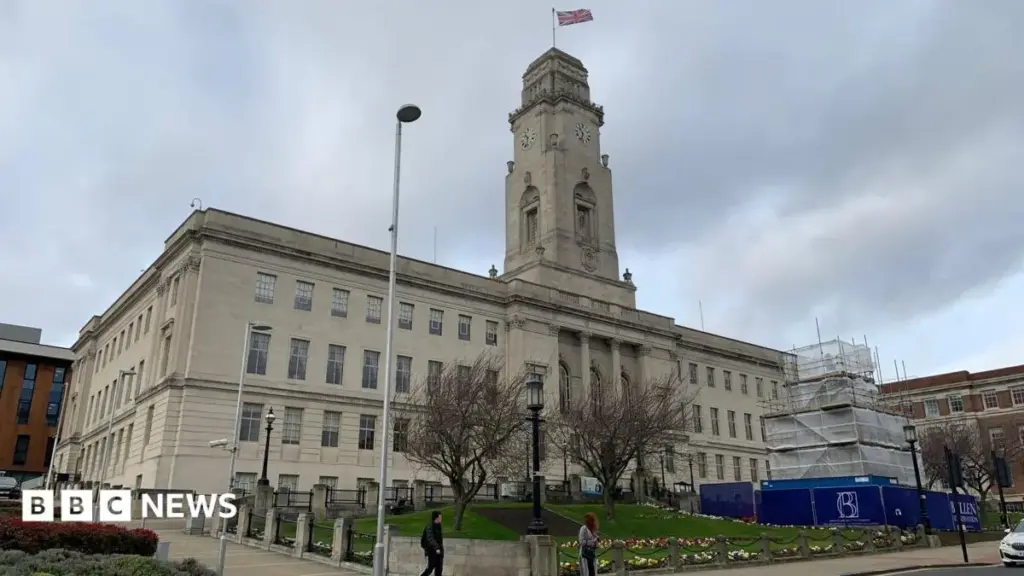
Executive Overview
Barnsley Metropolitan Borough Council is currently at a critical crossroads regarding its long-term environmental policy framework. At the heart of this unfolding political and administrative debate are two cornerstone initiatives: Zero40, the local authority’s internal strategy designed to eliminate carbon emissions across its own corporate operations by the year 2040, and Zero45, a broader borough-wide ambition aimed at achieving net-zero emissions across the entire geographical region by 2045.
However, these ambitious decarbonization timelines are facing fierce headwinds. A revealing performance report published in 2024 highlighted that the council was already falling significantly behind its projected trajectory, raising serious questions among local leaders and policymakers regarding the feasibility of these targets. Compounding these administrative challenges is an ideological shift within the council chamber, mirrored by similar developments in other local authorities across the United Kingdom. Influential political figures, spearheaded by local actors taking aim at what they term "woke" administrative priorities, are actively pushing to dismantle these foundational environmental commitments.
At the center of this pivot is a newly galvanized approach that seeks to pivot away from broad, symbolic climate emergency declarations in favor of hyper-pragmatic, financially tangible interventions. Proponents of this policy shift argue that local government resources must be funneled directly into initiatives that yield immediate, measurable dividends for residents and businesses—such as lowering domestic energy bills, enhancing building insulation, reducing municipal running costs, and securing critical external funding streams.
Yet, this pragmatic defense masks a deeply polarized ideological battleground. The move to potentially rescind Barnsley’s climate emergency declaration aligns the borough with a growing wave of similar actions led by Reform-associated and conservative-leaning councils nationwide, including recent votes in Wakefield, Newcastle-under-Lyme, Sunderland, South Tyneside, and Walsall. As an initial investigative report detailing the restructuring of Barnsley’s environmental commitments is slated for completion by the end of September, the council faces a defining moment: how to balance statutory obligations, fiscal responsibility, and local economic resilience against the backdrop of an escalating national culture war over climate policy.
Detailed Chronology
To fully understand the current friction surrounding Barnsley’s environmental roadmap, it is essential to trace the historical timeline of policy formulation, performance evaluation, and the subsequent political pivot that has brought the borough to this juncture.
The Genesis of Zero40 and Zero45
The framework for Barnsley’s contemporary climate policy was established against a backdrop of increasing international and domestic pressure for local authorities to take decisive action against global warming. Recognizing its dual role as both a corporate entity (managing its own buildings, vehicle fleets, and street lighting) and a community leader, the council split its carbon-reduction ambitions into two distinct tiers:
- Zero40: Formulated as an internal blueprint, this strategy committed the council’s own direct operations to achieving net-zero carbon emissions by the year 2040. This encompassed municipal waste management fleets, public housing stock maintenance, corporate offices, and leisure facilities.
- Zero45: Envisioned as a more sweeping, community-wide endeavor, this strategy set out a longer-term horizon to transition the entire Barnsley borough—including residential homes, local industries, and transport networks—to net-zero status by 2045.
For several years, these strategies served as the guiding principles for the council’s Directorate of Place, shaping everything from local planning policy to transport infrastructure grants.
The 2040 Reality Check
The friction between aspirational climate targets and operational reality came to a head in a landmark council report published in 2024. According to findings compiled by the Local Democracy Reporting Service (LDRS), the comprehensive audit revealed that Barnsley Council was decisively "not on track" to meet its interim and ultimate carbon reduction milestones.
The report pointed to several structural impediments:
- Fiscal Constraints: The severe budgetary pressures facing local government made large-scale capital investments in green infrastructure exceedingly difficult to prioritize over statutory social care and adult services obligations.
- Supply Chain and Technological Barriers: Upgrading the borough’s aging housing stock to modern energy-efficiency standards required capital outlays far exceeding the council’s ring-fenced environmental budgets.
- Decarbonization Lags: Reductions in corporate emissions from council-operated assets plateaued, proving that "low-hanging fruit"—such as LED street lighting conversions and basic recycling expansions—had already been exhausted, leaving more expensive and technically complex challenges unaddressed.
The Ideological Pivot and the "War on Woke"
Following the sobering revelations of the 2024 progress report, the political discourse within the borough underwent a sharp transformation. Figures critical of the prevailing consensus began to frame the council’s climate emergency declarations not as vital existential safeguards, but as costly, performative bureaucracy that diverted attention from core municipal duties.
This rhetoric manifested forcefully in statements from key political actors. Proponents of rolling back the climate commitments began characterizing the campaign as part of a broader "war on woke"—a cultural pushback against what they perceived as urban-centric, ideological orthodoxy imposed upon industrial and post-industrial towns.
In statements that have since defined the local debate, leadership figures confirmed a multi-pronged counter-offensive:
- Challenging Environmental Orthodoxies: Committing to the formal withdrawal of the council’s climate emergency declaration.
- Reprioritizing Municipal Focus: Shifting administrative bandwidth away from global carbon metrics toward tangible, local service delivery—such as restoring reliable waste collection ("getting the bins back on track") and preserving the local countryside from perceived over-development driven by green mandates.
- Establishing a Review Timeline: Commissioning an exhaustive administrative and financial report, scheduled for completion by the end of September, to map out the precise mechanics of dismantling or restructuring the borough’s legacy climate frameworks.
The National Wave: Parallels Across UK Local Government
Barnsley’s pivot does not occur in a vacuum. It is part of a coordinated, national wave of policy reversals among councils experiencing shifts in political control or insurgent populist pressure.
Earlier in the year, Wakefield Council—operating under Reform leadership—voted formally to rescind its climate and biodiversity emergency declaration, which had originally been adopted in May 2019. This domino effect quickly spread across the country. Municipalities including Newcastle-under-Lyme Borough Council, Sunderland Council, South Tyneside Council, and Walsall Council all introduced and successfully backed motions to rescind their own historical climate pledges. In each case, the narrative advanced by the motion’s architects was remarkably consistent: municipal government must abandon grand, unenforceable global rhetoric in favor of hyper-local, cost-effective service provision.
Supporting Context & Metrics
Evaluating the substance of Barnsley’s policy shift requires examining the quantitative data, economic realities, and socio-political dynamics underpinning the borough.
Socio-Economic Landscape of Barnsley
Barnsley is a metropolitan borough in South Yorkshire with a rich industrial heritage rooted in coal mining and glassmaking. Following the deindustrialization of the late 20th century, the local economy underwent significant structural transformation, moving toward logistics, advanced manufacturing, and retail distribution.
However, pockets of profound socio-economic deprivation persist across several former mining villages and urban wards. For residents in these areas, the rising cost of living, domestic fuel poverty, and job security are immediate, daily anxieties. Critics of the Zero40 and Zero45 strategies argue that abstract carbon-reduction targets offer little immediate solace to families struggling to heat their homes or afford basic goods.
The Pragmatic Core vs. Ideological Rhetoric
Despite the sharp ideological language surrounding the "war on woke," a closer examination of the council’s stated agenda reveals a pragmatic policy framework that still addresses many environmental and energy-related issues under a different banner.
According to administration figures, the council will continue to channel resources into practical work that delivers clear, quantifiable benefits for residents and businesses. These operational priorities include:
- Fuel Poverty Alleviation: Delivering targeted interventions that directly help households cut their soaring energy bills through better insulation and heating controls.
- Estate Decarbonization: Improving the energy efficiency ratings of both residential council homes and municipal operational buildings, framed not as an abstract contribution to global net-zero, but as a hard-nosed measure to reduce long-term structural running costs.
- Business Support: Assisting local enterprises in adopting resource-efficient practices to lower their operational overheads in an inflationary economic climate.
- External Funding Acquisition: Aggressively pursuing central government grants, regional mayoral funds, and private-sector investment to regenerate local infrastructure.
- Statutory Compliance: Ensuring that all actions strictly align with mandatory legal duties under UK environmental and public health legislation.
This dual-track approach—abandoning the symbolic "emergency" label while retaining practical, cost-saving green engineering projects—represents an attempt to reconcile populist political messaging with fiscal and administrative necessity.
Official Statements
The debate over Barnsley’s environmental strategy has generated starkly contrasting viewpoints from local leaders, council officials, and representatives of the Local Democracy Reporting Service.
The Case for Pragmatism and Retraction
Articulating the rationale behind the policy shift, council representative Brown emphasized that the local authority’s primary fiduciary duty is to deliver tangible outcomes for the taxpayer rather than symbolic gestures.
"The war on woke is only just beginning," Brown stated, outlining the aggressive posture of the administration. "We have taken the first steps, but there is much more to do."
Highlighting the tangible achievements that the administration believes have resonated most strongly with the electorate, Brown pointed to local service improvements:
"We have stood up for our countryside, got the bins back on track, and we are standing firm on our intention to withdraw the climate emergency declaration."
Furthermore, Brown defended the dismantling of the old targets by reiterating that the council remains fully committed to practical, bottom-up projects that improve household finances:
"The council will continue to back practical work that delivered clear benefits for residents and businesses. This includes activity that helps households cut energy bills, improves the energy efficiency of homes and council buildings, reduces long-term running costs, supports local businesses, secures external funding for the borough, or is needed to meet statutory duties."
Critics and Environmental Advocates
Conversely, environmental campaigners, opposition councillors, and community groups have expressed profound alarm at the dismantling of the Zero40 and Zero45 frameworks. Critics argue that formally abandoning climate emergency declarations sends a dangerous signal to investors, residents, and younger generations about the borough’s commitment to public health and ecological sustainability.
Opponents have pointed to the 2024 progress report not as a justification for abandoning targets, but as an indictment of administrative under-resourcing and a lack of political will. They contend that dropping the targets does not magically erase the physical risks associated with climate change—such as increased flood frequency, urban heat island effects, and agricultural disruption in South Yorkshire’s rural fringes.
Furthermore, civil society groups have questioned whether the rebranding of energy-efficiency work as purely "financial cost-cutting" risks undermining access to vital green regeneration funds that are increasingly tied by central government and institutional investors to verified net-zero commitments.
Future Outlook
As Barnsley Metropolitan Borough Council navigates this turbulent period of policy realignment, several critical milestones and systemic challenges lie ahead.
The September Report: The Next Legislative Battleground
All eyes are currently fixed on the end of September, the deadline set for the completion of the comprehensive initial report detailing the administrative, financial, and legal implications of withdrawing the climate emergency declaration. This document will serve as the blueprint for the council executive.
Key questions the report must answer include:
- Legal Vulnerability: What are the potential administrative or legal ramifications of rescinding a council resolution passed in good faith by a previous administration?
- Financial Impact: Will the formal abandonment of Zero40 and Zero45 jeopardize ongoing or prospective bids for national decarbonization grants, levelling-up funds, or South Yorkshire Mayoral Combined Authority (SYMCA) investments?
- Performance Metrics: If the broad net-zero strategies are discarded, what precise Key Performance Indicators (KPIs) will replace them to measure the borough’s environmental and energy performance moving forward?
The Broader Regional and National Trajectory
Barnsley’s trajectory is reflective of a deeper, ongoing fracture in British local politics. As more councils—particularly those influenced by Reform UK or populist factions within the major parties—step back from the sweeping environmental orthodoxy of the late 2010s, a new paradigm of local governance is emerging.
This emerging model prioritizes immediate economic relief, service reliability (such as waste management and street cleaning), and defense of local landscapes over long-term global modeling. Whether this populist-pragmatic synthesis can successfully deliver sustainable communities—or whether it will leave post-industrial towns uniquely vulnerable to future environmental shocks—remains one of the most pressing and contentious questions in contemporary British public administration.
For the residents of Barnsley, the coming months will test whether a local authority can successfully untangle the rhetoric of the "war on woke" from the hard, inescapable physics of energy costs, infrastructure resilience, and ecological stewardship.