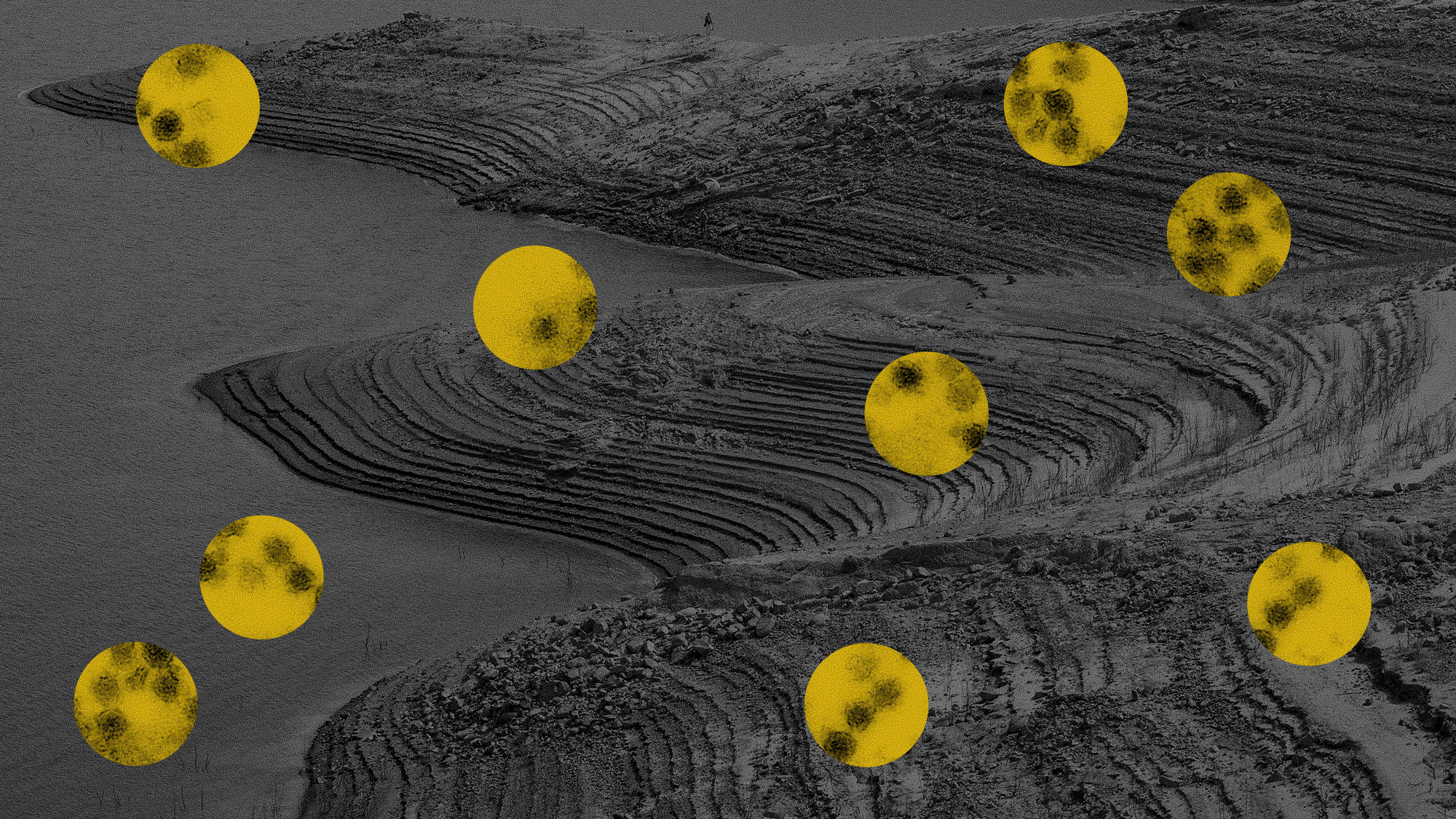
Across the globe, the planetary landscape is undergoing a profound and alarming transformation. As fossil fuels continue to warm the atmosphere, a relentless cycle of heat and evaporation is sucking moisture directly from the earth, leaving soils barren, riverbeds exposed, and reservoirs at historic lows. From the dwindling waters of the Colorado River in the United States to the parched, crisis-ridden infrastructure of Puerto Rico and the shriveling courses of the Danube and Rhine rivers in Europe, extreme water scarcity has ceased to be a seasonal anomaly. It is now the defining baseline of a changing global climate.
Yet, while the visual and economic tolls of these droughts—ranging from failing crops and paralyzed nuclear plants to the grim unearthing of long-lost World War II relics—are widely documented, a far more insidious threat is unfolding in the shadows. Emerging scientific consensus reveals a stark and counterintuitive truth: a drier world is frequently a sicker one.
A landmark paper published in Trends in Ecology and Evolution upends traditional assumptions by evaluating nearly 100 scientific studies spanning the animal kingdom. The research illuminates the "drought-disease paradox," a phenomenon wherein the reduction of water resources does not merely suppress pathogens, but in many cases, accelerates their transmission and lethality. While certain water-dependent infections like schistosomiasis and malaria may temporarily wane when ponds and lakes disappear, others—including cholera, West Nile virus, dengue, and valley fever—thrive in the crucible of parched ecosystems.
This in-depth report explores the mechanics of the drought-disease paradox, examining how shifting animal behaviors, concentrated resources, and volatile weather patterns converge to create a compounding threat to global public health.
Detailed Chronology: The Evolution of a Parched Planet and Pathogen Adaptations
To understand how modern drought has become a primary engine for infectious disease transmission, one must trace the convergence of climate disruption and ecological response over recent decades.
The Rise of Climate-Driven Aridity
For generations, epidemiological research into climate change focused predominantly on rising temperatures, often overlooking the complex mechanics of the global water cycle. However, as global temperatures steadily climbed, the atmosphere’s capacity to hold moisture increased exponentially. According to United Nations data, the world has grown approximately 77 percent drier over the last three decades alone.
This systemic drying out of the landscape did not happen overnight; it evolved through a series of compounding regional crises:
The 2000s–2010s: Extended, multi-year droughts gripped the American West, triggering unprecedented spikes in valley fever cases across California and Arizona, while setting the stage for intense West Nile virus outbreaks by 2014.
2017: A devastating drought in Somalia crippled agricultural and water infrastructure, sparking a massive cholera epidemic that infected nearly 80,000 individuals and claimed over a thousand lives.
The 2020s: Historic low water levels took hold across major global arteries. In Europe, more than 60 percent of Italy’s vital farmland faced critical drought conditions by the mid-2020s, while South America battled explosive, climate-linked outbreaks of mosquito-borne dengue following extended dry periods.
The Genesis of the "Drought-Disease Paradox"
The intellectual framework behind the recent Trends in Ecology and Evolution study began on a micro-scale years prior. Aquatic disease ecologist Tara Stewart Merrill of the Cary Institute of Ecosystem Studies and coauthor Pieter Johnson, a professor at the University of Colorado Boulder, were conducting field research on parasite dynamics in California pond ecosystems.
Without warning, more than half of their designated study sites completely dried up. Rather than abandoning their research, the disruption forced a paradigm shift. Stewart Merrill and Johnson began asking broader, systemic questions about how widespread aridity was altering disease transmission pathways globally. Their subsequent review of nearly 100 studies cemented a foundational realization: water-borne and vector-borne pathogens do not simply disappear when water vanishes; instead, they adapt to the novel stressors of shrinking aquatic and terrestrial habitats.
Supporting Context & Metrics: The Mechanics of Infection in a Dry World
The mechanisms driving the drought-disease paradox are deeply rooted in ecology, animal behavior, and biogeochemistry. When aquatic and terrestrial environments are compressed by a lack of water, the fundamental rules governing host-pathogen interactions are rewritten.
Concentration and Crowding: The Savannah Effect
Wildlife disease ecologist Georgia Titcomb of Colorado State University emphasizes that tracking disease is fundamentally about tracking the movement of the animals that carry it. When water distribution across a landscape is severely disrupted, animals are forced to travel greater distances—and congregate in much tighter clusters—to access remaining hydration sources.
Consider the classic ecosystem of an African savannah, dotted with watering holes frequented by elephants, zebras, giraffes, and rhinos. During severe droughts, these watering holes shrink or vanish entirely, forcing wildlife to crowd around the few remaining pools.
The Fecal-Oral Route: These hyper-dense congregation zones quickly become saturated with animal dung.
Parasite Proliferation: Titcomb’s research, integrated into the recent review, demonstrated that following periods of reduced rainfall, certain parasites thrive dramatically, with researchers recovering more than 100,000 parasite eggs per kilogram of dung in these concentrated areas. The physical proximity of hosts combined with high parasite loads turns dwindling water holes into hyper-efficient transmission hubs.
The Vector Dynamic: Birds, Mosquitoes, and Warming Waters
Similar dynamics play out across avian and insect populations. When drought reduces the number of surface water bodies, birds carrying pathogens like West Nile virus are funneled into closer proximity with mosquitoes sharing the remaining aquatic habitats. This high-density intersection dramatically increases vector infection rates, ultimately spilling over into human populations.
Furthermore, lower water volumes in rivers and lakes heat up much faster under a baking sun. These elevated temperatures create ideal incubator conditions for various dangerous molds, algae, and bacteria. For instance, Vibrio vulnificus—a flesh-eating and food-poisoning bacterium commonly found in oysters that accounts for tens of thousands of annual U.S. cases—initially surges as coastal waters warm and dry periods concentrate salinity and nutrients, though extreme, prolonged desiccation can eventually suppress it.
Weather Whiplash and Dust-Borne Threats
Drought does not exist in a vacuum; it is frequently punctuated by erratic, torrential precipitation—a phenomenon known as "weather whiplash." This climatic instability creates perfect storm conditions for fungal and bacterial spores.
Biologist and postdoctoral researcher Sam Sabado of Stanford University points to the fungus responsible for valley fever as a prime example of this dynamic. The pathogenic fungus flourishes in the soil during unusually wet winters. When a subsequent summer drought bakes the earth, the soil turns to dust. Winds sweep across the landscape, lifting the dried, spore-laden dust into the air, where it is inhaled by humans. The result is a direct mechanical pipeline from climate instability to severe respiratory infection.
Official Statements & Expert Perspectives
The scientific community is rapidly mobilizing to integrate these insights into broader epidemiological and ecological frameworks. The realization that drought is a profound vector modifier has fundamentally altered how researchers view climate resilience.
"It’s so counterintuitive," says Tara Stewart Merrill, aquatic disease ecologist at the Cary Institute of Ecosystem Studies and coauthor of the review paper. "We think a water-borne disease should thrive only when there’s plenty of water, but in some cases they thrive when there’s less water." Reflecting on how the study originated, she noted, "Beyond drought screwing up our study, we then started having conversations about how drought might be shaping disease transmission in ecosystems around the planet."
Georgia Titcomb, wildlife disease ecologist and assistant professor at Colorado State University, highlights the inevitable migration pressures placed on wildlife: "Throughout history, living things have been moving to get water, and so when there are massive changes to the way water is distributed on the landscape, we’re going to also expect big changes in the ways animals move to access that water. That’s going to remove some opportunities for transmission, and introduce new ones too."
Addressing the broader implications for public health pedagogy and infrastructure management, Sam Sabado, a Stanford University biologist not affiliated with the study, stresses the urgency of proactive planning: "It’s a classic case of, climate change will make this worse… It’s going to be really foundational for how we teach disease ecology. Water touches almost every aspect of life. How do we manage this resource, knowing the future will be warmer?"
Future Outlook: Managing Water and Health on a Warming Planet
As global temperatures continue to rise, mitigating the health impacts of the drought-disease paradox will require a fundamental retooling of public health strategies, environmental policy, and water resource management.
Technological Monitoring and Predictive Modeling
Historically, disease surveillance has been reactive, tracking outbreaks only after they manifest in clinics and hospitals. However, the integration of advanced satellite monitoring technology offers a paradigm shift. In the coming years, high-resolution orbital imaging will allow scientists to track minute shifts in global water distribution in real-time. By pairing satellite data with ecological modeling, researchers hope to predict precisely where and when drought conditions will trigger specific pathogen outbreaks, giving public health officials a vital window to intervene.
Anthropogenic Interventions and Water Manipulation
Human response to drought remains a double-edged sword. While engineering solutions like building dams, digging deep wells, and implementing extensive agricultural irrigation are designed to buffer human populations against water scarcity, they can inadvertently create artificial habitats that foster disease.
Irrigation canals can serve as warm, nutrient-rich breeding grounds for snails carrying flatworms or mosquitoes transmitting dengue.
Artificially maintained water reservoirs can concentrate animal populations in ways that mimic the savannah watering hole effect.
Consequently, future water management policies must incorporate public health safety margins. Communities can no longer afford to manage water resources solely through the lens of economic agricultural yields or municipal supply; they must weigh hydrological decisions against the cascading epidemiological consequences of altered ecosystems.
Ultimately, the drought-disease paradox serves as a stark reminder of the deep interconnectedness of planetary health. As the atmosphere grows hotter and landscapes dry out, safeguarding human populations will require looking beyond traditional medicine. It will demand a comprehensive, ecological defense of the very water systems that sustain life on Earth.