

Executive Overview
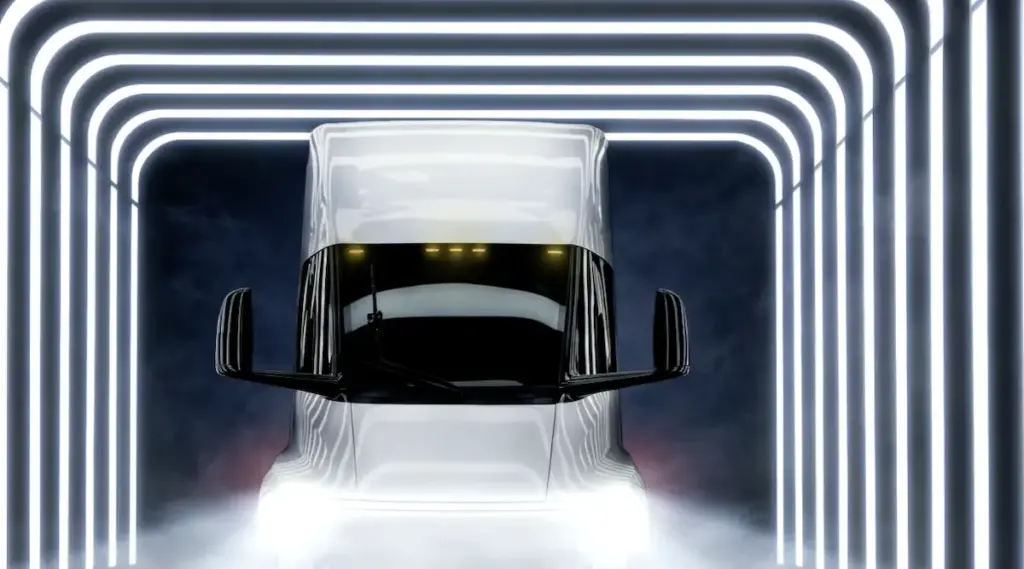
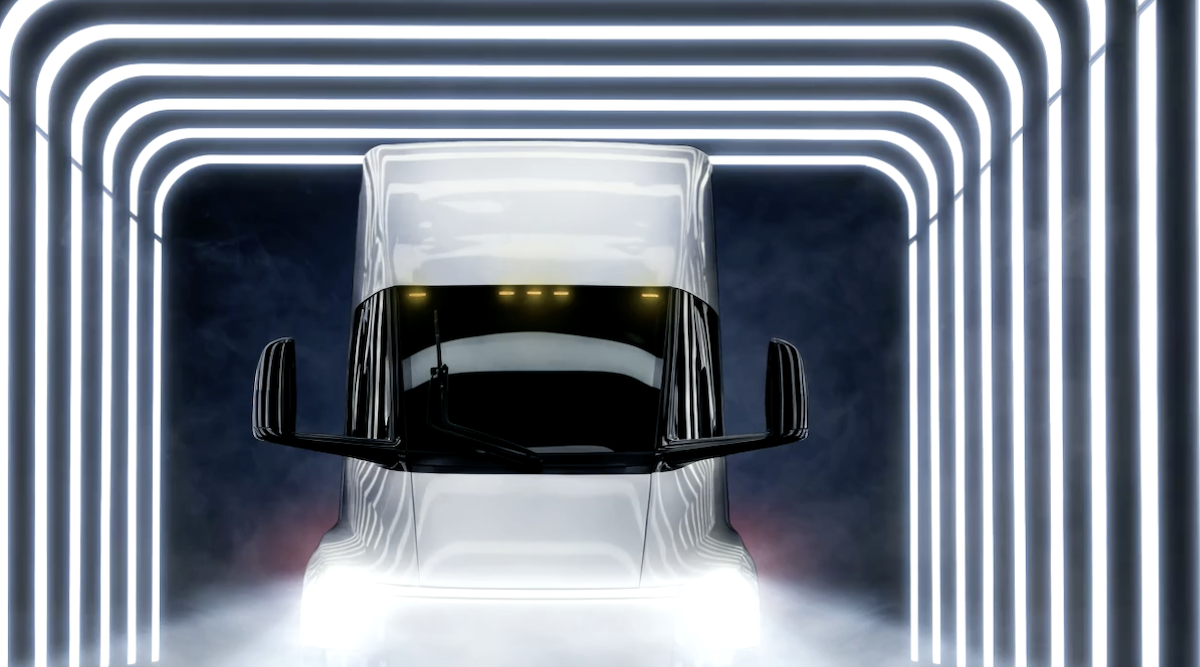
The commercial viability of the Tesla Semi Class 8 truck is rapidly evolving from an ambitious corporate promise into a hard commercial reality. Touted as a potential game-changer for the heavy-duty freight sector, the long-awaited electric rig is securing its status as one of the automaker’s most promising operational milestones. Yet, the official launch event celebrating the opening of the dedicated Tesla Semi manufacturing facility in Nevada was marked by a glaring absence: CEO Elon Musk.
Rather than commanding the stage in person to champion a monumental leap forward for sustainable logistics, Musk appeared solely via a pre-recorded video stream. For an executive renowned for inserting himself at the absolute center of his companies’ product debuts, this virtual-only appearance has ignited intense speculation across both financial and automotive sectors.
Musk’s physical absence from the Nevada facility is not an isolated incident. Just weeks prior, he also declined to make a live, on-stage appearance at the heavily publicized debut of the Tesla Cybercab autonomous robotaxi in Austin, Texas. This pattern of remote participation raises a compelling question: Why is the world’s most visible technologist physically stepping back from some of the most critical milestones in his company’s electrification mission?
A confluence of overlapping pressures offers a multi-layered explanation. From high-stakes diplomatic dinners in Washington, D.C., and mounting legal battles over workplace discrimination on the factory floor, to a firestorm of controversy surrounding a new unauthorized documentary and tens of millions of dollars flowing into key congressional races, Musk finds himself juggling an extraordinary portfolio of distractions. This investigative feature examines the convergence of corporate triumphs and external pressures surrounding the Tesla chief executive, parsing out why his physical presence has become conspicuously scarce precisely when his companies are making headlines.
Detailed Chronology
To understand the rhythm of Musk’s recent absences, it is necessary to chart the simultaneous collisions of corporate milestones, legal reckonings, and political maneuvers that defined late September 2026.
Early September 2026: The Cybercab Debut and the Nevada Semi Factory
The sequence began on September 3, 2026, when Tesla hosted its highly anticipated launch event for the Cybercab robotaxi in Austin, Texas. Promoted as the vanguard of Tesla’s driverless future, the event commanded global media attention. Yet, Musk’s physical footprint at the launch was conspicuously muted, establishing a template for his remote approach to upcoming corporate celebrations.
Weeks later, the focus shifted to the high-volume manufacturing of the Tesla Semi Class 8 truck. The inauguration of the dedicated Semi factory in Nevada represented a monumental step forward for commercial fleet electrification. Fleet operators and environmental analysts alike looked to the event as a definitive signal that zero-emission heavy trucking was scaling up. Instead of a traditional keynote address delivered from the factory floor, stakeholders watched a digitally transmitted address by the CEO, fueling a wave of internal and external inquiries regarding his schedule.
Mid-September 2026: Diplomatic Circles and Legal Showdowns
The proximate cause for Musk’s remote appearance at the Semi factory launch traces back to elite circles in the nation’s capital. Ahead of the Nevada event, Musk was a guest at a high-profile White House state dinner honoring visiting Chinese President Xi Jinping. Notably, reports from automotive trade publications like the Detroit News highlighted that while traditional automotive titans—such as General Motors CEO Mary Barra—were invited strictly in their capacities as automotive stewards, Musk secured his seat through his aerospace venture, SpaceX, rather than Tesla.
Simultaneously, legal pressures were mounting on the West Coast. On September 21, 2026, a long-simmering class-action lawsuit brought by the California Civil Rights Department against Tesla’s flagship Fremont assembly plant officially went to trial. The state agency accused the automaker of fostering rampant racial discrimination and harassment. This high-stakes litigation arrived alongside a parallel suit filed by the U.S. Equal Employment Opportunity Commission (EEOC) and dozens of independent worker claims, creating an acutely sensitive public relations climate for the brand precisely as it sought to celebrate manufacturing expansion.
Late September 2026: Documentary Backlash and Midterm Financing
As if operating under the adage that major news events arrive in clusters, mid-to-late September brought a fresh wave of media scrutiny regarding public perception, documentary filmmaking, and federal electoral politics.
On September 20, attention turned to "Musk," a controversial new documentary directed by award-winning filmmaker Alex Gibney and produced by Jigsaw Productions. Despite positioning himself publicly as a "free speech absolutist," Musk and his legal team threatened legal action against the production company.
Concurrently, a censorship controversy erupted across major social media ecosystems. Reports from outlets like the Daily Beast and The Hollywood Reporter revealed that algorithmic filters or internal policies on YouTube, TikTok, Instagram, Meta, and even Musk’s own platform, X (formerly Twitter), initially blocked or restricted promotional ad campaigns for the documentary.
By September 26, the digital logjam began to clear when Meta and YouTube reversed course, attributing the initial ad rejections to automated systemic errors and promising to restore the promotional trailers. However, the episode underscored the deep tensions surrounding media narratives, digital gatekeeping, and corporate power.
Compounding this whirlwind, financial disclosures revealed that Musk’s personal political action committee, America PAC, had aggressively ramped up its spending ahead of the 2026 midterm elections. Pumping millions of dollars into high-profile Senate and House contests across Ohio, Michigan, Iowa, Maine, and Texas, Musk was effectively shaping the federal legislative landscape from behind the scenes, ensuring his influence was heavily felt even if his physical body was thousands of miles away from Tesla’s assembly lines.
Supporting Context & Metrics
Evaluating Musk’s physical absence from Tesla events requires a close examination of the underlying metrics driving both his corporate empire and his political expenditures.
The Financial Scale of America PAC Interventions
During the 2026 election cycle, Musk transitioned from overt, personal campaign appearances—which previously triggered voter backlashes, such as during the high-profile Wisconsin Supreme Court election—to a strategy centered on financial mobilization via America PAC.
According to financial tracking data analyzed by the Detroit News and The New York Times, America PAC deployed $16.6 million directly into high-stakes U.S. Senate contests across critical swing states, including:
- Ohio
- Michigan
- Iowa
- Maine
In addition to Senate battles, the PAC distributed $3.1 million across more than 30 competitive U.S. House districts, supporting Republican efforts to retain legislative majorities in both chambers of Congress. Notably, a staggering $6.3 million was funneled into a single state race: the high-profile Texas Senate contest aimed at bolstering the campaign of Republican Ken Paxton.
| Electoral Target / Region | Estimated Investment (USD) | Primary Focus / Objective |
|---|---|---|
| U.S. Senate Contests (National) | $16.6 Million | Securing Republican majorities in Ohio, Michigan, Iowa, Maine |
| U.S. House Districts (Competitive) | $3.1 Million | Defending targeted congressional seats across multiple states |
| Texas U.S. Senate Race | $6.3 Million | Propping up conservative campaign efforts |
| Total Tracked PAC Outlays | ~$26.0 Million | Midterm Electoral Dominance |
The Legal and Regulatory Landscape
Beyond electoral expenditures, Tesla’s balance sheets and operational stability face significant scrutiny due to escalating legal liabilities. The California Civil Rights Department lawsuit, alongside the EEOC federal complaint and dozens of individual worker filings, exposes the company to substantial financial and reputational exposure. While Tesla’s market valuation remains deeply intertwined with its perceived technological dominance in autonomous driving and commercial electrification, systemic workplace litigation threatens to distract institutional investors who increasingly prioritize Environmental, Social, and Governance (ESG) metrics.
At the same time, federal regulatory bodies such as the National Highway Traffic Safety Administration (NHTSA) continue to press Tesla for detailed safety data regarding its Full Self-Driving (FSD) architecture and the newly unveiled Cybercab fleet, keeping regulatory compliance officers working around the clock.
Official Statements & Industry Reactions
The converging controversies surrounding Musk’s remote appearances, the "Musk" documentary distribution hurdles, and his PAC’s political donations have drawn sharp commentary from industry observers, corporate spokespeople, and civil watchdogs.
Corporate Responses to the Documentary Ad Rejections
The controversy over advertising the Gibney documentary prompted swift clarifications from major technology platforms after media pressure mounted.
A Meta spokesperson addressed the initial advertising block in a statement to TheWrap:
"This was an error and we’re restoring the ads."
Similarly, YouTube officials issued public clarifications addressing platform policies via social media channels, noting that while the official trailer for "Musk" had remained hosted on the platform, its submission as a paid advertisement triggered automated restrictions that were subsequently reviewed and lifted.
Watchdog and Legal Warnings
As political spending intensified, watchdog groups and election integrity organizations issued warnings regarding deceptive digital practices. Of particular concern was the emergence of data-collection portals styled around voter registration.
Elections officials and consumer advocates issued public service announcements urging voters to utilize verified government portals such as Vote.gov rather than alternative web domains like "votesafe.org," which investigative reports tied directly to data-harvesting operations funded by Musk’s America PAC.
Future Outlook
As the automotive industry transitions into the final quarters of the decade, the implications of Elon Musk’s dual focus—splitting his immense capital and attention between sprawling political engagements, high-stakes legal defenses, and multi-industry corporate management—will profoundly shape Tesla’s trajectory.
Commercializing the Tesla Semi
Despite the CEO’s remote ribbon-cutting in Nevada, the commercial outlook for the Tesla Semi Class 8 truck remains exceptionally strong. Major logistics providers are eager to secure heavy-duty electric tonnage to meet corporate sustainability mandates. As the Nevada factory ramps up production volume, the success of the Semi program will largely depend on execution at the manufacturing level—a domain where day-to-day engineering leadership may matter far more than executive stage presence.
The Autonomous Horizon and Regulatory Hurdles
Looking ahead toward the rollout of the Cybercab and the broader scaling of Tesla’s robotaxi network, the company faces an uphill battle against mounting regulatory oversight. NHTSA’s ongoing inquiries into autonomous systems mean that Tesla’s leadership team must maintain transparent, rigorous engagement with federal regulators. Whether Musk chooses to appear in person or digitally at future product unveilings, the financial markets will ultimately judge the company not by its promotional pageantry, but by its ability to secure safety certifications and deliver profitable, scalable autonomy.
Ultimately, whether Musk’s digital appearances are a temporary adaptation to an overwhelming calendar of political fundraising, legal defense, and diplomatic obligations, or a permanent shift in his corporate management style, remains an open question. What is certain is that the gravitational pull of his actions—both physical and virtual—will continue to steer the conversation across the global technology and automotive landscapes for years to come.



