By Investigative Energy Desk Published September 1, 2026
Executive Overview
Have you ever stopped to wonder why the vast majority of households across the United Kingdom rely on gas boilers to heat their homes? The question rarely concerns the practical or financial hurdles stopping consumers from retrofitting modern low-carbon heat pumps. Instead, the deeper, more foundational question is: How and why did the gas boiler become so ubiquitous in the first place?
According to Arthur Downing, an economic historian and the director of strategy at Octopus Energy (writing here in a strictly personal capacity), the answer lies in a forgotten chapter of industrial history.
"We only have boilers in our houses because of a state-owned enterprise that went into everybody’s home and installed natural gas-suitable appliances at no direct cost," Downing explains.
In his new book, Power and the People: A History of British Energy (published by Verso), Downing maps out how the nationalised British gas industry of the mid-20th century operated. For roughly three decades, it functioned as one of the most dynamic, innovative, and efficient industrial bodies in the nation.
Today, however, public perception could not be more starkly opposed. Britain’s current electricity and gas grid is widely viewed as fragile, fragmented, comically complicated, and hopelessly dependent on volatile imported fossil fuels. As consumers navigate severe cost-of-living pressures and soaring energy bills amid an escalating climate crisis, Downing’s deep dive into the political economy of power feels less like a historical retrospective and more like an urgent blueprint for national survival.
Detailed Chronology: Four Phases of the British Energy Grid
To understand how the UK energy system morphed from a coordinated powerhouse into a dysfunctional hybrid, Downing divides the last 200 years of British industrial history into four distinct phases, each defined by how ownership and control were distributed.
Phase 1: Municipal and Public Control (Late 1880s – 1920s)
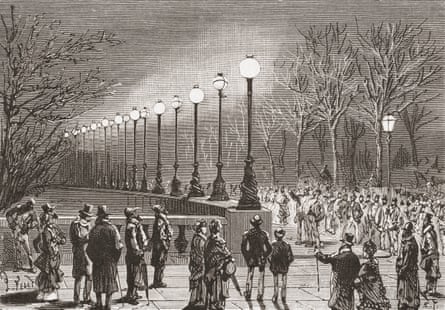
At the dawn of the electrical and gas age, the ownership of Britain’s energy infrastructure was overwhelmingly public and municipal. Even where private companies held operations, they were heavily localized and embedded within regional municipal networks. Local authorities—city councils and municipal boroughs—made the strategic decisions regarding how to plan, build, and coordinate gas and electricity systems to serve local populations directly.
Phase 2: Early Government Infrastructure (1920 – 1945)
Recognizing that local fragmentation could not scale to meet the demands of a modern industrial economy, the central government began stepping in as a major owner and operator.
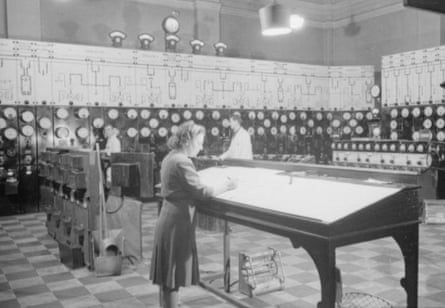
Crucially, nationalisation did not begin with the post-war Attlee government in the late 1940s, as is commonly assumed. In 1926, it was Conservative Prime Minister Stanley Baldwin who established the Central Electricity Board (CEB)—a state-owned public corporation tasked with constructing the nation’s very first unified transmission network, the National Grid. Unlike many modern infrastructure projects, the CEB built its network on time and strictly on budget.
Phase 3: The Nationalised Golden Age (1945 – 1979)
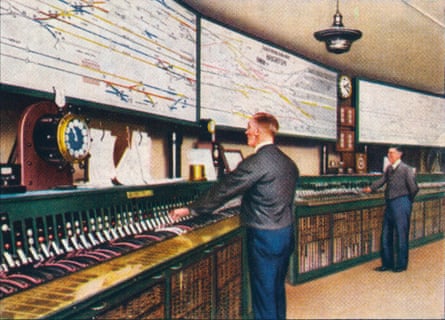
Following the Second World War, the British state consolidated roughly 1,500 fragmented energy entities into sweeping state-owned enterprises. This era saw the large-scale rollout of gas infrastructure, hydroelectric schemes, and advanced power stations built inside mountains.
According to Downing, state-owned enterprises during this three-decade stretch built monumental infrastructure faster and cheaper than today’s private sector companies can manage. It was during this phase that natural gas converted the nation’s homes, installing efficient heating systems directly into British properties at public expense.
Phase 4: Total Privatisation to the Modern "Zombie" Hybrid (1979 – Present)
Beginning in the 1980s under Margaret Thatcher, the energy sector was subjected to sweeping, near-total privatisation. Proponents argued that private markets would foster creativity, drive down costs, and optimize efficiency.
Instead, Downing argues, the system has devolved into a "zombie" network—a dysfunctional hybrid of public and private models. The industry remains privately owned on paper, yet it feeds continuously off state subsidies, passing maximum costs and operational inefficiencies onto consumers while privatising profits.
Supporting Context & Metrics: Ownership Matters
Central to Downing’s thesis is a simple, often overlooked economic truth: ownership matters profoundly.
"Who owned and controlled the means of making, moving, and selling energy shaped which technologies were developed, what infrastructure got built, and the extent to which citizens and consumers benefited," he writes.
The Myth of Private Superiority
Despite the current messy state of Britain’s privatised grid, the dominant political orthodoxy continues to claim that private ownership is inherently superior to public models—cheaper, more innovative, and more creative. Downing firmly rejects this premise, urging observers to look at energy through the lens of political economy: the institutional frameworks, organizational models, and human decisions that actively construct energy systems.
"The technology is interesting," Downing notes, "but it is very strange to think of the energy system as being composed of inanimate objects, as if these things have agency. They don’t. They are only there because of human decisions."
The Foreign State Paradox
A prime example of the UK’s peculiar market structure occurred when French utility giant Engie—in which the French government remains the largest shareholder—acquired UK Power Networks (UKPN) for £10.5 billion.
On the exact day of the acquisition, the 10-year bond borrowing rates of the French state declined while Engie’s stock value rose. In effect, every French citizen grew marginally richer through their state’s strategic investment in British energy infrastructure. The transaction proved that state-backed ownership can operate smoothly without causing bond markets to panic or national governments to collapse—a reality that flies in the face of persistent warnings from British media and political establishment orthodoxies.
Official Statements and Policy Interventions
As local leaders begin pushing back against national energy stagnation, policy proposals are starting to shift. The early announcement by Greater Manchester Mayor Andy Burnham regarding plans to cut VAT on energy bills was praised by energy analysts as a positive initial step.
When asked what further actions political leaders like Burnham should take, Downing’s prescription is clear:
Shift focus from producers to consumers, and from investors to citizens.
Lower household bills by stripping out legacy policy levies currently added to bills to fund social and environmental programmes, funding them through general taxation instead.
Re-evaluate the fundamental question of ownership.
"Public ownership was an extraordinary tool for building infrastructure at pace while delivering benefits for citizens," Downing asserts. "It can be again."
Reimagining Regulation: The Role of Ofgem
Downing also highlights the failure of modern regulatory bodies. Institutions like Ofgem (the Office of Gas and Electricity Markets) are tasked with setting price caps and assessing bill components, yet they frequently lack direct control over the underlying costs accumulating across the system. True regulatory reform requires state intervention that matches the complexity of modern networks.
Future Outlook: A Mutualised Energy Transition
Crucially, Downing does not advocate for a nostalgic return to the command-and-control state structures of the 1940s. Instead, he champions a mutualised system—a model that is neither purely nationalised nor aggressively privatised.
"The old labels don’t fit," he explains. "The principle is that energy should be built around mutually beneficial relationships between capital, citizens, and the state, with ownership and decision-making spread out rather than concentrated."
What Does a Mutualised System Look Like?
Public Corporations: Retaining public ownership for natural monopolies, such as high-voltage transmission networks and onshore grid infrastructure.
Local Stakes: Empowering local councils and community-led schemes to hold genuine equity stakes in regional renewable infrastructure.
Distributed Ownership: Equipping households with rooftop solar panels, home battery storage systems, and electric vehicles, ensuring citizens are properly compensated for the grid flexibility their assets provide.
Competitive Markets: Retaining healthy market competition in retail supply, EV charging networks, and domestic green tech installations.
"Public ownership and markets are not opposites," Downing points out. "The Nordic countries introduced competition in power generation and retail shortly after Britain, yet kept extensive public ownership. China runs markets at a massive scale within a publicly owned system. Meanwhile, the US has the longest tradition of private ownership and some of the least competitive markets in the world."
The Road Ahead
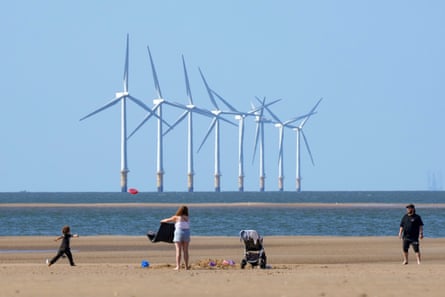
Historically, energy transitions are exceptionally rare and protracted, typically requiring roughly a century to unfold. If the UK’s current green transition succeeds on its required timeline, it will represent the first all-encompassing, rapid energy transition in human history.
Achieving this feat requires breaking free from the ingrained British orthodoxy that treats state involvement as inherently incompetent while romanticising private efficiency. As Downing reminds us:
"We have a strange situation where we are OK with public ownership—just not by our own state."
With the publication of Power and the People, the debate over who controls Britain’s lights, heat, and future is officially back on the table.