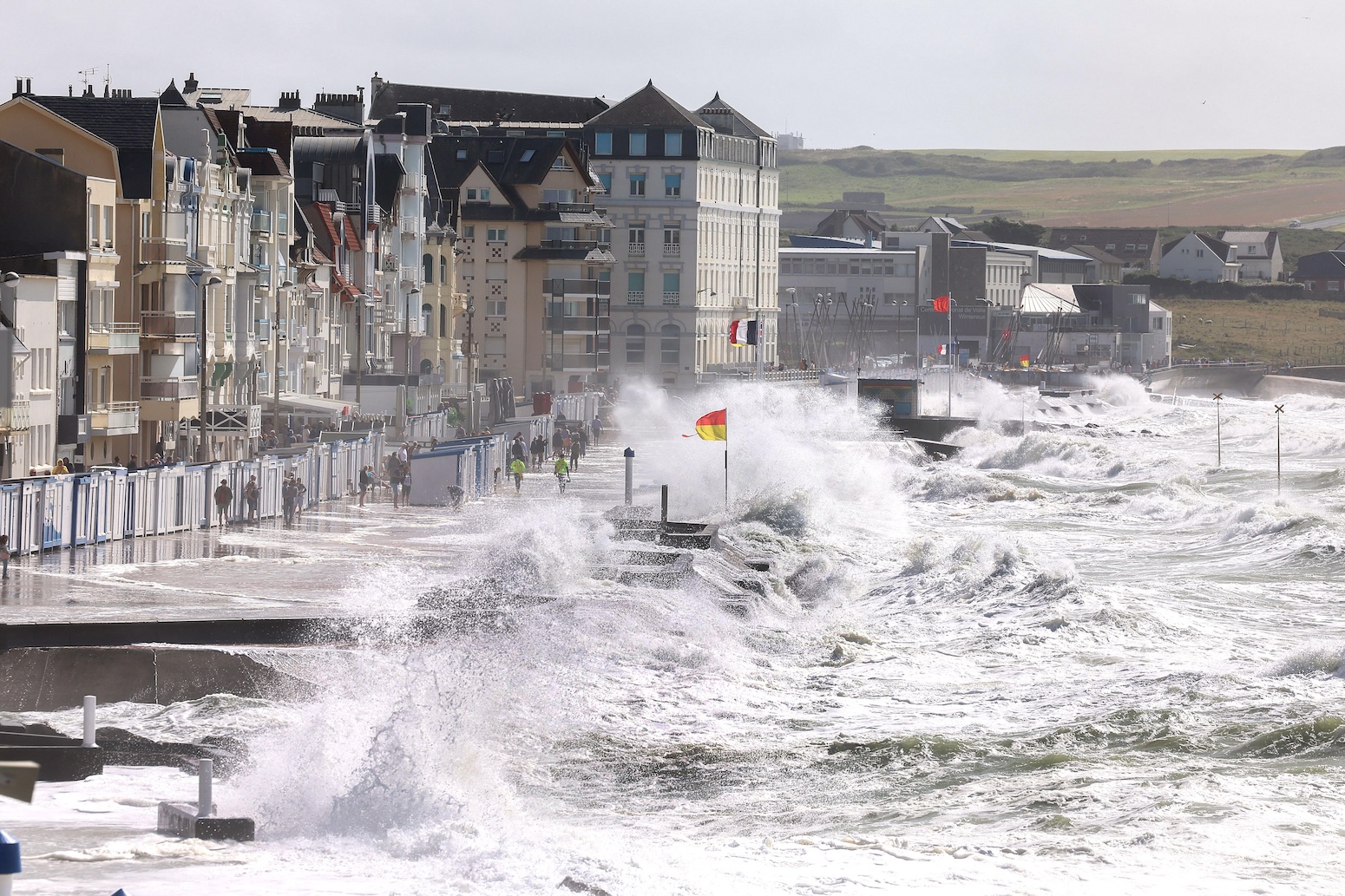
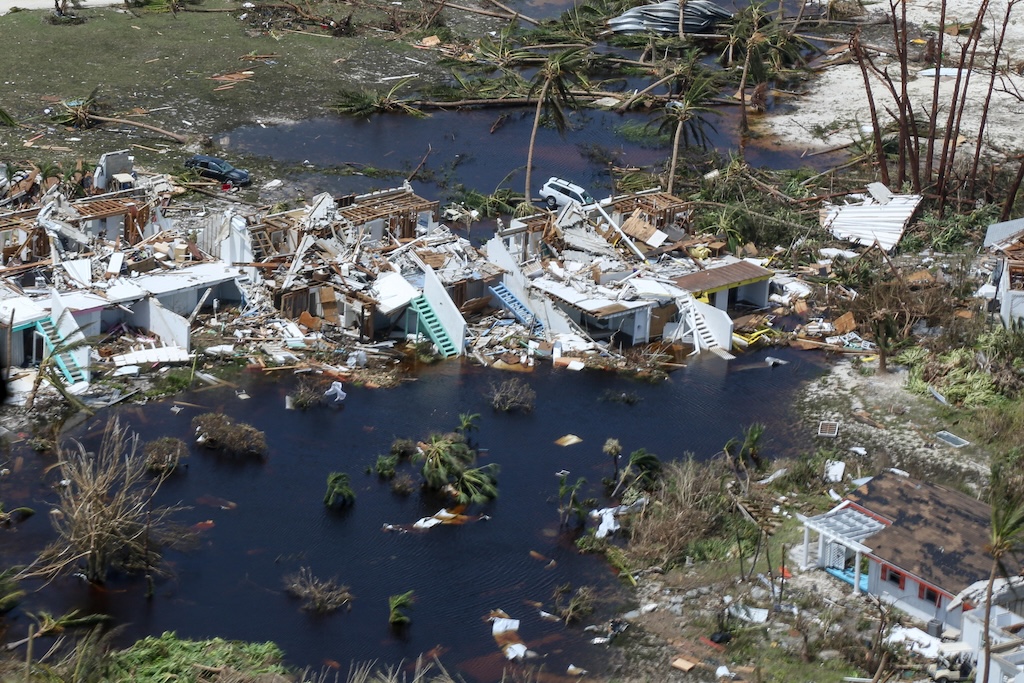
For hundreds of millions of people residing along the world’s coastlines, global sea level rise has ceased to be a speculative climate model projection; it has materialized as an active economic, geographical, and humanitarian emergency. Driven by the relentless accumulation of anthropogenic greenhouse gas emissions, the global ocean surface is rising at a pace unprecedented in at least three millennia.
At the United Nations General Assembly in New York, world leaders convened to formally adopt a high-level declaration addressing the "existential threats" posed by rising sea levels. The declaration underscores a grim consensus: sea level rise represents an immediate, lived reality that imperils global food security, critical infrastructure, cultural heritage, and the national sovereignty of low-lying island states.
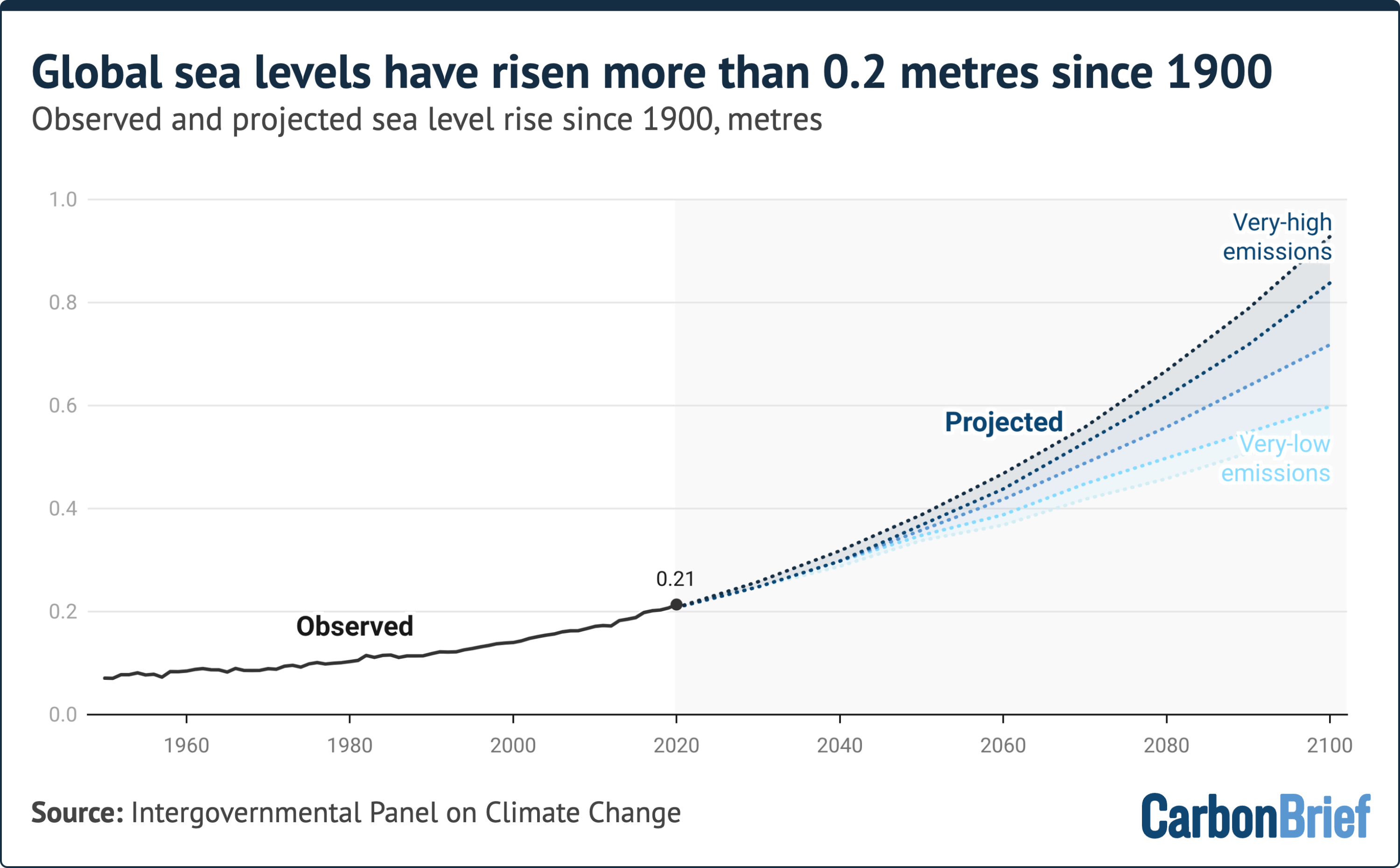
According to data compiled from the Intergovernmental Panel on Climate Change (IPCC) and recent UN assessments, human activity has been the primary driver of global ocean rise since at least 1970. Under a moderate-emissions trajectory, scientists project an additional global average sea level rise of 56 centimeters by 2100 relative to a 1995–2014 baseline.
Today, approximately 770 million people—representing nearly 10% of the world’s population—live in areas classified at "acute risk" of coastal inundation. The crisis threatens mega-cities across Asia and the Americas, risks triggering unprecedented climate-induced migration, and exposes a severe structural deficit in global climate adaptation finance.
Detailed Chronology & Mechanistic Drivers
The Century-Long Acceleration
The trajectory of modern sea level rise reflects a stark acceleration over the course of the industrial era:
+-----------------------------------------------------------------------+
| GLOBAL SEA LEVEL RISE TIMELINE & ACCELERATION                          |
+-----------------------------------------------------------------------+
| 1901 – 2018: Global mean sea level rose by ~20 centimeters.           |
| 1993 – Present: Satellite altimetry records an additional 10.6 cm rise.|
| 2100 (Projected): Moderate-emissions scenario yields +56 cm rise.     |
+-----------------------------------------------------------------------+
Between 1901 and 2018, the global mean sea level rose by approximately 20 centimeters. However, satellite altimetry reveals that the rate of expansion has surged dramatically in recent decades, with sea levels rising by 10.6 centimeters since 1993 alone.
This expansion is governed by three main physical mechanisms:
Thermal Expansion (Steric Rise): As seawater absorbs excess heat trapped by atmospheric greenhouse gases, its density decreases and its volume expands.
Cryospheric Mass Loss: Accelerated thermal degradation of glaciers and the polar ice sheets in Greenland and Antarctica releases massive volumes of meltwater into the ocean basins.
Land-Water Storage Alterations: Human extraction of groundwater, combined with changes in terrestrial water impoundment, alters the total mass of liquid water retained on continental landmasses.
Local Factors and Vertical Land Motion
While global mean sea level rise provides a baseline indicator, local or relative sea level rise varies significantly across geography. Local oceanic dynamics, changes in the Earth’s gravitational pull and rotation as massive ice sheets melt, and ocean circulation currents dictate local sea surface anomalies.
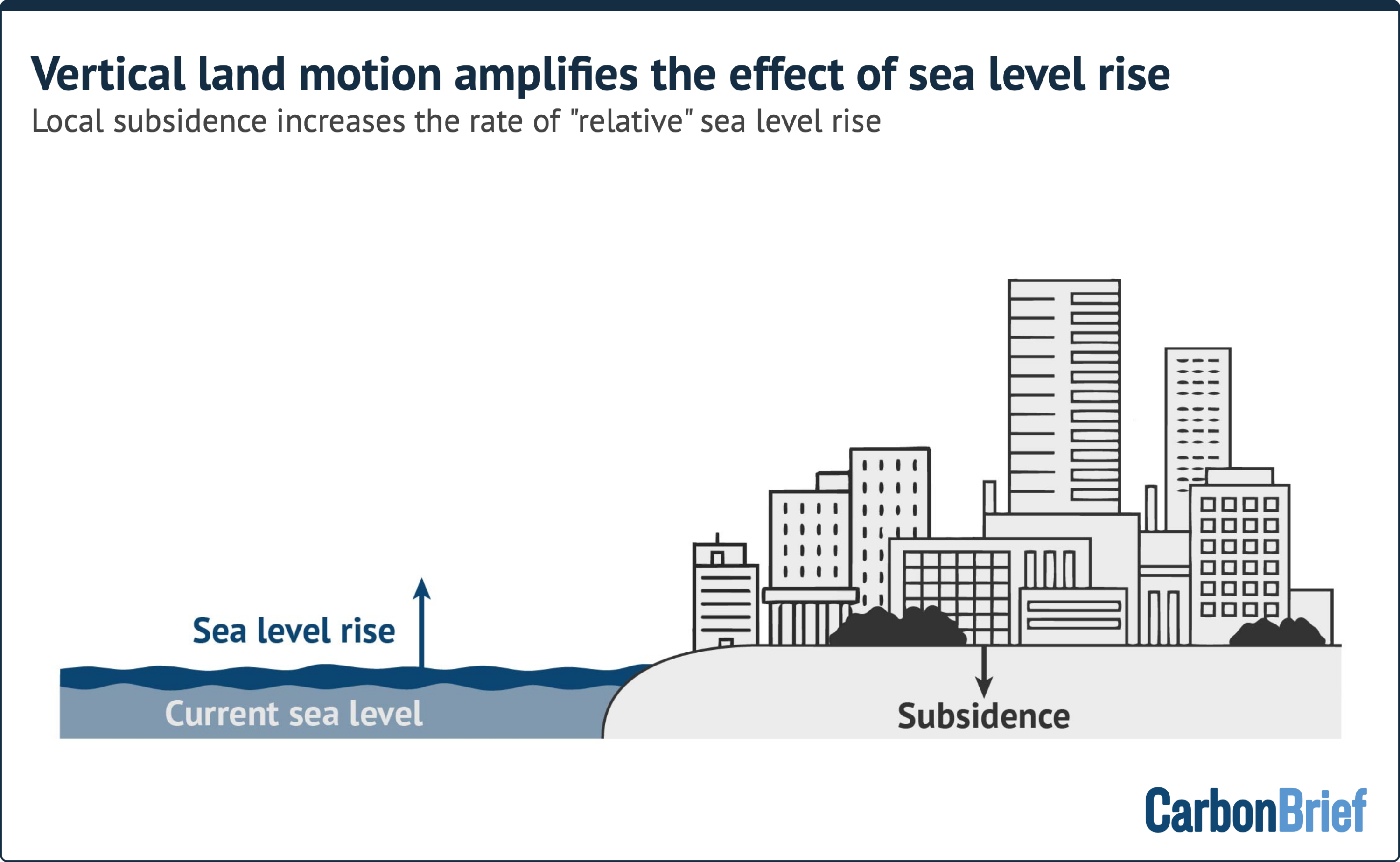
Furthermore, Vertical Land Motion (VLM) significantly exacerbates coastal risks. Land movement through tectonic activity, post-glacial rebound, or human-driven land subsidence directly impacts local conditions. In megacities built on river deltas or sedimentary basins, land subsidence frequently equals or exceeds climate-driven sea level rise.
A notable example is Jakarta, Indonesia. Driven by excessive groundwater extraction that collapses underground aquifers, parts of Jakarta have sunk by up to 15 centimeters annually over the past decade. Similar subsidence patterns compound storm surge threats across major urban centers in East and Southeast Asia.
+-----------------------------------------------------------------------+
| EXTREME SEA LEVEL (ESL) EVENTS                                         |
+-----------------------------------------------------------------------+
| Past: Historical "100-year events" occurred once per century.         |
| Present: Frequency has increased 12-fold since 1900.                  |
| 2100 (Projected): Moderate emissions make these annual occurrences.   |
+-----------------------------------------------------------------------+
Historically rare extreme sea level (ESL) events—where high tides, severe storm surges, and mean sea level rise combine—have already surged 12-fold in frequency since 1900. Under moderate-emissions scenarios, the IPCC estimates that 100-year flood events will occur annually across most coastal monitoring locations by the end of the century.
Supporting Context & Metrics
Urban Exposure and Economic Degradation
The human and financial assets exposed to coastal inundation are heavily concentrated in low-lying urban coastal zones, defined by the UN as areas sitting less than five meters above the high-tide line.
       POPULATION GROWTH IN COASTAL ZONES (2000–2018)

   Global Population Growth       [███████████████████] 23%
   Coastal Zone Growth (<5km)     [████████████████████████] 28%
Despite mounting hazard warnings, demographic movement into coastal areas continues to outstrip inland growth. Between 2000 and 2018, while the total global population grew by slightly over 23%, the population living within five kilometers of a coast surged by 28%.
Metric
Historical / Baseline
Projected Future
Global Population at Acute Risk
—
770 million people (~10% global pop)
Top 136 Coastal Cities Annual Flood Damage
$6 Billion (2005)
$52 Billion annually (by 2050)
100-Year Flood Frequency Multiplier
Baseline (1900)
12x increase (Present) $rightarrow$ Annual (2100)
Major financial centers and low-lying metropolitan areas—such as Mumbai, Kolkata, Guangzhou, Shenzhen, New York, and Rotterdam—face compound threats. In coastal zones, sea level rise elevates local water tables, leading to urban basement flooding, reduced sewage infrastructure capacity, saltwater intrusion into urban drinking aquifers, and structural degradation of concrete foundations.
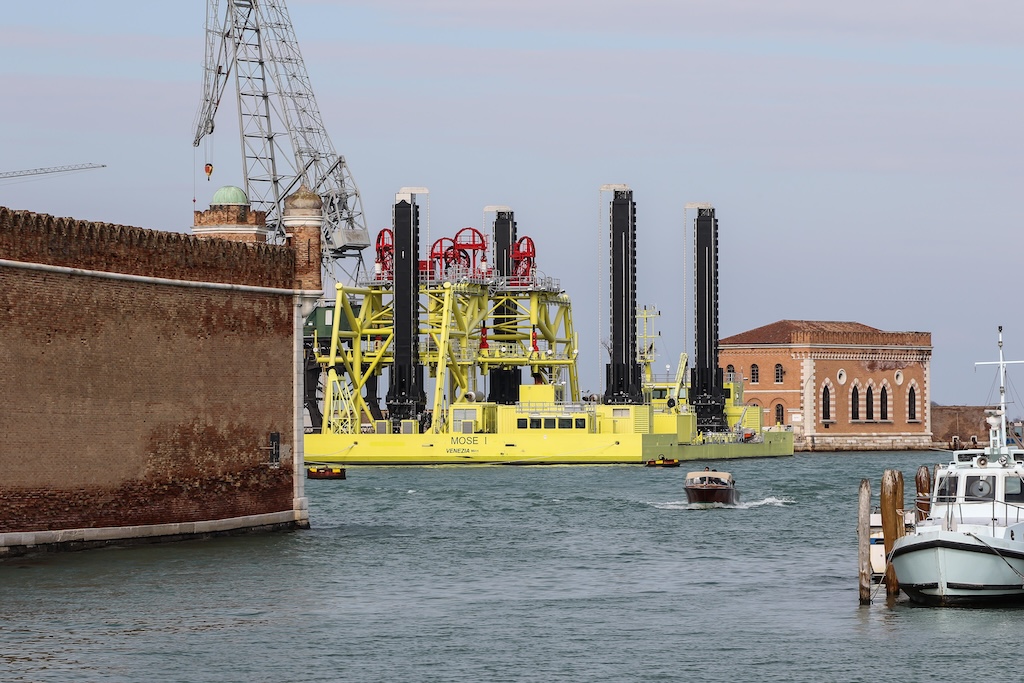
Adaptive interventions vary widely by region and financial capacity. Engineering solutions like Venice’s MOSE dynamic floodgate barrier—which cost billions and was activated over 48 times between 2020 and 2022 alone—illustrate the intensive capital required to defend historical coastal infrastructure. Less capitalized regions rely on hard seawalls, mangrove buffer restoration, or managed retreat, moving critical infrastructure and communities to higher ground.
However, current adaptation thresholds face severe constraints: under low-emissions projections, existing physical coastal defenses are expected to be breached ten times more frequently over the next three decades than they are today.
Cryospheric Collapse, "Coastal Squeeze," and Biodiversity Loss
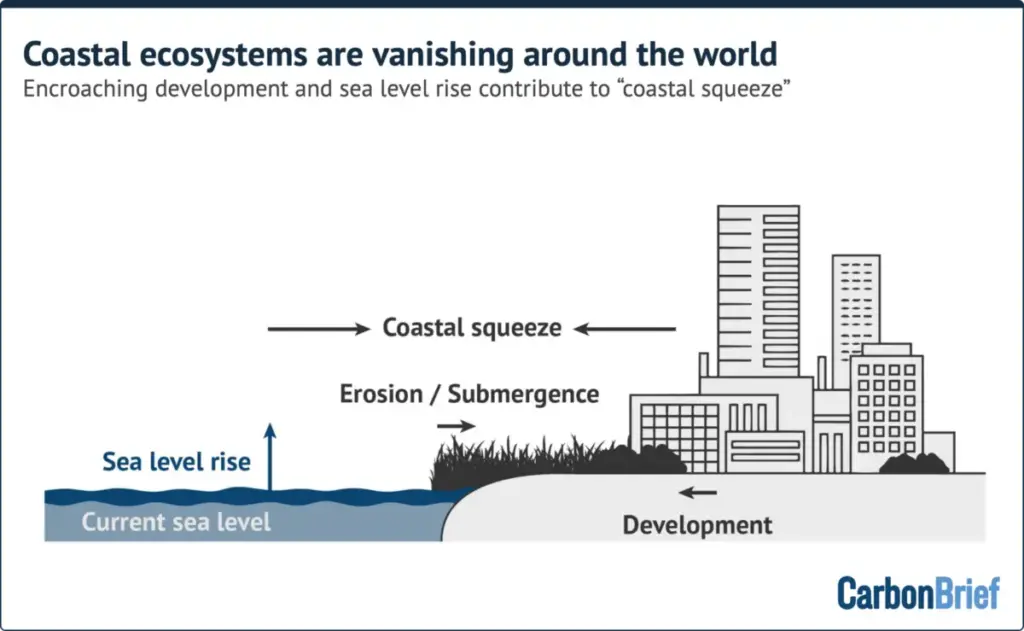
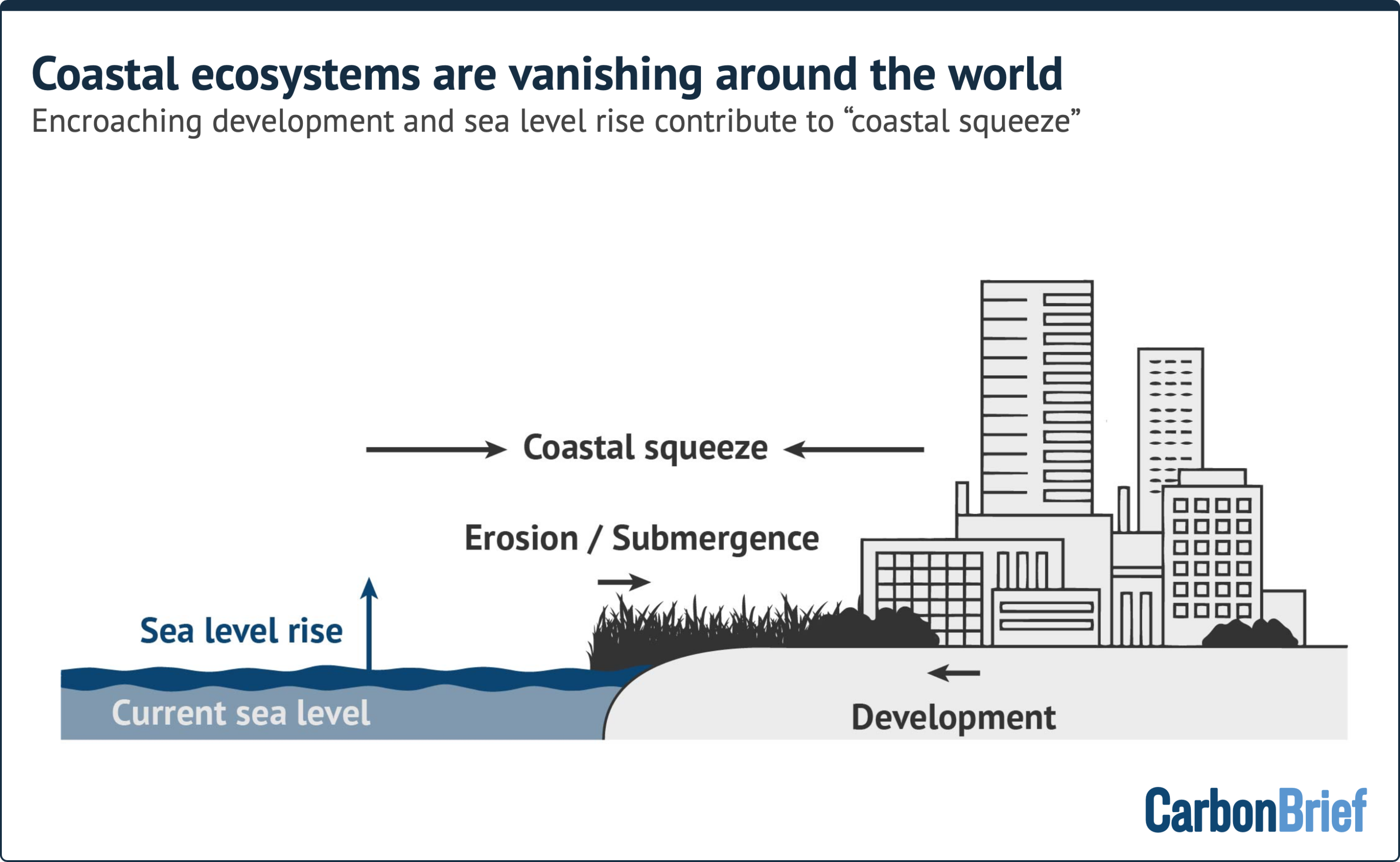
Ecological biomes situated at the terrestrial-marine interface face a severe structural crisis termed coastal squeeze. As rising sea levels push coastal marine boundaries inland, natural ecosystems attempt to migrate landward. However, where human infrastructure—such as seawalls, highways, and urban developments—blocks this migration path, natural habitats become compressed and submersed.
                       THE "COASTAL SQUEEZE" MECHANISM

   [ Rising Sea Level ]  ──>  ( Ecosystem Migration )  ──x  [ Human Infrastructure ]
                                                               (Seawalls / Built Environment)
                                                                            │
                                                                            ▼
                                                                  Habitat Extinction
Wetland Degradation: The Global Wetland Outlook reports that nearly 28 million hectares of coastal wetlands—including estuaries, tidal flats, salt marshes, and mangroves—have been destroyed since 1970, an area roughly equivalent to the landmass of Ecuador.
Inland Migration Deficit: In the continental United States, only 16% of coastal wetlands are migrating inland at rates sufficient to keep pace with relative sea level rise. Nearly 75% are failing to match the speed of rising waters, while 11% are submerged.
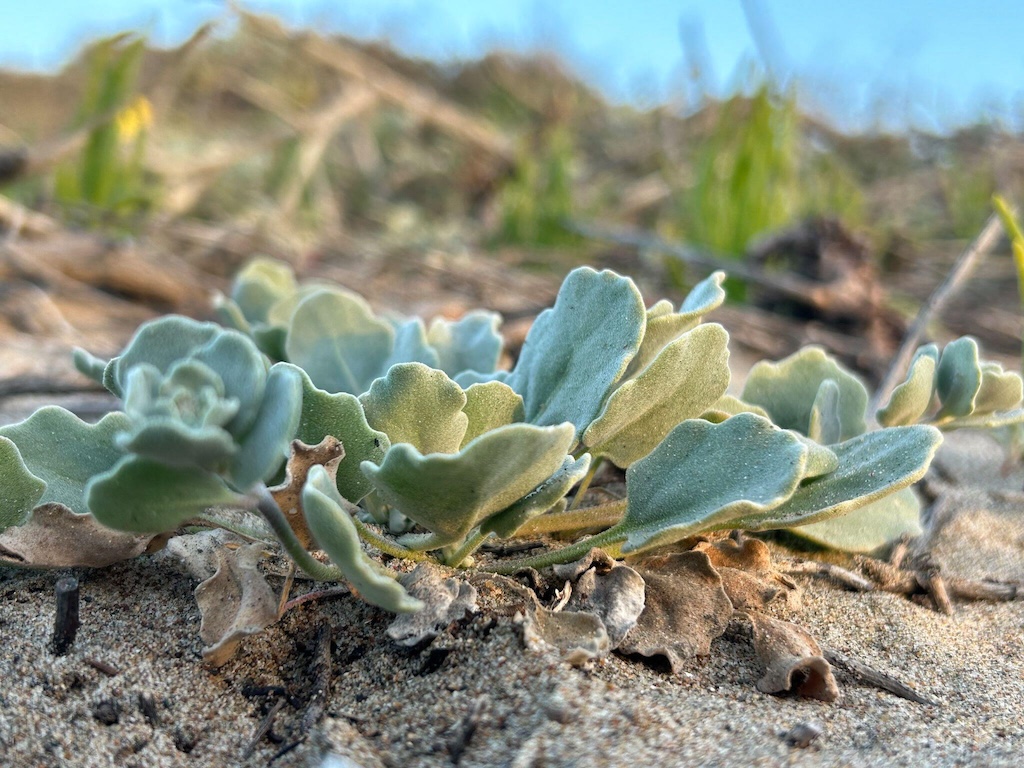
Species Extirpation: In 2024, researchers documented the first recorded local extinction of a land plant species in the United States caused directly by sea level rise: the Key Largo tree cactus (Pilosocereus millspaughii). Driven by saltwater intrusion and storm surge erosion, the final wild specimens were removed from the Florida Keys in 2021 to prevent total species loss.
Insular Biodiversity Hotspots: Islands host over 20% of the world’s plant species despite occupying a fraction of global land surface area. Modeling indicates that a one-meter rise in sea level would completely submerge 6% of island habitats across ten global biodiversity hotspots, while reducing the land area of over 11% of hotspot islands by more than half.
Coral Reef Degradation Dynamics
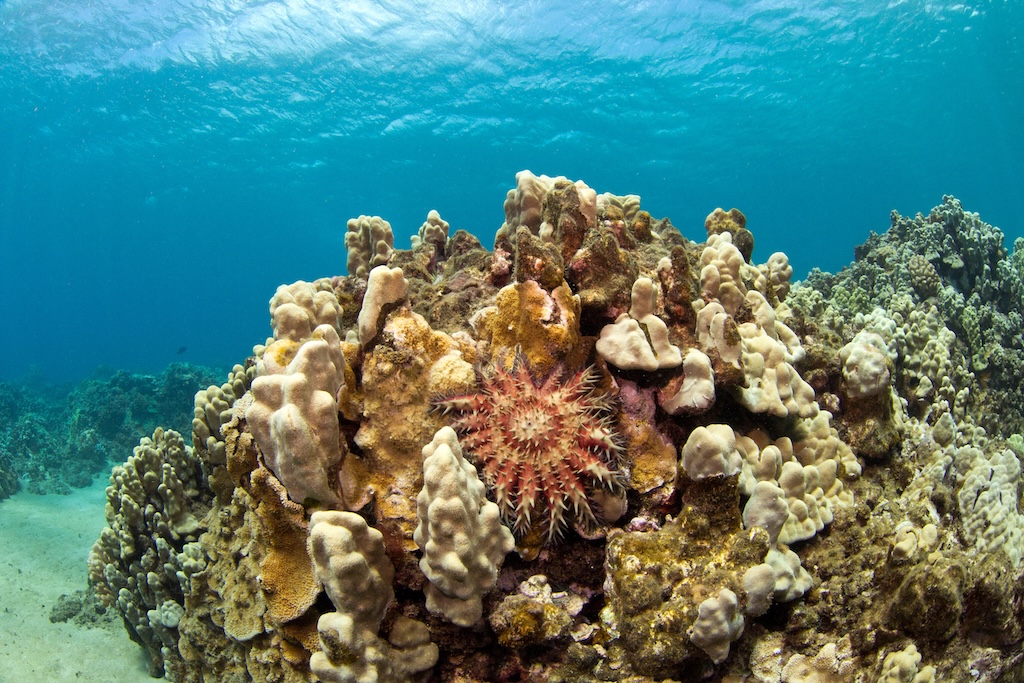
Although shallow-water coral reefs exist completely underwater, they are deeply sensitive to changes in sea surface elevation.
                            SEA LEVEL RISE IMPACTS ON CORAL REEFS
                                              │
         ┌────────────────────────────────────┴────────────────────────────────────┐
         │                                                                         │
   Light Attenuation & Sedimentation                                     Thermal Depressurization
   • Water deepening reduces photosynthetically                          • Deeper water marginally buffers
     active radiation (PAR) reaching zooxanthellae.                        extreme heatwaves in local micro-zones.
   • Coastal erosion increases sediment load, smothering coral.          • Offset by global surface warming.
Light Attenuation: As sea depth over shallow reefs increases, the availability of photosynthetically active radiation decreases. This disrupts the symbiotic relationship between corals and their photosynthetic zooxanthellae algae, impairing calcification and structural growth.
Sedimentation: Enhanced coastal erosion washes terrestrial soil and particulate matter into nearshore waters. Suspended solids block light penetration and settle directly on coral polyps, smothering them and impairing reproduction.
Erosion of Natural Barriers: When living coral reefs degrade, the structural reef matrix erodes. This deepens the seafloor, effectively increasing local relative sea level rise and allowing larger wave energy to strike adjacent coastlines unabated.
While some fast-growing coral species in the Western Pacific historically maintained vertical growth alongside sea level rise, scientific models demonstrate that few modern reef systems possess the biological resilience to keep pace under moderate-to-high emissions trajectories. Globally, nearly 10% of total coral cover has been lost since 1980 due to compounding marine heatwaves and sea level rise.
Cultural Heritage and UNESCO World Heritage Vulnerability
Rising seas threaten to permanently erase thousands of years of preserved human history established along river basins and coastlines.
       UNESCO WORLD HERITAGE SITES AT RISK

   Low-Elevation Coastal Sites (<20m)     [████████████████████████████████████████] 386 Sites
   Mediterranean Coastal Sites           [███████████████████████████████████████▌] 49 Sites (42 Erosion / 37 Flood Risk)
   African Heritage Sites Exposed (2050) [████████████████████] 191 Sites (Up from 56)
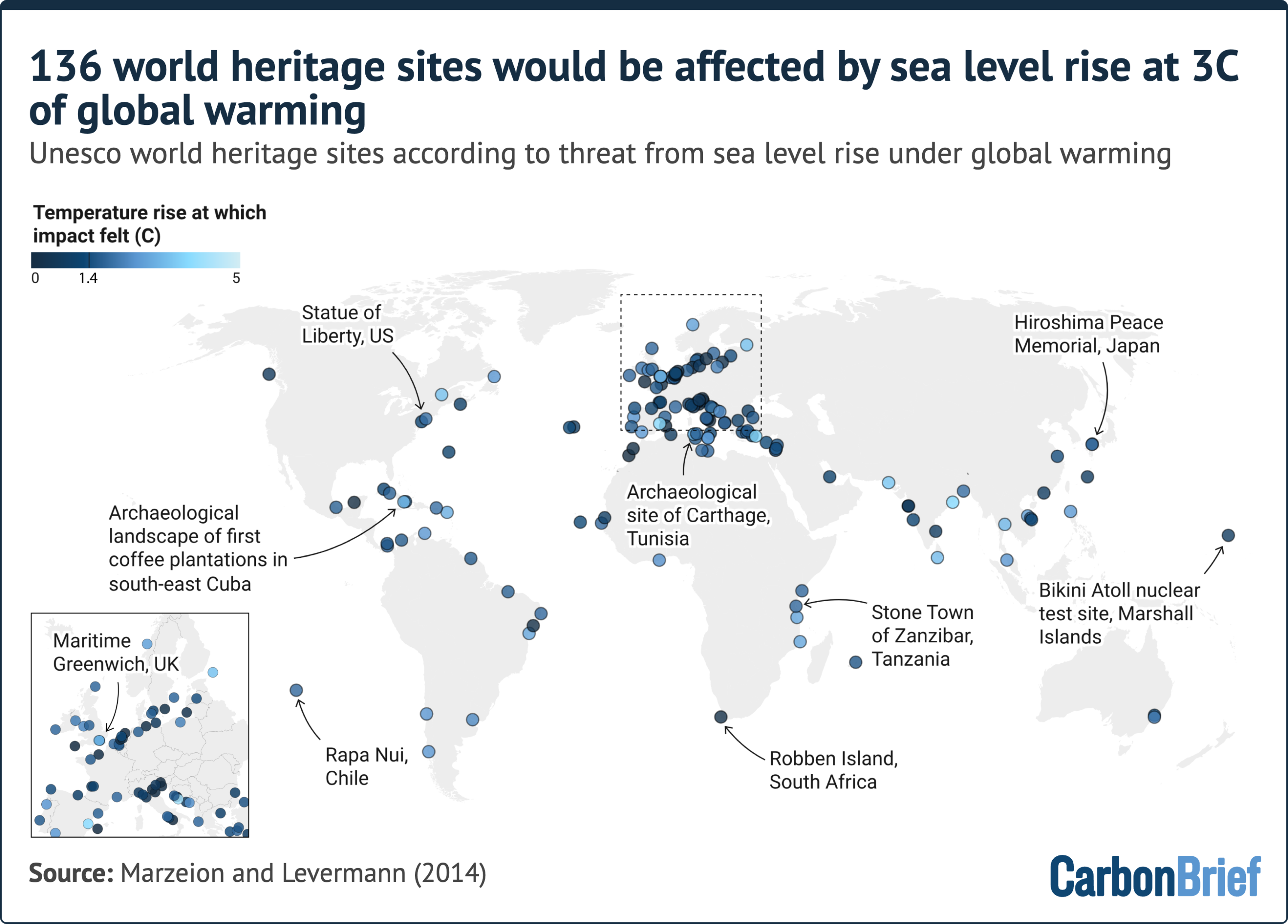
Globally, 386 UNESCO World Heritage sites are located in low-lying coastal zones at or below 20 meters above sea level, including 289 cultural sites, 91 natural sites, and six mixed sites.
                             MEDITERRANEAN UNESCO RISK MATRIX
  ┌──────────────────────────┬─────────────────────────────┬───────────────────────────┐
  │ Heritage Site            │ Country                     │ Primary Hazard Exposure   │
  ├──────────────────────────┼─────────────────────────────┼───────────────────────────┤
  │ Archaeological Carthage  │ Tunisia                     │ Coastal Erosion / Flooding│
  │ Ephesus                  │ Turkey                      │ Wave Inundation           │
  │ Pompeii and Herculaneum  │ Italy                       │ Water Table Rise / Flood  │
  │ Cathedral of St James    │ Croatia                     │ Tidal Surge Storm Impact  │
  └──────────────────────────┴─────────────────────────────┴───────────────────────────┘
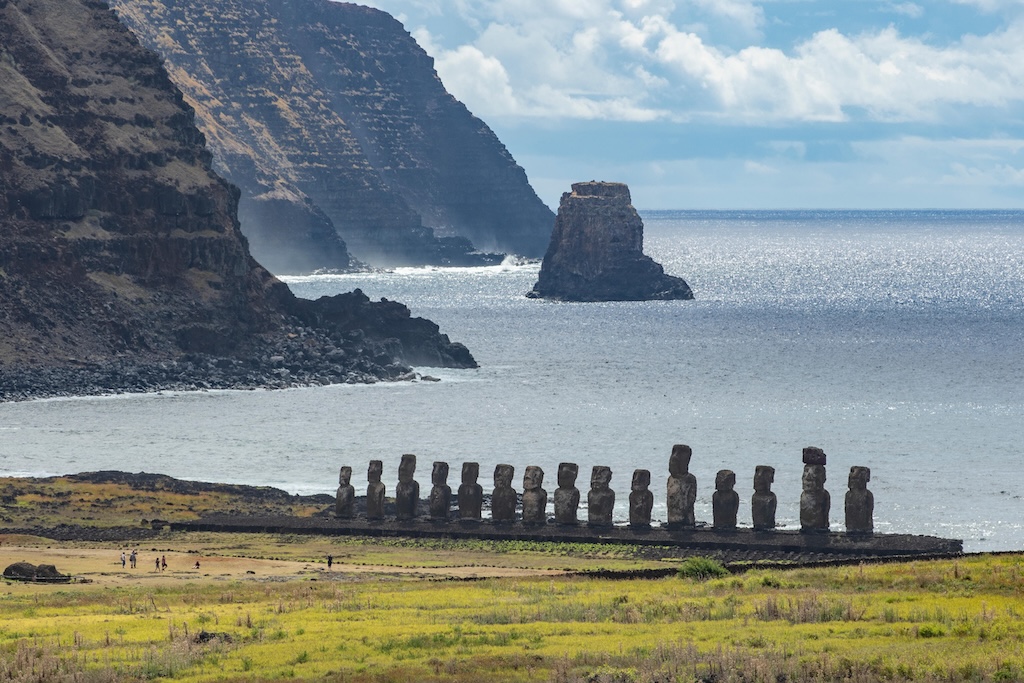
A global warming trajectory of 3°C above pre-industrial levels is projected to directly impact nearly 20% of all UNESCO cultural world heritage sites globally. Unmitigated sea level rise threatens iconic cultural assets, including Chile’s Rapa Nui (Easter Island) moai sites, South Africa’s Robben Island, Japan’s Hiroshima Peace Memorial, and Australia’s Sydney Opera House. In Africa alone, the number of heritage sites exposed to severe coastal flooding and erosion is projected to triple from 56 today to 191 by 2050 under a moderate emissions path.
Official Statements & Policy Directives
The high-level political declaration finalized at the United Nations General Assembly signifies a major shift, framing sea level rise not merely as an environmental challenge, but as a critical threat to global security, international law, and human rights.
Excerpt from the UN General Assembly High-Level Declaration on Sea Level Rise: "Sea level rise is not a distant scenario, but a real and lived experience for many. Every fraction of a degree of global warming increases the risks… Protection, preservation and documentation of cultural heritage is a priority."
Report of the UN Secretary-General on Ocean Hazards: "Even under moderate scenarios, rising seas will render many low-lying coastal zones and small island developing states increasingly uninhabitable without extraordinary adaptation."
Small Island Developing States (SIDS) and Legal Sovereignty
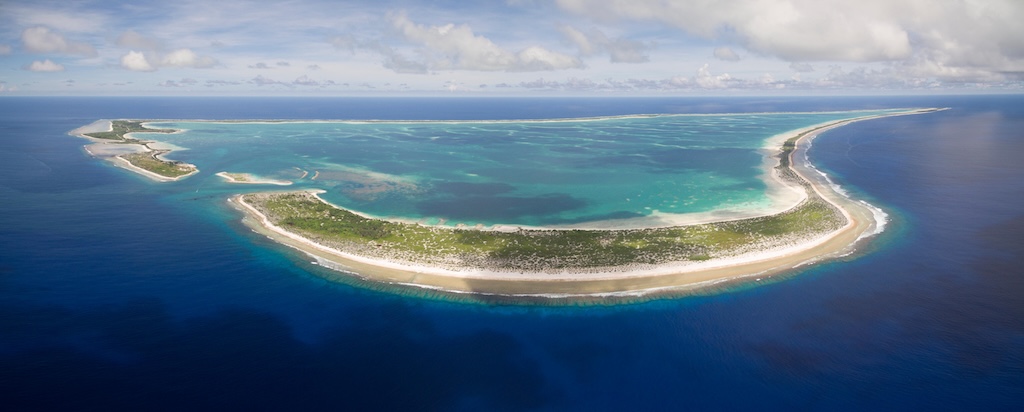
For Small Island Developing States (SIDS), particularly low-lying atoll nations such as Kiribati, Tuvalu, the Marshall Islands, and the Maldives, rising sea levels present an existential challenge to national territorial existence.
                SMALL ISLAND DEVELOPING STATES (SIDS) FINANCIAL MATRIX

  Annual Adaptation Capital Needed (by 2035)   [████████████████████████] $6.0 Billion
  Public Adaptation Capital Received (2022-23) [████▌] $1.2 Billion
  Projected Annual Flood Damages at 1.5°C      [████████████████████████████████████] $24.0 Billion
Geographic Disproportion: Many Pacific atoll states feature average land elevations of just 1 to 2 meters above sea level. Because of gravitational shifts caused by Antarctic ice sheet melt, the Pacific equatorial belt will experience relative sea level rise 11% to 33% higher than the global mean by 2100.
Documented Land Loss: Land loss is already occurring. Kiribati lost two uninhabited islands to submersion in 1999; five vegetated reef islands in the Solomon Islands vanished completely by 2014, with six more suffering severe shoreline erosion that forced the relocation of coastal villages.
Adaptation Capital Shortfall: UN economic estimates indicate SIDS will require up to $6 billion annually by 2035 to implement critical physical and economic adaptation measures. However, international public adaptation finance delivered to these nations totaled just $1.2 billion in 2022–2023. Annual coastal flood damages across SIDS are projected to rise from $1.64 billion today to over $24 billion annually, even if global warming is successfully capped at 1.5°C.
The UN International Law Commission 2025 Ruling
The threat of physical submersion raises novel and complex international legal questions regarding statehood, maritime territorial boundaries, and the control of Exclusive Economic Zones (EEZs). Under traditional interpretations of the UN Convention on the Law of the Sea (UNCLOS), baseline legal boundary lines shift inward as coastlines recede, threatening to strip island nations of rich maritime rights.
In response, a landmark 2025 report issued by the UN International Law Commission (ILC) established a crucial legal precedent:
"International law allows for countries’ maritime boundaries and sovereign baseline holdings to remain fixed and preserved, notwithstanding physical changes to coastlines resulting from climate change-related sea level rise."
The Commission emphasized the imperative to develop practical global legal frameworks to prevent statelessness, defend maritime borders, and protect populations displaced internally or internationally by rising ocean levels.
Future Outlook
The trajectory of global sea level rise through the end of the twenty-first century and into the next millennium depends heavily on near-term mitigation efforts. Because ocean warming and polar ice sheet melting carry long-term physical inertia, global seas will continue to rise for centuries regardless of future emissions cuts. However, the rate and total magnitude of that rise remain highly sensitive to near-term policy decisions.
                          PROJECTED SEA LEVEL RISE BY 2100

   Low-Emissions (RCP 2.6 / SSP1-2.6)        [████████████] ~0.38 - 0.50 m
   Moderate-Emissions (SSP2-4.5)             [████████████████] ~0.56 m
   High-Emissions / Ice Sheet Instability    [████████████████████████████████] > 1.0 - 2.0 m
If greenhouse gas emissions continue at high levels, severe tipping points—specifically the rapid collapse of the West Antarctic Ice Sheet or Marine Ice Sheet Instability (MISI) in Greenland—could trigger global sea level rise far exceeding the baseline median, potentially approaching or exceeding 1 to 2 meters by 2100.
Policy and Engineering Imperatives
Addressing this slow-onset global emergency requires a coordinated multi-pillar international strategy:
                                GLOBAL ACTION FRAMEWORK
                                           │
         ┌─────────────────────────────────┼─────────────────────────────────┐
         │                                 │                                 │
   Emissions Mitigation             Adaptation Mobilization             Legal & Humanitarian
   • Limit warming to 1.5°C to     • Scale public adaptation capital   • Enforce ILC legal baselines
     prevent polar ice collapse.     to $6B+/yr for SIDS.               to protect statehood.
   • Rapid decarbonization of      • Deploy nature-based defenses     • Establish legal frameworks
     heavy industries.               and hard infrastructure.           for climate-displaced people.
Aggressive Atmospheric Mitigation: Restricting global mean temperature rise to 1.5°C above pre-industrial levels is necessary to prevent irreversible destabilization of the Antarctic and Greenland ice sheets.
Scaling Targeted Climate Finance: Bridging the multi-billion-dollar adaptation finance gap is essential to provide vulnerable and developing nations with the capital required to construct sea defenses, upgrade urban drainage systems, and restore natural coastal buffers.
Equitable Managed Retreat Frameworks: Where physical defense becomes engineeringly impossible or economically unsustainable, nations must develop proactive legal, financial, and humanitarian frameworks to facilitate managed migration with dignity, preserving community cohesion and fundamental human rights.
Preservation of National Sovereignty: Adopting global legal protections that preserve national boundaries, maritime claims, and statehood for submerged or heavily impacted island nations ensures international legal stability in an era of shifting geography.
The decisions made by international policymakers over the coming decade will determine whether the world’s coastal cities, island nations, and irreplaceable cultural landscapes can adapt to rising seas, or whether rising waters will irreversibly re-draw the geographic and economic map of the Earth.