Executive Overview
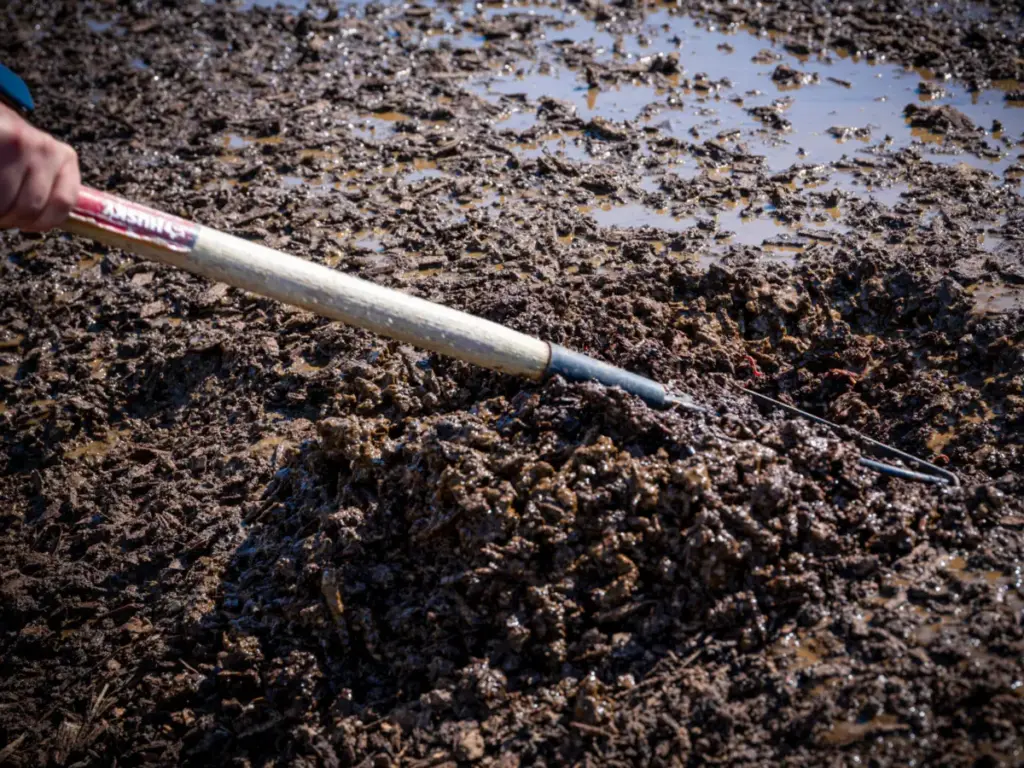
HICKMAN, California — In the searing heat of California’s Central Valley, where sprawling agricultural tracts meet the horizon, a quiet revolution is taking root in beds of dark, wet wood chips. Here, at the family-run Alberto Dairy, third-generation farmer Anthony Agueda sifts through a clump of rich organic muck to reveal a writhing cluster of red earthworms. Beneath these three-foot mounds of organic matter—stretching across the equivalent of six football fields—lies a biological engine designed to address one of the modern livestock industry’s most stubborn environmental challenges: manure management.
The system is a vermifiltration biofilter, developed and patented by the Chilean company BioFiltro. It represents a burgeoning shift away from high-tech, capital-intensive industrial fixes toward biological, low-cost alternatives. As the livestock sector faces mounting pressure from tightening environmental regulations, climate mandates, and shifting public expectations, dairy farmers are under intense scrutiny. Livestock manure is a notorious driver of greenhouse gas emissions and water contamination, accounting for roughly 1.6% of total U.S. greenhouse gas emissions and roughly 10% of global agricultural climate contributions.
California, the nation’s largest milk-producing state, has emerged as the crucible for this environmental reckoning. Spurred by aggressive climate mandates like Senate Bill 1383—which requires a 40% reduction in methane emissions below 2013 levels by 2030—the state has channeled over a billion dollars into agricultural emissions programs. While anaerobic digesters have historically captured the lion’s share of funding and public attention, their exorbitant costs and failure to address water pollution have left small- and medium-sized dairies searching for alternatives.
Vermifiltration offers a compelling, decentralized vision for the future of sustainable dairy farming. By replacing low-oxygen anaerobic lagoons with aerobic, worm- and microbe-driven biofilters, operations like the Alberto Dairy are aiming to drastically reduce methane, ammonia, and nitrate pollution while transforming wastewater into clean irrigation water and valuable soil amendments. Yet, as the industry races to embrace these innovations, questions persist regarding long-term efficacy, carbon offset accounting, and the true cost of scaling biological solutions under real-world farming conditions.

Detailed Chronology
The Evolution of Manure Management in California
- 1989: Antonio Alberto relocates his dairy operations to Hickman, California, establishing what would eventually become a generational family business in the state’s agricultural heartland.
- 2009: BioFiltro is founded, developing its patented vermifiltration technology for industrial and municipal wastewater applications globally.
- 2016: The state of California enacts Senate Bill 1383, mandating a 40% reduction in short-lived climate pollutants, including methane, by 2030 relative to 2013 levels. The California Air Resources Board (CARB) is tasked with deploying incentive programs to drive compliance.
- 2018: UC Davis researcher Frank Mitloehner publishes a landmark study on vermifiltration at the Fanelli Dairy in Hilmar, California, concluding that the technology reduces ammonia emissions from wastewater by approximately 90%.
- 2020–Present: Propelled by California’s Low Carbon Fuel Standard (LCFS) and state grant programs, anaerobic digesters proliferate across large-scale dairies, generating over $1 billion for farms while drawing criticism for ignoring water pollution and favoring only massive operations.
- October 2024: The Alberto Dairy in Hickman officially commissions its BioFiltro vermifiltration system, becoming an early adopter of the technology in California after receiving nearly $2 million in state grant funding through the Alternative Manure Management Program and Dairy Plus Program.
- Late 2025: BioFiltro secures a $35 million financing round to accelerate its agricultural expansion across the United States. Concurrently, CARB begins discussing regulatory sticks to enforce compliance as state dairy methane reductions track roughly 4 million metric tons shy of 2030 targets.
Supporting Context & Metrics
The Scale of the Manure Problem
The environmental footprint of a modern dairy operation extends far beyond the barn. Globally and domestically, the primary vehicle for manure storage—open-air lagoons and slurry tanks—acts as a biological incubator for greenhouse gases. When cattle manure is washed into these oxygen-depleted containment systems, it creates a stagnant slurry where specialized microorganisms known as methanogens thrive. Feeding on hydrogen, carbon dioxide, and organic compounds, these microbes release methane as a metabolic byproduct. Alongside methane, secondary microbial processes generate nitrous oxide.
Both gases possess disproportionate global warming potential. Over a 100-year timescale, methane traps heat with an efficiency roughly 30 times greater than carbon dioxide, while nitrous oxide packs nearly 275 times the warming power of CO2. According to the World Resources Institute (WRI), manure management on dairy and swine farms accounts for 1.6% of total U.S. greenhouse gas emissions.
Beyond atmospheric impacts, traditional manure management poses severe risks to terrestrial and aquatic ecosystems. When nitrogen-rich slurry is applied excessively or improperly to agricultural fields, it leaches into groundwater as nitrates or runs off into local waterways. Nitrated drinking water has been linked to significant human health risks, while agricultural runoff into rivers, lakes, and coastal estuaries routinely triggers massive algae blooms. These blooms suffocate aquatic life, block sunlight, and spawn expansive hypoxic "dead zones."
The Digester Dilemma and the Rise of Alternatives
In response to California’s strict 2016 climate mandates, the state’s dairy industry initially leaned heavily on anaerobic digesters. By capping manure lagoons with impermeable membranes and piping the captured biogas to be scrubbed into pipeline-quality natural gas, dairies could generate lucrative credits under California’s Low Carbon Fuel Standard. This financial ecosystem funneled over $1 billion to participating farms since 2020.

However, critics point out glaring structural flaws in the digester model:
- The Scale Barrier: Anaerobic digesters require massive capital investments, making them economically viable only for mega-dairies housing 2,000 or more cattle. For the vast majority of family-owned operations, digesters are entirely out of reach.
- Water Pollution Blindspot: Because digesters primarily target methane capture from liquid slurry without fundamentally altering the chemical composition of the manure that is subsequently spread across fields, they do little to solve—and can sometimes exacerbate—regional water contamination issues.
- Misallocated Resources: Energy policy experts argue that heavy state subsidies for digesters have diverted financial capital, research attention, and administrative focus away from holistic, lower-cost mitigation strategies.
These limitations have created an opening for alternative technologies designed to intercept methane and nitrogen production before they occur. Approaches such as solid separation (using mechanical screw presses to dewater manure), chemical and biological additives, and vermifiltration offer scalable pathways for mid-sized and smaller operations.
Official Statements & Scientific Perspectives
The integration of biological filtration into industrial dairy operations has sparked robust debate within the academic, regulatory, and corporate spheres.
The Science of Vermifiltration: Worms vs. Microbes
BioFiltro markets its technology as "worm-powered solutions," emphasizing the role of earthworms and specialized microorganisms in consuming up to 99% of wastewater contaminants. However, independent researchers like Dr. Frank Mitloehner, professor and chair of the Department of Animal Science at UC Davis, suggest the marketing narrative overstates the invertebrates’ direct mechanical role.

"The rocks and wood chips form a porous filter that replaces the anaerobic environment of a manure lagoon with an aerobic one. And in that oxygen-rich environment, different types of microbes thrive." — Dr. Frank Mitloehner, UC Davis
Mitloehner’s independent field research at the Fanelli Dairy demonstrated that vermifiltration systems can slash ammonia emissions by roughly 90% by converting reactive nitrogen compounds into inert nitrogen gas rather than volatile ammonia or groundwater-leaching nitrates.
Yet, discrepancies remain regarding methane mitigation metrics. While company-backed and partner-funded studies report massive reductions in methane emissions through vermifiltration, Mitloehner’s independent monitoring observed elevated short-term methane signatures under specific test parameters. Researchers emphasize that biological systems are inherently dynamic—sensitive to fluctuations in ambient temperature, herd size, feeding regimes, and moisture content—making standardized, long-term empirical accounting a continuous challenge.
The Carbon Offset Controversy
As companies like BioFiltro commercialize carbon credits to offset emissions for major consumer packaged goods brands—such as Nestlé purchasing over 150,000 credits from Washington’s Royal Dairy project—scrutiny from carbon market analysts has intensified.

Grayson Badgley, a research scientist at CarbonPlan, questions the additionality of credits generated by projects heavily subsidized or driven by impending regulatory pressure:
"If lots of dairies are cleaning up their act ahead of pending regulation, it really does seem like the regulation, not offsets, is driving that action. Trying to collect as many credits prior to that deadline might adhere to the rules of the market, while still raising questions about whether those rules have enabled real climate action."
Conversely, industry proponents and dairy operators defend the market mechanisms as vital financial catalysts. Anthony Agueda noted that the capital-intensive installation of the Alberto Dairy’s vermifiltration system would have been financially unviable without the anticipated revenue stream from carbon credits. Patrick Beckett, BioFiltro’s vice president of quality and R&D, echoed this sentiment, maintaining that third-party validated research and voluntary carbon markets provide the foundational economic scaffolding necessary to scale agricultural sustainability.
Future Outlook
As California approaches its 2030 climate milestones—with state projections indicating current agricultural interventions will fall roughly 4 million metric tons short of statutory mandates—regulatory agencies are shifting from incentives to enforcement. The California Air Resources Board has initiated discussions regarding mandatory rules that would compel dairy operations to achieve required emission reductions, replacing voluntary carrots with regulatory sticks.

For multi-generational farmers like Anthony Agueda, the calculus is clear. Modernizing dairy operations is no longer optional; it is an existential prerequisite for survival in a regulated economy. The successful deployment of vermifiltration at the Alberto Dairy demonstrates that ecological stewardship and operational efficiency can coexist. By converting troublesome waste streams into clear irrigation water, compostable bedding, and high-value vermicompost, biological filtration offers a decentralized template for the future of livestock management.
Ultimately, the lessons learned from California’s ambitious climate laboratory will resonate far beyond the Central Valley. Whether through worm-powered biofilters, advanced solid separation, or novel microbial additives, the global agricultural sector must navigate the complex trade-offs between cost, scalability, and scientific verification if it hopes to permanently defang its most persistent environmental challenge.