

Executive Overview
When the conversation turns to the United States robotaxi market, the public discourse is overwhelmingly dominated by two names: Waymo and Tesla. While Waymo continues to scale its commercial operations across major metropolitan areas and Tesla pursues its ambitious—albeit heavily scrutinized—vision for unsupervised autonomy, a third major player is quietly rewriting the competitive landscape.
Zoox, an autonomous vehicle company backed by Amazon, has been executing a masterclass in methodical rollout strategy. Far from flying under the radar within the industry, Zoox has spent the year aggressively expanding its footprint, claiming key regulatory milestones, introducing next-generation hardware, and capturing market share at a clip that is catching legacy competitors off guard.
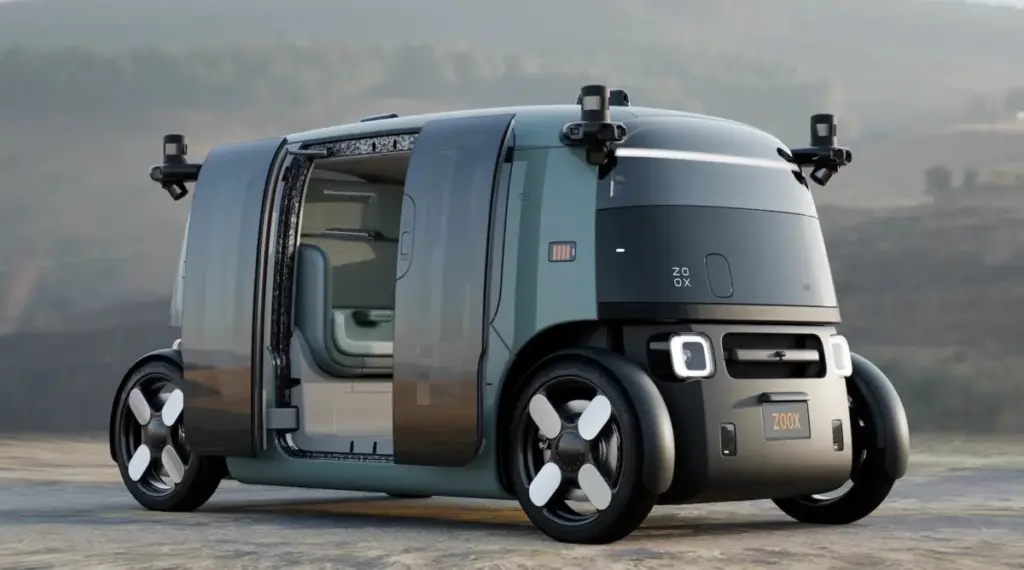
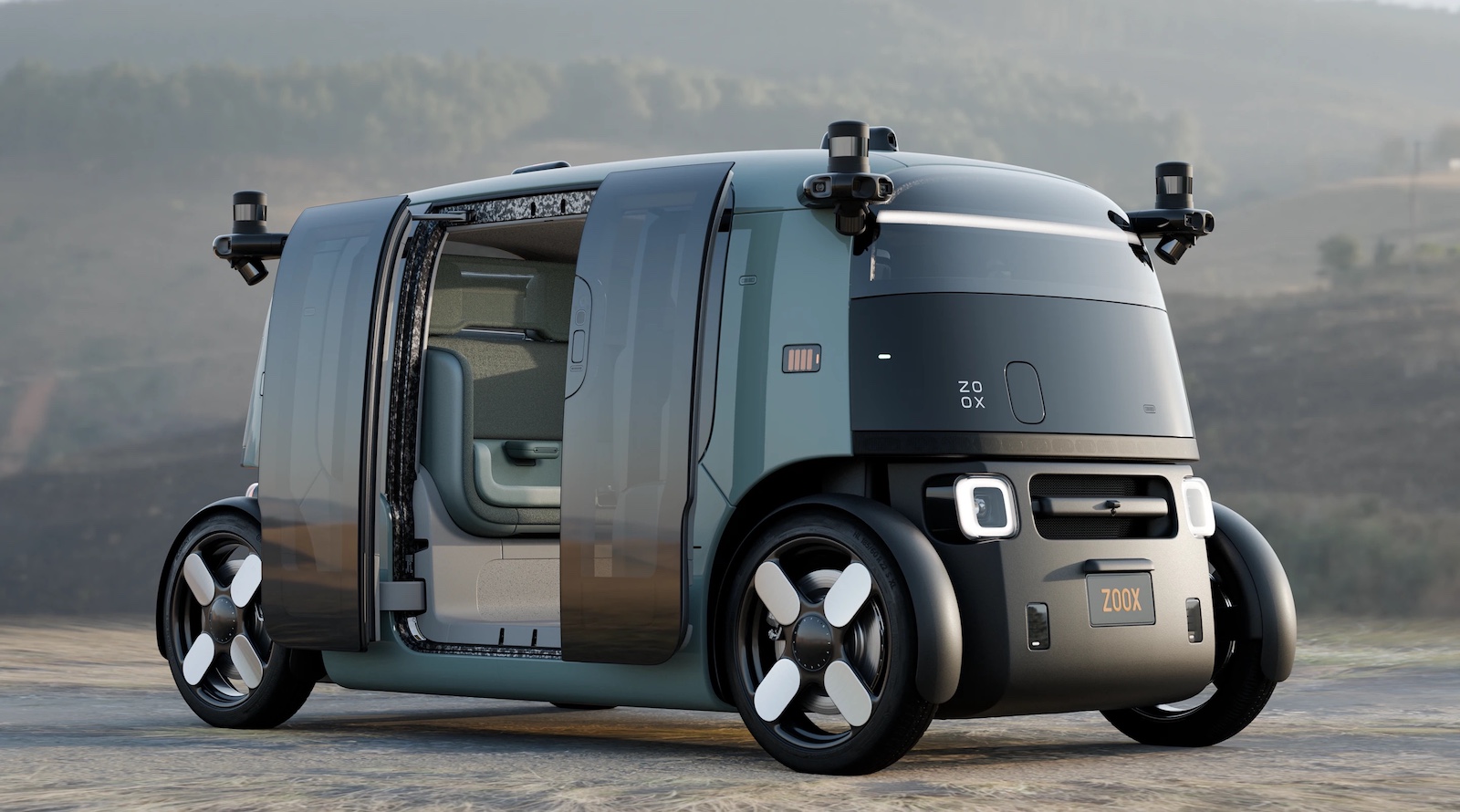
Now, the autonomous vehicle (AV) pioneer is setting its sights on "Space City." Zoox has announced that it will officially begin autonomous vehicle testing in Houston, Texas, later this month. Marking a notable departure from its initial launch playbook, the company’s entry into Houston will kick off using retrofitted traditional SUVs equipped with human safety drivers, rather than its custom-built, bilateral "toaster-style" robotaxis.
This move into Texas’s largest city is more than just another pin on a map. Houston presents a uniquely grueling crucible for autonomous systems, characterized by sprawling suburban landscapes, notoriously complex service-road networks, erratic merging scenarios, and severe weather events ranging from scorching heat waves to torrential downpours and flash flooding. By conquering Houston, Zoox aims to prove that its autonomous stack is adaptable enough to handle the chaotic infrastructure found across the broader American sunbelt, further cementing its position as a serious contender to upend the burgeoning robotaxi duopoly.
Detailed Chronology: A Landmark Year for Zoox
To understand the weight of Zoox’s Houston expansion, one must examine the blistering pace of developments the company has maintained over the past several months. While some competitors have faced regulatory hurdles, public safety pushback, or technological delays, Zoox has methodically checked off every box required to transition from a research-and-development project into a commercially viable, revenue-generating autonomous transit network.
Spring and Early Summer 2026: Hardware and Growth
The groundwork for Zoox’s current market momentum was laid earlier this year. In June, the company officially unveiled its next-generation robotaxi model, showcasing refinements in sensor suites, passenger comfort, and redundant safety architecture.
Simultaneously, industry data began to reflect a shifting consumer preference. Despite Waymo’s massive brand recognition and Tesla’s formidable cult of personality, reports surfaced revealing that Zoox was quietly growing its user base faster than any other competitor in the U.S. market. By offering a uniquely designed vehicle built from the ground up for ridesharing—featuring facing seats, no steering wheel, and dual-direction driving capabilities—Zoox cultivated a distinct brand identity that resonated with early adopters.
Mid-Summer 2026: Regulatory Firsts and Commercialization
The true inflection point for the company occurred in late July. On July 30, Zoox achieved a monumental regulatory victory: it became the first company in the United States to secure formal approval to operate a paid robotaxi service with vehicles completely devoid of human controls (such as steering wheels and pedals).
Capitalizing immediately on this momentum, Zoox did not waste time resting on its bureaucratic laurels. Just weeks later, on August 6, the company officially flipped the switch on its commercial operations, beginning paid robotaxi services for the general public. This launch marked the culmination of years of meticulous testing, passenger-free rides, and patient regulatory navigation while waiting for state and local clearances.
Late Summer 2026: The Houston Expansion
With its commercial service operational in initial launch markets, Zoox is now pivoting back to geographic expansion. The announcement in late August regarding upcoming testing in Houston represents the next phase of its national scaling strategy. Unlike previous market entries where the company immediately deployed its proprietary autonomous pods, the Houston rollout begins with retrofitted SUVs outfitted with safety drivers, signaling a phased, highly pragmatic approach to mapping and understanding one of America’s most challenging driving environments.
Supporting Context & Metrics: Navigating the Complexities of Houston
Zoox’s decision to plant its flag in Houston is underpinned by calculated logistical and technical considerations. The city is fundamentally different from the dense, grid-based or hilly layouts where autonomous vehicles have traditionally cut their teeth.
The Challenge of "Space City"
In its official market entry announcement, Zoox did not mince words regarding the challenges posed by the Lone Star State’s largest metropolis.
“Houston is our most sprawling market to date,” the company noted, highlighting the vast geographic expanse that vehicles will need to navigate.
Beyond its sheer size, Houston’s infrastructure presents a labyrinth of engineering hurdles. The city is famous for its intricate highway systems, often featuring complex service-road networks (locally known as "feeders") where drivers must cross multiple lanes of fast-moving traffic on short notice to exit or enter freeways. Furthermore, the city’s merging scenarios require a high degree of predictive aggression and negotiation—traits that traditional conservative AV algorithms have historically struggled to master.
Then there is the element of climate. Houston experiences extreme weather patterns that test the limits of both hardware and software. High summer temperatures can push sensor thermal limits to the maximum, while torrential tropical downpours and recurring flash floods obscure lane markings, alter road geometry, and create dangerous hydroplaning conditions. By throwing its autonomous stack into this meteorological and infrastructural gauntlet, Zoox is deliberately seeking out worst-case scenarios to harden its technology.
National Footprint and Infrastructure
Houston will not be an isolated island for Zoox. The company is already laying down permanent roots in the city, with concrete plans already in motion to establish a dedicated charging and maintenance depot in the area. This facility will handle fleet management, sensor calibration, routine maintenance, and overnight power replenishment.
With the addition of Houston, Zoox’s operational footprint now spans nearly a dozen major U.S. markets. The company’s expanding empire includes active testing, development, or commercial operations in:
- Atlanta, Georgia
- Austin, Texas
- Dallas, Texas
- Houston, Texas (Upcoming)
- Las Vegas, Nevada
- Los Angeles, California
- Miami, Florida
- Phoenix, Arizona
- San Francisco Bay Area, California
- San Diego, California
- Seattle, Washington
- Washington, D.C.
This diverse geographical spread ensures that Zoox’s machine-learning models are ingesting driving data from coastal rain, desert heat, urban gridlock, and sprawling southern highways, creating a robust, generalized autonomous driver profile.

Official Statements and Industry Insights
The strategy behind Zoox’s methodical approach points to a broader philosophy shared by its parent company, Amazon: build it right, test it exhaustively, and scale with unwavering reliability.
Industry analysts have noted that while Tesla relies heavily on a camera-only, vision-based approach pushed rapidly to consumer vehicles via over-the-air updates, and Waymo relies on a deeply entrenched sensor suite deployed in geofenced urban cores, Zoox occupies a unique middle ground. Backed by Amazon’s seemingly limitless financial runway and logistics expertise, Zoox is under less pressure to achieve immediate profitability and can instead focus on perfecting a holistic passenger experience.
The decision to use retrofitted SUVs for the initial Houston testing phase—rather than rolling out its custom-built bilateral pods straight away—has been praised by transit experts as a prudent risk-mitigation strategy. By utilizing human safety drivers in familiar vehicle platforms initially, Zoox can rapidly map the city’s complex geometry and feed real-world edge cases into its neural networks without risking its bespoke fleet assets in Houston’s notoriously aggressive traffic culture. Once the software proves its competence in the local environment, the transition to custom, driverless pods is expected to follow smoothly.
Future Outlook: Can Zoox Break the Duopoly?
As the calendar moves forward, the autonomous vehicle sector is hurtling toward a critical consolidation phase. The narrative that the market is a two-horse race between Waymo and Tesla is rapidly eroding, thanks in large part to Zoox’s aggressive 2026 trajectory.
The introduction of paid, driverless robotaxi services last month proved that Zoox can clear the highest regulatory hurdles in the Western world. Now, by tackling notoriously difficult markets like Houston, the company is demonstrating that its technology is not just a localized novelty designed for predictable tourist corridors like the Las Vegas Strip, but a scalable transit solution capable of handling the messy, unpredictable realities of American urban and suburban driving.
Looking ahead, the success of the Houston pilot will likely serve as a blueprint for how Zoox enters other sprawling, auto-centric metropolitan areas across the globe. If the company can successfully navigate Houston’s service roads, sudden downpours, and aggressive drivers—and transition those routes from safety-driver-assisted SUVs to fully autonomous, custom-built pods—it will firmly establish itself as a formidable third pillar in the future of urban mobility.
For consumers, cities, and competitors alike, the message is clear: do not sleep on Zoox. The robotaxi race is no longer a binary equation, and the battle for the American curbside is just beginning.



