Executive Overview
In 1934, as the United States struggled through the economic devastation of the Great Depression, an economist named Simon Kuznets delivered a landmark document to the United States Congress. Designed to quantify the catastrophic collapse of economic output, Kuznets’ framework laid the groundwork for what would become Gross Domestic Product (GDP)—the most powerful financial metric in human history.
However, embedded within that foundational 1934 report was an explicit warning that global policymakers would spend the next nine decades ignoring: "The welfare of a nation can scarcely be inferred from a measure of national income."
Today, that neglected caveat sits at the center of a growing global debate. Writing for the United Nations Environment Programme (UNEP), Steven Stone, Acting Director of UNEP’s Office of Science, highlights how the global reliance on GDP as a proxy for human well-being and national success has led to systemic market failures. By treating the depletion of natural resources, the destruction of ecosystems, and the erosion of social equity as economic gains, standard GDP metrics have created a dangerous misalignment between financial expansion and planetary survival.
As the international community faces interconnected crises—climate change, biodiversity loss, and accelerating inequality—the mandate to look "Beyond GDP" has shifted from an academic debate to a geopolitical necessity. Leaders across the UN system, sovereign governments, and financial institutions are mobilizing to replace this outdated metric with multi-dimensional accounting systems that value natural capital, human health, and long-term economic sustainability.
Detailed Chronology: The Evolution and Misuse of National Accounts
+-----------------------------------------------------------------------------------+
| CHRONOLOGY: THE RISE AND QUESTIONING OF GDP                                       |
+-----------------------------------------------------------------------------------+
| 1934: Simon Kuznets submits report to US Congress; warns against using GDP        |
|       as a measure of national welfare.                                           |
| 1944: Bretton Woods Conference establishes GDP as the international standard      |
|       for measuring national economic recovery and development.                  |
| 1972: Club of Rome publishes "The Limits to Growth"; King of Bhutan conceives     |
|       Gross National Happiness (GNH).                                             |
| 1990: Mahbub ul Haq and Amartya Sen develop the Human Development Index (HDI)     |
|       for the United Nations Development Programme (UNDP).                        |
| 2009: Stiglitz-Sen-Fitoussi Commission publishes critical assessment of GDP,       |
|       advocating for broader sustainability indicators.                           |
| 2021: UN Statistical Commission adopts the System of Environmental-Economic       |
|       Accounting (SEEA) Ecosystem Accounting framework.                           |
| 2024: UNEP and UN leadership present advanced "Beyond GDP" frameworks ahead of     |
|       the UN Summit of the Future.                                                |
+-----------------------------------------------------------------------------------+
1934: The Depression-Era Breakthrough
The concept of national economic accounting emerged out of necessity. Facing widespread unemployment and industrial stagnation during the Great Depression, the U.S. government lacked standardized data to evaluate the impact of policy interventions. Commissioned by the U.S. Senate, Simon Kuznets led a team at the National Bureau of Economic Research to compile the first comprehensive national income statistics. Kuznets brought rigorous statistical methods to the task, creating a unified measure of total production. Yet, from the outset, he recognized that aggregate monetary production omitted non-market activities, social equity, and the health of the underlying resource base.
1944: The Bretton Woods Institutionalization
The transition of national income accounting into global economic policy occurred during the 1944 Bretton Woods Conference. As world powers met to design the postwar financial infrastructure, national output measures became essential tools for managing international debt, sovereign credibility, and Marshall Plan disbursements. The International Monetary Fund (IMF) and the World Bank adopted GDP as the primary indicator for assessing economic health and lending eligibility. What began as a crisis management metric in Washington was codified into the benchmark for global governance.
1972–1990: Early Critiques and Alternative Models
By the early 1970s, ecological and developmental economists began highlighting the disconnect between GDP growth and real-world conditions. The publication of The Limits to Growth by the Club of Rome in 1972 challenged the assumption that infinite economic expansion was possible on a finite planet. Concurrently, King Jigme Singye Wangchuck of Bhutan famously declared that "Gross National Happiness is more important than Gross National Product," establishing a national framework built on cultural preservation, governance, and environmental protection.
In 1990, Pakistani economist Mahbub ul Haq and Indian Nobel laureate Amartya Sen developed the Human Development Index (HDI) for the UN Development Programme. By combining income data with health and education outcomes, the HDI demonstrated that higher national income did not automatically translate to improved living standards.
2009–Present: The Push for Reform
The 2008 global financial crisis exposed structural weaknesses in traditional economic modeling, prompting French President Nicolas Sarkozy to form the Commission on the Measurement of Economic Performance and Social Progress, led by Joseph Stiglitz, Amartya Sen, and Jean-Paul Fitoussi. Their 2009 report urged a shift from measuring economic production to measuring multi-dimensional well-being and sustainability.
In 2021, the UN Statistical Commission took a major step forward by formally adopting the System of Environmental-Economic Accounting (SEEA) Ecosystem Accounting framework. This enabled nations to integrate natural capital—such as forests, wetlands, and clean air—directly into their national balance sheets. Under the leadership of Steven Stone and his colleagues at UNEP, the push to replace GDP with comprehensive wealth accounting has become a key operational goal for international development.
Supporting Context & Metrics: The Perverse Economics of GDP
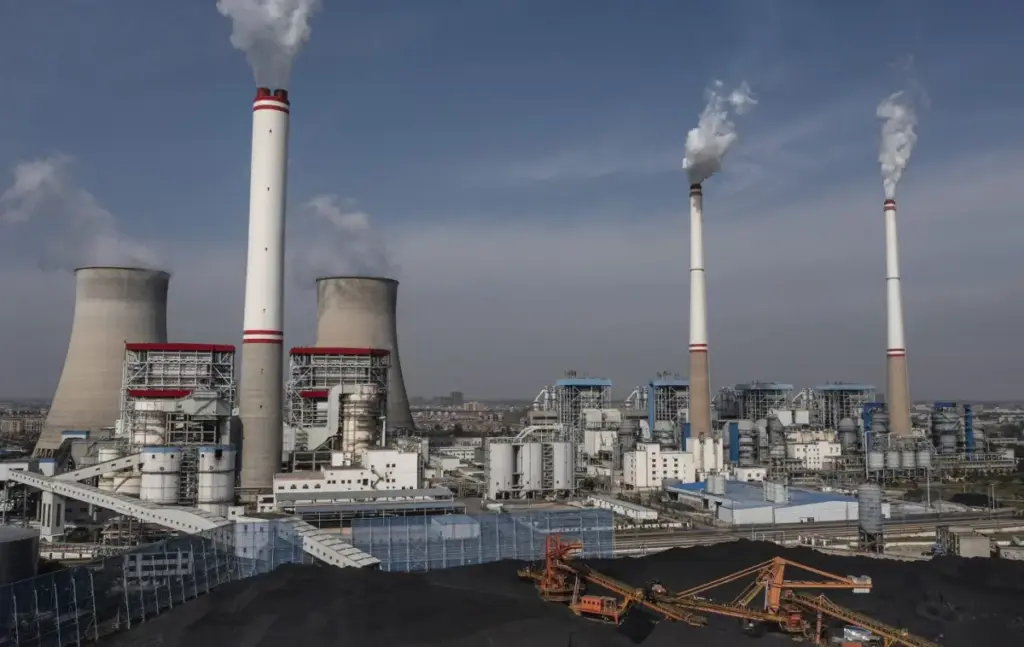
The primary flaw of Gross Domestic Product lies in its methodology: it measures market transactions regardless of their societal or environmental costs. Consequently, activities that destroy value over the long term are recorded as positive contributions to economic output.
+-----------------------------------------------------------------------------------+
| REAL-WORLD PARADOXES OF TRADITIONAL GDP ACCOUNTING                                |
+-----------------------------------------------------------------------------------+
| Event / Activity                | GDP Impact   | Real Ecological & Social Impact    |
+---------------------------------+--------------+------------------------------------+
| Major Industrial Oil Spill      | POSITIVE     | Severe destruction of marine life, |
| (Cleanup costs & litigation)    | (Boosts GDP) | coastal collapse, long-term toxic  |
|                                 |              | legacy.                            |
+---------------------------------+--------------+------------------------------------+
| Primary Forest Deforestation    | POSITIVE     | Carbon sink loss, biodiversity     |
| (Timber sales & agriculture)    | (Boosts GDP) | collapse, increased flood risk.    |
+---------------------------------+--------------+------------------------------------+
| Unpaid Family Caregiving &      | ZERO         | Critical social infrastructure     |
| Community Volunteering          | (Ignored)    | sustained without market costs.    |
+---------------------------------+--------------+------------------------------------+
| Intact Ecosystem Services       | ZERO         | Provides clean water, pollination, |
| (e.g., Natural Water Filtration)| (Ignored)    | climate stability at no charge.    |
+---------------------------------+--------------+------------------------------------+
The Misleading Nature of Wealth Accumulation
Standard economic statistics focus on flow metrics (income generated over a period) rather than stock metrics (the total value of capital assets held by a society). A country can boost its immediate GDP by clear-cutting its primeval forests, overfishing its territorial waters, and depleting its aquifers. On paper, the nation appears to be growing rapidly; in reality, it is liquidating its capital assets to fund short-term consumption.
To address this distortion, UNEP developed the Inclusive Wealth Index (IWI). The IWI evaluates a country’s long-term economic sustainability based on three categories of capital:
- Produced Capital: Infrastructure, buildings, machinery, and physical assets.
- Human Capital: Education, skills, life expectancy, and labor capability.
- Natural Capital: Ecosystems, land, forests, minerals, fossil fuels, and ecosystem services.
Data compiled across dozens of countries demonstrates that while global GDP per capita expanded steadily over recent decades, per-capita Natural Capital declined significantly. This indicates that modern economic growth is drawn from the drawdown of ecological capital.
                  GLOBAL CAPITAL TRENDS (Normalized)

  Capital Value
    ^
    |                                          / Produced Capital (Rising)
    |                                         /
    |                                        /
    |---------------------------------------/-- Global Well-being (Stagnant/Risk)
    |                                      /
    |                                     /
    |..................................../..... Natural Capital (Declining)
    |___________________________________/________> Time
Official Statements: Key Perspectives on Rethinking Economic Metrics
Steven Stone, Acting Director of UNEP’s Office of Science
"Simon Kuznets gave us a brilliant mechanism for tracking short-term economic transactions during a national emergency, but he explicitly warned against converting it into a holistic proxy for human progress. Decades later, we continue to prioritize GDP at the expense of our planetary support systems. When we fail to account for the depreciation of natural capital, we create an illusion of prosperity that masks deep ecological deficits. To solve our environmental crises, we must reform the fundamental rules of economic measurement."
Simon Kuznets, Nobel Laureate in Economics (from his 1934 Congressional Report)
"The welfare of a nation can scarcely be inferred from a measure of national income. If the GDP is up, why is America down? Distinctions must be kept in mind between quantity and quality of growth, between costs and return, and between the short and long run. Goals for more growth should specify more growth of what and for what."
António Guterres, Secretary-General of the United Nations
"Gross Domestic Product calculates the cost of everything and the value of nothing. It measures economic activity without distinguishing whether that activity is constructive or destructive. Destruction of the environment, overfishing, and the burning of fossil fuels all contribute to higher GDP. It is time to create economic indicators that reflect the true state of our world, incorporating natural capital, social cohesion, and the legacy we leave for future generations."
Sir Partha Dasgupta, Author of the UN-commissioned Economics of Biodiversity Review
"Truly sustainable economic growth requires recognizing that our economies are embedded within nature, not external to it. So long as we rely on GDP statistics that fail to register the degradation of natural assets, we will continue to over-invest in produced capital and under-invest in natural capital. This is not just bad environmental management; it is flawed accounting."
Future Outlook: The Blueprint for a Post-GDP World
Moving beyond GDP requires shifting global governance, corporate accounting, and public finance toward multi-dimensional metrics. Economists and statistical agencies have identified three critical interventions to institutionalize this transition over the coming decade.
1. Mandatory National Capital Accounting
The implementation of the UN System of Environmental-Economic Accounting (SEEA) must transition from voluntary reporting to a standard requirement for sovereign financial disclosures. By integrating natural asset losses directly into national balance sheets, governments can ensure that policy trade-offs—such as infrastructure projects versus ecosystem restoration—are evaluated using complete financial data.
2. Adoption of the Inclusive Wealth Framework
Multilateral development banks, sovereign credit rating agencies, and international financial institutions must incorporate the Inclusive Wealth Index alongside standard income data. Rating sovereign debt based on capital sustainability rather than short-term output will incentivize long-term asset management over natural resource extraction.
+-----------------------------------------------------------------------------------+
| PROPOSED FRAMEWORK FOR COMPREHENSIVE ECONOMIC MEASUREMENT                          |
+-----------------------------------------------------------------------------------+
| COMBINED METRIC: COMPREHENSIVE NATIONAL WEALTH                                    |
|                                                                                   |
|  [ Produced Capital ]   +   [ Human Capital ]     +   [ Natural Capital ]         |
|  - Factories            - Education Level         - Forest Ecosystems             |
|  - Digital Grids        - Public Health           - Carbon Sinks                  |
|  - Transport Hubs       - Workforce Mobility      - Freshwater Systems            |
|                                                                                   |
|  MINUS (-) SYSTEMIC RISK ADJUSTMENTS:                                             |
|  - Carbon Vulnerability Index                                                     |
|  - Wealth & Resource Inequality Multipliers                                      |
|                                                                                   |
|  = EQUALS: REAL SUSTAINABLE PROSPERITY RATING                                     |
+-----------------------------------------------------------------------------------+
3. Realigning Fiscal Policy and Tax Structures
Governments must align tax policy with this broader understanding of economic value. Rather than heavily taxing labor and income while subsidizing resource extraction, modern fiscal systems are beginning to shift tax burdens onto resource consumption, pollution, and natural capital degradation.
Overcoming Political and Institutional Barriers
The primary obstacle to replacing GDP is not a lack of alternative methodologies, but institutional inertia. For almost a century, global policy frameworks, political electoral cycles, and capital market operations have been anchored around quarterly GDP data. Changing this standard requires coordinated leadership across international bodies, central banks, and financial regulatory authorities.
As Steven Stone and UNEP emphasize, the ongoing environmental and social crises demonstrate that continuing with outdated economic metrics carries severe risks. The task ahead is to complete the work begun by Simon Kuznets ninety years ago: building an economic accounting system that reflects real-world conditions, values the natural assets that sustain human life, and measures genuine economic progress.