

Published on October 7, 2026 | Architectural Innovation & Systems Analysis
Executive Overview
For generations, the fundamental lexicon of architectural acoustics has been anchored in permanence. Traditional sound control strategies rely heavily on fixed infrastructural elements—poured concrete assemblies, dense multi-layered drywall partitions, specialized ceiling baffles, and deep building insulation systems—designed to permanently dictate how sound energy travels through a built environment. These methods assume a static spatial condition: a room has a designated purpose, noise sources remain localized in predictable zones, and the operational life of the space aligns with the permanent physical layout of the building envelope.
However, the reality of contemporary architecture, industrial engineering, and workspace management diverges sharply from this rigid paradigm. Modern environments are defined by constant evolution. Construction sites shift dynamically as phases advance; heavy manufacturing floors integrate new, repositionable machinery lines; commercial offices constantly reconfigure to meet changing collaborative needs; and temporary creative studios emerge within adaptive reuse shells never originally engineered for acoustic isolation. Sound is an inherently dynamic phenomenon, yet our conventional methods for controlling it have remained stubbornly static.
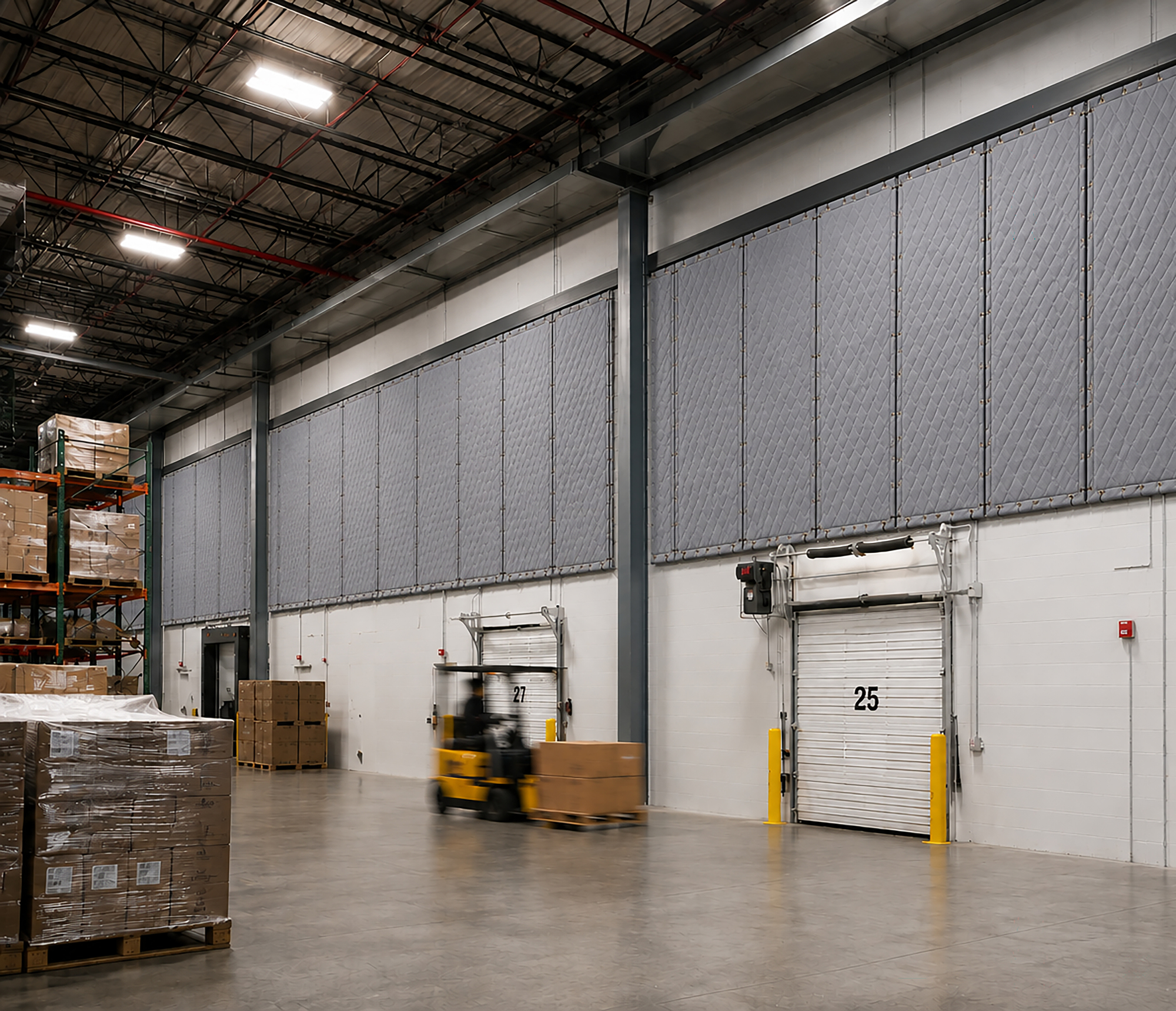
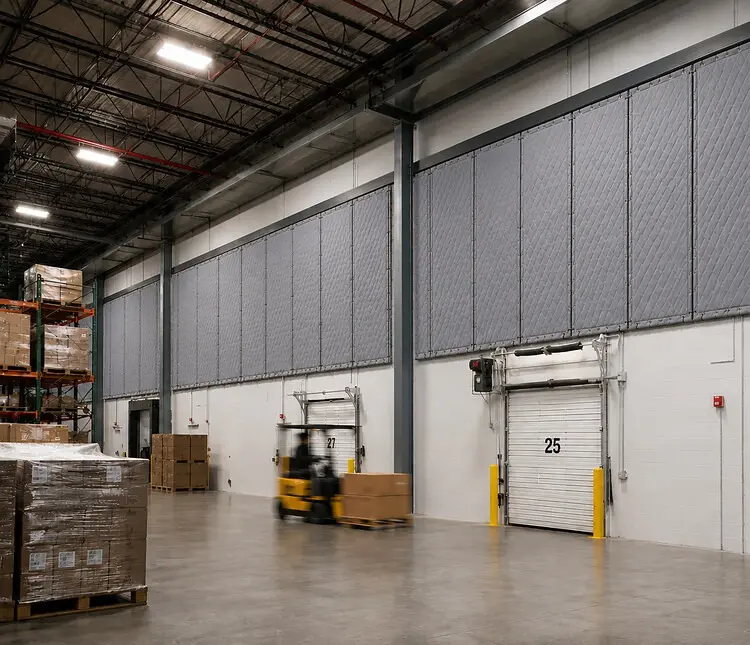
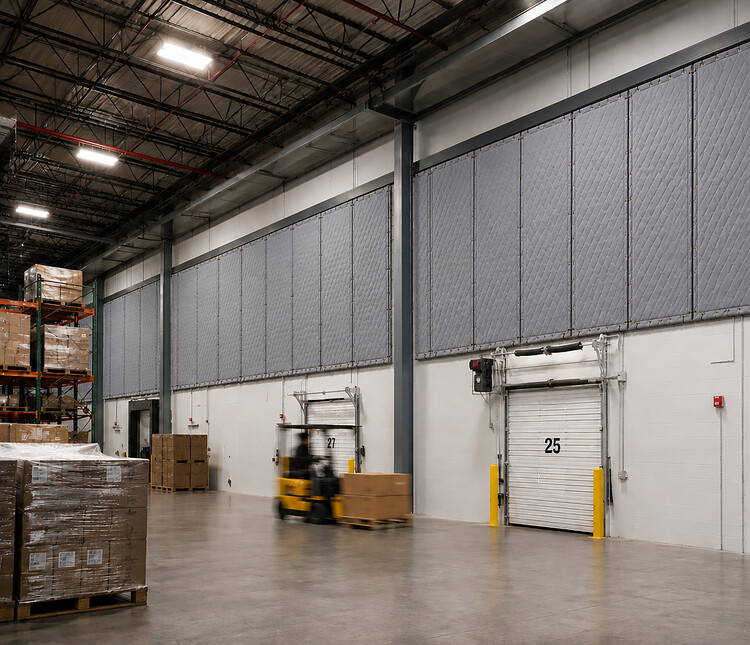
This operational friction has accelerated a paradigm shift toward mobile and flexible acoustic engineering. Rather than treating sound attenuation as a rigid, permanent structural requirement, leading designers and manufacturers—most notably Acoustical Surfaces—are pioneering modular, deployable, and reconfigurable acoustic infrastructures. By utilizing temporary barriers, quilted sound-absorbing blankets, modular track-mounted curtains, and portable enclosures, architects and facility managers can bring acoustic control directly to the source of the noise. This approach decouples sound management from permanent architecture, transforming acoustic control into a fluid, responsive strategy capable of adapting to the continuous transformation of modern spaces.
Detailed Chronology: The Evolution of Dynamic Spatial Acoustics
To understand the sudden prominence of mobile acoustic control, it is essential to trace how building typologies and workspace strategies have evolved over the past several decades, forcing a departure from traditional construction methodologies.
Phase 1: The Era of Fixed Infrastructure (Pre-2000s)
Historically, industrial hygiene and commercial architecture treated noise mitigation as a localized, endgame engineering problem. When a noisy factory machine or a loud testing lab was introduced, the standard architectural response was to construct fixed masonry walls or build specialized isolated rooms around the equipment.
- The Limitation: While effective at containing sound, these interventions were economically prohibitive and fundamentally unadaptable. If a manufacturing floor needed to reorganize its assembly line to optimize workflow, the permanent acoustic walls became immediate architectural bottlenecks, requiring expensive demolition and rebuilding.
Phase 2: The Open-Plan Movement and the Acoustic Crisis (2000s–2010s)
As corporate real estate costs soared and collaborative work cultures gained dominance, architecture swung heavily toward open-plan office designs. Fixed private offices were systematically stripped away to maximize floor plate efficiency and encourage spontaneous interaction.
- The Unintended Consequence: The elimination of walls exposed workers to chronic noise pollution, acoustic fatigue, and severe losses in productivity. Traditional retrofitting—such as adding permanent glass partitions or retrofitting drop ceilings—proved disruptive, expensive, and structurally difficult in leased commercial spaces where tenants lacked the authority to alter the core building shell.
Phase 3: The Rise of Modular and Temporary Architecture (2010s–Present)
Faced with the limitations of both rigid industrial barriers and the uncontrolled chaos of open-plan spaces, the building industry began embracing true spatial agility. Driven by advancements in material science—such as mass-loaded vinyl, high-density fiberglass cores, and durable vinyl-coated fabrics—manufacturers started developing heavy-duty, deployable acoustic treatments.
This modern era treats the interior environment not as a finished monument, but as an adaptable ecosystem. Innovations from industry pioneers like Acoustical Surfaces shifted the market from fixed construction to lightweight, high-performance tactical infrastructure. Acoustic curtains, modular screen panels, and track-guided partitions emerged as standard architectural tools, allowing spaces to be partitioned, silenced, and reconfigured in a matter of hours rather than weeks.
Supporting Context & Metrics: Engineering Flexibility Without Compromising Performance
A common skepticism among traditional architects and acoustic engineers is that "mobile" or "temporary" equates to "inferior performance." For decades, lightweight partitions were dismissed as acoustic placeboes that could block high-frequency clatter but failed to control low-frequency, high-energy sound waves.
Advanced material science has entirely dismantled this assumption. Modern flexible acoustic barriers achieve structural-grade sound attenuation through targeted multi-layered engineering.
The Physics of Flexible Sound Control
To match the performance of a traditional stud wall without the physical mass of drywall and concrete, portable systems rely on two fundamental acoustic principles: Sound Absorption and Sound Transmission Loss.
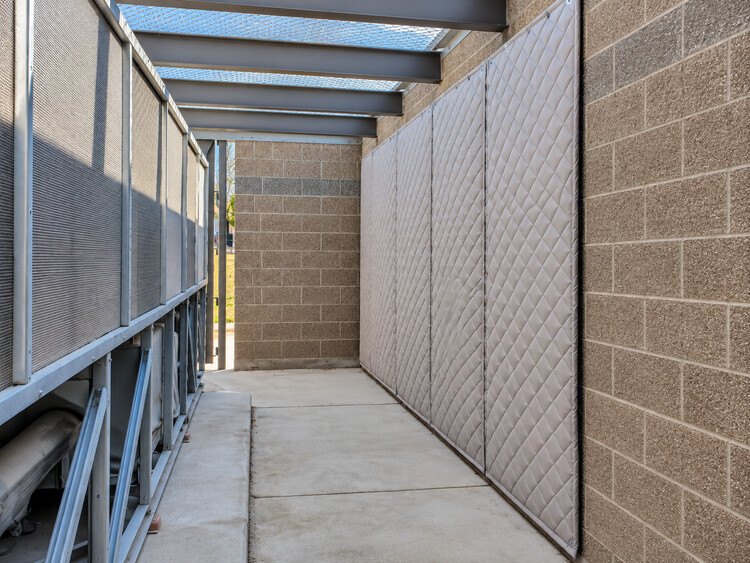
- Mass-Loaded Vinyl (MLV) Cores: High-performance portable curtains and barriers often incorporate a dense mass-loaded vinyl core (typically ranging from 1 to 2 pounds per square foot). MLV provides the necessary limp mass to block sound transmission, forcing acoustic waves to expend energy attempting to vibrate a dense, flexible medium.
- Quilted Sound-Absorbing Faces: Encasing the dense core on both sides with quilted, porous materials (such as industrial-grade fiberglass or specialized synthetic batting) traps high- and mid-frequency sound waves, converting acoustic energy into microscopic thermal energy and preventing sound reflections (echo and reverberation) within the workspace.
Real-World Performance Metrics: Case Studies in Agility
Case Study A: Open Shop Studio
At Open Shop Studio, the operational mandate required a space that could seamlessly transition between a massive, open creative floor and multiple distinct, acoustically isolated recording and working environments.
- The Solution: Installation of Acoustical Surfaces’ STOP-25 fiberglass quilted curtain panels.
- The Metrics: These panels achieved a Sound Transmission Coefficient (STC) rating of 26, offering robust sound separation while absorbing acoustic reflections on both sides. Hung from an overhead track system with interlocking vertical Velcro seams, the system allows the studio space to morph physically and acoustically in real-time, adapting to the shifting scale of creative projects.
Case Study B: Zamboni’s Office Environment
In modern corporate environments, spatial needs shift faster than lease agreements. At Zamboni’s offices, management required an executive acoustic barrier between high-activity collaborative zones and focused administrative desks. However, permanent drywall additions were prohibited by lease terms, and the layout needed to remain fluid.
- The Solution: The implementation of BSC-25 quilted acoustic curtains, supported by a robust 1-inch black steel tube frame resting directly on the floor, paired with a 1/8-inch high-density vinyl core.
- The Metrics: Despite being entirely portable and easily disassemblable, this system delivered sound-blocking performance directly comparable to a conventional 2×4 wood-stud wall framed with drywall on both sides. Overlapping curtain edges secured a continuous acoustic seal, proving that structural sound isolation no longer requires permanent construction.
Official Industry Perspectives & Architectural Philosophy
The integration of mobile acoustics into contemporary design challenges the traditional hierarchy between the architect and the occupant. In traditional practice, the architect hands over a finished, static box. With flexible acoustic systems, the architecture remains incomplete in the most positive sense—it invites the user to co-author the space continuously.
"Expanding the way acoustic design is understood means recognizing that not every challenge in contemporary spaces is permanent. While walls, ceilings, and insulation materials remain fundamental to establishing a building’s overall acoustic conditions, mobile solutions can also address situations that cannot be fully anticipated during the design process." — Agustina Iñiguez, Architectural Journalist & Researcher
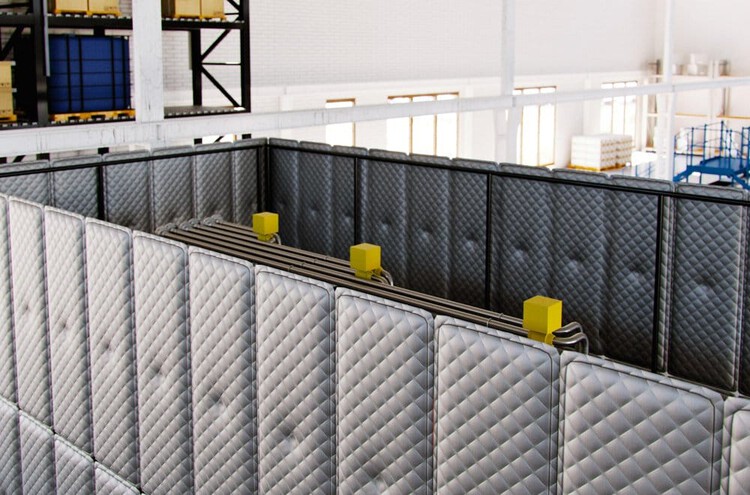
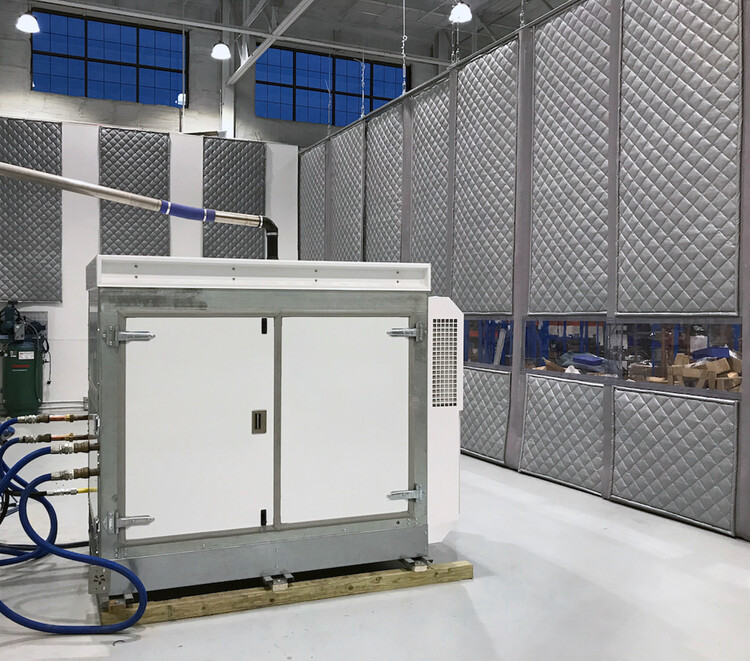
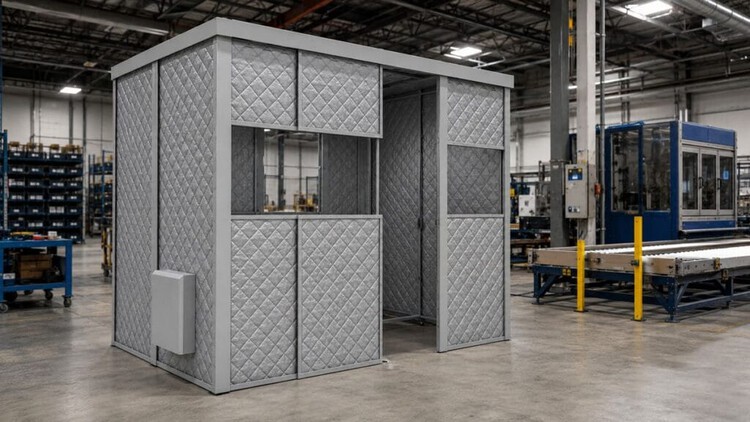
Industry experts emphasize that portable acoustic infrastructure should not be viewed as a mere "quick fix" or a compromise when a real wall cannot be built. Instead, it represents an advanced tier of environmental control. In industrial settings, wrapping a notoriously loud CNC machine or generator in a custom portable enclosure addresses the noise at its exact spatial and temporal origin. This avoids the inefficiency of trying to deaden an entire vast warehouse or factory shell, protecting worker health while preserving the unobstructed flow of heavy machinery and logistics below.
Furthermore, in commercial, educational, and residential adaptive reuse projects, temporary acoustic blankets and movable screens allow heritage structures to be preserved. By avoiding drilling into historic masonry or pouring new concrete foundations to erect partition walls, designers can achieve modern acoustic comfort while respecting the architectural integrity of the original building fabric.
Future Outlook: The Next Frontier in Adaptive Soundscapes
As we look deeper into the 2020s and beyond, the convergence of smart manufacturing, hybrid work models, and rapid urban density will only increase the demand for agile spatial design. Several emerging trends are set to define the future of mobile acoustic control:
- Smart Materials and Responsive Acoustics: Future iterations of portable acoustic blankets and curtains will likely integrate smart polymers and piezoelectric materials capable of dynamically adjusting their damping coefficients and STC ratings in real-time based on automated decibel sensors within the room.
- Circular Design and Sustainable Lifecycles: As the architecture, engineering, and construction (AEC) industry prioritizes circular economy principles, permanent construction is increasingly scrutinized for its massive carbon footprint and demolition waste. Deployable, reusable acoustic systems align perfectly with sustainability goals; they can be uninstalled, relocated, and repurposed across multiple building leases or industrial retooling cycles without generating landfill waste.
- Acoustic Ergonomics as a Standard Workplace Metric: Just as adjustable sit-stand desks and ergonomic task chairs revolutionized physical worker health, movable acoustic barriers will become standard wellness assets. Empowering employees to shape their immediate acoustic bubble will be recognized as a critical factor in mitigating workplace stress, cognitive fatigue, and neurodiversity accommodations.
Conclusion
Acoustic control is no longer confined by the physical boundaries of the brick wall or the suspended ceiling. By embracing mobile, high-performance systems—such as those engineered by Acoustical Surfaces—architecture is learning to move with the times. When sound management becomes a flexible strategy rather than a permanent structural constraint, spaces gain the profound capacity to evolve alongside the human activities they shelter, ensuring peace, clarity, and focus wherever and whenever they are needed most.



