

Executive Overview
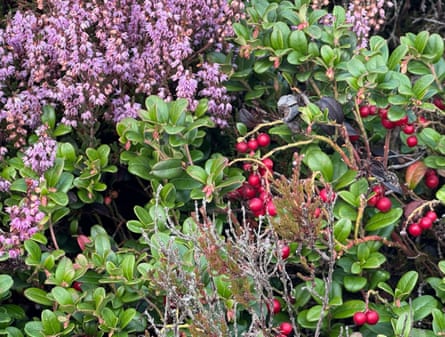
Can a landscape sigh with relief? Following months of parched, baking heat that left hiking trails coated in fine, choking dust and moorland flora gasping for moisture, the arrival of autumn rain provided a profound, visceral restorative. Walking through the damp bilberry and cowberry—their leaves strung with heavy pearls of overnight rain that soaked the lower legs—the transformation was immediate. The once-arid soil of the path had reverted to a reassuring, sticky gloop, prompting careful steps around fresh puddles.
Overhead, a buzzard wheeled in the shifting skies, while a small gang of swallows skimmed low across patches of heather whose rich purple intensity was already, seemingly too soon, beginning to fade. To the west, a kestrel meticulously quartered the slopes of Wet Withens, embodying the timeless predatory rhythm of the British uplands.
Yet, this moment of atmospheric grace coincides with an even more profound ecological and cultural turning point for this storied terrain. Eyam Moor, a landscape bearing the indelible scars of Bronze Age ritual, 18th-century industrial extraction, and 19th-century aristocratic sporting estates, has embarked on a radical new chapter. Through a transformative, anonymous philanthropic gift, a massive 600-acre expanse has been officially presented to the Derbyshire Wildlife Trust. This landmark acquisition—the largest in the Trust’s history—promises to rewrite the future of these fragile uplands, shifting their primary purpose from exclusive recreational extraction to a sprawling, ambitious haven for biodiversity and climate resilience.
Detailed Chronology: From Ancient Rituals to Modern Conservation
To understand the weight of the recent transition at Eyam Moor, one must retrace the deep, often tumultuous chronology etched into its topography. The history of this landscape is not a linear progression, but rather a palimpsest of human ambition, ecological exploitation, and now, environmental restoration.
The Bronze Age Foundation
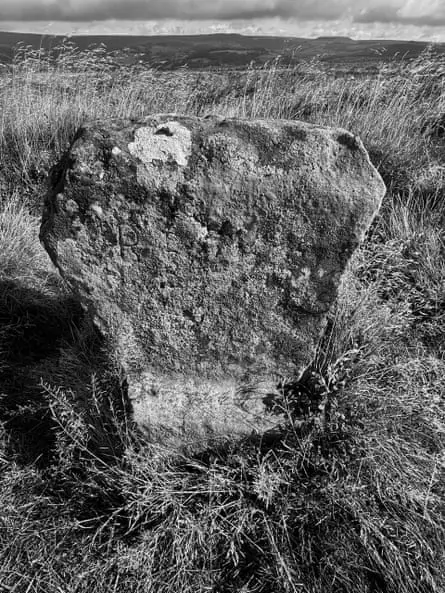
The downward curve of the moor steepens dramatically as it drops toward Highlow Brook. Just before this descent, however, the terrain levels out to reveal a carefully chosen bench of land. Thousands of years ago, Bronze Age communities recognized the profound resonance of this spot, utilizing it as the site for a ceremonial burial barrow. Adjacent to this monumental earthwork sits a henge—a distinct circle of small, weather-beaten stones. The most prominent and commanding of these megaliths was dubbed "the chair" by generations of local shepherds and travelers.
On a recent morning, evidence of the moor’s fierce, untamed wildlife was starkly visible: a raptor, likely the local kestrel, had recently dismantled small, furry prey atop the stone chair, a reminder of the unyielding food chains operating across the plateau. Moving past the chair to the barrow reveals a sweeping panorama that ranks among the finest in the Peak District. From this vantage point, the distant spire of St Michael’s in Hathersage is visible, nestled harmoniously in the crook of opposing hills where ridgelines intersect like arms wrapped around shoulders. This calculated visual harmony stands as enduring proof that our distant forebears possessed an elevated, deeply intentional appreciation for landscape architecture.
Industrial Intrusion and Enclosure
The sanctity of the Bronze Age landscape did not survive the march of industrialization and property consolidation. The barrow itself today stands as a chaotic jumble of displaced stones—not the result of natural weathering, but of deliberate human intervention in the mid-18th century. When the nearby turnpike was constructed, work crews raided the ancient monument, tearing it apart to source cheap, accessible building materials for the burgeoning road network.

This act of infrastructural vandalism occurred decades before the parliamentary acts of enclosure systematically stripped commoners of their ancient grazing rights across the English uplands. In this specific region, the newly consolidated lands were absorbed into the vast estate of the Duke of Devonshire. By the 19th century, the landscape’s purpose had shifted fundamentally. The Duke and subsequent landowners transformed the ancient, multi-use commons into a tightly managed grouse moor, optimizing the terrain for elite sporting pursuits through controlled burning, drainage ditches, and the suppression of apex predators.
The Contemporary Renaissance
These twisting strands of deep history demonstrate just how varied the British uplands have been over millennia: transitioning fluidly from sacred ritual space to communal sheepwalk, and onward to elite sporting playground. Now, however, the landscape has been handed an entirely new script.
In a landmark development for the region, an anonymous benefactor stepped forward to purchase and present Eyam Moor to the Derbyshire Wildlife Trust. This monumental 600-acre acquisition is designed to reverse centuries of intensive management, shifting the focus decisively toward ecological recovery, carbon sequestration, and species reintroduction.
Supporting Context & Metrics: The Scale of the Eyam Moor Project
The transfer of 600 contiguous acres of upland habitat to the Derbyshire Wildlife Trust represents a watershed moment for conservation in northern England. Upland ecosystems—specifically peat-laden moorlands—play a disproportionately vital role in regional hydrology, carbon storage, and biodiversity preservation.
| Metric / Feature | Historical Context | Current Conservation Status |
|---|---|---|
| Total Area | Managed piecemeal as common land, later consolidated into ducal sporting estates. | 600 acres consolidated under a single conservation mandate. |
| Primary Land Use (19th–20th C.) | Intensive grouse shooting, drainage of blanket bog, and predator control. | Transitioning to an unmanaged or lightly managed biodiversity reserve. |
| Archaeological Assets | Bronze Age barrow and stone circle (Wet Withens / "The Chair"), partially degraded by 18th-century road-building. | Scheduled ancient monuments slated for professional protection and interpretation. |
| Ecological Profile | Dominated by monoculture heather stands, bilberry, and cowberry, with suppressed woodland margins. | Targeted for peatland restoration, sphagnum moss re-establishment, and native flora recovery. |
The acquisition addresses several critical environmental metrics facing the Peak District National Park:
- Carbon Sequestration: Healthy upland peat bogs act as massive natural carbon sinks. Decades of drainage and burning for grouse management have historically compromised the ability of many Peak District moors to lock away carbon. Restoration efforts will focus on blocking drainage grips to raise the water table.
- Hydrological Regulation: By allowing soils to retain moisture—as witnessed in the reassuring gloop of the restored paths—the landscape functions more effectively as a natural sponge, mitigating downstream flood risks in communities like Hathersage and the wider Derwent valley.
- Species Recovery: While iconic raptors like buzzards and kestrels currently patrol the thermals above Wet Withens, the Trust’s management plan aims to create a richer understory and varied structural habitats capable of supporting declining ground-nesting bird populations, native invertebrates, and specialized flora.
Official Statements and Stakeholder Perspectives
The scale and suddenness of the Eyam Moor acquisition have drawn praise from conservation scientists, local historians, and environmental advocates alike, who view the project as a vital blueprint for future philanthropic land management in the UK.
Dr. Jo Smith, Chief Executive of the Derbyshire Wildlife Trust, emphasized the generational significance of the acquisition during the initial announcement:
"This is a monumental day for Derbyshire and for nature conservation in the UK. Securing 600 acres of such culturally rich and ecologically sensitive land in a single stride is unprecedented for our organization. Eyam Moor is a place where deep human history intersects with the raw power of the natural world. Our goal is to honor both—protecting the ancient monuments while unlocking the land’s incredible potential to heal itself, capture carbon, and provide a sanctuary for wildlife that has struggled under historical management regimes."
Local historians have similarly welcomed the transfer, noting the added protection it affords to the fragile archaeological remains scattered across the plateau. Archaeological consultants working alongside the Trust have highlighted that bringing the Bronze Age barrow and the Wet Withens stone circle under unified conservation ownership will help safeguard them from further erosion and unauthorized disturbance.
From the perspective of the anonymous benefactor, whose identity remains shielded at their own request, the donation was framed as an act of generational stewardship. Representatives close to the transaction noted that the donor sought to provide "a gleam of light in a troubled sky"—a permanent, tangible investment in ecological resilience at a time when biodiversity loss and climate anxiety weigh heavily on the public consciousness.
Future Outlook: A New Horizon for the Peak District
As the autumn mist clears from the slopes above Highlow Brook, the long-term vision for Eyam Moor begins to take shape. The transition from a private sporting estate to a public-benefit wildlife haven will not happen overnight; ecological restoration requires patience, meticulous planning, and sustained community engagement.
In the coming months, the Derbyshire Wildlife Trust will outline a comprehensive management framework for the 600-acre site. Key priorities will include:
- Peatland Rehabilitation: Implementing scientific re-wetting techniques to restore degraded blanket bogs, ensuring the moor functions as a resilient carbon sink.
- Access and Education: Balancing increased public access with the needs of sensitive ground-nesting birds and fragile archaeological features, ensuring visitors can connect with the landscape without degrading it.
- Habitat Diversification: Encouraging a mosaic of native vegetation beyond the dominant heather monoculture, fostering micro-habitats for specialized insects, small mammals, and avian predators.
Ultimately, Eyam Moor stands as a powerful reminder that landscapes are not static backdrops, but living, breathing entities capable of renewal. Just as the parched soils of the plateau drank in the overnight rain, sighing with relief as dust gave way to mud, the broader ecosystem is now poised to absorb the restorative care of modern conservation. In doing so, it bridges thousands of years of human fascination with the urgent ecological imperatives of the 21st century.



