

Executive Overview
While Wales has long celebrated its status as a global leader in domestic recycling—proudly holding the position of the second-best domestic recycler in the world—a stark environmental paradox persists just beyond the threshold of the front door. Behind office doors, on factory floors, and within the bustling corridors of commercial enterprises, the green habits that citizens meticulously practice at home frequently break down.
Recent data indicates that a mere 61% of people in Wales actively recycle when they are at their workplace. Furthermore, an alarming one in five employees reports that they cannot even recall seeing the appropriate infrastructure required to separate their waste correctly. This widening gulf between domestic eco-consciousness and corporate negligence highlights a critical vulnerability in the nation’s broader environmental strategy.
This structural disconnect is coming under intense scrutiny following the implementation of the Welsh government’s Workplace Recycling Law in 2024. The legislation mandates that businesses, public sector organisations, and charities sort their waste into specific categories—mirroring the successful schemes long established for households. Yet, as waste reduction experts, local authorities, and business leaders grapple with the transition, it has become abundantly clear that there is still "lots of room for improvement."
Transitioning a nation’s workforce into an army of conscious corporate recyclers is no small feat. While some enterprises have dramatically slashed their general waste output by rethinking office layouts and removing personal deskside bins, others continue to struggle with confusing collection arrangements, added administrative burdens, and a cultural shift that treats workplace sustainability as an afterthought rather than a core responsibility. This report investigates the challenges, examines the early success stories, and analyzes whether Wales can bridge the gap between home and office recycling.
Detailed Chronology: The Evolution of Welsh Waste Legislation
To understand the current state of workplace recycling in Wales, one must examine the progressive trajectory of environmental policy that has shaped the nation over the past two decades. Wales did not stumble into its top-tier global recycling status by accident; it was forged through deliberate, increasingly stringent legislative milestones.
Early Foundations and Domestic Success (2000s–2010s)
In the early 2000s, Welsh recycling rates hovered below 10%, mirroring the rest of the United Kingdom. However, recognizing the ticking time bomb of landfill capacity and environmental degradation, the Welsh government introduced sweeping waste strategies. Through sustained public campaigns, investment in kerbside sorting infrastructure, and eventually statutory targets for local authorities, domestic recycling rates skyrocketed. By the late 2010s, Wales consistently ranked among the top three nations globally for municipal waste recycling, fostering a deep-seated cultural habit among citizens.
However, commercial and industrial waste remained a largely decentralized and less regulated frontier. While households faced strict enforcement and comprehensive green-bin collections, businesses often relied on mixed commercial waste contracts—frequently referred to as "dry mixed recycling" or general waste bins—which masked low segregation rates and high contamination levels.
The Legislative Turning Point: The Workplace Recycling Law (2024)
The pivotal moment for commercial sustainability arrived in 2024 with the full rollout of the Welsh government’s Workplace Recycling Law. Designed to level the playing field between domestic and commercial waste, the law placed a legal obligation on all workplaces to present their waste for collection sorted into distinct categories.
Under the new regulations, businesses must separate:
- Food waste (for businesses producing more than a specified threshold)
- Paper and card
- Glass
- Metal, plastic, and cartons
- Unrecyclable waste
- Small waste electrical and electronic equipment (WEEE) and textiles (where applicable)
This legal mandate sent shockwaves through the commercial sector. For many business owners, the initial reaction was apprehension regarding logistical hurdles, space constraints, and potential financial penalties. Collection arrangements varied wildly from one local authority to another, with businesses navigating a complex patchwork of council-run services and private waste management contractors.
The Post-Law Adjustment Period (2024–Present)
As businesses crossed the threshold into the post-2024 era, a transitional settling-down period began. Waste reduction charities, local council project officers, and environmental consultants mobilized to support employers through the maze of compliance.
Early indicators show a polarized landscape. While proactive businesses seized the opportunity to drastically overhaul their waste management—often yielding unexpected cost savings—others lagged behind due to a lack of clear labeling, inadequate bin placement, and employee apathy. Today, stakeholders across Wales are assessing the real-world impact of the law, working to transform initial administrative friction into long-term operational habits.
Supporting Context & Metrics: The Anatomy of the Recycling Gap
The friction between domestic recycling habits and workplace practices is heavily documented by behavioral data and waste management metrics.
The 61% Reality and the "Out and About" Effect
Statistical insights reveal that while household recycling compliance in Wales sits well above 80% to 90% in many regions, workplace recycling compliance languishes at roughly 61%. This disparity is exacerbated by the psychological framing of public and commercial spaces versus the private home.
For many citizens, the home is a controlled environment where social pressure from family, neighbors, and community expectations reinforces green behavior. As Gerwyn Pugh, 56, from Barry, candidly admits:
"I don’t recycle as much when I am out and about, I just bin it. It’s routine [at home], but out and about every bin takes a bit more time to work out."
This sentiment is echoed by James Jenkins, 30, who highlights the severe infrastructure deficits in certain commercial environments:
"We only recycle cardboard because that’s our only waste. The more industrialised businesses need to do more, because they’ll have more of an impact than smaller businesses."
For workers trapped in workplaces with scarce or confusing recycling points, the friction of compliance often leads to total abandonment of the practice. Some employees even resort to bringing their recyclable waste back home with them—a testament to the failure of commercial infrastructure.
The Institutional Exception: Healthcare and High-Compliance Sectors
Conversely, sectors subject to rigorous, standardized protocols tell a very different story. Natalie James, 47, who works in the healthcare sector, notes a stark contrast to casual office environments:
"Because I work at a hospital we’ve got the recycling categories everywhere, so we have to [recycle]."
This illustrates a core principle identified by waste reduction experts: when infrastructure is ubiquitous, unmistakable, and mandatory, compliance rates rise dramatically. Hospitals, large manufacturing plants, and forward-thinking corporate campuses that embed waste sorting into daily operational routines achieve compliance rates that rival or exceed domestic settings.
The Economic and Environmental Impact
The stakes of closing this gap are immense. Commercial and industrial waste accounts for a significant portion of Wales’ total waste generation. When businesses fail to segregate their waste, valuable materials—particularly high-grade paper, clean plastics, and organic food waste—are contaminated and sent to incineration or landfill rather than being fed back into the circular economy.
Conversely, effective segregation yields immediate dividends. Local authorities operating mixed private-council frameworks, such as the Vale of Glamorgan, report that the quality of commercial recycling has risen markedly since the 2024 legislation took effect. Higher-quality recycling means lower processing costs, reduced carbon footprints, and a stronger foundation for local green industries.
Official Statements & Expert Perspectives
To fully grasp the complexities of workplace recycling in Wales, industry leaders, environmental consultants, and local government officials have offered critical insights into the cultural and logistical hurdles at play.
The Waste Reduction Charity View: Infrastructure is Key
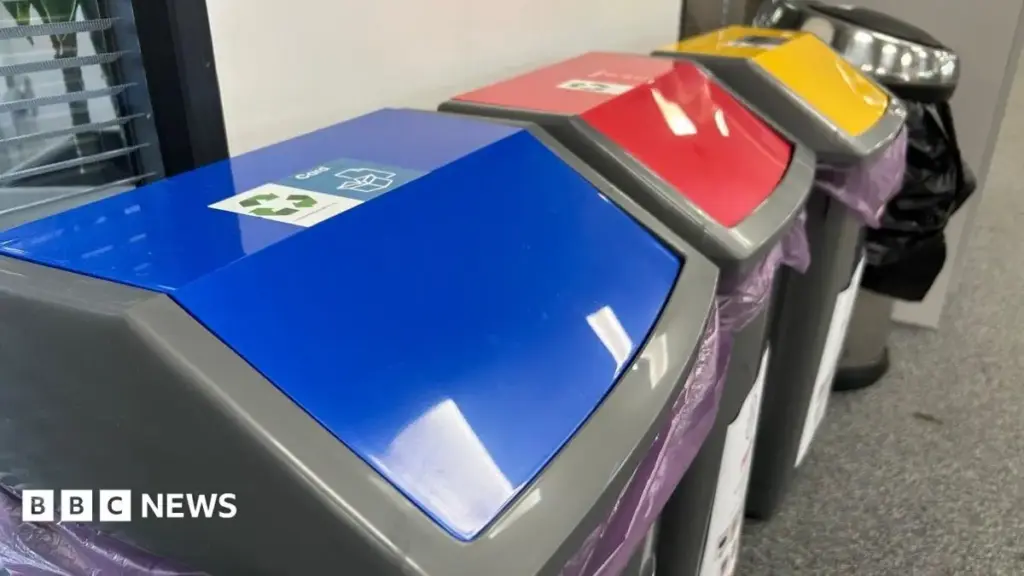
Representatives from Wrap, the prominent waste reduction charity, emphasize that businesses cannot expect high compliance without making sustainable choices effortless. The charity stresses that simply introducing more bins or applying crystal-clear, unambiguous labeling can make a profound difference in daily employee behavior. When workers can instantly identify where an item belongs without stopping to read a dense paragraph of instructions, error and apathy drop significantly.
The Municipal Perspective: Overcoming Early Skepticism
Local authorities have found themselves on the front lines of implementing the new regime. Carys Stephens, a waste project officer for the Vale of Glamorgan Council, acknowledges the initial friction experienced by the business community, but points to a largely positive long-term trajectory:
"There’s obviously going to be some that are critical of the idea, and they’re worried about extra costs and effort that goes into segregated recycling. But we’ve been doing segregated recycling for a couple of years now, and most people just take it in their stride."
According to Stephens, the initial fears regarding insurmountable administrative burdens and exorbitant costs have largely subsided as businesses establish predictable routines and witness the tangible benefits of cleaner waste streams.
The Environmental Consultant’s Diagnostic: Culture vs. Compliance
Rebecca Colley-Jones, a leading environmental consultant specializing in commercial waste management, offers a nuanced psychological analysis of why workers behave differently in the office compared to the living room:
"Our home is our castle, we’re responsible for the waste and people are under a little bit of pressure, perhaps from their neighbours to look like they’re recycling. Whereas you don’t have that in the workplace."
Colley-Jones points out a fundamental flaw in how employees view their roles:
"When people come to work, they come to work, they don’t necessarily think recycling is part of their job description."
To overcome this, Colley-Jones argues that organizations must foster a deeper institutional culture change:
"It’s trying to get people to understand that they also need to be buying into the culture of an organisation, and also the culture of Wales as a country. We are the second-best recycler in the world."
While acknowledging that the transition has introduced costs and that varying collection arrangements across different council areas can occasionally be confusing, Colley-Jones remains optimistic that the current 61% participation rate will inevitably rise as the new system matures.
The Corporate Success Story: Acorn by Synergie
Proof that drastic improvements are possible can be found in the offices of recruitment firm Acorn by Synergie, located on the outskirts of Newport. When the company first occupied its premises in 2003, it generated an astronomical six large wheelie bins’ worth of mixed rubbish every single week.
Following the introduction of the 2024 Workplace Recycling Law, the firm undertook a radical overhaul of its waste management practices. Their biggest adaptation was the introduction of comprehensive food waste recycling, paired with a bold, uncompromising operational change: the complete removal of personal deskside bins.
Although this move was initially met with resistance from staff accustomed to the convenience of private bins, the results speak for themselves. By forcing employees to use centralized, multi-stream recycling stations, the Newport offices reduced their output to just one single weekly collection. The friction of walking to a central station was vastly outweighed by the collective pride and operational efficiency of a streamlined, zero-waste-to-landfill philosophy.
Future Outlook: Can Wales Close the Loop?
As Wales looks toward the future of its environmental policy, the commercial sector stands as the final frontier in cementing the nation’s reputation as a global recycling powerhouse. The journey from a 61% workplace recycling rate to the near-universal compliance seen in Welsh households will require a multi-pronged approach involving government support, technological innovation, and cultural transformation.
1. Streamlining Collection Logistics
One of the most pressing challenges identified by businesses is the fragmentation of collection services. Because commercial waste arrangements vary significantly between local authorities (such as the Vale of Glamorgan) and private contractors, multi-site businesses often face a confusing array of rules, schedules, and container types. Future policy iterations must focus on harmonizing commercial waste collection frameworks, reducing administrative overhead for businesses operating across county borders.
2. Redefining Corporate Culture
As consultant Rebecca Colley-Jones noted, recycling cannot remain an optional or disconnected task in the modern workplace. Businesses must integrate sustainability into their onboarding processes, internal communications, and Key Performance Indicators (KPIs). When corporate leadership champions environmental responsibility—not merely as a box-ticking exercise for legal compliance, but as a core pillar of organizational identity—employee attitudes shift permanently.
3. Embracing Radical Infrastructure Changes
The success of firms like Acorn by Synergie demonstrates that incremental changes are often insufficient. The widespread elimination of deskside bins in favor of thoughtfully designed, highly visible, centralized recycling hubs is likely to become a best-practice standard for forward-thinking enterprises. By making recycling the path of least resistance, offices can effectively engineer compliance into their daily spatial design.
Conclusion
Wales has proven to the world that domestic sustainability initiatives can achieve staggering success through political will, public education, and robust infrastructure. The 2024 Workplace Recycling Law has laid the legal foundation for extending that success into the commercial sphere.
While a 61% participation rate and lingering employee confusion highlight that there is still "lots of room for improvement," the early wins—ranging from hospital compliance models to dramatic reductions in wheelie bin dependency—prove that the gap can be bridged. By aligning workplace infrastructure with home habits and fostering a culture of shared national pride, Wales is well-positioned to conquer the final frontier of its recycling revolution.



