

This coverage is made possible through a partnership between Grist and Verite News, a nonprofit news organization with a mission to produce in-depth journalism in underserved communities in the New Orleans area.
Executive Overview
For Louisiana’s burgeoning offshore wind sector, a single date dominates boardroom discussions, strategic planning sessions, and union halls: January 21, 2029—the first day following the conclusion of Donald Trump’s presidential term.
While the American offshore wind industry was once hailed as a cornerstone of the nation’s clean energy transition, federal policy shifts have brought development to a near standstill. Through an aggressive strategy of executive orders, permitting freezes, stop-work directives, and financial buyout offers, the Trump administration has effectively dismantled the domestic wind pipeline. Developers nationwide have been given a stark choice: fight costly, protracted legal battles or accept billions in federal buyouts to walk away from their leases entirely.
Yet, deep in the heart of traditional oil and gas country, Louisiana’s maritime, engineering, and manufacturing firms are refusing to vanish. Rather than permanently shuttering their operations, local industry leaders are weathering the storm by trimming budgets, pivoting temporarily to aerospace and defense, and preserving their specialized expertise. Their overarching strategy is simple, pragmatic, and remarkably tense: wait for the clock to run out.
Detailed Chronology: From Offshore Pioneers to Federal Roadblocks
The Historical Foundation: Building Bridges from Oil to Wind
Long before renewable energy became a fierce political battleground, Louisiana companies provided the heavy maritime muscle required for offshore operations. Utilizing decades of institutional knowledge forged in the Gulf of Mexico’s oil and gas fields, local shipbuilders, engineers, and metal fabricators quietly expanded their footprint onto the East Coast.
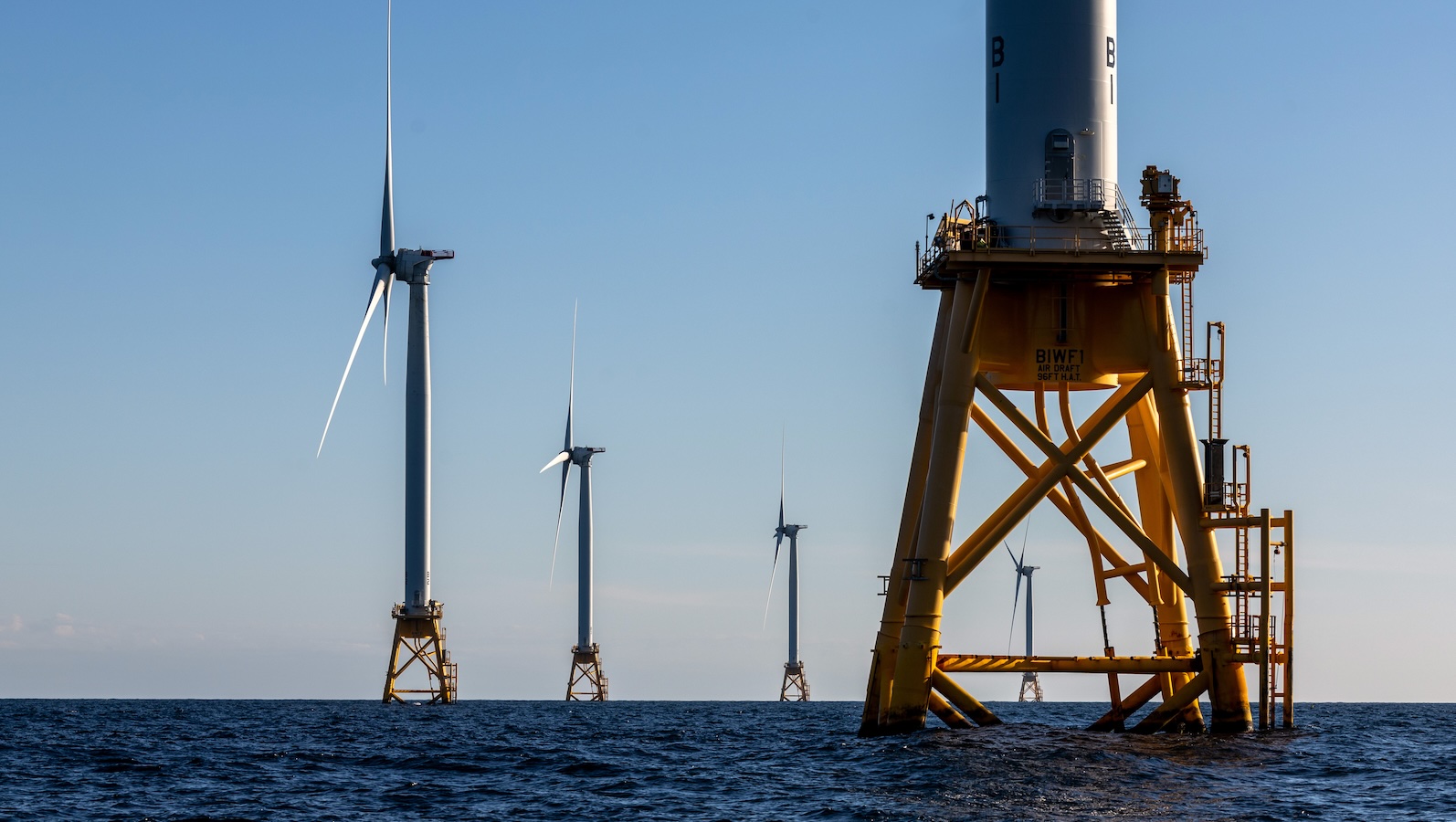
In 2016, Louisiana-based enterprises—including family-owned supply boat businesses and specialized fabrication yards—helped construct the United States’ very first commercial offshore wind farm near Block Island, Rhode Island. For a region heavily reliant on fossil fuels, offshore wind offered a lucrative, synergistic diversification pathway. By 2024, the momentum was undeniable: nearly a quarter of all offshore wind work contracts in the United States had been awarded to Gulf-based firms, injecting roughly $1 billion in direct investments into local shipyards and manufacturing hubs, according to data from the Oceantic Network.
Educational institutions quickly followed suit to support the booming job market. Nunez Community College in Chalmette established a dedicated two-year turbine technician program, while the University of New Orleans launched its Wind Energy Hub, offering specialized engineering scholarships and corporate internships designed to pipeline local talent directly into clean energy careers.
The Second-Term Crackdown and the $4 Billion Buyout Strategy
The landscape shifted dramatically when Donald Trump assumed office for his second term. Fulfilling campaign pledges to dismantle federal renewable energy initiatives, the administration’s assault on wind energy began on its very first day in office with sweeping executive orders. Federal waters were abruptly withdrawn from new offshore wind leasing, and the permitting process for active or pending projects was frozen indefinitely.
When these initial actions triggered immediate pushback and subsequent legal battles from developers and environmental coalitions, the administration pivoted to a novel tactic: financial buyouts. Rather than engaging in endless litigation, the federal government began offering developers multi-million-dollar payouts to voluntarily relinquish their federal leases and walk away from the table.
According to Madelyn Smith, a program manager with the Southeastern Wind Coalition, the financial logic presented to developers proved difficult to ignore. With regulatory pathways effectively blocked for the foreseeable future and lease-holding costs climbing, 12 major offshore wind leases have been surrendered to the federal government in exchange for these payouts.
Among the casualties is a massive 2-gigawatt wind farm planned for the Gulf of Mexico, situated south of Lake Charles, Louisiana. Promoted by German energy giant RWE, the project had already secured a landmark power delivery deal with Entergy to supply carbon-free electricity to an estimated 350,000 homes across Louisiana and Texas by 2035. Today, that project—alongside roughly 21 gigawatts of potential national generation capacity—has been wiped from the immediate drawing board.
Supporting Context & Metrics: The Human and Economic Toll
The financial and operational metrics of the federal crackdown reveal the true scale of disruption in the energy sector:
- $4 Billion Spent: The approximate amount of taxpayer funds utilized by the federal administration to buy out developers and remove offshore wind leases from active circulation.
- 21 Gigawatts Lost: The total energy generation capacity vaporized by the cancellation of these leases—enough electricity to power upwards of 5 million American homes.
- $1 Billion in Gulf Investments: The capital injection that previously flowed directly into Louisiana shipyards and fabrication yards prior to the federal policy reversal.
- Decades of Personal Resentment: Trump’s hostility toward wind energy traces back nearly two decades, originating in 2006 during a protracted, decade-long legal and public relations battle against the Scottish government over an offshore wind farm that he argued would mar the scenic ocean views of his personal golf resort.
In the years since, the president’s rhetoric has expanded well beyond aesthetics. He has frequently characterized wind turbines as destructive hazards to coastal property values and local bird populations, while making unsubstantiated claims connecting wind technology to spikes in consumer food prices, cancer risks, and even psychological distress.
For regional business leaders who invested heavily in the transition, the rhetoric has translated into painful economic reality. James Martin, CEO of Gulf Wind Technology—an Avondale-based enterprise specializing in the design and testing of advanced wind turbine blades—summarized the sentiment at Tulane University’s Future of Energy Forum.
"It is a shame," Martin stated. "It’s been a big pause button on what was a sleeping giant of an industry."
To survive the dry spell, Gulf Wind Technology has been forced to pivot its engineering talent toward the aerospace and defense sectors. Across the state, other supply-chain companies have trimmed operational budgets, frozen hiring, and laid off specialized personnel.
"There’s huge layoffs in the wind space, and some of the best engineers on the planet—they’re giving up," Martin warned.
Official Statements and Industry Perspectives
The mood among Louisiana’s political and industrial leaders is characterized by a mix of profound frustration and calculated patience.
State Representative Joe Orgeron, a Republican from southeastern Louisiana who spent years working in the offshore wind industry before entering public office, pulled no punches during his appearance at the Tulane Future of Energy Forum.
"Come January 21st, 2029, we all get to wave goodbye," Orgeron remarked, referring to the end of the current presidential term. "The current administration has been a one-man stopping show. I’m pretty confident, and I’m hopeful that it’ll change."
When asked about the immediate tactical blueprint for local businesses caught in the crosshairs, Orgeron offered a blunt, succinct summary:
"Just wait for the clock to run out."
This sentiment is shared by regional advocates who argue that the economic imperatives of energy diversification cannot be suppressed indefinitely. Madelyn Smith of the Southeastern Wind Coalition noted that while the buyout offers are compelling to corporations facing institutional dead-ends, the fundamental demand for diverse, utility-scale power generation in the American South remains intact.
Future Outlook: Can the Supply Chain Hold On Until 2029?
The central question facing Louisiana’s industrial base is not whether offshore wind possesses long-term economic viability, but whether the local supply chain, specialized workforce, and academic pipelines can survive a multi-year federal winter.
Industrial ecosystems are notoriously difficult to build and exceptionally easy to dismantle. When shipyards pivot away from maritime renewables, engineering talent migrates to alternative industries like defense or relocates overseas, and community colleges scale back technical programs due to a lack of immediate job placement, rebuilding that institutional muscle takes years.
Yet, Louisiana’s maritime sector has weathered boom-and-bust cycles for generations, historically riding the volatile waves of the global oil market. The gamble being taken by companies like Gulf Wind Technology and various regional fabricators is that the foundational expertise developed over the past decade will serve as a resilient bridge.
If developers and manufacturers can protect their core intellectual property, retain key engineering talent through temporary diversification into aerospace or traditional infrastructure, and maintain their institutional readiness, they position themselves to capture a massive market advantage the moment federal policy shifts.
Until then, Louisiana’s offshore wind community remains caught in a state of suspended animation—watching the political calendar, tightening their belts, and counting down the days until January 21, 2029.



