

Executive Overview
From the grand waterways of the Bosphorus to the political epicenter of Mexico City, and from the bustling energy summits of Bangkok to the climate-marched streets of Amsterdam, environmental activism entered a heightened phase of global mobilization. Over the course of a single intensive week, Greenpeace and allied grassroots organizations deployed powerful visual interventions, peaceful mass demonstrations, and high-impact investigative campaigns to challenge the systemic drivers of climate change, corporate pollution, and environmental degradation.
This wave of mobilization comes at a critical juncture in the global climate timeline. As atmospheric temperatures continue to break historical records and corporations post unprecedented windfall profits amidst a cost-of-living crisis, civil society is increasingly drawing a straight line between corporate greed and ecological collapse. Whether confronting the fossil gas lobby at international energy forums, protesting toxic industrial infrastructure, or exposing the health hazards embedded in fast-fashion supply chains, activists have reaffirmed a simple, unyielding truth: environmental justice and economic equity are inextricably linked.
This report provides a comprehensive, deeply reported chronicle of the global actions undertaken this week, examining the geopolitical contexts, the grassroots resilience, and the urgent policy demands fueling this worldwide movement.

Detailed Chronology of Global Actions
1. Thailand: Challenging the Fossil Gas Illusion at GasTech 2026
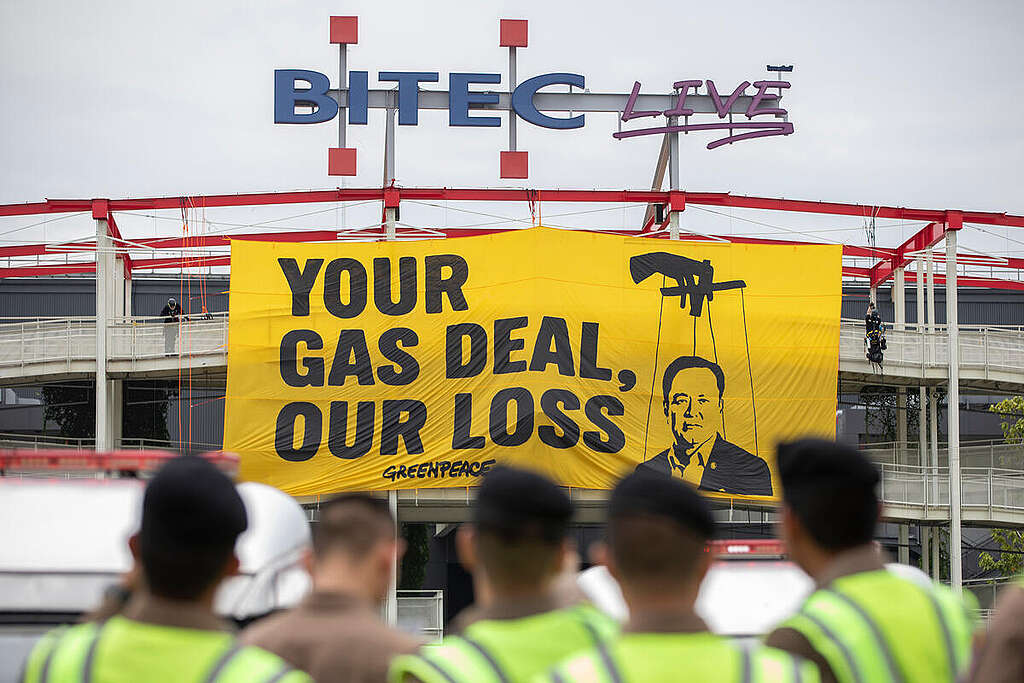
Bangkok — At the high-profile opening of the GasTech 2026 summit, Greenpeace Thailand activists executed a striking visual intervention. Unfurling a massive 17-by-7-meter banner bearing the unvarnished message "YOUR GAS DEAL, OUR LOSS," protesters confronted government officials and fossil fuel executives directly.
The action targeted the industry’s aggressive marketing of fossil gas and liquefied natural gas (LNG) expansion as a viable bridge fuel for energy security and economic growth. Greenpeace Thailand argues that this narrative is a dangerous distraction—a "fossil gas scam" that locks developing nations into decades of high-emission infrastructure while exacerbating the climate crisis. The organization is demanding an immediate halt to new gas projects and an accelerated, just transition toward decentralized renewable energy, prioritizing grid modernization, energy storage, and efficiency.
2. The Netherlands: Tens of Thousands Demand Systemic Change in Amsterdam
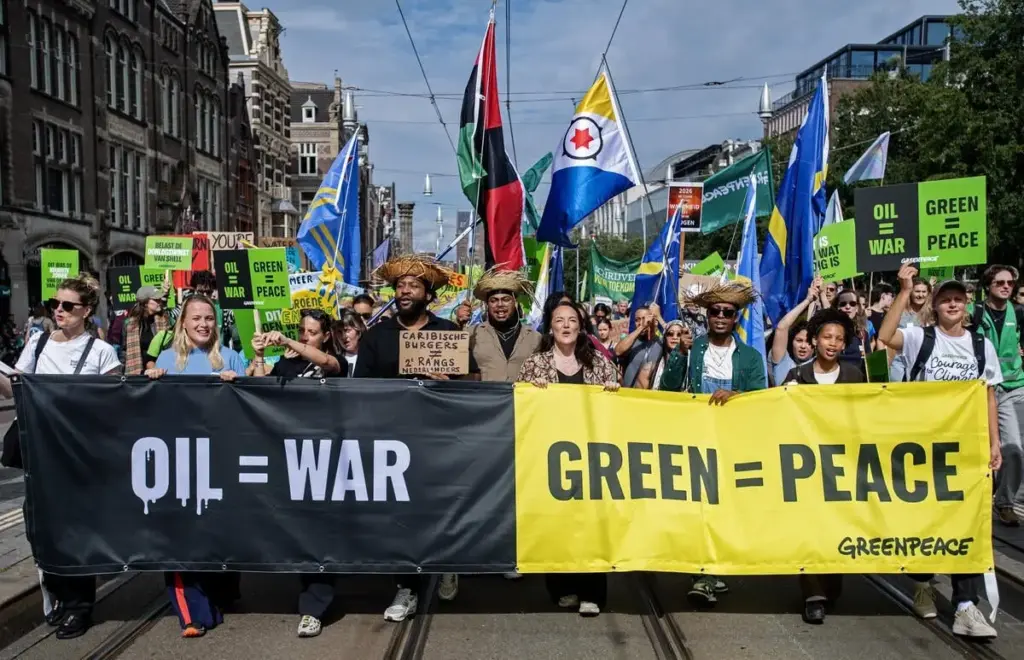
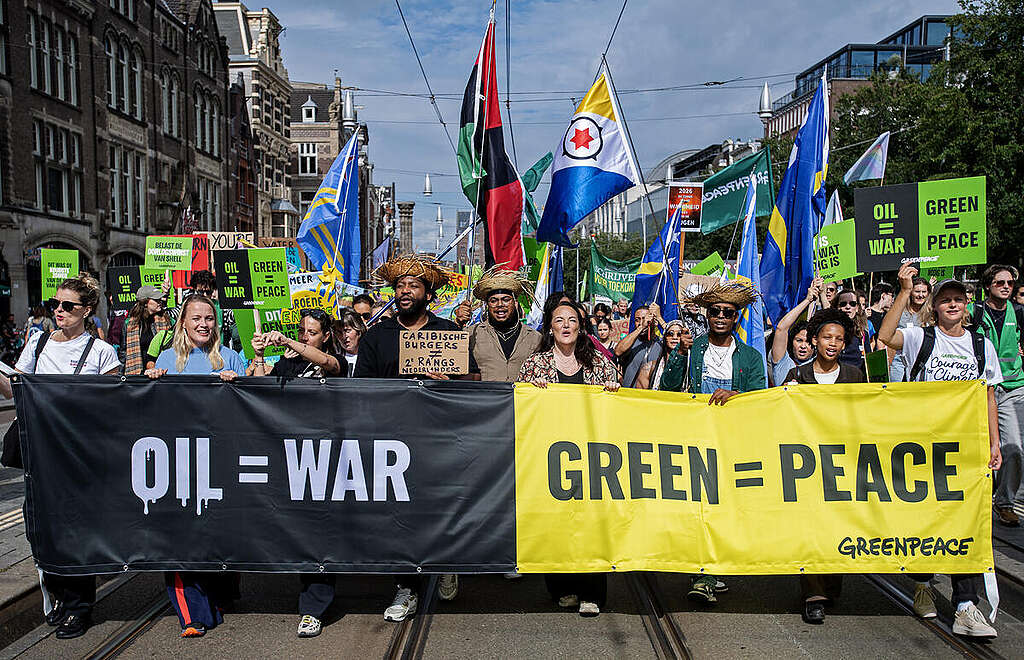
Amsterdam — On Saturday, September 12, 2026, the Dutch capital transformed into a sea of climate urgency. Tens of thousands of demonstrators converged on Amsterdam for the annual national Climate March, turning the city’s historic thoroughfares into a vibrant exhibition of resistance.
Protesters representing a broad coalition of labor unions, youth groups, and environmental organizations demanded an immediate end to fossil fuel reliance and corporate impunity. Amidst chants of climate justice and placards demanding systemic economic transformation, the march underscored the growing public frustration with slow governmental action on carbon reduction targets and the continued subsidization of multinational polluters.
3. Germany: Exposing Windfall Profits in Hamburg and Fast-Fashion Hazards in Berlin
Hamburg & Berlin — Greenpeace Germany executed two distinct yet complementary campaigns targeting corporate irresponsibility this week.
In the Port of Hamburg, activists utilized dynamic projection mapping to beam an escalating, towering pile of coins onto a major fuel storage facility. The stark visual was designed to spotlight the obscene windfall profits reaped by oil corporations while everyday citizens struggle under soaring fuel prices and inflation. Their rallying cry resonated across the industrial harbor: "They profit — we pay!"
Meanwhile, in the heart of Berlin, activists staged a disruptive protest outside the pop-up store of ultra-fast-fashion giant Shein. Decked out in pink barrier tape bearing the message "Shame on you, Shein" and storefront signs declaring "Closed due to irresponsibility," the action drew sharp public focus to the ecological and health hazards of disposable clothing. The protest built upon previous Greenpeace investigations that uncovered dangerously high levels of toxic chemicals—including per- and polyfluoroalkyl substances (PFAS, or "forever chemicals") and phthalates—embedded in items across Shein’s global online inventory.
4. Mexico: Demanding the Cancellation of the Topolobampo Ammonia Plant
Mexico City — In a peaceful yet defiant demonstration at Mexico City’s historic Plaza de la Constitución (the Zócalo), Greenpeace Mexico activists targeted the federal government over a controversial industrial project. Following the raising of the national flag, twenty environmental defenders gathered beneath the flagpole. Two activists skillfully scaled the towering structure to unfurl a banner reading "PRESIDENT: PROTECT TOPOLOBAMPO!" while ground-level participants displayed a red circular banner proclaiming "Not in Mexico!"
The action directly called upon President Claudia Sheinbaum Pardo to instruct federal authorities to revoke permits for the mega-ammonia plant currently under construction by Grupo Proman and Gas y Petroquímica de Occidente (GPO) in Topolobampo, Sinaloa. Local communities and environmentalists warn that the facility poses catastrophic risks to local marine ecosystems, indigenous fishing rights, and regional air quality.

5. Türkiye: The Arctic Sunrise Navigates the Bosphorus with a Coal-Free Message
Istanbul — Greenpeace’s legendary icebreaker and flagship vessel, the Arctic Sunrise, made a powerful statement as it transited the historic Bosphorus strait. Returning from an extensive tour of the Black Sea organized by the Central and Eastern Europe office, the ship’s crew unfurled a prominent banner across its hull reading "Phase out coal, now!"
The voyage through Turkish waters served as a floating platform to highlight the severe regional threats posed by continued reliance on aging coal-fired power plants and to champion the rapid, equitable expansion of wind and solar capacity across the region.
6. Cameroon: Eco-Jogging and Grassroots Plastic Resistance in Yaoundé
Yaoundé — Shifting focus to plastic pollution and grassroots community mobilization, fifteen dedicated volunteers in Cameroon’s capital teamed up with the National Committee for the Environment and Sustainable Development (CNEDD).

Participants engaged in an "eco-jogging" cleanup march through the streets of Yaoundé, actively collecting discarded plastic waste while engaging local residents in dialogues concerning waste management, circular economies, and the urgent need for robust legislative frameworks to curb single-use plastics in Central Africa.
Supporting Context & Metrics: The Anatomy of Crisis
To fully grasp the gravity of this week’s global actions, one must examine the underlying statistical and environmental realities driving activists to the streets, waterways, and corporate doorsteps:
- The Chemical Burden of Fast Fashion: Recent laboratory tests commissioned by environmental watchdogs have consistently found that a significant percentage of garments from ultra-fast-fashion retailers contain hazardous chemical plasticizers and persistent synthetic compounds. PFAS, dubbed "forever chemicals" due to their inability to break down in nature, bioaccumulate in human bloodstreams and wildlife, linked directly to endocrine disruption and heightened cancer risks.
- Fossil Gas Expansion vs. Paris Goals: Energy economics experts point out that investments in new liquefied natural gas (LNG) infrastructure globally risk creating trillions of dollars in "stranded assets," while locking the planet into a warming trajectory well beyond the 1.5°C threshold outlined in the Paris Agreement.
- Plastics in Central and West Africa: Urban centers like Yaoundé face acute waste management crises, largely exacerbated by imported single-use plastic packaging from multinational conglomerates that fail to finance collection or recycling infrastructure in the Global South.
Official Statements and Civil Society Perspectives
Leadership across Greenpeace’s international network emphasized that visual activism and direct confrontation remain vital tools in holding power structures accountable.

"For more than half a century, visual documentation and peaceful direct action have torn away the veil of corporate public relations to expose environmental injustice," noted a spokesperson for Greenpeace International. "Whether it is toxic PFAS in children’s clothing in Berlin, toxic ammonia plants threatening local fisheries in Sinaloa, or deceptive gas deals brokered in Bangkok, our commitment to bearing witness remains absolute."
In Mexico City, local activists reiterated that the fight against the Topolobampo ammonia plant is emblematic of a broader struggle for environmental sovereignty. "President Sheinbaum has a historic opportunity to break with the extractive models of the past," said a Greenpeace Mexico spokesperson following the Zócalo action. "The protection of our coastal ecosystems and the health of local communities must take precedence over corporate chemical expansion."
Future Outlook: The Road Ahead
As the dust settles on a turbulent week of international protest, the roadmap for the global environmental movement is clear. The coming months will witness intensified legal challenges, shareholder resolutions, and grassroots mobilizations leading up to major international climate negotiations and trade summits.

- Escalation Against Fossil Subsidies: Environmental coalitions are preparing coordinated campaigns to pressure governments ahead of upcoming global energy summits, demanding the total redirection of public subsidies away from fossil fuels and toward grid modernization and renewable deployment.
- Regulatory Crackdowns on Fast Fashion: Activist networks in Europe and beyond are increasing pressure on legislative bodies to enforce stricter import controls and chemical bans on low-cost apparel retailers, aiming to hold companies financially accountable for the entire lifecycle of their products.
- Empowering Local Resistance: Solidarity networks are actively channeling international support to frontline communities—from Sinaloa to West Kalimantan—ensuring that local struggles against industrial pollution and deforestation receive global amplification and legal backing.
Greenpeace remains steadfast in its mission: through the lens of a camera, the canvas of a banner, and the collective voice of millions, the fight for a green, peaceful, and equitable future continues unabated.
To explore more high-resolution documentation, photographs, and video archives from Greenpeace’s global actions, visit the official Greenpeace Media Library.



