

Published: September 29, 2026
By Daniela Andino
Executive Overview
Volcanic landscapes are among the most visually striking and geologically volatile terrains on Earth. They make planetary change unusually visible: molten rock hardens into jagged new ground, pioneering flora slowly colonize barren expanses of basalt, and layers of volcanic ash can linger in the atmosphere and soil for decades. Around active and dormant volcanoes alike, these subterranean and surface processes are in a constant state of flux, fundamentally dictating where, how, and why humanity builds.
Despite the inherent hazards—ranging from pyroclastic flows and toxic gas emissions to unpredictable seismic tremors and lava inundations—volcanic regions persistently draw architects, urban planners, and residents. The appeal is profound: these landscapes offer striking isolation, dramatic topographies, rich geothermal energy, and an unmediated connection to raw planetary forces.
However, designing for volcanic ground requires a radical departure from conventional construction methodologies. Architects can no longer treat the earth as a static, passive platform. Instead, they must engage with a living, breathing landscape. Through resilient material choices, adaptive structural typologies, and deeply contextual site-planning, modern architecture in volcanic zones has evolved from merely surviving nature’s fury to entering into an intricate architectural dialogue with it. This article explores how contemporary studios—such as Altitude 80 Architecture, Atelier Épicéa, DesignBuild Collaborative, and SP(R)INT STUDIO—are redefining what it means to build on ground that is never truly still.
Detailed Chronology: The Evolution of Volcanic Architecture
The relationship between human habitation and volcanic activity has evolved across centuries, shifting from pragmatic survival tactics to sophisticated, risk-informed engineering and poetic site integration.
Ancient and Vernacular Adaptations
Historically, populations living in volcanic zones—such as the Mediterranean islands of Santorini and Sicily, or the slopes of Mount Vesuvius in Italy—relied on heavy masonry, vaulted roofs, and subterranean excavation. Building materials were sourced directly from the site: porous volcanic tuff, lightweight pumice, and dense basalt blocks. These materials provided exceptional thermal mass, regulating interior temperatures against scorching summers and biting winters while offering structural integrity against minor seismic shocks. Architecture was humble, defensive, and deeply anchored into the topography.
The Mid-to-Late 20th Century: The Rise of Brutalism and Structural Resilience
As modern materials like reinforced concrete and structural steel emerged, architects attempted to conquer volcanic topographies rather than yield to them. During this era, government infrastructure projects near active zones often prioritized heavy defense walls, channeling barriers, and bunker-like public facilities. While these structures offered physical protection, they frequently ignored the ecological and aesthetic context of the volcanic terrain, resulting in scars upon the natural landscape.
The Contemporary Era (2010s–Present): Contextual Symbiosis
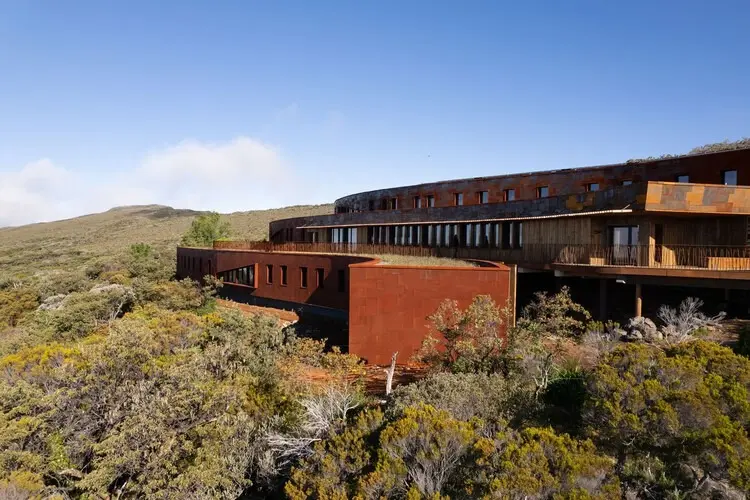
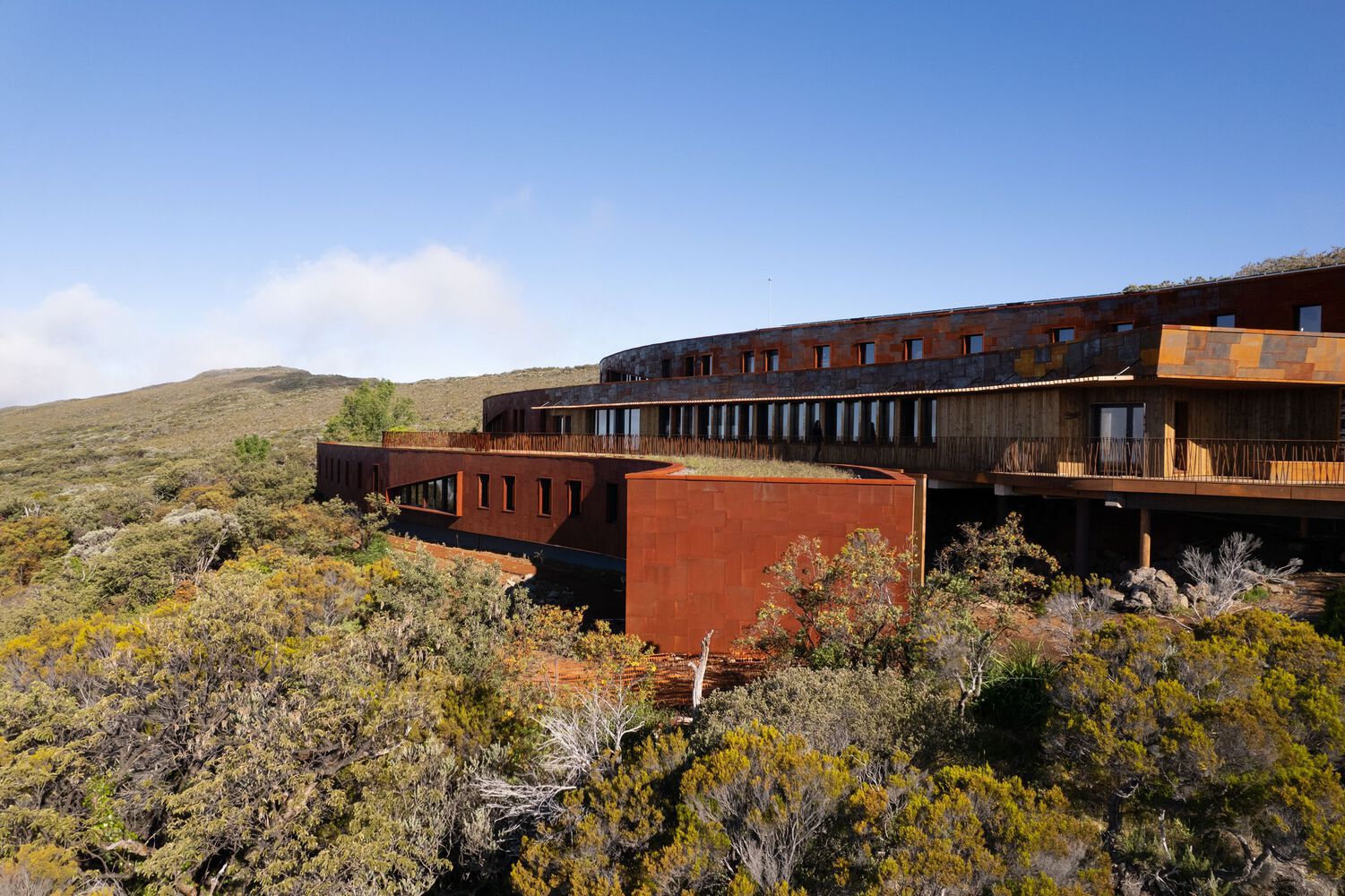
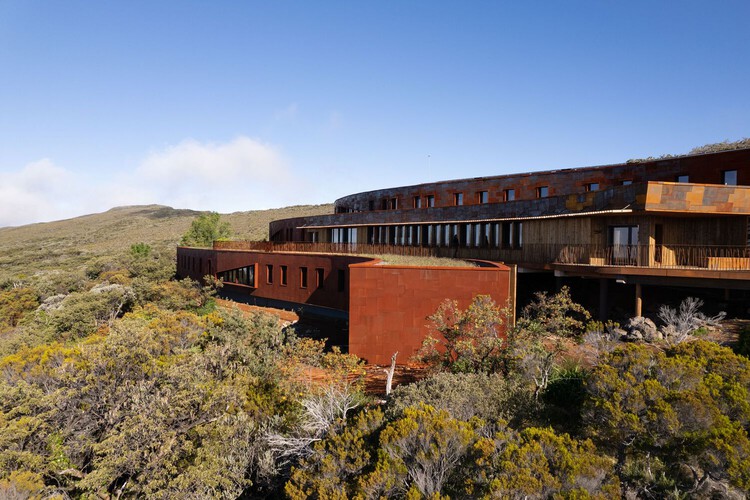
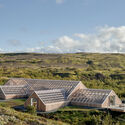
In recent years, the philosophy has shifted toward a delicate balance between ecological sensitivity and structural adaptability. Contemporary practices recognize that volcanic ground cannot be permanently subdued. Instead, modern projects like the Gîte du Volcan (by Altitude 80 Architecture and Atelier Épicéa), the Lava House (by Paul Weiner / DesignBuild Collaborative), Stöng Ruins (by SP(R)INT STUDIO), and the Volcano House (by Pilar Beltrán + Br-arquitectos) demonstrate a new vernacular. These modern interventions utilize elevated foundations, lightweight framing, gabion retaining walls filled with local volcanic rock, and modular systems that can weather, shift, or even be partially sacrificed to geological forces without catastrophic failure.
Supporting Context & Metrics: The Realities of Volcanic Terrain
Building upon volcanic substrata involves navigating unique engineering, ecological, and geographical challenges. Understanding the physical properties of these environments is essential for evaluating contemporary architectural responses.
Materiality and Thermodynamic Properties
- Basalt and Tuff: Naturally occurring igneous rocks provide immense compressive strength. When crushed and utilized as aggregate in modern concrete or stacked dry-laid in gabion baskets, local volcanic stone minimizes the carbon footprint of material transportation while seamlessly blending structures into their surroundings.
- Porous Substrata: Fresh lava fields and ash deposits often feature low load-bearing capacities near the surface, necessitating deep foundation systems, helical piers, or floating raft foundations that distribute structural loads evenly across irregular basalt waves.
- Thermal Regulation: The high thermal mass of volcanic stone absorbs solar radiation during the day and radiates it slowly at night, presenting unique thermodynamic challenges and opportunities for passive heating and cooling strategies.
Global Distribution of Volcanic Architecture
- The Ring of Fire: Hosting over 75% of the world’s active and dormant volcanoes, the Pacific Rim—spanning from the western coast of the Americas through Japan, Indonesia, and New Zealand—represents the primary theater for experimental volcanic architecture.
- Insular Microclimates: Volcanic islands, such as Réunion Island (home to the Gîte du Volcan), Iceland, the Canary Islands, and the Azores, present concentrated settings where extreme isolation, steep topography, and high humidity push architects to engineer self-sufficient, highly durable envelopes capable of withstanding corrosive salt air and torrential tropical downpours.
Official Statements & Design Philosophies
The architectural community working within these volatile zones emphasizes a philosophy of humility and respect. Rather than fighting geological evolution, modern design harnesses it.
"When you build on active or recent volcanic ground, you are accepting a temporary lease from the earth. Architecture in these places must renounce the illusion of permanence. Our designs do not seek to conquer the landscape; they seek to listen to it, adapting their footprints to the scars and flows of ancient eruptions."
— Design Collective Statement, Architectural Review on Volcanic Intervention
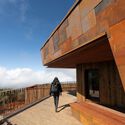
Practitioners working on projects such as the Gîte du Volcan emphasize that public and residential architecture in extreme environments must serve as an educational medium. By exposing structural connections, utilizing local geological strata as exterior finishes, and integrating monitoring technologies, these buildings turn visitors into active observers of earth sciences.
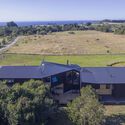
Furthermore, urban planners and structural engineers working in collaboration with architectural firms stress the importance of redundancy and flexibility. Because ash accumulation can collapse roofs and lava flows can alter drainage basins overnight, contemporary guidelines advocate for modular roof geometries that shed debris easily, alongside open-plan interiors that facilitate rapid evacuation and structural retrofitting.
Future Outlook: The Next Frontier of Geomorphic Design
As climate change alters weather patterns and accelerates erosion around volcanic peaks—often triggering mudflows (lahars) and unstable landslides—the role of the architect in volcanic zones is expanding from designer to environmental mediator.

Emerging Technologies and Resilient Materials
Looking forward, research institutions and architectural labs are exploring bio-receptive concretes that encourage indigenous mosses and lichens to grow on exterior volcanic stone walls, accelerating the natural weathering process and anchoring buildings visually and physically into the terrain. Additionally, advanced drone mapping and subsurface radar are allowing architects to model underground lava tubes and void networks with unprecedented precision, ensuring that heavy structures are never anchored over hollow, unstable subterranean chambers.
The Shift Toward "Sacrificial" Architecture
Perhaps the most profound paradigm shift on the horizon is the acceptance of "sacrificial architecture." In zones facing high risks of renewed volcanic activity, architects are designing low-cost, easily replaceable modules or elevated structures where the foundation and utility hubs are hardened, but the primary living spaces are lightweight, modular, and economically viable to rebuild should an eruption occur. This approach trades the hubris of absolute defense for the wisdom of agility.

Ultimately, architecture’s response to volcanic landscapes is a testament to human resilience and creativity. By transforming raw geological threats into opportunities for poetic, site-sensitive design, these contemporary interventions prove that even on the most volatile ground on Earth, human habitat can find a sustainable, respectful, and breathtaking footing.



