

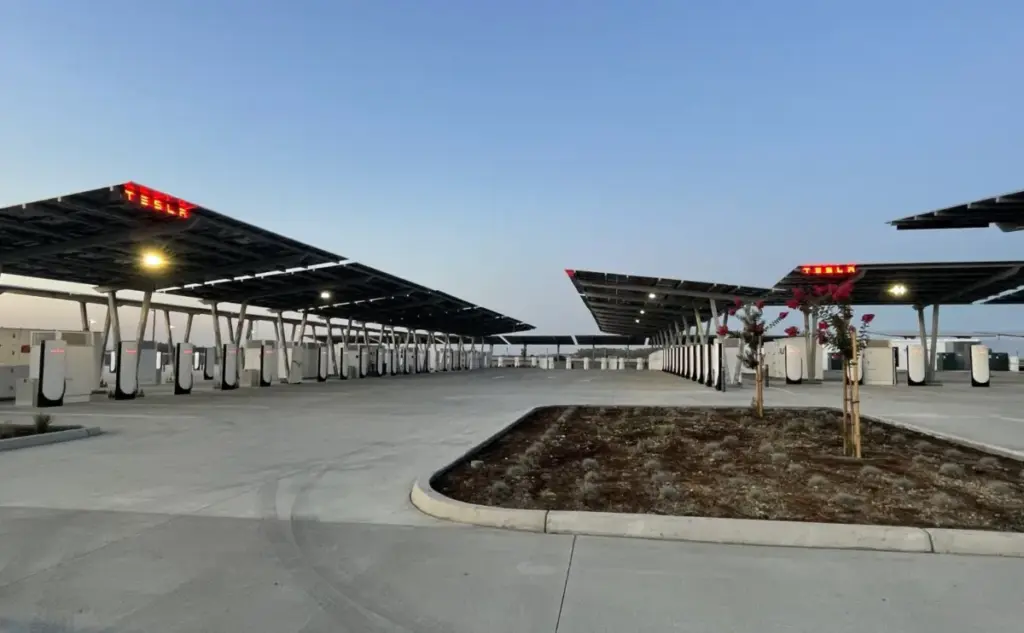
LOS ANGELES — In a major push to expand and fortify its electric vehicle infrastructure backbone, the state of California has officially opened applications for a fresh $28 million funding round dedicated to public DC fast-charging ports. Administered through the state’s landmark California Electric Vehicle Infrastructure Project (CALeVIP), this latest initiative aims to slash upfront financial barriers for property owners, potentially covering 100% of eligible installation costs.
As the state edges closer to its aggressive zero-emission vehicle mandates, policymakers are pivoting toward a streamlined, "ready-to-build" funding strategy designed to bypass the bureaucratic bottlenecks that have historically plagued public infrastructure projects. By prioritizing sites that already possess utility clearances and local permits, California is signaling a new era of efficiency in how public funds are deployed to meet surging transportation electrification demands.
Executive Overview: Bridging the Infrastructure Gap
The transport sector remains the single largest contributor to greenhouse gas emissions in California. While the state continues to lead the nation in battery-electric vehicle adoption—accounting for a dominant share of total US EV sales—the expansion of public charging infrastructure must accelerate in tandem to alleviate range anxiety and support drivers who lack home-charging capabilities.
The Fast Charge California Project, which officially began accepting applications, targets businesses, non-profit organizations, public agencies, and federally recognized or state-eligible California Native American tribes. Crucially, any infrastructure funded through this program must be accessible to the general public.
The financial structure of the program is designed to be deeply compelling. Depending on the power output delivered by each individual charging port, applicants can secure up to $100,000 per port. When combined with eligible soft and hard costs—including planning, engineering, hardware procurement, and physical construction—the incentives can cover the entirety of a project’s approved budget, subject to per-port caps.
However, entering this funding round requires substantial preliminary legwork. The program strictly enforces a "shovel-ready" standard, ensuring that public dollars translate into operational electrons on the asphalt with minimal delay.
Detailed Chronology and Program Mechanics
To fully appreciate the scope of the current funding window, it is essential to examine the operational timeline and the strategic evolution of CALeVIP’s deployment framework.
The Application Timeline and Deadlines
The Fast Charge California Project portal opened its digital doors on October 7, launching a multi-month application window that runs through January 14, 2027.
- First-Come, First-Served with Equity Priority: Once the initial window closes, eligible submissions will be processed in the order they were received. However, applications originating from disadvantaged, low-income, and tribal communities will receive formal priority weighting, ensuring that lower-income regions—which have historically suffered disproportionately from vehicular air pollution—are not left behind in the transition.
- Secondary Window Scheduled: For entities that require additional time to finalize their site plans, CALeVIP has already scheduled a subsequent application window spanning from February 24 through May 27, 2027. This secondary round will offer incentives of up to $55,000 per port.
Tiered Incentive Structure Based on Power Output
Recognizing that modern electric vehicles require increasingly rapid charge times to match the convenience of legacy fossil-fuel refueling, CALeVIP has structured its financial incentives around kilowatt (kW) output thresholds:
- Mid-Tier Fast Chargers (150 kW to <275 kW): Ports guaranteed to deliver power outputs within this range qualify for incentives of up to $55,000 per port. This tier caters efficiently to standard commercial and passenger EV fast-charging needs.
- High-Power Ultra-Fast Chargers (≥275 kW): Ports delivering at least 275 kW of continuous power qualify for the maximum incentive of up to $100,000 per port. These ultra-fast systems are critical for reducing dwell times at highway corridors and high-density urban refueling hubs.
The "Ready-to-Build" Mandate
One of the most significant lessons learned from early-generation EV charging programs was the chronic delay between funding allocation and physical construction. Too often, awardees secured grants before coordinating with local utilities or acquiring zoning permits, leading to protracted delays, returned funds, and stagnant projects.
Under the current Fast Charge California Project rules, applicants must already possess:
- A finalized utility service design, OR an official letter from the local electric utility confirming that no new electrical service or grid upgrade is required.
- All necessary local and regional building, zoning, and environmental permits in place prior to submitting an application.
This stringent vetting process ensures that capital is deployed exclusively to projects capable of immediate physical execution.
Supporting Context, Metrics, and Technical Requirements
Beyond financial and scheduling parameters, the latest round of CALeVIP funding introduces specific technical mandates and geographic exclusions designed to maximize network efficiency and plug compatibility.
Site Eligibility and Geographic Constraints
Property owners must carefully assess their locations before initiating the application process. According to official program guidelines published on the CALeVIP portal, certain commercial property types—specifically general charging hubs, hotels, and isolated business districts—are no longer eligible site types for this specific round. Prospective applicants are encouraged to utilize CALeVIP’s interactive EV Charging Opportunity Finder mapping tool, which cross-references existing charger density, local EV registration statistics, and demographic datasets to identify high-need zones.

Hardware and Interoperability Standards
To ensure universal access for the broader non-Tesla EV fleet (as well as Tesla vehicles equipped with adapters), the state has mandated that at least 50% of the connectors installed at each funded site must utilize the Combined Charging System (CCS) standard. This requirement reinforces public interoperability across diverse automotive brands operating on California roadways.
Historical Context and Trajectory
The current $28 million infusion builds directly upon massive prior state investments. In the spring of 2026, CALeVIP awarded $56.9 million to fund more than 1,266 ready-to-build DC fast-charging ports. Those projects spanned all 58 California counties, with a remarkable 67% of the funded chargers deployed in disadvantaged, low-income, and tribal communities.
Since its inception in 2017, CALeVIP has collectively supported the installation of approximately 10,200 charging ports across the Golden State. Financial backing for these initiatives originates from the California Energy Commission’s (CEC) Clean Transportation Program alongside state-level allocations from the Greenhouse Gas Reduction Fund, which reinvests cap-and-trade auction proceeds directly into carbon-mitigating public works.
Official Perspectives and Institutional Insights
Industry leaders and state administrators have emphasized that transitioning to zero-emission transportation requires close synergy between state agencies, local utilities, and private property owners.
Scott Shepard, Senior Director of Transportation Programs at the Center for Sustainable Energy (CSE)—the organization managing CALeVIP on behalf of the California Energy Commission—highlighted the operational philosophy driving the current initiative:
"We’ve learned through CALeVIP that the fastest way to get chargers in the ground is to fund projects that are truly ready to build. When permitting and utility coordination are already underway, incentive dollars can turn into working chargers much faster."
By removing the financial friction of hardware procurement and installation engineering, the state is encouraging commercial real estate holders, small businesses, and community organizations to view EV infrastructure not as an operational liability, but as a valuable community amenity that drives foot traffic and long-term asset value.

Furthermore, energy analysts point out that synchronizing public funding with rigorous grid-readiness checks protects local distribution systems from unexpected transformer overloads. By requiring utility sign-offs upfront, California ensures that every dollar spent on physical hardware is matched by adequate electrical capacity at the distribution substation level.
Future Outlook: The Road Toward 2030 and Beyond
California’s aggressive decarbonization goals—including the Advanced Clean Cars II rule requiring 100% of new passenger vehicle sales in the state to be zero-emission by 2035—hinge entirely upon the reliability, ubiquity, and speed of its refueling network.
As ultra-fast charging technology advances, with next-generation systems such as EVgo’s upcoming 750 kW architecture slated for commercial introduction in 2027, the demands placed on local charging sites will evolve rapidly. Programs like the Fast Charge California Project ensure that the underlying real estate and heavy-duty electrical infrastructure keep pace with technological breakthroughs in battery chemistry and high-voltage vehicle design.
For businesses, nonprofits, and tribal entities possessing qualifying properties with pre-approved utility plans, the current funding round represents an unprecedented financial window. With up to $100,000 available per port and the potential for complete project cost coverage, California is effectively underwriting the foundational architecture of its electrified future.
Interested property owners and stakeholders can review comprehensive program rules, verify geographic eligibility, and access the application portal by visiting the official CALeVIP Fast Charge California Project website.



