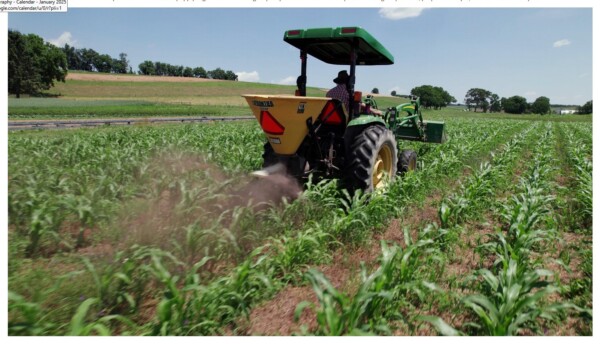
For decades, the transition toward sustainable and regenerative organic agriculture has faced a formidable, yet rarely discussed, bottleneck: access to reliable, university-grade, and field-tested knowledge. While consumer demand for organic food continues its exponential upward trajectory, the literal and figurative seeds of this movement have historically been sown in isolated patches of earth. Aspiring and transitioning farmers eager to ditch synthetic chemicals in favor of holistic ecosystem management have had to rely on a patchwork of fragmented internet forums, sporadic regional workshops, or the rare privilege of relocating for immersive, in-person residencies.
Enter the Rodale Institute Farmer Training (RIFT) online platform—an ambitious digital transformation designed to bridge the chasm between time-tested agricultural science and the modern farming community. Built on the robust Canvas learning management system, this new virtual campus distills more than 75 years of groundbreaking research and practical field experience into a comprehensive, self-paced curriculum. By addressing the acute time poverty of modern agrarians, Rodale Institute is scaling its educational reach from a dozen resident apprentices a year to an anticipated 6,500 digital learners.
This article explores the mechanics of this educational evolution, examining the core challenges facing contemporary farmers, the structural design of Rodale’s virtual campus, vital cross-sector partnerships, and the broader socioeconomic implications of democratizing regenerative agricultural literacy.
Detailed Chronology: The Evolution of Rodale’s Educational Outreach
To understand the weight of Rodale Institute’s current digital pivot, it is necessary to trace the historical trajectory of agricultural extension and farmer education in the United States.
The Foundation of Hands-On Stewardship (The First 15 Years)
For over 15 years, the physical campus of the Rodale Institute in Pennsylvania served as the epicenter of its educational efforts. Through the RIFT program, agricultural entrepreneurs immersed themselves in a grueling, nine-month, on-site boot camp. Trainees learned the intricate mechanics of soil science, entomology, and organic certification standards by getting their hands dirty in the institute’s research fields. While deeply effective, this model was inherently exclusive. The physical constraints of a brick-and-mortar program meant that only a dozen or so aspiring farmers could be accepted annually, leaving thousands of eager producers locked out due to geographic, financial, or time-related barriers.
The Three-Year Digital Buildout
Recognizing that the urgency of the climate and soil degradation crises demanded a far broader dissemination of knowledge, Rodale’s leadership initiated a strategic pivot three years ago. The institute embarked on a meticulous, multi-year project to capture its world-class RIFT curriculum on video. Rather than offering superficial, surface-level tips commonly found on generic video-sharing sites, the education team committed to developing university-level modules. These lessons were explicitly designed to address the complex, interconnected realities of running a modern organic enterprise—balancing scientific rigor with pedagogical best practices.
The Launch of the Virtual Campus
The culmination of this multi-year effort is the rollout of the institute’s dedicated online learning environment. Powered by the Canvas learning management system, the platform officially bridges the gap between the institute’s Pennsylvania campus and farms scattered across remote rural counties, suburban plots, and urban agricultural hubs nationwide. By integrating digital assignments, interactive peer discussions, and structured testing environments into a user-friendly interface, Rodale has successfully translated its physical classroom experience into an accessible virtual format that operates around the clock.
Supporting Context & Metrics: The Realities of Modern Farming
To fully appreciate why a virtual extension service is critical, one must examine the socioeconomic and operational realities of the contemporary farming landscape.
The Time Poverty Crisis in Agriculture
Farming is unlike almost any other profession. As Renée Baran, Rodale Institute Dean of Education, aptly points out, farmers do not get standard vacations, nor do they enjoy weekends off to recharge or pursue continuing education. During peak planting and harvesting seasons, waking hours are dictated by sunlight, weather patterns, and the unpredictable needs of livestock and crops.
This operational relentless time poverty leaves little room for traditional classroom learning. When a farmer finally finishes a 14-hour workday, driving two hours to a regional agricultural extension office is rarely a viable option. By moving the classroom into the cloud, Rodale Institute allows producers to access vital training during pre-dawn hours, late nights, or slow winter months—right from their kitchen tables or tractor cabs.
Bridging the Knowledge Gap
Transitioning from conventional farming methods—which rely heavily on synthetic fertilizers, herbicides, and pesticides—to regenerative organic systems is not simply a matter of stopping chemical inputs. It requires a fundamental rewiring of how a farmer interacts with their local ecosystem.
New and transitioning farmers routinely encounter complex knowledge gaps spanning multiple disciplines:
Soil Microbiology: Understanding how to foster mycorrhizal fungi, bacteria, and earthworm populations to cycle nutrients naturally.
Integrated Pest Management (IPM): Utilizing beneficial insects, trap crops, and physical barriers rather than broad-spectrum poisons.
Complex Crop Rotations: Designing multi-year rotation plans that naturally suppress weeds, break pest cycles, and fix atmospheric nitrogen.
Financial Literacy and Cost Accounting: Tracking enterprise budgets, understanding profit margins per acre, and mastering direct-to-consumer or wholesale marketing strategies.
Scalability Metrics
The contrast in scalability between physical and digital education is stark. While the in-person RIFT program remains a crown jewel for hyper-localized, immersive mentorship, its capacity maxes out at approximately 12 students per year. In contrast, the newly launched virtual campus has been engineered to seamlessly accommodate up to 6,500 concurrent learners. This exponential leap in capacity represents a paradigm shift in how agricultural knowledge can be mobilized to combat climate change, restore degraded topsoil, and fortify regional food systems.
Official Statements & Expert Insights
Industry leaders, educators, and institutional partners have rallied around the launch of Rodale’s virtual campus, recognizing its potential to transform the agricultural sector from the ground up.
"Farming is a unique way to make a living because farmers don’t get vacations or even weekends off when they can take time to focus on learning. But new farmers and many experienced ones have gaps in their knowledge they need to fill."
— Renée Baran, Dean of Education, Rodale Institute
Baran emphasizes that the institute’s ultimate vision extends far beyond a traditional online school. The goal is to create the "regenerative organic agriculture YouTube"—a centralized, highly searchable repository of expert knowledge—but infused with uncompromised scientific integrity and a vibrant community of peers.
Dr. Jason Slipp, Director of Education at Rodale Institute, underscores the academic rigor embedded within the digital modules:
"At Rodale Institute, we have accumulated more than 75 years’ worth of knowledge, and for the past three years, we’ve been capturing much of our RIFT curriculum on video. We’re now offering it to farmers who are not able to enroll in our nine-month, in-person program. These are university-level classes based on proven instructional principles."
Slipp also highlights the intentional design of the user experience, ensuring that producers who might feel intimidated by technology can navigate the Canvas platform with ease.
The Perspective of Collaborative Partners
The impact of this virtual extension service is already rippling outward, attracting collaboration from agricultural non-profits and farm apprenticeship networks across the country. One prominent early adopter is Good Roots, a non-profit dedicated to helping organic farmers build resilient, long-lasting enterprises.
Rebecca Frimmer, a partner and principal consultant for Good Roots, points out that operational survival often hinges on skills that extend beyond the dirt:
"Farmers need training in business management and finance to ensure they are profitable and viable for the long term. The biggest challenge for farmers is finding the time to balance all that must be done. It’s essential to carve out the space to work on the farm business and not just in the business."
Frimmer notes that many small-scale and emerging producers simply lack the capital to hire outside consultants, bookkeepers, or marketing strategists. By leveraging Rodale’s self-paced educational resources, Good Roots can help bridge this structural disadvantage, ensuring that the next generation of food producers can scale their operations on solid financial footings.
As Rodale Institute looks toward the horizon, the implications of its digital education initiative extend well beyond commercial crop producers. The institute is actively breaking down the artificial barrier that separates "producers" from "consumers," recognizing that systemic agricultural reform requires a culturally literate public.
Expanding the Tent: Education for Every Citizen
While the core technical curriculum is meticulously tailored for working farmers and farm apprentices, the virtual campus also hosts courses designed for the general public. Programs such as "Being a Regenerative Consumer" and "Regenerative Health: The Power of the Plate" invite everyday citizens to explore the direct linkages between soil vitality, nutrient density, and human wellness. Furthermore, online classes covering practical home gardening and hobby beekeeping empower urban and suburban dwellers to actively participate in biodiversity preservation.
By welcoming non-farmers into the fold, Rodale is cultivating a conscious consumer base that understands the true cost of food production and actively supports the expansion of certified organic acreage.
The Road Ahead
As climate disruptions intensify, supply chain vulnerabilities mount, and consumer demand for chemical-free food accelerates, the imperative for regenerative farming has never been more urgent. By successfully digitizing 75 years of agricultural research and pairing it with intuitive learning management systems and collaborative non-profit networks, Rodale Institute is future-proofing the organic movement.
The virtual campus represents more than just a collection of instructional videos; it is a digital lifeline for stewards of the earth. By equipping thousands of farmers with the scientific knowledge, ecological tools, and business acumen necessary to thrive, Rodale is ensuring that the roots of the regenerative revolution run deep, wide, and enduringly strong across the agricultural landscape.
For detailed course schedules, enrollment information, and partnership inquiries, visit the official portal at RodaleInstitute.org/education.