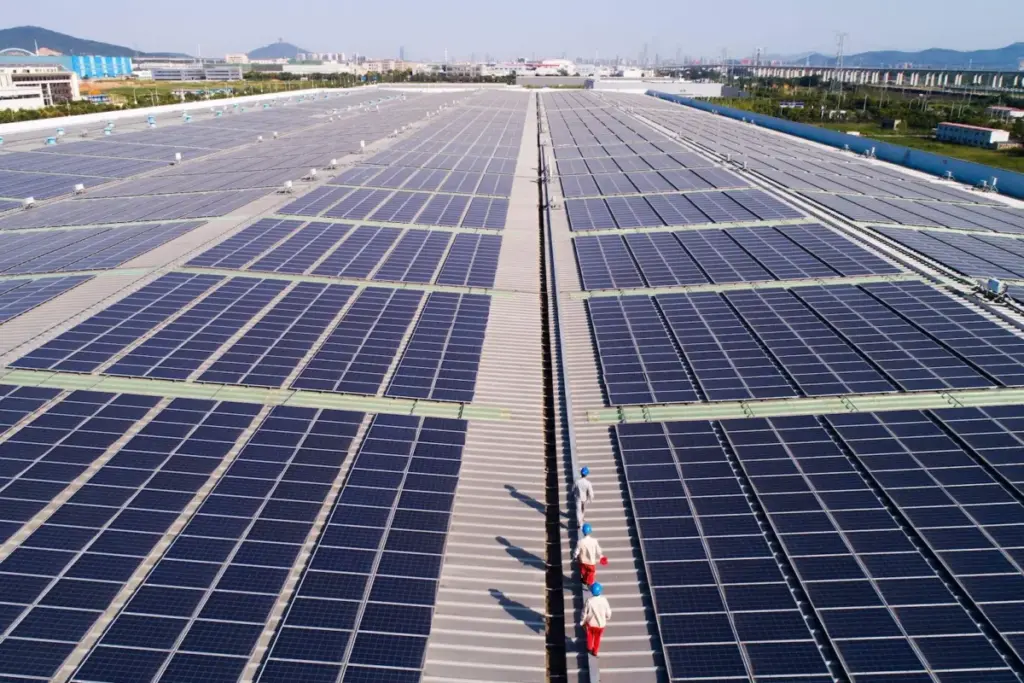
In a decisive consolidation of its national climate policy, China has officially released its dedicated 15th Five-Year Plan for Responding to Climate Change, establishing an unprecedented governance framework for the 2026–2030 period. Formally published by the Ministry of Ecology and Environment (MEE) in concert with 18 key government bodies—including the National Development and Reform Commission (NDRC) and the National Energy Administration (NEA)—the plan represents the most comprehensive institutionalization of climate targets in Beijing’s history.
While the document does not introduce radical new headline figures for carbon dioxide ($textCO_2$) reduction, it achieves something far more structurally significant: for the first time at the Five-Year Plan level, China has codified an overarching, all-encompassing target system that unifies domestic decarbonization, non-$textCO_2$ greenhouse gas (GHG) mitigation, market-based carbon pricing, and international climate strategy.
The plan systematically aligns China’s near-term economic implementation with its long-term commitments under the Paris Agreement—specifically peaking carbon emissions before 2030, slashing carbon intensity by more than 65% from 2005 levels, and slashing overall GHG emissions by 7% to 10% below peak levels by 2035. Beyond administrative organization, the document sends unequivocal signals regarding two critical policy frontiers: an aggressive crackdown on non-$textCO_2$ "super-pollutants" such as methane and sulphur hexafluoride ($textSF_6$), and an explicit strategy to project Chinese leadership across global climate governance frameworks and carbon markets.
Evolution of China’s Climate Governance: From Sectoral Plans to a Unified Blueprint
Historically, Beijing’s climate objectives were dispersed across disparate sectoral plans, broad national economic strategies, or standalone documents with limited operational link to the central Five-Year Plan machinery. A prominent prior attempt to centralize policy occurred in 2014 when the NDRC published a climate response plan running through 2020. However, that initiative operated independently of the central five-year planning cycles that govern provincial administrative performance and state-owned enterprise (SOE) capital allocation.
The release of the 15th Five-Year Climate Plan bridges this legacy gap. According to official MEE communications, the document acts as the primary policy instrument through which the Chinese state will operationalize its climate promises through 2030. By jointly issuing the blueprint alongside 18 state departments, the MEE has secured inter-agency alignment across key sectors including heavy industry, transport, finance, and national grid operations.
This unified architecture binds previously distinct regulatory tracks into a single execution framework. It integrates parallel 2026–2030 sectoral strategies—such as plans for "Building a Beautiful China," establishing a "New-Type Energy System," and expanding renewable capacity—under a central climate-focused mechanism. Sector analysts note that this alignment transitions Chinese climate governance from a period of high-level pledge-making into a mature phase focused on regulatory enforcement, monitoring infrastructure, and capacity building.
Granular Scope and Core Targets: CO₂ and Carbon Intensity
At its core, the plan consolidates and reaffirms China’s established carbon constraints while laying down strict administrative structures for tracking progress. The headline national targets remain anchored to China’s Nationally Determined Contributions (NDCs) under the Paris Agreement and domestic presidential decrees:
Carbon Intensity Reduction: Reaffirming the target to reduce $textCO_2$ emissions per unit of GDP by more than 65% compared to 2005 levels by 2030.
Emissions Peaking: Reasserting the mandate to reach peak carbon emissions before 2030, laying the ground for sustained structural declines.
2035 Reduction Trajectory: Supporting President Xi Jinping’s policy directive to reduce total national GHG emissions to 7%–10% below peak levels by 2035, while establishing institutional mechanisms to "strive for better performance."
Long-Term Neutrality: Preserving the long-term goal of achieving full carbon neutrality before 2060.
Rather than establishing higher, volatile numeric targets that could disrupt industrial stabilization, the plan focuses on streamlining metrics and closing policy loopholes. It strengthens regional emissions accounting, formalizes carbon budget controls, and demands tighter integration between local government growth models and national energy consumption thresholds.
Dissecting the Non-CO₂ GHG Strategy: Targets, Gas Types, and Industrial Levers
The most detailed policy pivot within the 15th Five-Year Plan lies in its explicit treatment of non-$textCO_2$ greenhouse gases. While previous policy cycles focused heavily on power sector coal consumption and heavy industrial $textCO_2$, non-$textCO_2$ super-pollutants are now receiving structured regulatory focus.
                  CHINA GHG EMISSIONS BREAKDOWN (2021)

   Total National Emissions: ~14,000 MtCO2e (excluding LULUCF)
   ──────────────────────────────────────────────────────────
   [██████████████████████████████████████████████░░░░░░░░░░]

   ■ CO2 Emissions:                   ~11,300 MtCO2e  (81%)
   ░ Non-CO2 GHGs (Methane, N2O, etc.): ~2,700 MtCO2e  (19%)
The Non-CO₂ Baseline and Targets
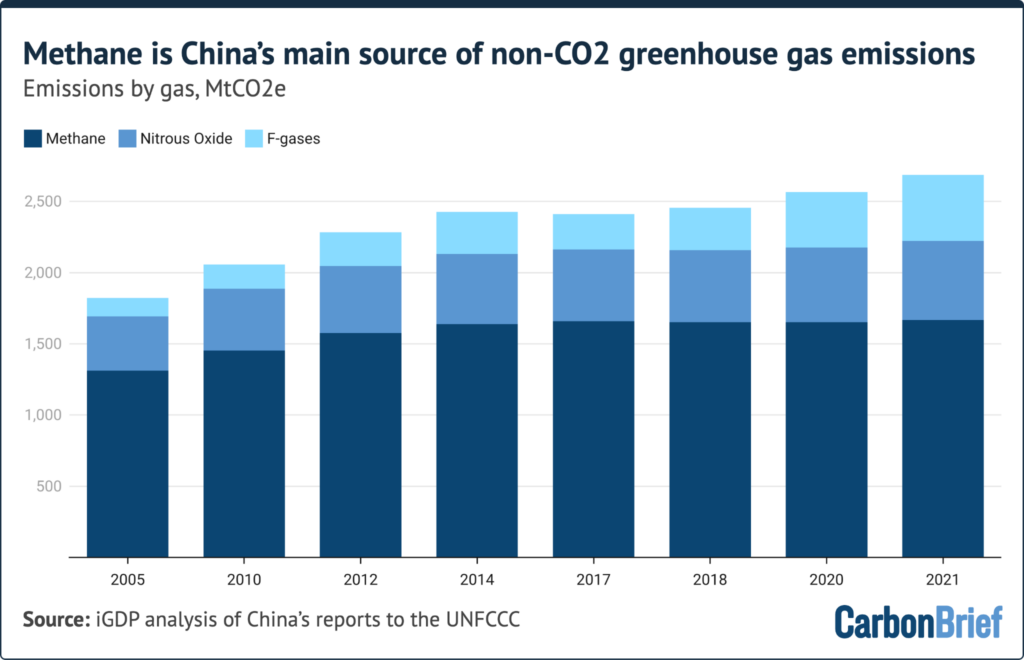
According to analytical data compiled by the Institute for Global Decarbonization Progress (iGDP) from China’s official filings to the UNFCCC, China generated approximately $14,000text MtCO_2texte$ in total greenhouse gases in 2021 (excluding land use, land-use change, and forestry). Non-$textCO_2$ gases accounted for roughly $2,700text MtCO_2texte$, representing nearly 19% of national emissions. Methane ($textCH_4$) comprised the vast majority of this non-$textCO_2$ footprint, followed by nitrous oxide ($textN_2textO$) and fluorinated gases (HFCs, PFCs, and $textSF_6$).
To curb these potent gases, the plan formalizes a target to establish an emissions "reduction capacity" of 30 million tonnes of $textCO_2$ equivalent ($textMtCO_2texte$) for non-$textCO_2$ GHGs by 2030.
Industrial Levers and Methodology
The plan outlines specific operational pathways to hit this $30text MtCO_2texte$ reduction capacity target across different gas categories:
Target Gas
Key Sources
Primary Policy & Technological Levers
Methane ($textCH_4$)
Coal mining operations, ventilation air methane (VAM), oil & gas operations.
Expanding utilization projects for drainage gas; incentivizing VAM utilization below 8% concentration via CCER credits.
Nitrous Oxide ($textN_2textO$)
Adipic acid and nitric acid production facilities.
Mandatory installation of thermal/catalytic destruction technologies; catalytic reduction guidance.
Hydrofluorocarbons (HFCs)
Chemical manufacturing, industrial refrigeration, AC systems.
End-of-pipe recovery, destruction technology mandates, phased production quotas under Kigali Amendment.
Sulphur Hexafluoride ($textSF_6$)
High-voltage electrical switchgear and grid transformers.
Mandatory recovery, recycling, and substitution with eco-friendly insulating gas alternatives across expanding power grids.
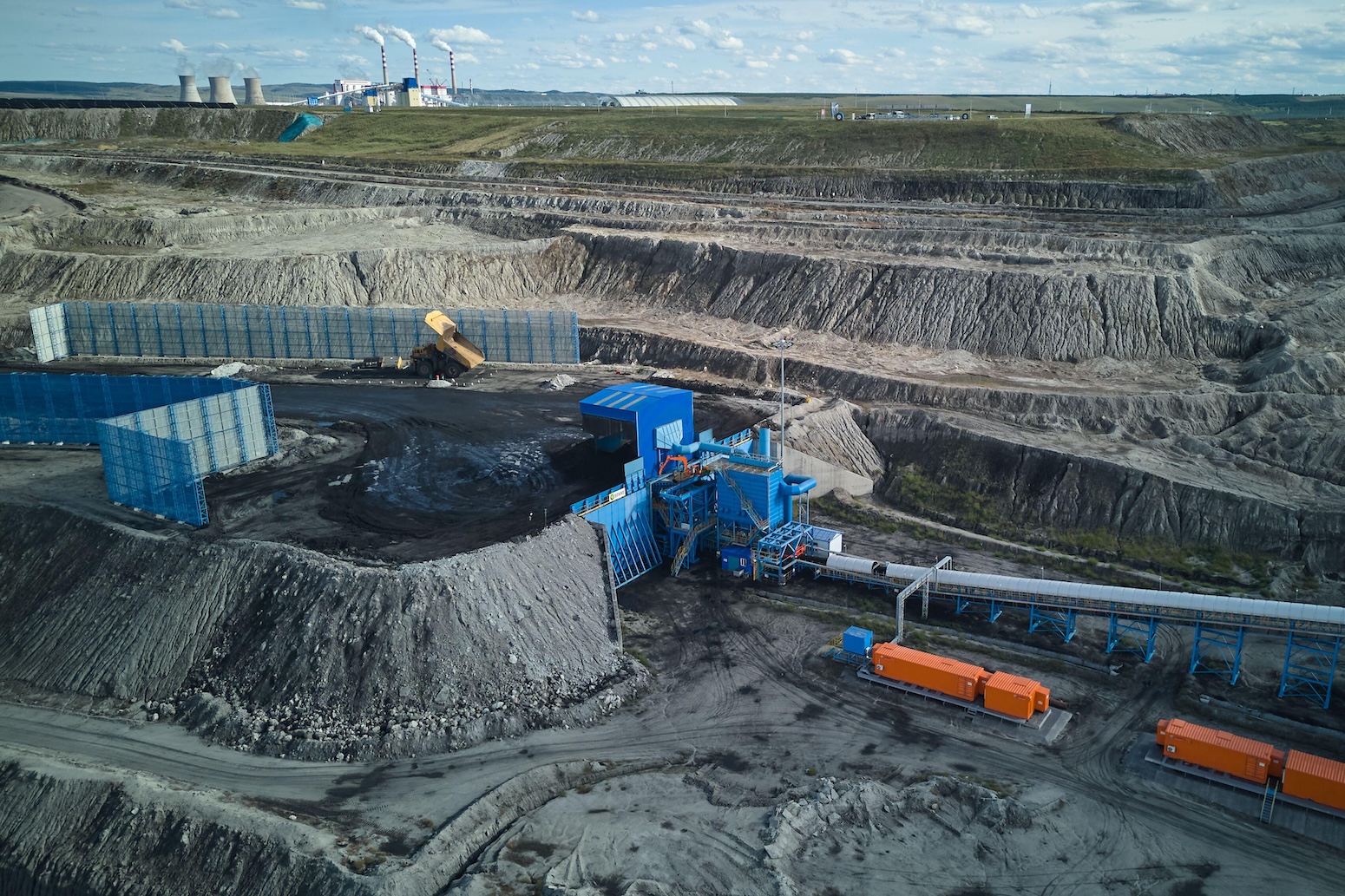
Experts highlight that methane control in coal mining forms the core of this non-$textCO_2$ drive. Technical explanatory documentation from the MEE indicates that low-concentration coal-mine methane and VAM projects (concentrations under 8%) under the China Certified Emission Reduction (CCER) voluntary credit scheme are estimated to generate around $20text MtCO_2texte$ of mitigation by 2030—up from a current baseline of approximately $4.5text MtCO_2texte$ annually. Combined with aggressive end-of-pipe controls on industrial $textN_2textO$ and HFC destruction, the $30text MtCO_2texte$ target represents an attainable threshold that creates clear market incentives for facility retrofits.
Of equal importance is the explicit regulatory entry of sulphur hexafluoride ($textSF_6$). Possessing a global warming potential over 23,000 times greater than $textCO_2$, $textSF_6$ emissions risk escalating rapidly as China builds out the world’s largest ultra-high voltage (UHV) electrical transmission network. Bringing $textSF_6$ under systematic containment directly mitigates the environmental impact of grid expansion.
Global Climate Governance and Carbon Market Expansion
Beyond domestic mandates, the 15th Five-Year Plan reflects an assertive pivot in China’s international climate diplomacy. The document explicitly tasks Chinese state agencies with elevating the nation’s influence, shaping capacity, and moral appeal within global climate governance frameworks by 2030.
                         GLOBAL DIPLOMATIC STRATEGY
 ┌────────────────────────────────────────────────────────────────────────┐
 │                      GLOBAL GOVERNANCE INITIATIVE                      │
 └───────────────────────────────────┬────────────────────────────────────┘
                                     │
         ┌───────────────────────────┴───────────────────────────┐
         ▼                                                       ▼
┌─────────────────────────────────┐             ┌─────────────────────────────────┐
│     INTERNATIONAL RULEMAKING    │             │      CARBON MARKET DIPLOMACY    │
├─────────────────────────────────┤             ├─────────────────────────────────┤
│• Lead Article 6 standards       │             │• Host China Carbon Market Conf. │
│• Shape global offset accounting │             │• Build EU-Brazil-China          │
│• Formulate green trade norms    │             │  Compliance Carbon Coalition    │
└─────────────────────────────────┘             └─────────────────────────────────┘
Reshaping Global Narratives
The plan places climate action at the heart of Beijing’s broader "Global Governance Initiative," an overarching foreign policy framework designed to alter traditional multilateral institutions. The plan directs state apparatuses to "build a new narrative on climate governance"—one that balances decarbonization with industrial sovereignty, energy security, and economic development for emerging economies.
Internationalizing Carbon Markets and Article 6
A core strategy for projecting climate influence lies in carbon pricing and trading infrastructure. The plan calls for China to actively expand the global reach of its carbon markets through three key vectors:
Rule-Making under Article 6: As domestic industrial demand for offsets grows alongside decarbonization imperatives, China is positioned to become one of the world’s primary buyers and sellers of carbon offsets. The plan instructs regulators to actively shape standards under Article 6 of the Paris Agreement, ensuring international carbon trading rules align with Chinese industrial practices.
Cross-Border Carbon Coalitions: Highlighting this strategy, China, Brazil, and the European Union launched an open coalition on compliance carbon markets. This alliance seeks to align monitoring, reporting, and verification (MRV) standards, boost offset market integrity, and streamline global carbon pricing structures.
Standard Setting via Flagship Platforms: China intends to leverage platforms such as the annual China Carbon Market Conference to export its technical carbon-accounting methodologies, green financial instruments, and verification protocols across Global South nations participating in the Belt and Road Initiative (BRI).
Official Statements and Expert Analysis
The significance of the 15th Five-Year Climate Plan has been acknowledged by key policy architects, independent climate analysts, and international academic researchers:
"For the first time at the five-year plan level, this document creates a comprehensive, target-driven system covering all functional areas of climate policy… It serves as the main policy instrument for advancing China’s climate action through 2030."
— Ministry of Ecology and Environment (MEE), Official Policy Q&A
"The release of this dedicated plan demonstrates that China’s domestic climate governance has reached an unprecedented strategic level. It creates an all-encompassing target system that underpins China’s Paris Agreement commitments for both 2030 and 2035… As China’s energy transition accelerates, the country could eventually become the world’s largest carbon offset buyer. Helping shape global rules under the Article 6 framework is a key strategic priority."
— Qin Yan, Principal Analyst at ClearBlue Markets
"The 30m-tonne non-$textCO_2$ mitigation target is relatively achievable through targeted industrial retrofits. Coal-mine methane and low-concentration ventilation air methane projects alone can deliver roughly 20Mt of that capacity via CCER incentives… Furthermore, the plan’s focus on sulphur hexafluoride ($textSF_6$) is particularly noteworthy. $textSF_6$ is finally receiving explicit policy focus, which is a crucial step to prevent runaway emissions as the national power grid expands."
— Chen Meian, Programme Director and Senior Analyst at iGDP
"This plan marks a major rhetorical and strategic shift. China is indicating an explicit willingness not just to participate in global climate action, but to actively lead, shape, and set the rules for global climate governance moving forward."
— Prof. Thomas Hale, Professor of Public Policy at Oxford University’s Blavatnik School of Government
"The document reflects a coordinated push to fundamentally harden China’s climate governance structure. It focuses heavily on upgrading administrative capacities, strengthening local implementation mechanisms, and standardizing baseline metrics across provinces."
As China transitions into the implementation phase of the 15th Five-Year Plan, global markets, industrial players, and international negotiators will monitor several critical operational milestones:
                  15TH FIVE-YEAR PLAN ROADMAP (2026–2030)

  2026                 2027                 2028                 2030
───┼────────────────────┼────────────────────┼────────────────────┼───
   │                    │                    │                    │
   ▼                    ▼                    ▼                    ▼
 Rollout of CCER      Full integration     Mid-term policy      Target Check:
 Low-Concentration    of non-CO2 gases     review & grid        • Non-CO2 Cap +30Mt
 VAM Methodologies    into national ETS    SF6 phase-out        • CO2 Intensity -65%
                                           benchmarks           • Emissions Peak
Key Milestones to Watch:
Integration of Non-$textCO_2$ Gases into National Markets: Regulators are expected to publish formal methodologies expanding the national carbon market—including both the ETS and the voluntary CCER framework—to cover industrial methane capture, $textN_2textO$ abatement, and $textSF_6$ recycling projects.
Expansion of Sectoral Coverage in the National ETS: Moving beyond power generation, heavy industrial sectors such as steel, aluminum, and cement will be systematically integrated into the national compliance emissions trading scheme, establishing benchmark allocations through 2030.
Bilateral and Multilateral Carbon Standards Alignment: Progress under the EU-Brazil-China carbon coalition will be evaluated at upcoming international forums, setting up technical standards ahead of global stocktakes.
Enforcement of Provincial Carbon Budgets: Provincial governments will face strict compliance auditing, tying local administrative evaluations directly to success in controlling absolute energy consumption and intensity targets.
By transforming high-level international targets into an organized, inter-ministerial strategy, China’s 15th Five-Year Climate Plan establishes the operational blueprint for the country’s carbon peak. In doing so, it codifies a climate strategy where domestic structural reform and global rule-making go hand in hand.