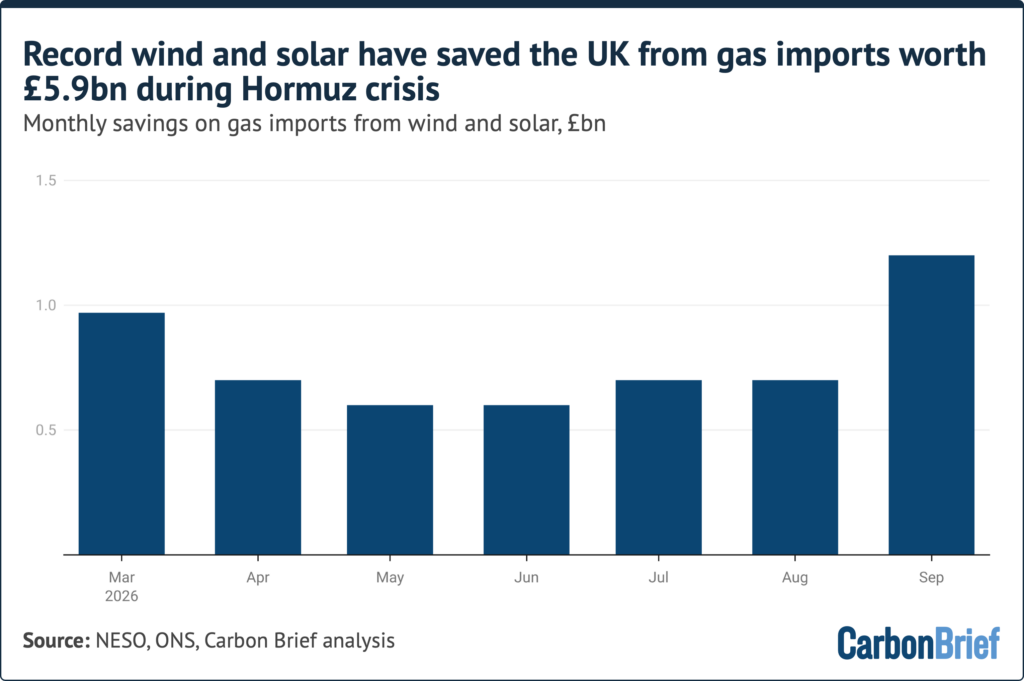
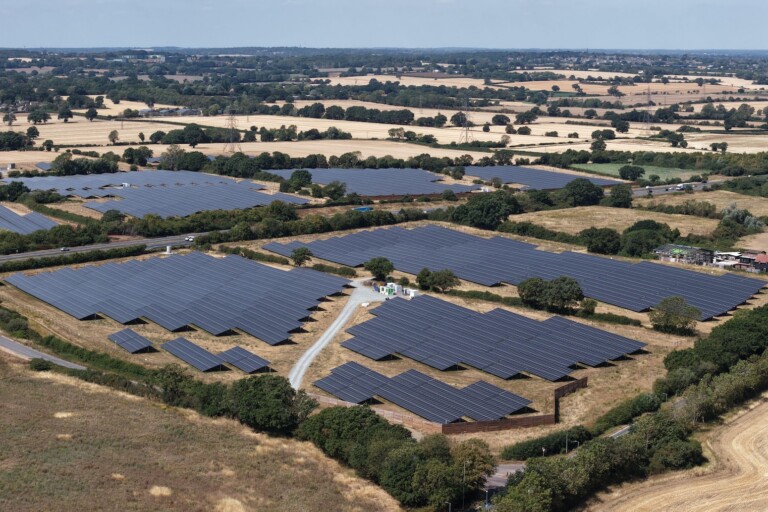
Amid escalating geopolitical conflict in the Middle East and a severe tightening of global hydrocarbon supplies, the United Kingdom’s rapid transition toward renewable energy has served as a critical macroeconomic shield. According to a landmark analysis released by Carbon Brief, record generation from domestic wind and solar infrastructure has saved the UK an estimated £5.9 billion in avoided natural gas imports since the outbreak of the Straits of Hormuz crisis in early 2026.
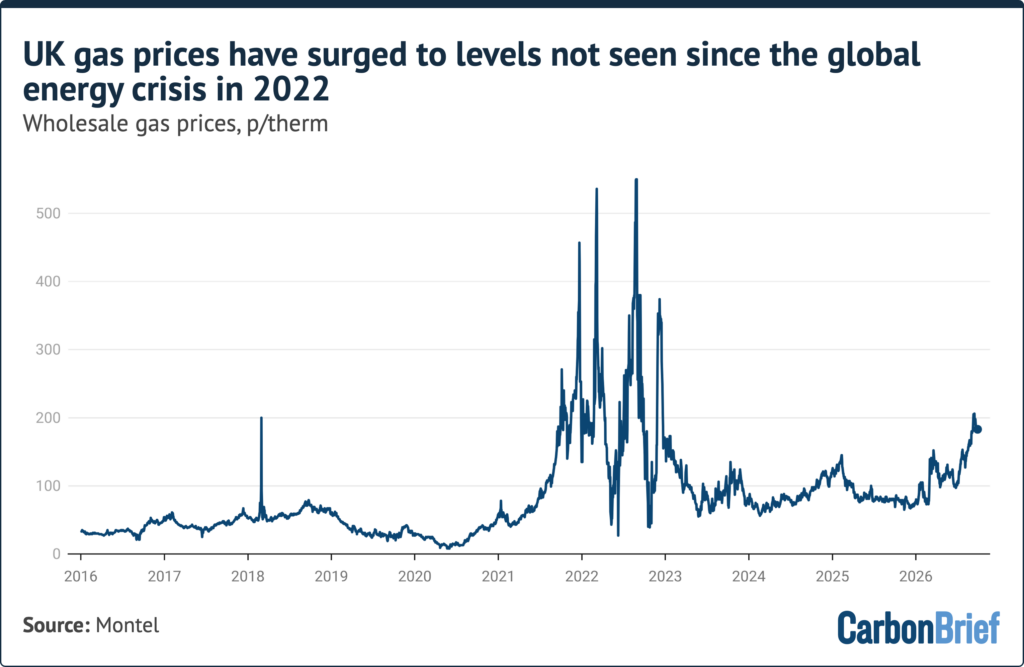
As war between the United States and Iran disrupted key maritime energy bottlenecks, global gas markets experienced a price surge reminiscent of the 2022 European energy shock. However, unlike previous supply disruptions, the impact on the UK grid was significantly cushioned by clean energy infrastructure. Year-to-date figures for 2026 reveal that wind and solar generation rose 14% year-on-year, producing a record 41% share of the UK’s total electricity requirements. In contrast, gas-fired power generation dropped by nearly 10% over the same period, providing just 25% of the nation’s power.
This displacement of fossil-fuel power generation spared the British economy from procuring the equivalent of more than 100 additional supertanker shipments of liquefied natural gas (LNG) at exorbitant spot market rates. While household heating bills face a sharp winter adjustment due to international gas price inflation, electricity tariffs have remained remarkably resilient—offering definitive evidence that clean energy is fundamentally altering the economic defense posture of energy-importing nations.
Detailed Chronology
                                  TIMELINE OF THE UK ENERGY CRISIS
┌──────────────────────┬───────────────────────┬───────────────────────┬────────────────────────┐
│     PRE-2022 ERA     │   2022 – EARLY 2026   │      MARCH 2026       │     SEPTEMBER 2026     │
├──────────────────────┼───────────────────────┼───────────────────────┼────────────────────────┤
│ Baseline Gas Price:  │ Post-Ukraine Invasion │ Hormuz Crisis Breaks  │ Gas Hits Peak:         │
│ ~30p per therm       │ Gas averages ~90p     │ Gas spikes to ~134p   │ 189p per therm         │
│                      │ per therm             │ per therm             │                        │
│ Stable global energy │ Russian pipeline      │ US-Iran war blocks    │ Pre-winter bidding war │
│ flows.               │ flows disrupted.      │ key shipping lanes.   │ between EU and Asia.   │
└──────────────────────┴───────────────────────┴───────────────────────┴────────────────────────┘
Phase I: The Pre-Crisis Baseline and the 2022 Supply Shock
Prior to the global disruptions of recent years, wholesale UK natural gas prices traded at a long-term baseline averaging approximately 30p per therm. That stability collapsed in February 2022 following Russia’s full-scale invasion of Ukraine, which triggered sweeping cuts to European pipeline gas supplies. Between 2023 and early 2026, wholesale UK gas prices settled into a elevated plateau, averaging roughly 90p per therm—a threefold increase over pre-2020 averages. This structural shift recalibrated the economics of energy across Western Europe, forcing nations to dramatically accelerate renewable deployment while increasing reliance on sea-borne LNG imports.
Phase II: The Hormuz Escalation (February–March 2026)
The fragile equilibrium was broken in early 2026 when military confrontation erupted between the US and Iran, leading to a near-total blockade of the Strait of Hormuz—the maritime passage through which roughly one-fifth of global petroleum and LNG flows. With Qatari LNG shipments halted and Gulf energy infrastructure threatened, international market prices reacted immediately. Between March and August 2026, UK wholesale gas prices climbed to an average of 134p per therm, nearly four times the pre-crisis baseline.
Phase III: The September Spike and Clean Energy Offset
By September 2026, as northern hemisphere nations began building winter gas reserves, market pressures intensified further. Low European storage levels triggered a fierce bidding war with Asian importers for non-Gulf LNG cargoes. Wholesale UK gas prices surged to an average of 189p per therm—their highest level since the peak of the 2022 crisis.
Simultaneously, UK wind and solar assets operated at historic efficiency. In September 2026 alone, combined output from wind and solar farms reached nearly 10 terawatt hours (TWh). This single-month surge in clean generation delivered £1.3 billion in avoided gas import costs, bringing the cumulative savings since the outbreak of the Middle East conflict to £5.9 billion.
Supporting Context & Metrics
The UK Power Generation Mix (2026 Year-To-Date)
The shift in Britain’s power architecture represents a historic departure from fossil-fuel reliance. For the first nine months of 2026, domestic generation statistics highlight a widening structural gap between clean electricity and fossil-fired generation:
Wind and Solar Share: 41% (Record high)
Gas-Fired Generation Share: 25% (Record low)
Renewable Generation Growth: +14% Year-on-Year
Gas-Fired Generation Decline: -10% Year-on-Year
Avoided LNG Cargoes: >100 supertanker shipments
     UK POWER GENERATION SHARE (2026 YTD)
  ┌─────────────────────────────────────────┐
  │ Wind & Solar (41%)                      │
  ├───────────────────────────┬─────────────┘
  │ Gas Generation (25%)      │ Other (34%)
  └───────────────────────────┴─────────────┘
Macroeconomic Impact on Consumers: The Dual-Tariff Divergence
The structural decoupling of electricity from gas generation is noticeably impacting consumer finances. Energy regulator Ofgem’s price cap update illustrates a stark policy and market dynamic:
           HOUSEHOLD ENERGY BILL CHANGES
       (Comparing April 2026 to October 2026)
  ┌──────────────────────────────────────────────┐
  │ Household Gas Bills: +33% (~£200/year increase)│
  ├─────────────────┬────────────────────────────┘
  │ Elec Bills: +4% │
  └─────────────────┘
According to analysis by the independent thinktank Nesta, from October 1, 2026, the typical household gas bill will increase by 33% compared to April 2026 levels—adding approximately £200 per year to domestic heating budgets. By contrast, average household electricity bills will rise by just 4%. This minimal increase in power costs reflects the high penetration of zero-marginal-cost renewable assets, which effectively insulate the electricity grid from global fossil fuel volatility.
Broader Liquid Fuel Shock and EU Footprint
The crisis has extended beyond gas heating and grid power into transport and refineable fuels:
UK Transport Sector: Retail diesel prices across the UK have hit record highs, approaching £2.00 per litre. In contrast, updated running-cost assessments reveal that operating an electric vehicle (EV) charged via the UK grid is now up to nine times cheaper per mile than driving an equivalent petrol or diesel vehicle.
European Union Exposure: The European Union as a whole has absorbed an estimated €100 billion in extra fossil-fuel import expenditure since the onset of the Hormuz crisis. Developing and middle-income importing economies have faced even harsher balance-of-payments shocks, highlighting the systemic macroeconomic vulnerability of remaining reliant on global fossil fuel supply chains.
Official Statements
The political and economic implications of the Carbon Brief findings dominated discussions at the Labour Party conference, framing the debate around energy sovereignty, cost-of-living relief, and grid reform.
Commenting on the structural shift in power markets, Andrew Sissons, Director for Sustainable Future at Nesta, noted on social media:
"The historic link between electricity and gas prices has already begun to break. Because of the volume of renewables coming onto the grid, we are seeing real-time protection for consumers on their power bills, even as heating costs surge due to international market turmoil."
Addressing delegates at the conference, Energy Secretary Miatta Fahnbulleh underscored the country’s ongoing exposure to volatile global commodities:
"The reason British families are once again facing painful winter energy bills is not because of our domestic energy policies, but because we remain fundamentally exposed to international fossil-fuel markets controlled by foreign regimes and geopolitical shocks. The only true path to energy security and affordable bills is accelerating away from fossil fuels entirely."
In his address to the conference, Prime Minister Andy Burnham explicitly tied clean-energy expansion to national security, pledging legislative action to alter how domestic energy is priced:
"We are already taking more control of our electricity prices with a massive expansion of home-grown renewables and nuclear power. I have asked Miatta to speed up the breaking of the link between what we pay for power at home and the international gas market, to get bills down permanently."
Future Outlook
Short-Term Risks: Winter 2026/2027 Resilience
As Western Europe enters the 2026/2027 heating season, energy security remains fragile. With European gas storage reserves dipping to their lowest seasonal levels since 2011, competition between European and Asian buyers for non-Middle Eastern LNG will keep wholesale gas prices inflated.
The UK’s immediate defense against potential gas shortages relies heavily on wind conditions over the North Sea during late autumn and winter. A high-performing winter for wind generation could save the country billions more in import costs, whereas extended wind droughts ("Dunkelflaute" events) would force high-cost gas peaking plants into service, driving spot electricity prices higher.
                  STRATEGIC IMPERATIVES FOR UK GRID RESILIENCE
┌──────────────────────────────────┬──────────────────────────────────┬──────────────────────────────────┐
│        MARKET REFORM             │      INFRASTRUCTURE BUILD        │         STORAGE CAPACITY         │
├──────────────────────────────────┼──────────────────────────────────┼──────────────────────────────────┤
│ Decouple marginal gas pricing    │ Fast-track grid connections and  │ Expand Long-Duration Energy      │
│ from clean electricity to drop   │ high-voltage transmission lines  │ Storage (LDES) including pumped  │
│ consumer power bills.            │ to prevent curtailment.          │ hydro and advanced batteries.    │
└──────────────────────────────────┴──────────────────────────────────┴──────────────────────────────────┘
Strategic Policy Imperatives
To capitalize on the economic protection demonstrated during the Hormuz crisis, the UK government is expected to pursue three main policy initiatives:
Marginal Price Reform: Under current market rules, the most expensive power generator needed to meet demand—typically a gas plant—sets the clearing price for all electricity generated, including cheap renewables. Rewriting these wholesale market rules to break the gas-electricity price link is now a top political priority.
Long-Duration Energy Storage (LDES): To resolve renewable intermittency without relying on gas backup, investment must flow into LDES assets, such as pumped hydro storage, compressed air systems, and utility-scale battery networks.
Grid Capacity Expansion: Record wind and solar output has occasionally led to grid bottlenecks, where clean energy must be curtailed due to localized transmission constraints. Accelerating national grid upgrades will be essential to ensure maximum clean power can reach urban centers.
Conclusion
The £5.9 billion saved during the 2026 Hormuz crisis demonstrates that renewable energy deployment is no longer purely an environmental policy—it is a cornerstone of national security and macroeconomic risk management. By replacing imported fossil fuels with domestic clean energy, the UK has shielded its power sector from severe external market shocks, providing a clear blueprint for navigating an increasingly volatile global landscape.