

Executive Overview
A catastrophic convergence of severe climatic anomalies and traditional agricultural practices has unleashed an unprecedented wave of wildfires across Indonesia, threatening not only the ecological integrity of the world’s oldest lowland tropical rainforests, but also the very foundation of decades-long primatological research. In the heart of West Kalimantan’s Gunung Palung National Park, aggressive blazes are sweeping through pristine habitats that serve as a crucial stronghold for the critically endangered Bornean orangutan (Pongo pygmaeus).
Within a matter of days, advancing flames have narrowed the gap to a mere 200 metres from the Rangkong research station—a vital satellite facility of the renowned Cabang Panti research camp. Cabang Panti has hosted one of the world’s longest-running, continuous studies of wild apes for over three decades. Now, a desperate, around-the-clock coalition of local field assistants, indigenous staff, and villagers are waging a desperate war against an inferno that threatens to obliterate decades of irreplaceable scientific data and displace an irreplaceable population of great apes.
Driven by an intensely powerful El Niño event, which has exacerbated extreme dry spells and scorching temperatures across the equatorial Pacific, these fires have outpaced the capacity of local conservation groups. Scientists warn that without immediate, large-scale international intervention—including specialized water-bombing operations—the destruction could permanently alter the region’s biodiversity landscape. As the flames consume the peat-rich forest floor, threatening to smoulder for months underground, the crisis transcends a localized emergency. It stands as a stark indicator of how intensifying climate disruptions are unravelling the resilience of Earth’s most vital carbon sinks and ecological sanctuaries.
Detailed Chronology: The Escalation at Gunung Palung
The current catastrophe in West Kalimantan did not erupt in a vacuum, but its recent escalation has caught conservationists and field researchers entirely off guard with its ferocious speed.
The Spark and the Spread
The crisis began, as it frequently does during the dry season across the Indonesian archipelago, with intentional, small-scale agricultural fires set to clear land for cultivation. Historically, local communities and corporate entities alike have relied on fire as a low-cost method for land preparation. However, the routine practice collided disastrously with severe meteorological anomalies this year.
By late August and early September, areas of West Kalimantan had endured months of virtually no rainfall. When the initial agricultural fires were set, the parched underbrush and deeply desiccated peat soils acted as an accelerant. The fires quickly broke containment lines, transforming from manageable land-clearing actions into raging, uncontrollable wildfires that tore through primary lowland forests.
Encroaching on Rangkong Research Station
By the first week of September, the forward edge of the fire front made alarming gains toward the Rangkong research station, a critical logistical and scientific hub located roughly four miles north of the main Cabang Panti camp within Gunung Palung National Park.

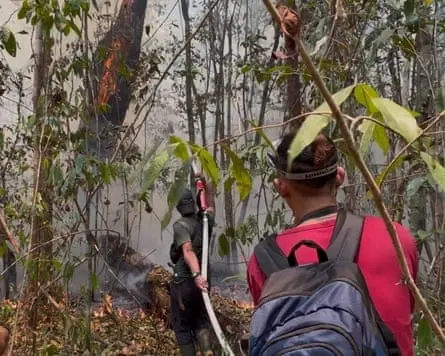
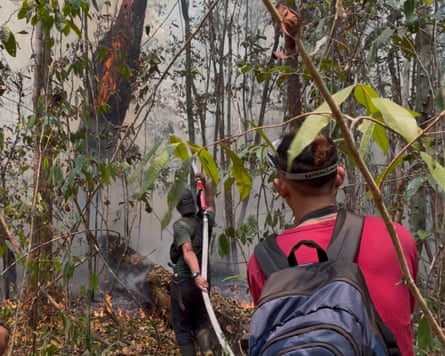
Witnesses on the ground reported that the blaze closed to within 200 metres of the Rangkong facility. Realizing that standard handheld firefighting tools were insufficient against the advancing wall of fire, a hastily organized brigade of more than 40 individuals—comprising field assistants, station staff, and courageous local villagers—mobilized a round-the-clock defense strategy. Working in blinding, acrid smoke, the team constructed strategic firebreaks and cobbled together an improvised sprinkler system using punctured hose lines to saturate the vulnerable peat surrounding the station.
The Countdown to Cabang Panti
Despite these heroic localized efforts, the broader fire front continues its relentless march northward. Current trajectory models indicate that, barring a dramatic shift in weather patterns, the creation of massive firebreaks, or the deployment of heavy aerial firefighting assets, the primary Cabang Panti research station will be directly impacted within 20 days.
The physical structures of the camps, however, represent only the most visible symbols of a deeper tragedy. As the fire advances through the surrounding canopy and understory, researchers have documented individual orangutans—some of whom have been tracked since birth—fleeing for their lives, navigating mere metres from active flames. The logistical nightmare of monitoring and protecting a sprawling, remote jungle reserve during a climate-amplified mega-fire has stretched the local workforce to its absolute breaking point.
Supporting Context & Metrics: The Science and the Stakes
To fully grasp the magnitude of the disaster unfolding in Gunung Palung National Park, one must understand the irreplaceable nature of the research conducted there and the precarious biological realities of the species fighting for survival within its borders.
The Value of Long-Term Ecological Data
Established decades ago, the Cabang Panti research site is internationally celebrated for housing one of the longest-running, continuous behavioral and ecological studies of wild great apes in existence. Unlike short-term field projects, the multi-decade database meticulously compiled by international and Indonesian scientists offers an unparalleled longitudinal view of animal behavior, forest ecology, and evolutionary biology.
- Reproductive Timelines: Research at Cabang Panti fundamentally reshaped our understanding of mammalian biology by discovering that Bornean orangutans possess the longest inter-birth interval of any mammal on Earth, giving birth only once every eight years.
- Individual Tracking: Scientists have successfully tracked distinct lineages of orangutans across generations, following specific individuals from birth through adulthood to grandmotherhood. This level of granularity allows researchers to observe how long-lived, slow-reproducing species adapt to environmental pressures over their lifespans.
- Ecosystem Resilience: As noted by leading anthropologists, continuous field data from intact lowland tropical rainforests like Gunung Palung serve as the baseline against which global climate change impacts are measured. Without this unbroken stream of data, science loses its window into how complex tropical habitats respond to shifting global weather regimes.
Biological Vulnerability of Pongo pygmaeus
All three recognized species of orangutans—the Bornean, Sumatran, and Tapanuli—are classified as critically endangered by the International Union for Conservation of Nature (IUCN). The Bornean orangutan (Pongo pygmaeus), numbering more than 2,500 individuals within the greater Gunung Palung ecosystem, faces unique survival hurdles exacerbated by the current fires:
- Solitary Lifestyle and Low Density: Unlike social primates such as chimpanzees or baboons, orangutans are predominantly solitary and require vast home ranges to secure adequate nutrition. They exist naturally at low population densities.
- The Overcrowding Trap: Conservationists emphasize that displaced orangutans cannot simply be relocated en masse into unburned patches of forest. Because forest fragments are already operating at carrying capacity, forcing displaced individuals into unfamiliar territories triggers territorial conflicts, starvation, and rapid population decline.
- Nutritional Dependency: Orangutans rely heavily on specific mast-fruiting cycles in primary lowland forests. When fire destroys these ancient trees, the surviving apes lose their primary food sources, leaving them with virtually no fallback habitat.
The El Niño Factor and Peat Dynamics
The structural vulnerability of Borneo’s forests has been dangerously compounded by an exceptionally strong El Niño phenomenon. This periodic warming of sea-surface temperatures in the equatorial Pacific Ocean disrupts global weather systems, plunging regions of maritime Southeast Asia into severe, prolonged droughts.
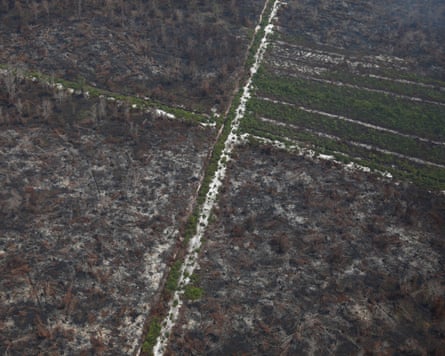
Compounding the surface fire threat is the nature of Indonesia’s tropical peatlands. Composed of millennia of accumulated, partially decayed organic matter, these peat soils store immense quantities of carbon. When dry conditions allow fire to penetrate the soil, the peat begins to smoulder underground. These subterranean fires can persist invisibly for months, resisting surface rains and continuously releasing massive volumes of greenhouse gases into the atmosphere while destroying root networks that anchor the forest canopy.
Official Statements and Expert Perspectives
The mounting crisis has drawn urgent commentary from leading primatologists, anthropologists, and conservation directors who have dedicated their lives to protecting Borneo’s natural heritage.
Prof. Cheryl Knott, a biological anthropologist at Boston University who has directed research at Cabang Panti for an astonishing 32 years, painted a bleak picture of the current conditions on the ground:
"Orangutans are fleeing from these forests. It’s just horrible… The long-term nature of this database and the detailed nature of the database is unparalleled. But if all we have left is the building, what are we studying if the orangutans are all gone, and the food they have is all gone? They can’t survive without that forest."
Prof. Andrew Marshall of the University of Michigan, who managed an orangutan research initiative at the site from 2000 to 2020, emphasized the broader ecological significance of the protected lowland tract:
"[Cabang Panti] protects what has been, until now, one of the only truly ecologically intact tracts of lowland tropical rainforest in Borneo. Without long-term, continuously collected field data, we cannot understand how tropical ecosystems are adapting to or suffering from global climate shifts."
Caitlin O’Connell, deputy director of the Gunung Palung Orangutan Conservation Programme, highlighted the severe mismatch between the scale of the disaster and the resources available to local defenders:
"The issue has surpassed any local organisation’s capacity. We need large-scale water bombing and skilled firefighters… The hotspots are everywhere. I don’t think it’s hyperbolic to say that what we thought couldn’t burn could actually completely disappear if we’re looking at these dry conditions going on for months."
Wahyu Susanto, research director for Yayasan Palung—an essential Indonesian NGO dedicated to safeguarding Bornean orangutans—shared firsthand observations of the human and animal toll:
"Five orangutans from our long-term study population were observed fleeing the fire, some only metres from the flames. These are individuals that we have followed and studied for years."
Future Outlook: A Race Against the Climate Clock
As meteorological forecasts from Indonesian agencies project that the intense El Niño conditions and associated drought will persist well into October, the immediate future of Gunung Palung National Park hangs in a delicate balance.
The immediate priority remains the defense of the Rangkong and Cabang Panti research stations, alongside emergency rescue operations for displaced wildlife caught in the fire zones. Organizations such as Yayasan Palung and international partners are calling for immediate governmental escalation, urging the deployment of aerial water-bombing assets and professional firefighting brigades to tackle hotspots that have rendered ground-level interventions insufficient.
Beyond the immediate crisis of the 2026 fire season, experts argue that structural changes are urgently required to prevent recurrent catastrophes. As global temperatures continue to rise and climate change amplifies the frequency and intensity of El Niño cycles, traditional approaches to land clearance and forest management are proving catastrophically inadequate. Without legally binding enforcement mechanisms to curb illegal burning, paired with massive investments in peatland restoration and community-based fire prevention, the unique lowland rainforests of Borneo face an existential threat.
For the Bornean orangutan, the margin for error has evaporated. The loss of Gunung Palung’s intact canopy would not only obliterate a priceless scientific archive spanning generations of behavioral research, but it would also erase one of the final, viable sanctuaries for a species standing precariously at the edge of extinction. The coming weeks will determine whether global society can muster the will and resources to protect what remains of Earth’s ancient emerald heartlands before they are reduced to ash.



