

Executive Overview
KUTZTOWN, PENN. — In an era where modern agriculture is routinely challenged by supply chain volatility, climate extremes, and systemic ecological degradation, stories of localized triumph offer a vital blueprint for the future. On Earth Day, April 22, 2026, the Davines Group and the Rodale Institute announced Rachel Kulchin, founder of Blue Heron Farm, as the second annual recipient of The Good Farmer Award U.S.
The prestigious honor recognizes agriculturalists who drive profound environmental and social transformation through regenerative organic practices. Kulchin—operating out of Bishop, California—earned the distinction by transforming a brittle, high-desert landscape into an oasis of biodiversity, ecological health, and community food sovereignty. In a region where nearly all food is imported and agricultural infrastructure is notoriously fragile, Kulchin’s 10-acre mixed orchard and vegetable operation has emerged as a beacon of hope and a masterclass in local resilience.
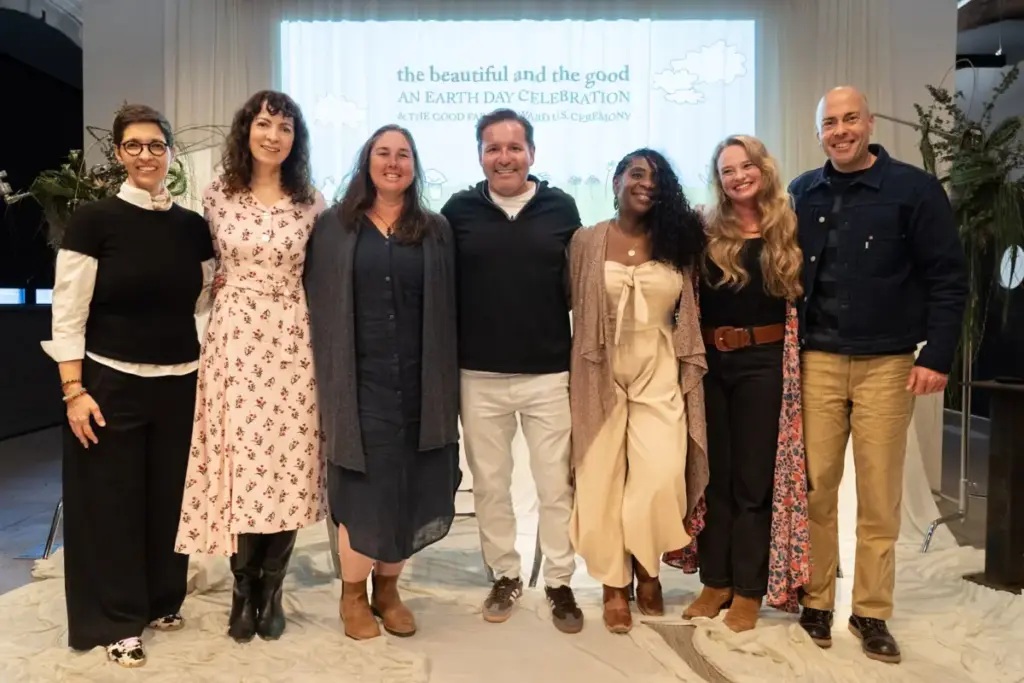
Selected from a competitive pool of 118 applicants spanning 25 states, Kulchin represents a new wave of agrarians who view farming not merely as a commercial enterprise, but as an act of community healing and planetary stewardship. Alongside runners-up Nia Kiara Cole of North Carolina and Nailah Marie Ellis of Georgia, Kulchin was celebrated during a special Earth Day event at the Davines Group House in Brooklyn, New York.
This comprehensive report explores Kulchin’s groundbreaking achievements, the mechanics of high-desert regenerative farming, the mission behind the Good Farmer Award, and the expanding global partnership between the Davines Group and the Rodale Institute.
Detailed Chronology: From Concept to Community Anchor
The journey of Blue Heron Farm is a study in rapid, purposeful execution. When Rachel Kulchin first broke ground in the Eastern Sierra, she was confronted with environmental constraints that would deter even the most seasoned growers: punishing diurnal temperature swings, arid desert soils deficient in organic matter, scarce water supplies, and an absence of localized food production systems.
Year One: Laying Down Roots
Within her inaugural season, Kulchin achieved what many thought impossible in the high desert. She cultivated a thriving 10-acre ecosystem housing over 1,000 fruit trees alongside a diverse array of annual vegetable crops. Rather than relying on industrial inputs, Kulchin implemented regenerative organic techniques designed to capture every drop of moisture, build soil carbon, and foster a complex underground biological web.
The impact was immediate and measurable. In her first year alone:
- Production Volume: Blue Heron Farm yielded more than 47,000 pounds of nutrient-dense food.
- Community Reach: Over 3,000 unique customers engaged directly with the farm.
- Market Position: The operation established itself as the single largest diversified fruit and vegetable producer in the region.
The U-Pick Model as a Social Catalyst
Central to Kulchin’s operational philosophy is the U-Pick harvesting model. By inviting community members directly onto the land, Blue Heron Farm bridges the widening gap between consumers and their food sources. This direct-to-consumer architecture does more than move produce; it fosters a deep psychological and cultural connection to the landscape. Customers who harvest their own peaches, apples, and root vegetables develop a visceral understanding of the land, water conservation, and the sheer labor required to feed a community.
This integration of ecology and community engagement caught the attention of the nation’s leading regenerative agriculture advocates, ultimately steering the judges of the Good Farmer Award toward the Eastern Sierra.
Supporting Context & Metrics: The Anatomy of the Award
The Good Farmer Award U.S. is a collaborative initiative launched in 2025 by the Davines Group—a Certified B Corporation and international leader in sustainable beauty—and the Rodale Institute, a 78-year-old pioneer in the global organic movement. The award specifically targets farmers who have been working their land for 10 years or less, shining a spotlight on early-career innovators who look beyond immediate yields to build long-term systemic change.
The 2026 Selection Process and Panel
The 2026 award cycle drew applications from 118 farmers across 25 states, showcasing a rich diversity of cultural backgrounds, growing zones, and farming methodologies. Candidates were evaluated by a panel of sustainable agriculture experts, environmental advocates, and conscious business leaders, including:
- Renée Baran: Dean of Education at Rodale Institute.
- Dario Fornara: Research Director of the European Regenerative Organic Center (EROC).
- Kegan Hilaire: Owner of Blackbird Farms and Small Farms and Diversified Vegetable Consultant at Rodale Institute.
- Hayley and Stephanie Painter: Co-founders of Painterland Sisters.
The judges rigorously assessed applicants based on their commitment to enhancing biodiversity, fortifying climate resilience, and spearheading environmental stewardship within their bioregions.
Recognizing Excellence: The Finalists
While Kulchin claimed the top honor, the accomplishments of the second and third-place finalists underscore the breadth and depth of the modern regenerative movement:
- Nia Kiara Cole (Kin & Flo Farm, North Carolina): Recognized for reclaiming ancestral family land in the North Carolina Piedmont. Cole implements Afro-Indigenous restorative land practices that train the next generation of BIPOC farmers, actively advancing food sovereignty and cooperative food systems for historically marginalized communities.
- Nailah Marie Ellis (Blessed Up Blooms, Georgia): Honored for establishing a soil-first, community-centered urban farm spanning Atlanta—from Bankhead to Buckhead. Ellis utilizes regenerative agriculture and direct-to-consumer models to ensure equitable access to nutrient-dense food and botanical beauty across diverse urban demographics.
Financial and Educational Investments
As the 2026 recipient, Rachel Kulchin will receive a $10,000 financial grant designed to catalyze further infrastructure development at Blue Heron Farm. In alignment with her ecological priorities, 90% of the funds will be channeled directly into water conservation and advanced orchard irrigation systems, ensuring the farm can withstand intensifying regional droughts. The remaining 10% will support educational signage and demonstration infrastructure, transforming the farm into an outdoor classroom for the Eastern Sierra.
In addition to the financial support, Kulchin will embark on an all-expenses-paid international exchange visit to the European Regenerative Organic Center (EROC) in Parma, Italy, situated adjacent to the Davines Group Village.
Official Statements: Perspectives on Leadership and Vision
The convergence of corporate sustainability and grassroots agriculture was a central theme during the Earth Day announcements. Leaders from both the Rodale Institute and the Davines Group articulated the profound significance of Kulchin’s work.
"Rachel embodies the resilient, systems approach that regenerative organic agriculture demands," noted Jeff Tkach, CEO of Rodale Institute. "In just one year, she has built a thriving 10-acre operation that is not only producing nutrient-dense food and restoring soil health, but also inspiring an entire community to reimagine what’s possible for local food security. Her work proves that small farms can be economically viable and ecologically sound, even in the most challenging climates."
For Kulchin, the recognition serves as both validation and fuel for her ambitious vision in the Eastern Sierra.
"I am standing behind a belief that feels both stubborn and bold," reflected Rachel Kulchin. "The recognition through the Good Farmer Award affirms the work we are doing to build something different in the Eastern Sierra. Our goal is not just to grow food, but to demonstrate that regenerative agriculture can thrive in challenging climates and build the resilience our valley desperately needs. This award will be transformational for Blue Heron Farm and for our community."
The corporate visionaries backing the award echoed these sentiments, emphasizing the interconnectedness of soil health, agricultural science, and commercial accountability.
"We are delighted to welcome Rachel to Italy and to guide her through our European Regenerative Organic Center," stated Davide Bollati, Chairman of the Davines Group. "This year’s award demonstrates why Davines continues to partner with Rodale Institute—not only to source regenerative organic ingredients for our products, but to learn from the Institute’s rigorous research and farmer-first expertise. Rachel’s farm is a living example of building resilient systems with regenerative organic agriculture. By supporting farmers like Rachel, we invest in the future of beauty, agriculture, and the planet."
Future Outlook: Scaling Regenerative Models Globally
The success of Blue Heron Farm and the continued expansion of the Good Farmer Award point toward a broader paradigm shift in how agricultural systems are conceptualized and supported. As climate change accelerates weather volatility, the vulnerability of centralized, industrial food supply chains becomes increasingly apparent. Regional models like Kulchin’s—built on closed-loop nutrient management, water conservation, and direct community integration—offer a resilient antidote.
The Role of EROC and International Knowledge Exchange
Through institutions like the European Regenerative Organic Center (EROC)—founded in 2021 through a partnership between Davines Group and Rodale Institute—researchers, agronomists, and farmers are bridging the gap between traditional wisdom and modern empirical science. Located on a 17-hectare site in Parma, Italy, EROC functions as a premier European hub for research and training in regenerative organic agriculture.
By bringing early-career innovators like Rachel Kulchin into this international network, the initiative facilitates cross-pollination of agricultural strategies. Practices developed to conserve water in the high desert of California can inform European growers facing Mediterranean droughts, just as European agroforestry insights can be adapted to American soils.
A Call to Action for the Next Decade
As the Davines Group and Rodale Institute look toward future iterations of the Good Farmer Award, the overarching mission remains clear: to elevate the invisible labor of land stewards who heal ecosystems from the ground up. With over two decades of corporate sustainability integration behind Davines—and nearly eight decades of scientific validation behind Rodale Institute—the partnership proves that industry and non-profit collaboration can successfully drive meaningful systemic change.
For Rachel Kulchin and Blue Heron Farm, the road ahead involves deepening soil organic matter, expanding community educational programming, and perfecting high-desert water management. In doing so, she continues to prove that even in the harshest landscapes, life—when nurtured with intention, science, and care—will not only survive, but abundantly flourish.



