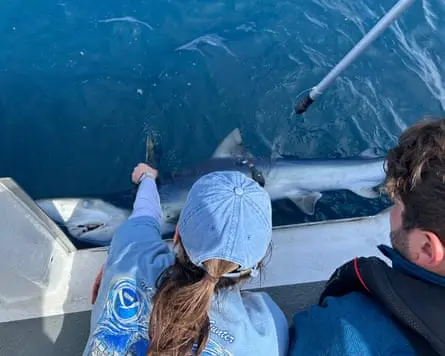
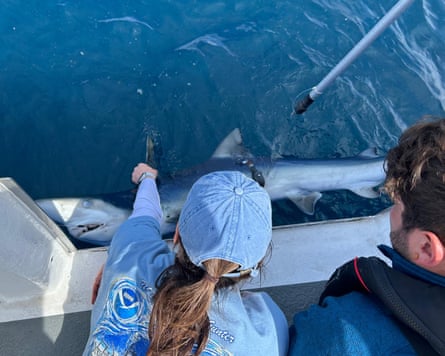
When most people picture the sleek, menacing silhouette of a shark slicing through sun-dappled ocean waters, their minds naturally drift toward the tropical coasts of South Africa, the sweeping golden beaches of Australia, or the deep blue drop-offs of Mexico. Yet, beneath the grey, temperate swells surrounding the British Isles lies a remarkably rich, dynamic, and largely unheralded shark habitat. Far from being devoid of formidable marine life, English coastal and pelagic waters are home to more than 40 distinct species of sharks, skates, and rays—ranging from the diminutive, bottom-dwelling catshark and the deepwater dogfish to the majestic, filter-feeding basking shark and the highly migratory blue shark.
Despite this astonishing biodiversity, a glaring paradox persists: scientists know surprisingly little about the day-to-day lives, migration routes, and population dynamics of these apex predators. That knowledge gap is now aggressively being targeted by a groundbreaking, three-year conservation initiative. Backed by a substantial nearly £1m funding injection from Natural England through its Species Recovery Programme, a dedicated team of marine biologists from the University of Exeter is spearheading an ambitious project to demystify and protect three of England’s most vulnerable shark species: the porbeagle, the tope (or school shark), and the blue shark.
Co-led by Dr. Lucy Hawkes and Dr. Matthew Witt, the project represents a paradigm shift in British marine conservation. Rather than operating in traditional academic isolation, the Exeter team is forging an unprecedented alliance with the Marine Biological Association, the Angling Trust, and the custodians of the Pat Smith Database—a meticulous, long-running online record of historical shark catches dating back to 1953. By synthesizing decades of historical data with cutting-edge electronic tagging, genetic sampling, and the invaluable field observations of the UK’s sprawling recreational angling community, researchers hope to map the critical habitats where these magnificent animals feed, mate, and migrate. Ultimately, the project aims to transform public perception, secure the future of England’s native sharks, and provide policymakers with the empirical evidence needed to prioritize targeted conservation frameworks.
Detailed Chronology: The Evolution of UK Shark Research and the New Initiative
To fully appreciate the significance of the current three-year project, one must understand how our relationship with British elasmobranchs (sharks and rays) has evolved over the past century.
1953–2000s: The Era of Extraction and Record-Keeping
For generations, the cultural narrative surrounding sharks in British waters was dominated by commercial exploitation and recreational trophy fishing. Throughout the mid-to-late 20th century, recreational shark fishing was viewed strictly through a lens of weight and extraction. Angling clubs and skippers measured their success by the physical landing of heavy, dead specimens onto the decks of boats.
It was during this era, specifically in 1953, that the foundational groundwork for the Pat Smith Database was laid. Originally conceived as a ledger for tracking sport fishing catches, this repository quietly grew into an invaluable, multi-decade archive. While many historical records from this period reflect a time when marine life was heavily depleted without regard for sustainable stock management, the database inadvertently preserved a continuous historical baseline of shark presence, size distribution, and seasonal appearance around the British coastline.
The 2010s: The Shift to Catch-and-Release
As global awareness of marine biodiversity decline accelerated, the cultural and regulatory landscape of British sea fishing underwent a quiet revolution. Commercial pressures continued to exert a heavy toll through direct targeting and accidental bycatch, but recreational angling shifted decisively toward a conservation-conscious model.
The traditional practice of landing and weighing dead sharks was largely phased out among organized clubs, replaced universally by "catch-and-release" protocols. Anglers began prioritizing the live measurement of sharks in the water, utilizing specialized slings and measuring tapes to record data before swiftly returning the animals to the sea unharmed. During this decade, marine biologists increasingly recognized that this vast, boots-on-the-water community possessed a wealth of observational data that institutional science could never hope to replicate independently.
2026–2029: The Natural England Species Recovery Project
The culmination of decades of incremental cooperation between scientists and fishers has now materialized as a formally funded, highly structured national initiative. Funded through Natural England’s 2026–2029 Species Recovery Programme grants, the Exeter-led project marks the first time that historical records, modern telemetry, citizen science, and genetic mapping have been fused into a single, cohesive management strategy for English sharks.
Over the next three years, Dr. Hawkes, Dr. Francesco Garzon, and their institutional partners will systematically deploy advanced satellite and acoustic tags, conduct hundreds of structured interviews with coastal fishers from the south-west to the north-east of England, and analyze DNA samples to trace the genetic connectivity of regional shark populations. This milestone project promises to shift UK marine conservation from a posture of reactive guesswork to one of proactive, data-driven stewardship.
Supporting Context & Metrics: Unpacking the Science of British Sharks
The waters surrounding the British Isles are far more ecologically complex than casual beachgoers realize. To design effective conservation strategies, researchers must grapple with specific biological traits, environmental stressors, and methodological frameworks.
The Trio of Concern: Porbeagle, Tope, and Blue Sharks
The Natural England grant specifically zeroes in on three iconic pelagic and coastal species:
The Porbeagle (Lamna nasus): Often described by Dr. Hawkes as looking like a "baby great white shark," the porbeagle is a close relative of the white shark and the mako. Capable of regional endothermy (maintaining a body temperature warmer than the surrounding water), these powerful predators can grow up to 2.5 meters in length. While their formidable appearance might terrify an unwary surfer, they are inherently docile toward humans. Porbeagles are high-trophic-level predators prone to overexploitation due to their slow reproductive rates; females give birth to only a small number of pups after a lengthy gestation period.
The Tope Shark (Galeorhinus galeus): Also known as the school shark, tope are slender, coastal predators recognizable by their distinctive second dorsal fin and notched tail. Known to form massive aggregations—such as the dramatic breeding gatherings observed in northern Scotland—tope are highly mobile and sensitive to coastal habitat degradation and commercial gillnetting.
The Blue Shark (Prionace glauca): The ultimate ocean wanderers, blue sharks undertake trans-Atlantic migrations rivaling those of bluefin tuna. Sporting a striking, deep indigo coloration, these pelagic nomads traverse vast oceanic expanses, making international cooperation vital for their long-term survival.
The Power and Precision of Modern Telemetry
A cornerstone of the Exeter-led project involves the deployment of high-tech electronic tags, divided into two distinct tiers of financial and operational capability:
Short-Term High-Density Tags: Valued at approximately £1,500 each, 40 of these tags will remain attached to sharks for roughly 45 days. Their primary objective is to evaluate the physiological resilience and post-release survival rates of sharks subjected to catch-and-release angling. By tracking fine-scale movements immediately following release, scientists can determine whether current handling practices induce fatal stress.
Long-Term Archival Tags: Valued at roughly £4,500 each, a separate batch of 30 tags will remain active for up to a full year. These sophisticated devices record continuous data regarding ambient water temperature, geographic path, and—crucially—dive profiles. They allow researchers to reconstruct a shark’s three-dimensional use of the water column, shedding light on how deep these animals descend and how long they forage at abyssal depths.
Citizen Science and the Angler Economy
The sheer scale of the UK’s recreational fishing community provides an irreplaceable logistical asset. With an estimated 3 million recreational anglers operating across the British coastline, the eyes-on-the-water capacity dwarfs anything a traditional university research department could field.
Furthermore, the integration of the Pat Smith Database—which has cataloged catches since 1953—offers a unique historical depth. Modern enhancements to this database focus heavily on granular details, such as photographing the undersides of newborn shark pups. This visual data allows scientists to age the fish accurately and pinpoint exact pupping grounds, revealing critical nursery habitats that require immediate legal protection.
Official Statements and Expert Insights
The human element of this conservation project is just as vital as the hardware and telemetry. Researchers at the University of Exeter emphasize that shifting cultural attitudes requires bridging the historical divide between marine scientists and recreational fishers.
"We have really cool sharks. I like the porbeagle, which looks like a baby great white shark. Surfers could see one and absolutely poop their pants, but they’re not dangerous. It’s amazing that we share the water with some pretty exciting animals."
— Dr. Lucy Hawkes, Associate Professor, University of Exeter
Dr. Hawkes draws a direct parallel between the dedication of shark anglers and the ornithological community, likening fishers to passionate bird ringers who willingly invest thousands of hours in the field simply to observe and document wildlife up close.
Marine biologist Dr. Francesco Garzon, working alongside Hawkes, underscores the historical significance of the British Isles as a hotspot for elasmobranch diversity in Europe:
"The UK has a long history of recreational fishing for sharks and big fish like tuna. It’s one of the best places to see sharks in Europe. Anglers are conservation-conscious; they can sometimes be ostracised but are usually just as passionate about protecting sharks as we are."
Garzon points out that while direct commercial fishing and accidental entanglement (bycatch) remain the single greatest anthropogenic threats to UK shark populations, recreational anglers have transformed into crucial allies.
"Even if all the shark researchers in England got together, we just couldn’t have the same level of records. Angler records are an essential tool, helping us understand shark populations. We could work out whether a French blue shark is closely related genetically to an English blue shark. They might be loners then aggregate in big numbers to mate, like tope sharks do in northern Scotland. We don’t yet know."
Future Outlook: Charting a Sustainable Course for England’s Apex Predators
As the three-year Natural England Species Recovery project swings into full gear, the implications extend far beyond academic curiosity. The data harvested through satellite telemetry, genetic swabbing, and historical cross-referencing will directly inform national marine spatial planning and fisheries management.
Navigating Policy and Bycatch Mitigation
One of the most actionable outcomes of the tagging initiative involves identifying spatial and temporal overlaps between migratory sharks and commercial or recreational fisheries. As Dr. Hawkes notes:
"If tags show that sharks are travelling into waters where a particular fishery is permitted with a high rate of bycatch, that would be relevant to their conservation. It really depends on what the sharks tell us."
Should telemetry data reveal critical migratory corridors or high-density feeding grounds intersecting with intensive commercial fishing zones, government agencies will possess the empirical justification required to implement seasonal closures, gear modifications, or marine protected areas (MPAs) tailored specifically to elasmobranch preservation.
Rewriting the Cultural Narrative
Perhaps the most enduring legacy of the Exeter lab’s endeavor will be psychological rather than purely legislative. For decades, sensationalist media portrayals have painted sharks as mindless, bloodthirsty monsters lurking just beyond the breakers. By actively engaging the public through workshops, angler interviews, and accessible science communication, researchers hope to dismantle these persistent myths.
Dr. Hawkes encapsulates the ultimate ethos of the project with infectious enthusiasm:
"We scientists are the ones who say, ‘Shark! Where? Let me see!’ I’d love to change people’s minds about these beautiful animals. They totally belong here."
As the first batch of £4,500 archival tags begins transmitting data from the cold, nutrient-rich depths of British waters, England’s sharks are finally stepping out of the shadows. Backed by government funding, scientific rigor, and an army of dedicated citizen scientists, the UK is poised to become a global leader in temperate shark conservation—proving once and for all that some of the world’s most magnificent marine wildlife is swimming right in our own backyard.