

Executive Overview
Industrial hemp has staged a remarkable resurgence across the American agricultural landscape. Ever since the landmark 2018 Farm Bill catalyzed its re-entry into mainstream commercial farming, cultivators from the rolling hills of Pennsylvania to the vast expanses of the Midwest have embraced the versatile plant. While public fascination initially focused on CBD extraction and fiber production, a quieter, more nutrient-dense revolution is rapidly taking root: industrial hemp grown specifically for grain.
Hemp grain is an extraordinary agricultural commodity. Packed with roughly 25 percent fatty-acid-rich oil, 27 percent complete protein containing eight essential amino acids, 22 percent dietary fiber, and an array of vital carbohydrates, minerals, and vitamins, it represents a goldmine for the burgeoning health-food and functional-beverage markets. Yet, despite its stellar nutritional profile, mastering the art of growing grain hemp consistently, profitably, and sustainably remains an uphill battle for many producers. Yields nationwide fluctuate wildly—ranging anywhere from a modest few hundred pounds to well over a thousand pounds per acre—largely driven by regional weather patterns, cultivar selection, and variable farm management practices.
Enter the Rodale Institute. As a global pioneer and vanguard of regenerative organic agriculture, the Institute has partnered with the United States Department of Agriculture’s Agricultural Research Service (USDA-ARS) in Wyndmoor, Pennsylvania, to demystify hemp grain production. Currently entering its second year, this multi-year initiative—funded by the USDA and administered through the Pennsylvania Department of Agriculture’s Specialty Crop Block Grant Program—aims to rewrite the playbook for organic hemp cultivation. By deploying targeted cover crop systems and examining the hidden microbial ecosystems beneath the soil, researchers are actively bridging the knowledge gap between modern ecological farming and high-yield crop performance.
Detailed Chronology of the Research Initiative
The path toward optimizing hemp grain production is being meticulously mapped out through a comprehensive, multi-phase field study situated at Rodale Institute’s primary research campus in Kutztown, Pennsylvania.
Phase I: Foundation and Experimental Setup (2024–2025)
The project commenced with the establishment of rigorous, controlled field trials designed to evaluate how specific pre-plant soil conditioners influence subsequent hemp performance. Researchers deployed a sophisticated experimental design utilizing four distinct cover crop treatments:
- A control group with no cover crop.
- Triticale alone (a high-biomass grass).
- Hairy vetch alone (a nitrogen-fixing legume).
- A synergistic triticale-and-hairy-vetch mix.
Following the termination of these cover crops, two prominent grain hemp varieties—CFX-2 and Indigo—were planted at a uniform rate of 40 pounds per acre. To ensure absolute statistical validity, each of the eight distinct treatment combinations was replicated four times across standardized 20-foot by 60-foot research plots.
Phase II: Mid-Project Milestones and Field Integration (2026)
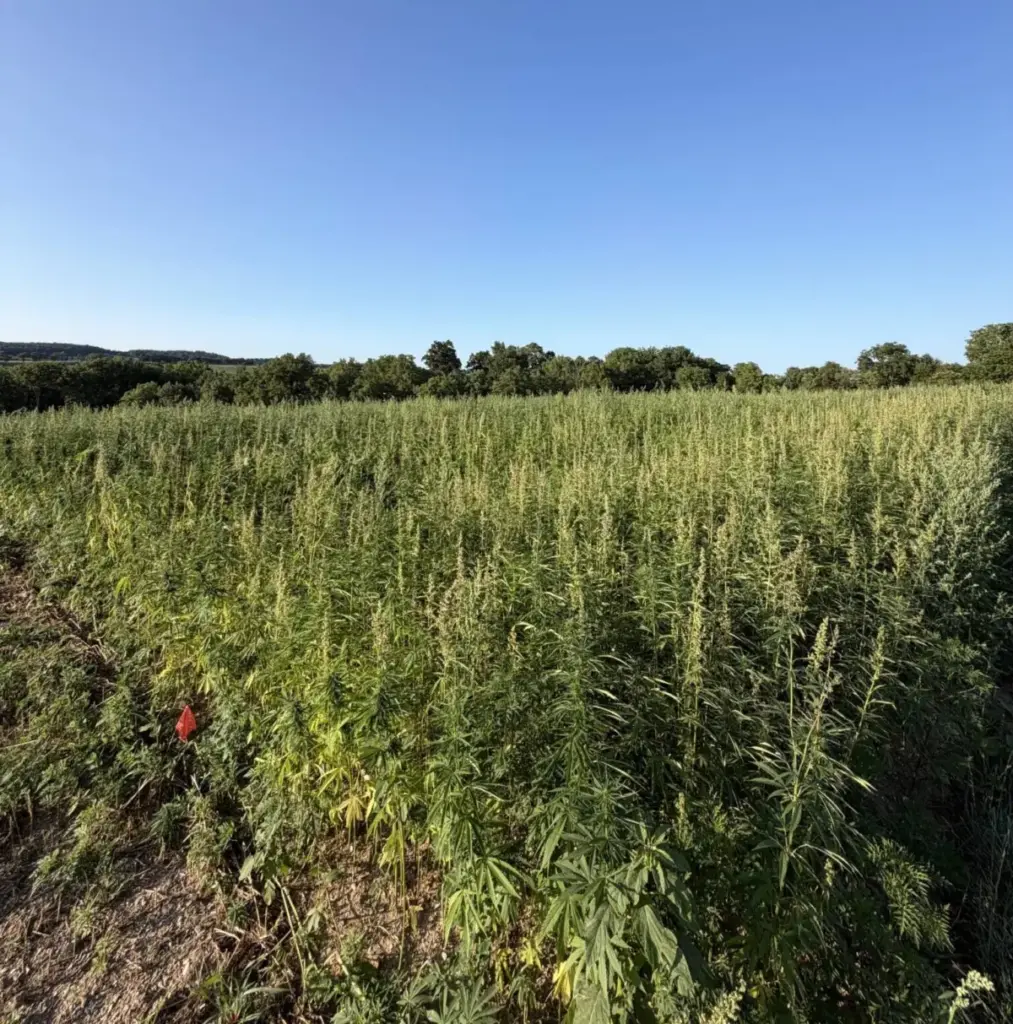
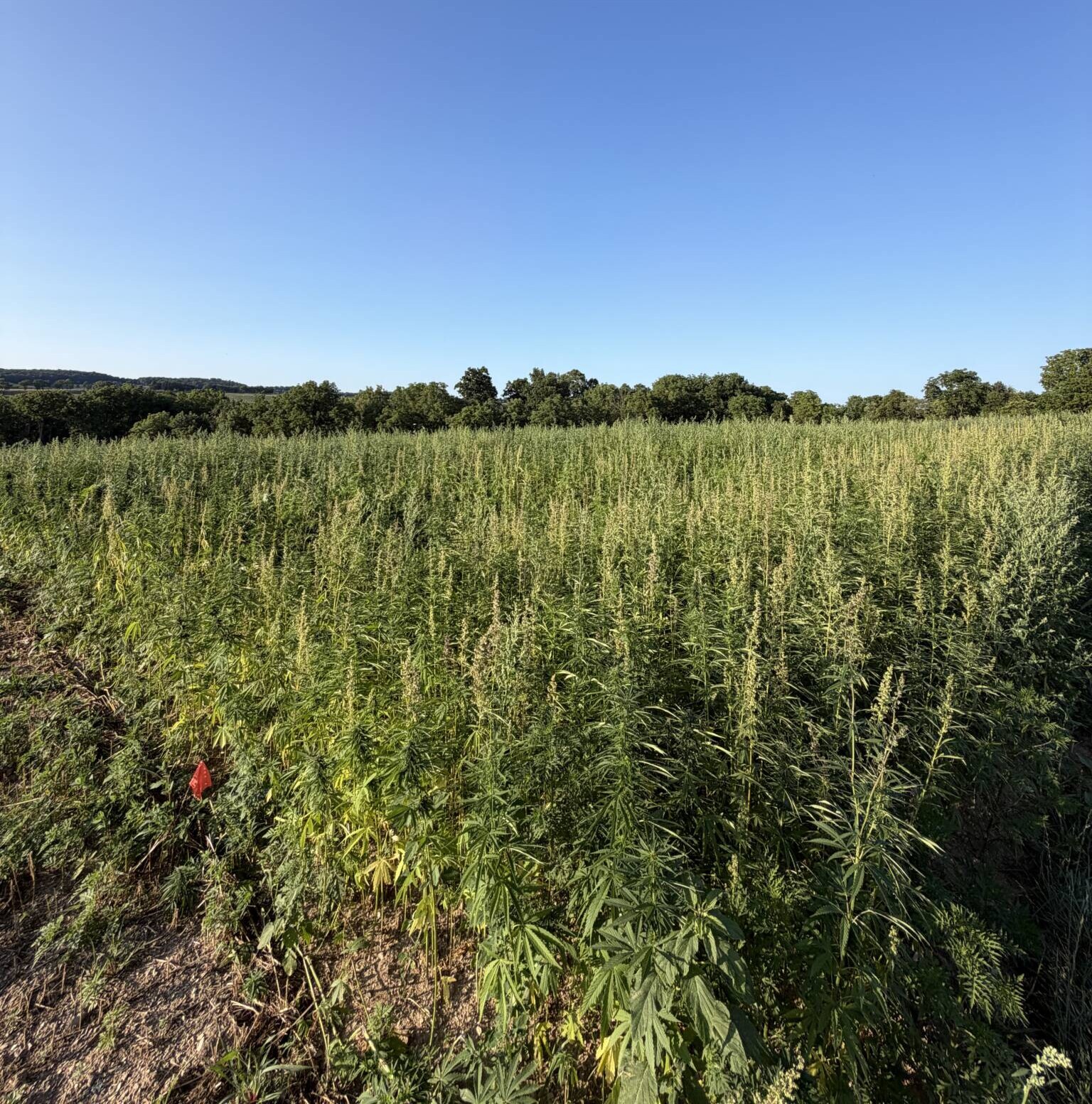
As the project crossed into its critical evaluation window, the research team ramped up field data collection and public outreach. On July 17, 2026, Rodale Institute hosted its flagship Organic Field Day, an event that drew approximately 500 visitors, including regional farmers, agronomists, and industry stakeholders. Attendees were given exclusive access to the hemp research plots, where Institute scientists—including researchers Tara and Dinesh—demonstrated firsthand how the different cover crop regimens were shaping the canopy development and structural integrity of the CFX-2 and Indigo varieties.
Simultaneously, laboratory analyses kicked into high gear. Collaborating scientists from the USDA-ARS began processing root samples to evaluate colonization rates of arbuscular mycorrhizal (AM) fungi, while agronomists prepared for comprehensive tissue chemistry and harvested-grain evaluations.
Supporting Context & Metrics: Unlocking Soil and Seed Science
To truly grasp the significance of Rodale Institute’s study, one must examine the intricate biological machinery operating both above and below the soil line.
The Cover Crop Advantage
In conventional agricultural systems, fields are frequently left bare between primary cash-crop seasons, leaving topsoil vulnerable to wind and water erosion, nutrient leaching, and organic matter depletion. Regenerative organic systems flip this paradigm on its head by utilizing living cover crops to maintain continuous root-zone activity.
In this study, crops like triticale and hairy vetch serve multiple ecological functions:
- Erosion Control & Carbon Sequestration: Root structures bind soil particles together, while plant biomass pulls atmospheric carbon down into the earth.
- Nutrient Cycling: Hairy vetch, a nitrogen-fixing legume, captures atmospheric nitrogen and converts it into a plant-available form, dramatically reducing or eliminating the need for synthetic nitrogen fertilizers.
- Weed Suppression: Dense cover crop stands outcompete invasive weeds, lowering the weed pressure for the subsequent hemp crop.
The Underground Ally: Arbuscular Mycorrhizal Fungi
Perhaps the most cutting-edge dimension of the research involves the rhizosphere—the narrow region of soil directly influenced by root secretions. The research team is specifically investigating arbuscular mycorrhizal (AM) fungi, a class of beneficial soil microorganisms that form symbiotic relationships with plant roots.
These microscopic fungi act as an extension of the plant’s root system, vastly expanding its surface area to forage for water and immobile nutrients like phosphorus. Previous agricultural studies have demonstrated that robust AM fungal networks can boost overall crop yields by approximately 15 percent while simultaneously enhancing plant resistance to environmental stressors such as drought.
Furthermore, earlier investigations at Rodale Institute revealed that fiber hemp varieties exhibit impressive fungal root colonization rates ranging from 37 percent to 54 percent (with the MS 77 variety showing peak performance). However, prior to this study, virtually nothing was known about how these subterranean fungi interact with grain hemp roots. By mapping these interactions across different cover crop treatments, researchers hope to identify specific biological triggers that optimize nutrient uptake and supercharge seed quality.
Nutritional Profiling and Emerging Biomarkers
Beyond simply measuring pounds per acre, the project incorporates advanced biochemical testing of the harvested hemp grain. Laboratory evaluations are charting:
- Macronutrient Content: Detailed breakdowns of protein concentrations, specific amino acid profiles, and fatty acid distributions (including crucial omega-3 and omega-6 ratios).
- Mineral Composition: Essential micronutrients absorbed from the biologically active soil.
- Ergothioneine Analysis: In a groundbreaking analytical step, researchers are testing for ergothioneine—a rare, naturally occurring antioxidant amino acid associated with neuroprotection and potential defense against neurodegenerative conditions like Alzheimer’s disease. This marks one of the first times ergothioneine levels are being systematically tracked in industrial hemp grain.
Official Statements and Industry Perspectives
The urgency and promise of this research are underscored by the scientists leading the charge on the ground.
"There is a real need for practical guidance on how to grow hemp grain successfully in organic systems," stated Dr. Dinesh Panday, Industrial Hemp Researcher and Soil Scientist at Rodale Institute.
Dr. Panday emphasizes that the overarching philosophy of the project centers on accessibility and economic viability. By moving away from costly, energy-intensive synthetic fertilizers and chemical pesticides, the research team aims to hand farmers a science-backed tool kit.
"By testing management practices that are affordable and accessible, rather than relying on heavy synthetic fertilizer inputs, we hope to give farmers science-backed options that improve both their harvest and their soil," Dr. Panday added.
Agricultural extension agents and regional farming advocates have echoed these sentiments, noting that beginning and specialty crop farmers in states like Pennsylvania face steep learning curves when adopting novel crops. Providing peer-reviewed data and transparent, field-tested methodologies acts as a vital risk-mitigation strategy for independent growers looking to diversify their crop rotations.
Future Outlook: A Sustainable Path Forward (2024–2027)
As the project marches toward its completion in 2027, the roadmap for dissemination and practical application is clear. Over the remaining lifespan of the initiative, Rodale Institute researchers will continue to track soil nutrient fluxes, plant tissue chemistry metrics, and fungal colonization rates across all trial plots.
The insights gleaned from this multi-year investment will not remain locked inside an academic vacuum. Findings are actively being funneled outward through a robust educational outreach campaign targeting an estimated 500 growers, agronomists, and industry stakeholders. Dissemination channels include:
- Hands-on demonstrations and workshops at Rodale Institute’s annual field days.
- Peer-reviewed journal publications and extension service bulletins.
- Presentations at prominent regional, national, and international agricultural conferences.
Ultimately, the mission driving this research is straightforward: empower farmers to produce higher volumes of nutrient-dense hemp grain while simultaneously healing, rather than depleting, the underlying soil ecosystem. As industrial hemp transitions permanently from a speculative novelty into a foundational pillar of modern American agriculture, initiatives led by the Rodale Institute and the USDA-ARS are ensuring that the industry’s growth is built upon an unshakeable, sustainable foundation—delivering health and vitality all the way from the microbial life in the earth to the food placed on our plates.



