

Executive Overview
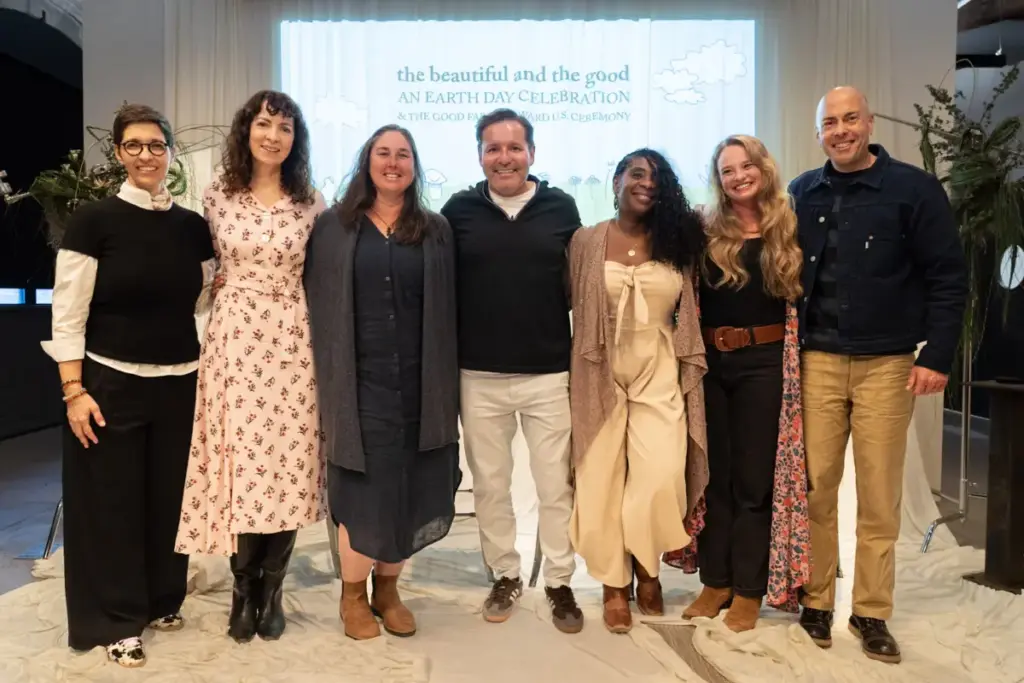
On Earth Day, April 22, 2026, the agricultural landscape received a powerful reminder that ecological resilience knows no geographical boundaries. At a special ceremony hosted at the Davines Group House in Brooklyn, New York, the Davines Group and the Rodale Institute crowned Rachel Kulchin, founder of Blue Heron Farm in Bishop, California, as the second annual recipient of The Good Farmer Award U.S.
Kulchin’s triumph in securing the top honor—beating out 118 applicants across 25 states—highlights a quiet revolution taking root in the rugged terrain of the Eastern Sierra. Operating a ten-acre mixed orchard and vegetable farm in an isolated high desert climate where agricultural infrastructure is notoriously fragile and virtually all food is imported, Kulchin has done the seemingly impossible. In just a single operating season, she transformed barren-adjacent soil into a hyper-productive ecosystem, yielding over 47,000 pounds of nutrient-dense food and engaging more than 3,000 community members through an innovative U-Pick model.
The Good Farmer Award U.S., launched in 2025 by two titans of sustainability—the certified B Corporation Davines Group and the pioneering agricultural nonprofit Rodale Institute—is designed to spotlight early-career farmers (those with ten years or less on the land) who extend their mission far beyond basic soil health. These are change-makers forging systemic social, economic, and environmental equity within their local communities.
For Kulchin, the $10,000 grand prize, alongside an all-expenses-paid international educational exchange to the European Regenerative Organic Center (EROC) in Parma, Italy, serves as validation for an approach to agriculture that defies conventional wisdom. Her work at Blue Heron Farm stands as a living, breathing blueprint for how isolated, climate-vulnerable regions can reclaim local food sovereignty through regenerative organic principles.
Detailed Chronology: From High Desert Isolation to National Recognition
To understand the magnitude of Rachel Kulchin’s achievement, one must trace the trajectory of Blue Heron Farm from an ambitious vision into the largest diversified fruit and vegetable producer in its region.
The Birth of Blue Heron Farm (2025–2026)
When Kulchin established Blue Heron Farm in Bishop, California, she inherited a landscape defined by extreme climatic hurdles. The Eastern Sierra high desert is characterized by arid conditions, dramatic temperature fluctuations, water scarcity, and depleted soils. Historically, this isolation meant that residents relied almost entirely on imported food chains, leaving the local population vulnerable to supply chain disruptions, rising costs, and a lack of fresh, nutrient-dense produce.
Rather than trying to force industrial, water-heavy farming methods onto a desert ecosystem, Kulchin adopted a systems-based approach centered on regenerative organic agriculture. She planted over 1,000 fruit trees alongside a diversified array of vegetable crops, consciously designing the farm to mimic natural ecological patterns. By prioritizing soil biology, practicing intensive water conservation, and introducing diverse plantings to boost local biodiversity, Kulchin rapidly transformed the ten-plot parcel into a micro-climate of fertility.
Community Integration and the U-Pick Model
What separates Kulchin from traditional commercial producers is her radical integration of the local community into the agricultural cycle. Blue Heron Farm implemented a direct-to-consumer U-Pick model, inviting local residents—from families to school children—to harvest produce directly from the land.
This approach achieved two critical outcomes simultaneously:
- It drastically reduced post-harvest waste and distribution overhead.
- It re-established a profound human connection to the land and the origins of food.
In her inaugural season alone, this model attracted over 3,000 customers. By harvesting and distributing more than 47,000 pounds of food locally, Blue Heron Farm instantly altered the nutritional landscape of the Eastern Sierra, proving that local food systems can be rapidly catalyzed even in deeply challenging environments.
The 2026 Earth Day Selection and Awards Ceremony
The culmination of Kulchin’s explosive first year arrived on April 22, 2026. Selected from a highly competitive pool of 118 applicants representing diverse cultural and geographical backgrounds, Kulchin stood alongside fellow finalists Nia Kiara Cole of Kin & Flo Farm (North Carolina) and Nailah Marie Ellis of Blessed Up Blooms (Georgia) in Brooklyn.
The judging panel—comprising elite figures in sustainable agriculture, environmental advocacy, and the beauty sector—unanimously lauded Kulchin’s ability to weave ecological restoration with social accessibility. The announcement not only brought national media attention to the Eastern Sierra but also unlocked critical capital for the farm’s next phase of evolution.
Supporting Context & Metrics: The Anatomy of an Award-Winning Operation
The selection process for The Good Farmer Award U.S. is rigorous, relying on quantitative and qualitative metrics evaluated by an expert panel. The judging committee included Renée Baran, Dean of Education at Rodale Institute; Dario Fornara, Research Director of the European Regenerative Organic Center; Kegan Hilaire, Farmer and Owner of Blackbird Farms and Diversified Vegetable Consultant at Rodale Institute; and Hayley and Stephanie Painter, Co-Founders of Painterland Sisters.
Data Points from the 2026 Award Cycle
- Applicant Reach: 118 farmers spanning 25 U.S. states.
- Diversity: Representation across multiple cultural backgrounds, farming models, and agro-ecological zones.
- Grand Prize Funding: $10,000 earmarked specifically for infrastructure and educational scaling at Blue Heron Farm.
- Fund Allocation: 90% dedicated to advanced water conservation and orchard irrigation systems; 10% dedicated to educational signage and on-farm demonstration infrastructure.
The Runners-Up: Pillars of the National Regenerative Movement
While Kulchin claimed the top spot, the contributions of the second and third-place finalists underscore the vibrant, intersectional nature of the modern American regenerative farming movement:
- Nia Kiara Cole (Kin & Flo Farm, North Carolina): Honored for reclaiming ancestral family land and implementing Afro-Indigenous restorative land practices. Cole focuses heavily on training the next generation of BIPOC farmers, advancing food sovereignty, and building cooperative food systems across the North Carolina Piedmont.
- Nailah Marie Ellis (Blessed Up Blooms, Georgia): Recognized for establishing a soil-first, community-centered urban and peri-urban farm. Ellis utilizes regenerative agriculture and direct-to-consumer models to supply nutrient-dense food and horticultural beauty across Atlanta, bridging communities from Bankhead to Buckhead.
Official Statements: Voices of Leadership
The partnership between the Davines Group and the Rodale Institute represents a powerful convergence of corporate sustainability and agricultural science. Leadership from both organizations emphasized the systemic importance of supporting early-career farmers like Rachel Kulchin.
"Rachel embodies the resilient, systems approach that regenerative organic agriculture demands. In just one year, she has built a thriving 10-acre operation that is not only producing nutrient-dense food and restoring soil health, but also inspiring an entire community to reimagine what’s possible for local food security. Her work proves that small farms can be economically viable and ecologically sound, even in the most challenging climates."
— Jeff Tkach, CEO of Rodale Institute"I am standing behind a belief that feels both stubborn and bold. The recognition through the Good Farmer Award affirms the work we are doing to build something different in Eastern Sierra. Our goal is not just to grow food, but to demonstrate that regenerative agriculture can thrive in challenging climates and build the resilience our valley desperately needs. This award will be transformational for Blue Heron Farm and for our community."
— Rachel Kulchin, Founder of Blue Heron Farm and 2026 Award Recipient"We are delighted to welcome Rachel to Italy and to guide her through our European Regenerative Organic Center. This year’s award demonstrates why Davines continues to partner with Rodale Institute—not only to source regenerative organic ingredients for our products, but to learn from the Institute’s rigorous research and farmer-first expertise. Rachel’s farm is a living example of building resilient systems with regenerative organic agriculture. By supporting farmers like Rachel, we invest in the future of beauty, agriculture, and the planet."
— Davide Bollati, Chairman of the Davines Group
Future Outlook: Scaling Resilience and Global Exchange
As Blue Heron Farm looks toward its second and third seasons, the impact of the 2026 Good Farmer Award will be immediate and structural. The $10,000 financial injection will allow Kulchin to upgrade her water infrastructure—a life-or-death priority in the high desert. By optimizing orchard irrigation systems using 90% of the grant funds, Blue Heron Farm will maximize water-use efficiency, setting a technical benchmark for desert farming under conditions of intensifying climate change. Furthermore, the 10% allocation toward educational signage and demonstration infrastructure will transform the farm into an active outdoor classroom, allowing visiting community members and fellow growers to study regenerative techniques firsthand.
Beyond California, Kulchin’s upcoming all-expenses-paid pilgrimage to the European Regenerative Organic Center (EROC) in Parma, Italy, represents a vital bridge of international agricultural knowledge. Located on a 17-hectare site adjacent to the Davines Group Village, EROC serves as Europe’s premier training and research hub for regenerative organic agriculture. Established in 2021 through the partnership of Davines Group and Rodale Institute, EROC explores biodiversity conservation, natural-origin cosmetic ingredient sourcing, and soil science.
The Broader Horizon of Regenerative Business
The evolution of initiatives like The Good Farmer Award—which runs parallel to its sister edition in Italy launched in 2024 by the Davines Group and the Sustainable Development Foundation—signals a broader corporate shift. For enterprises like the B Corp-certified Davines Group (operating globally across more than 90 countries with iconic brands like Davines and [comfort zone]), supporting frontline farmers is no longer corporate philanthropy; it is an existential business necessity. True regenerative growth requires investing in the stewards of the soil who preserve biodiversity and combat climate change at the grassroots level.
For Rachel Kulchin, the journey from a stubborn vision in the Eastern Sierra to an internationally recognized agricultural innovator is just beginning. As Blue Heron Farm continues to root itself deeper into the high desert, it carries with it the hopes of a community—and a compelling message to the agricultural world at large: with regenerative organic practices, even the desert can bloom.



