Executive Overview
Farmers feed the world, yet they often do so at the ultimate expense of their own physical and psychological wellbeing. While the ongoing discourse surrounding farmworker fairness properly prioritizes living wages, robust labor protections, and accessible healthcare, a vital dimension of systemic equity remains profoundly neglected: mental health.
Across the United States, agricultural professionals and farmers endure rates of anxiety, depression, and suicide that rank among the highest of any occupational sector, according to data from the USDA National Agricultural Statistics Service. This crisis is not merely a string of isolated personal tragedies; it is a structural reflection of the inherent conditions of modern farming.
If society is genuinely committed to achieving true fairness in agriculture, the paradigm must shift. We must rethink not only how producers are financially compensated, but also how they are prepared, equipped, and psychologically supported to shoulder the immense demands of their profession.
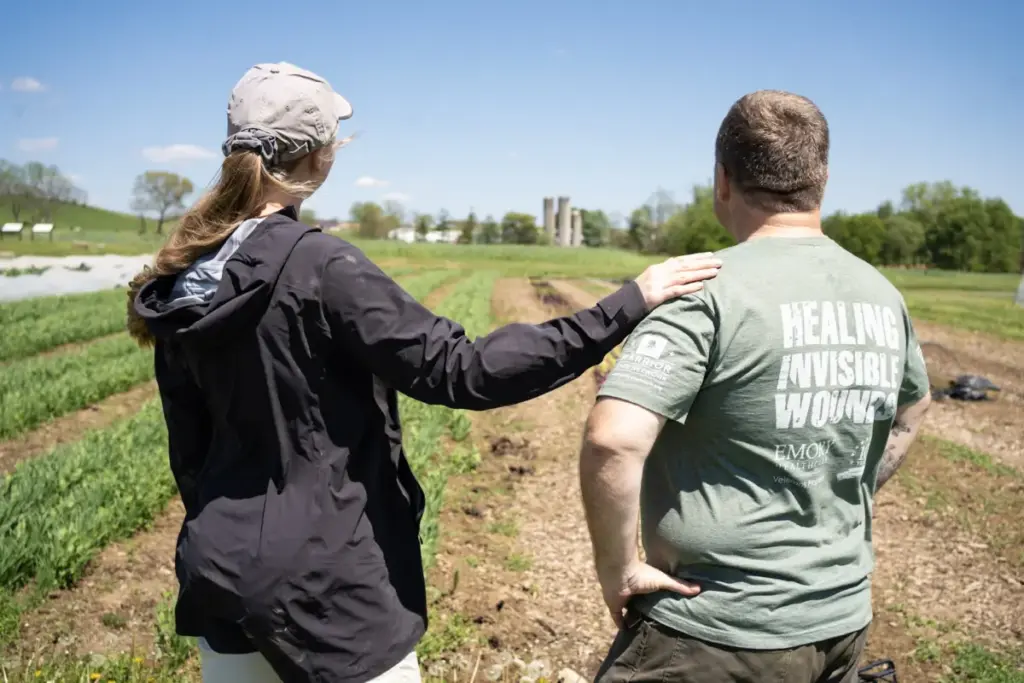
Addressing this gap, groundbreaking research is currently underway at the Rodale Institute Farmer Training (RIFT) program. By bridging the gap between rigorous agricultural science and human-centric education, this initiative explores how intentionally designed, nature-based learning environments can foster resilience, self-awareness, and holistic wellbeing in the next generation of farmers.
Detailed Chronology: The Evolution of Modern Agricultural Pressures and Educational Shifts
To understand how contemporary agricultural education arrived at this critical juncture, it is necessary to trace the historical evolution of farming, the psychological toll it has taken, and the recent pedagogical interventions attempting to reverse the trend.
The Industrialization of Agriculture and Rising Isolation (Late 20th Century)
For generations, farming was predominantly a community-reliant, generational endeavor. However, the late 20th-century consolidation of agriculture, coupled with rapid technological advancement, fundamentally transformed the nature of rural work.
As farms grew larger and profit margins grew thinner, the workforce contracted. Independent farmers became increasingly isolated, bearing the brunt of erratic global markets, unpredictable supply chains, and mounting debt. Despite these escalating pressures, agricultural extension services and institutional training programs remained laser-focused on technical proficiency—teaching soil science, crop rotation, machinery operation, and financial management—while entirely omitting the psychological toolkit required to survive the isolation.
The Emergence of the Farmer Mental Health Crisis (2010s)
Throughout the 2010s, public health advocates, rural sociologists, and farm advocacy groups began sounding the alarm regarding soaring suicide rates within the farming community.
- The Data Gap: For years, agricultural stress went unquantified. However, public health studies gradually revealed that farmers faced unique risk factors, including social isolation, reluctance to seek help due to stigma, financial precarity, and lethal means readily available on properties.
- Systemic Awakening: By the late 2010s, organizations across the nation began establishing crisis hotlines specifically tailored for rural communities, marking the first reactive step toward addressing an epidemic that had long remained hidden in plain sight.
The Proactive Turn: Redesigning Training (Present Day)
Recognizing that reactive crisis intervention is insufficient, forward-thinking agricultural institutions began asking a pivotal question: What if fairness and mental health support began earlier, at the very inception of a farmer’s career?
This realization birthed the current research initiative within the Rodale Institute Farmer Training (RIFT) program. Moving away from the traditional, purely technical training model, RIFT integrated a nine-month immersive experience where adult learners not only master organic agriculture but also participate in an environment intentionally engineered to support emotional development, stress resilience, and identity formation.
Supporting Context & Metrics: The Anatomy of Agricultural Stress
The argument for embedding mental health support into agricultural education is underpinned by stark sociological realities, psychological frameworks, and cutting-edge pedagogical theories.
The Statistical Reality
According to the USDA National Agricultural Statistics Service, agricultural workers face distinct occupational hazards that directly impact mental health:
- Climate and Market Volatility: Farmers operate at the mercy of forces entirely outside their control, from unseasonable droughts and destructive frosts to sudden fluctuations in commodity prices and tariffs.
- The Weight of Stewardship: Beyond financial survival, farmers carry a profound emotional responsibility: stewarding the land and feeding their communities within systems that frequently undervalue both environmental preservation and small-scale production.
- The "Rugged Individualism" Trap: The cultural narrative of farming has long glorified endurance without complaint. This rugged individualism creates a powerful stigma against acknowledging struggle, making it exceedingly difficult for agricultural workers to seek help.
Theoretical Frameworks Guiding the Solution
The RIFT program’s research is grounded in two complementary, highly respected academic frameworks:
- Ecological Design Theory: This framework posits that the environments humans inhabit—physical, social, and cultural—fundamentally shape how they think, feel, and learn. By consciously designing agricultural training environments that incorporate nature, community, and reflective rhythms, educators can positively influence student wellbeing.
- Transformational Learning Theory: Pioneered by educational theorists, this approach explores how adults make meaning of their lived experiences. Through structured reflection, learners can shift their perspectives, better understand themselves, and redefine their roles within the broader food system.
Official Statements and Perspectives
The transition toward holistic agricultural training has garnered attention from educators, researchers, and institutional leaders who view this work as a vital evolution in how society treats its food producers.
Redefining Professional Preparation
Proponents of this research emphasize that integrating wellbeing into agricultural training is not about introducing "abstract or soft ideals" into hard-nosed farming. Rather, it is a practical recognition of what makes a sustainable career.
"Alongside technical expertise, it positions resilience, self-awareness, and stress management as essential parts of professional preparation," notes program researchers. "Not as abstract ideals, but as capacities that can be supported through program design—through time in nature, structured reflection, community connection, and the rhythms of working with living systems."
Broadening the Definition of Fairness
Labor advocates and educational reformers agree that while fair wages and safe working conditions remain non-negotiable baselines, the conversation around agricultural justice must expand.
Institutional leaders argue that true fairness demands:
- Guaranteed access to culturally competent mental health resources in rural zip codes.
- The intentional cultivation of supportive peer communities to combat isolation.
- A recognition of the profound responsibility educational institutions hold in preparing individuals for the holistic, multidimensional reality of agricultural life.
Future Outlook: A New Paradigm for the Food System
As the Rodale Institute Farmer Training program continues its mixed-methods study—combining qualitative insights from reflective journals, focus groups, and interviews with objective biometric data gathered via wearable devices (such as heart rate variability, sleep tracking, and activity levels)—the implications for the future of agriculture are profound.
Shifting from Reactive to Proactive
The ultimate goal of this research is not to validate a predetermined outcome, but to empirically understand how specific elements of an educational environment can buffer against chronic stress and foster professional longevity. By understanding how future farmers regulate stress and develop professional identities during their training, agricultural programs nationwide can begin to replicate these supportive conditions.
Designing for the Whole Human Being
Ultimately, this work serves as an urgent invitation to educators, program directors, and agricultural leaders across the globe. It challenges institutions to design their curricula for the whole human being, rather than viewing students merely as functional cogs in the industrial food machine.
Farmworker fairness is, at its foundational core, about human dignity. It requires us to acknowledge that the men and women who grow our food are not just economic producers, but complex individuals navigating deeply demanding, highly meaningful, and often exhausting work.
If humanity is to build a truly just, resilient, and sustainable food system for the twenty-first century, the journey must begin in the soil—and in the classrooms and training fields that shape who our future farmers become.