

Executive Overview
In a monumental leap forward for avian conservation and evolutionary biology, a collaborative team of researchers in India has successfully generated high-resolution reference genomes for four threatened species of Asian hornbills. Spearheaded by scientists from the Nature Conservation Foundation (NCF) based in Mysore and the CSIR–Centre for Cellular and Molecular Biology (CCMB) in Hyderabad, this landmark genetic mapping initiative bridges a critical data gap in ornithological research.
Prior to this breakthrough, comprehensive whole-genome sequencing was available for only two of the 32 recognized species of Asian hornbills, severely limiting the ability of conservationists to study their evolutionary history, population dynamics, and genetic resilience in the face of escalating anthropogenic and climatic pressures.
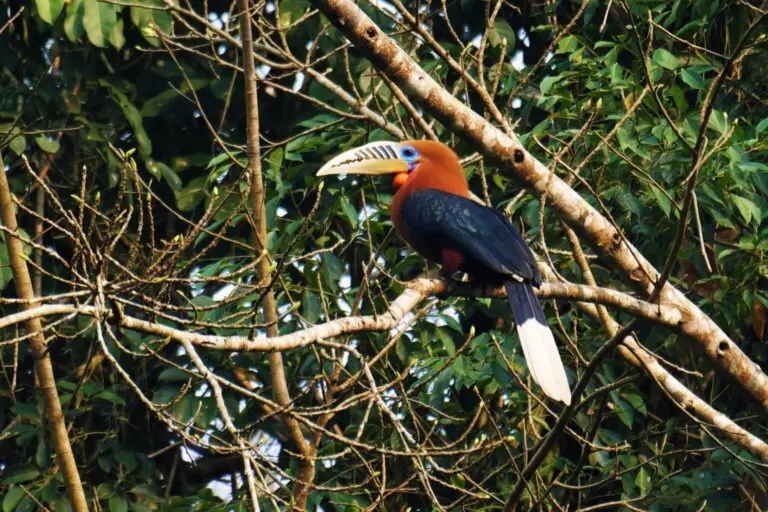
The newly mapped genomes cover four iconic and vulnerable species: the majestic great hornbill (Buceros bicornis), the striking rufous-necked hornbill (Aceros nipalensis), the localized Malabar pied hornbill (Anthracoceros coronatus), and the wide-ranging wreathed hornbill (Rhyticeros undulatus). By deploying an advanced combination of short- and long-read DNA sequencing technologies, the research team successfully minimized sequencing errors, yielding exceptionally robust genetic blueprints.
These genetic maps do more than simply catalogue base pairs; they serve as a dynamic time machine. By applying sophisticated statistical modeling to these genomes, the researchers were able to peer millions of years into the past, revealing how historical climatic upheavals during the Pleistocene epoch shaped the population trajectories of these forest-dwelling architects.
As Southeast Asian and Indian forests face unprecedented fragmentation, logging, and climate change, these reference genomes provide a foundational framework for modern conservation management. By unlocking the secrets encoded within hornbill DNA, scientists can now assess genetic diversity, evaluate population resilience, and design targeted interventions to safeguard these irreplaceable indicators of forest health well into the future.
Detailed Chronology and Scientific Methodology
The journey toward decoding the genetic architecture of Asian hornbills represents a triumph of modern molecular biology applied to wildlife conservation. The project, detailed in recent scientific literature and highlighted by Mongabay India contributor Nikhil Sreekandan, began with a stark realization: despite their ecological importance as primary seed dispersers and forest regenerators, hornbills were largely left behind in the genomics revolution.
The Genetic Drought: A Pre-Existing Blind Spot
For decades, conservation biologists relied on behavioral observations, ecological surveys, and limited mitochondrial DNA markers to understand hornbill populations. While these methods provided vital baseline data, they offered a narrow window into the deep evolutionary history and complex population structures of these birds. Out of 32 distinct Asian hornbill species, whole-genome data existed for a mere two species. This genetic drought hampered comparative studies, obscured cryptic population structures, and left conservationists guessing about how these birds might adapt to rapid environmental changes.
To rectify this, researchers at NCF and CCMB formed a multidisciplinary team to target four threatened taxa inhabiting diverse ecosystems across the Indian subcontinent and Southeast Asia. The selection was strategic, encompassing species with varying geographic ranges, habitat specializations, and conservation statuses.
Dual-Platform Sequencing: Overcoming Genomic Hurdles
Sequencing the genome of a large, long-lived avian species is no small feat. Avian genomes are notoriously compact compared to mammals, yet they contain highly repetitive regions that can confound standard sequencing technologies. To ensure absolute precision, the research team deployed a hybrid sequencing strategy, combining short-read and long-read DNA sequencing platforms.
- Short-read sequencing provided massive coverage and high base-level accuracy, ensuring that individual nucleotides were called correctly.
- Long-read sequencing allowed the researchers to span complex, repetitive genomic regions that typically cause assembly gaps, bridging fragments to construct continuous chromosomal scaffolds.
Together, this dual-platform approach minimized errors and generated reference genomes of exceptional quality. According to Pooja Pawar, a doctoral researcher at NCF and corresponding author of the study, a reference genome acts as a standardized baseline blueprint for a particular species, enabling scientists to map, compare, and analyze genetic variations with unprecedented clarity.
Traveling Through Time: Unlocking the Pleistocene
With high-quality reference genomes in hand, the research team moved beyond static genetic mapping to reconstruct the historical demography of the four hornbill species. Utilizing advanced statistical modeling programs designed to analyze coalescent theory—the mathematical study of how gene copies trace back to common ancestors—the scientists peered deep into the geologic past.
Their models revealed a dramatic narrative written in the DNA: climatic instability during the Pleistocene epoch, spanning from approximately 2.5 million to 11,000 years ago, left deep scars on hornbill populations. As glacial cycles drove massive shifts in temperature, rainfall, and forest distribution across Asia, the effective population sizes of all four hornbill species experienced severe contractions.
Interestingly, the modeling also highlighted ecological differences among the species. The wreathed hornbill (Rhyticeros undulatus), known for its wide geographic distribution and high mobility across varied forest types, maintained a notably higher effective population size during these turbulent climatic shifts compared to the more specialized or range-restricted great, rufous-necked, and Malabar pied hornbills.
Supporting Context & Metrics: The Ecological and Genetic Stakes
To fully grasp the significance of this genomic breakthrough, one must understand the ecological role of hornbills and the severe pressures they face across their native ranges. Often referred to as "farmers of the forest," hornbills are obligate frugivores that play an irreplaceable role in maintaining tropical forest ecosystems.
Ecological Architects of the Canopy
Hornbills are among the largest birds in the Asian forest canopy. Because they consume massive quantities of large-fruited tree species and fly vast distances before regurgitating or defecating seeds intact, they act as primary seed dispersers for climax tree species that store immense amounts of carbon. Without hornbills, the composition and regeneration dynamics of tropical forests shift dramatically, threatening overall biodiversity and forest health.
Despite their ecological prominence, hornbill populations are in steep decline. According to the International Union for Conservation of Nature (IUCN) Red List, many Asian hornbill species are classified as Vulnerable, Endangered, or Critically Endangered. The primary drivers of their decline include:
- Habitat Loss and Fragmentation: Large-scale conversion of primary lowland rainforests into monoculture plantations (such as oil palm and rubber) and agricultural lands.
- Logging: The extraction of large, mature hardwood trees that provide the natural cavities essential for hornbill nesting.
- Hunting and Poaching: Targeted hunting for casques, feathers, and meat, as well as the capture of nestlings for the illegal wildlife trade.
The Crucial Metric: Genetic Diversity and Adaptive Potential
In conservation biology, sheer headcounts—known as census population size—are not enough to determine whether a species will survive a crisis. Scientists must also measure effective population size and genetic diversity.

Meghana Natesh, a conservation geneticist at WWF India who was not involved in the study, emphasized the profound implications of the new research for population resilience.
"Genetic variation or diversity is crucial to the adaptive potential and long-term resilience of populations," Natesh noted.
When a population undergoes a severe bottleneck—whether caused by Pleistocene climatic shifts or modern deforestation—it loses genetic variation. This loss can lead to inbreeding depression, lowered immune responses, and an inability to adapt to emerging diseases or shifting climatic conditions. By establishing high-resolution reference genomes, researchers now possess the baseline data required to quantify genetic health across fragmented landscapes, identifying populations on the brink of inbreeding depression before visible demographic collapse occurs.
Official Statements and Expert Perspectives
The release of these four reference genomes has sent ripples of excitement through the global conservation genetics community, drawing praise for its methodological rigor and far-reaching applications.
Expanding the Geographical Horizon of Evolutionary Research
Pooja Pawar highlighted how genomic tools shatter the geographical and temporal limitations that have historically constrained field biologists. By examining complete genetic structures, researchers are no longer tethered to localized observational studies.
"I could go back in time, to when the species originated or diverged from its sister species, and not restrict [my research] to the Western Ghats or northeast India," Pawar explained.
This macro-evolutionary perspective allows scientists to understand how regional geography, such as the mountain barriers of the Himalayas or the isolation of the Western Ghats, drove speciation and shaped genetic lineages over millions of years.
Furthermore, these genomes enable direct comparative functional genomics. By aligning the genetic blueprints of the great, rufous-necked, Malabar pied, and wreathed hornbills, scientists can pinpoint the exact structural and functional variations in DNA that account for differences in body size, casque morphology, dietary specialization, and nesting behaviors.
"By comparing their genomes, we can attribute differences in their characteristics to the structural and functional variations within their genomes," Pawar added.
A Foundational Tool for Conservation Management
Independent experts agree that the NCF and CCMB initiative transforms theoretical genomics into an actionable toolkit for frontline conservationists. As habitats become increasingly fractured into isolated island-like patches surrounded by human-dominated landscapes, managing wildlife requires precision medicine for ecosystems.
WWF India’s Meghana Natesh underscored that these genomic resources provide the empirical backing needed for evidence-based conservation management. Whether deciding translocations, establishing protected corridors, or monitoring the genetic health of captive-breeding and reintroduction programs, conservationists can now utilize molecular markers derived from these reference genomes to make informed decisions that maximize genetic diversity and long-term viability.
Future Outlook: The Next Frontier in Avian Genomics
The publication of reference genomes for the great, rufous-necked, Malabar pied, and wreathed hornbills marks not an endpoint, but a foundational milestone for a new era of avian research in Asia.
Scaling Up Genomic Surveillance
With four genomes successfully assembled, the scientific community faces an inspiring challenge: expanding this genomic library to encompass all 32 species of Asian hornbills. Doing so will complete the phylogenetic puzzle of the family Bucerotidae, allowing researchers to construct a comprehensive evolutionary tree and map out conservation priorities on a continental scale.
Future research phases will likely focus on population-level genomics. By sequencing dozens or hundreds of individuals across different geographic sub-populations—such as comparing northeastern Indian populations of the rufous-necked hornbill with isolated populations in Southeast Asia—scientists can detect fine-scale population structure, measure gene flow, and identify distinct evolutionary significant units (ESUs) that require unique legal protections.
Informing Policy and Habitat Restoration
As climate change accelerates and deforestation pressures mount, conservation strategies must be proactive rather than reactive. Genomic data will increasingly inform spatial planning, helping governments and NGOs identify climate refugia—areas where environmental conditions are projected to remain stable, allowing hornbill populations to persist.
Moreover, understanding the genetic health of hornbill populations directly supports habitat restoration initiatives. By pinpointing corridors with high genetic connectivity, conservation planners can design targeted reforestation projects that link fragmented forests, allowing natural dispersal and preventing the genetic stagnation of isolated flocks.
Ultimately, the genetic blueprint of the Asian hornbill bridges the gap between ancient evolutionary history and urgent modern-day survival. By decoding the DNA of these iconic canopy guardians, Indian researchers have armed the global conservation community with an invaluable instrument to ensure that the booming call of the hornbill continues to echo through Asian rainforests for generations to come.



