In an increasingly polarized political landscape, the UK Conservative Party has launched a high-profile effort to dismantle the country’s legally binding commitment to achieve net-zero greenhouse gas emissions by 2050. Anchored by political assertions that existing decarbonization mandates are "bankrupting" the nation, the opposition leadership—led by Conservative Leader Kemi Badenoch and Shadow Energy Secretary Claire Coutinho—has put forward an alternative economic vision. This policy pivot is championed through a flagship report published by the centre-right thinktank Onward, which claims the UK could unlock over £320 billion in economic savings by abandoning core climate targets in favor of a gas- and nuclear-heavy energy strategy.
The central thesis of the Conservative proposal, termed the "Alternative Policy Pathway" (APP), posits that prioritizing cheap, firm electricity generation—primarily through unabated natural gas and expanded nuclear capacity—will lower energy bills, naturally incentivizing consumers to adopt electric vehicles (EVs) and heat pumps without state mandates or subsidies.
However, an exhaustive analysis of the Onward report and its underlying modeling by Transira Energy reveals critical analytical gaps, questionable cost projections, and contradictory economic logic. Far from accelerating decarbonization through market forces, independent energy economists, academic experts, and industry analysts demonstrate that the proposal would:
Increase Cumulative Carbon Emissions: Add an extra 524 million tonnes of CO₂ ($MtCO_2$) between 2030 and 2050—equivalent to the total annual emissions of South Africa.
Depress Electrification Rates: Slower adoption of heat pumps and EVs due to the removal of government subsidies, driving up off-model household expenditures on petrol and diesel by up to £95 billion.
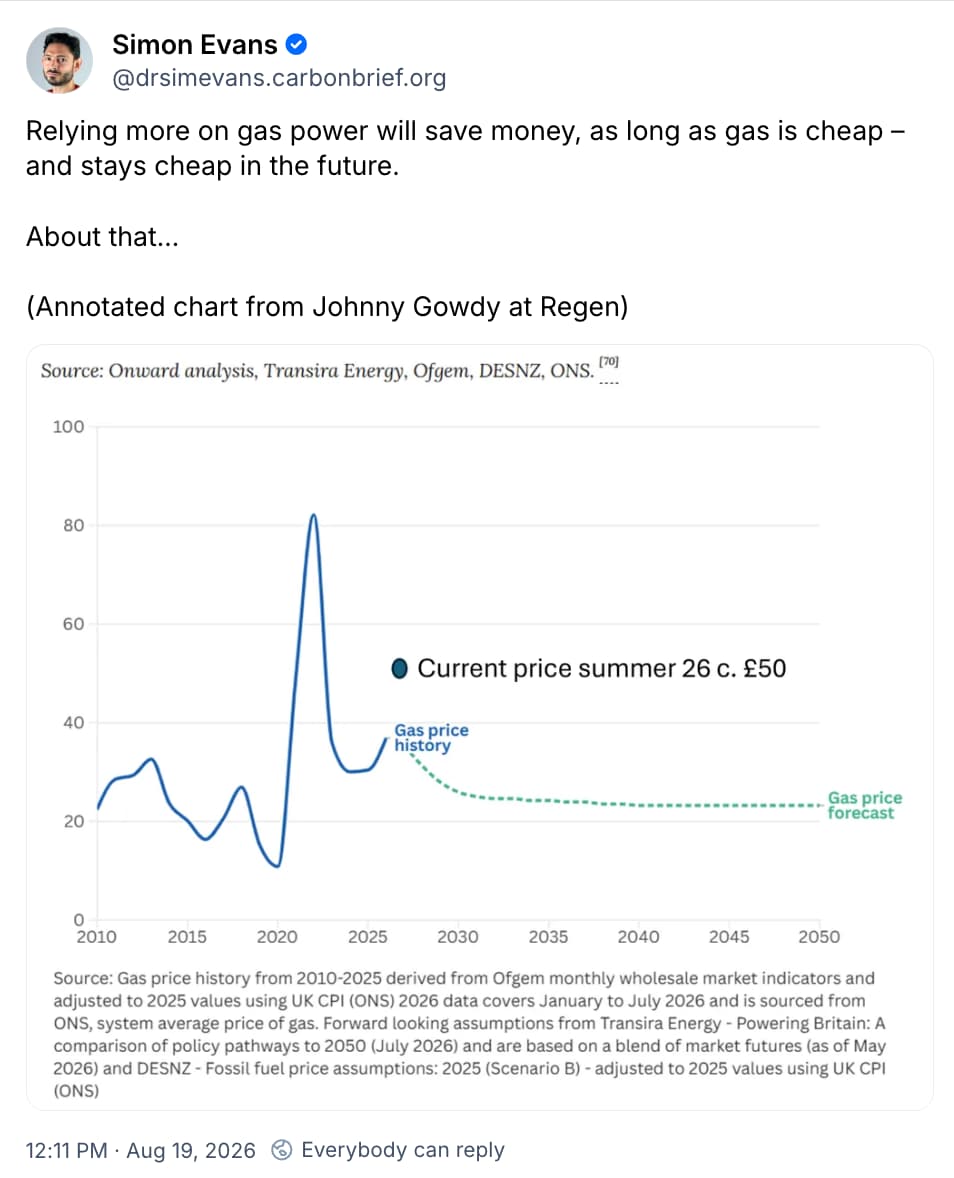
Rely on Unrealistic Cost Assumptions: Assume historically low, stable global gas prices and unrealistically low capital construction costs for gas plants (£650/kW versus market realities exceeding £1,400/kW) and nuclear installations.
Distort Grid Infrastructure Economics: Claim £137 billion in grid savings through flawed double-counting methodologies that simultaneously reduce network expansion while ignoring rising system balancing costs.
Jeopardize Investor Confidence and Trade Agreements: Create regulatory instability by reneging on long-term energy contracts, risking retaliatory tariffs under the UK-EU Trade and Cooperation Agreement (TCA).
As energy scholars note, correcting the report’s skewed baseline assumptions flips its conclusions on their head: credible market modeling confirms that a renewables-led transition remains the lowest-cost pathway for the UK economy.
Detailed Chronology
[2019] UK Lawmakers pass Net-Zero 2050 Target
   │
[2022–2024] Post-Pandemic & Ukraine Gas Shock: UK incurs £183bn in fossil fuel energy costs
   │
[Late 2024] Conservative Leadership Pivot: Opposition targets Net-Zero policies as "economically damaging"
   │
[Early 2026] Labor Govt confirms implementation of Fingleton Review for Nuclear Regulation
   │
[Mid 2026] Onward & Transira Energy publish "Firm Foundations" Report
   │
[Mid 2026] ONS reports Inflation Surge due to Middle East energy volatility
   │
[Present] Independent Analysts & Energy Experts refute Onward’s modeling assumptions
The Policy Shift: From Consensus to Confrontation
The UK’s net-zero 2050 framework was originally codified under a Conservative government in 2019, positioning Great Britain as a global leader in climate policy. However, following political realignments and subsequent election losses, the Conservative opposition fundamentally transformed its approach to environmental governance. Citing severe cost-of-living pressures and high retail power prices, party leadership began framing decarbonization mandates not as industrial opportunities, but as burdensome economic liabilities.
The Publication of Onward’s Alternative Model
The political narrative found its technical framework in the Onward thinktank report, based on energy dispatch modeling performed by Transira Energy. The report contrasted two main paths out to 2050:
Business-As-Usual (BAU): A pathway maintaining baseline net-zero policies, expanding offshore wind, solar, and supporting grid infrastructure.
Alternative Policy Pathway (APP): A strategy assuming the 2050 net-zero target is formally abandoned after 2029, replacing wind and solar expansion with 21 GW of new gas capacity, 20 GW of nuclear power, and the termination of major green subsidies.
Geopolitical Realities Intervene
The release of the Onward report coincided directly with data from the Office for National Statistics (ONS) showing UK inflation spiking to its highest level in four months. The primary catalyst was a sharp increase in wholesale energy costs triggered by geopolitical instability in the Middle East and ongoing supply disruptions following the Russia-Ukraine war. The macroeconomic climate starkly highlighted the fragility of domestic electricity markets tethered to international fossil fuel pricing, sparking immediate pushback from energy policy experts across academia and industry.
Supporting Context & Metrics
A detailed technical examination reveals structural discrepancies across the key dimensions of the Onward proposal:
                          EMISSIONS & DEMAND COMPARISON (2030-2050)
┌──────────────────────────────────────┬────────────────────────┬────────────────────────┐
│ Metric                               │ Baseline Net-Zero (BAU)│ Alternative Pathway    │
├──────────────────────────────────────┼────────────────────────┼────────────────────────┤
│ Cumulative CO₂ Emissions (2030–2050) │ Baseline Target        │ +524 MtCO₂             │
│ Power System Decarbonization Year    │ ~2045                  │ Missed (Unabated Gas)  │
│ Overall Electricity Demand Change    │ High Growth            │ 7% Reduction           │
│ New Unabated Gas Capacity Added      │ Minimal                │ +21 GW                 │
│ Total Nuclear Capacity by 2050       │ 13.3 GW                │ 20.0 GW                │
│ Estimated System Integration Cost    │ Standard Grid Allocation│ Claimed £125/MWh       │
└──────────────────────────────────────┴────────────────────────┴────────────────────────┘
1. Emissions Accounting and Environmental Impact
The core claim that lowering power prices will accelerate organic decarbonization fails within the report’s own quantitative output. Under the APP:
Cumulative carbon emissions rise by 524 million tonnes of CO₂ between 2030 and 2050.
The surge is directly caused by a 70% expansion in unabated gas-fired generation capacity (+21 GW), running continuously to replace variable renewable power.
Global climate modeling demonstrates that planet warming continues until net emissions reach zero; adding over half a billion tonnes of carbon guarantees compounded environmental and economic risks from climate impacts.
2. Electrification Deficit and Hidden Consumer Expenses
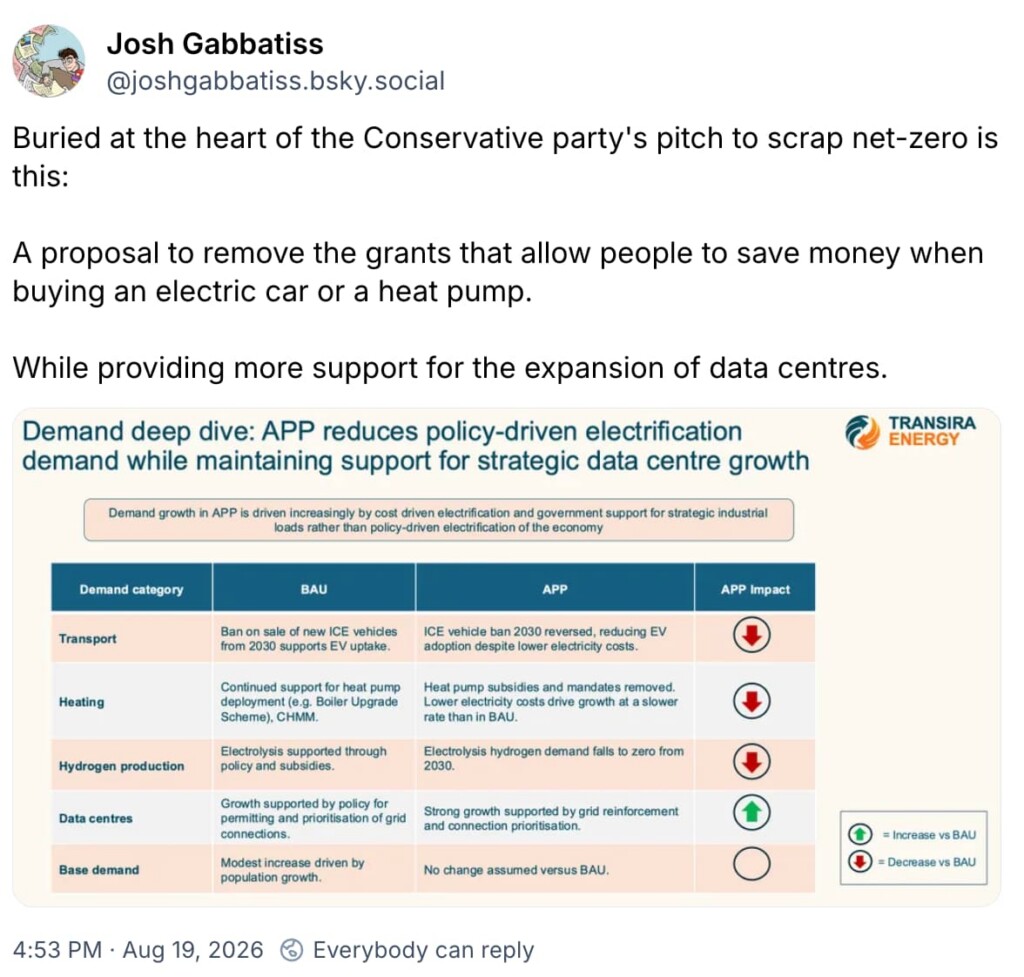
While the Conservative strategy argues that cheaper wholesale electricity will drive adoption of clean technologies, the model explicitly predicts slower uptake of heat pumps and electric vehicles.
                   HIDDEN CONSUMER COST ANALYSIS
┌────────────────────────────────────────────────────────────────────────┐
│  Claimed Direct System "Savings": £320 Billion                         │
└────────────────────────────────────────────────────────────────────────┘
                                    │
    ┌───────────────────────────────┴───────────────────────────────┐
    ▼                                                               ▼
  [Excluded Off-Model Expenses]                   [Questionable Grid Reductions]
  • £65bn–£95bn Extra Petrol/Diesel Spend          • £137bn Network Cut (Double Counts
  • Lost Heat Pump Subsidies (£7,500/home)           Constraint & Expansion Costs)
  • Lost Carbon Tax Revenue (£94bn deficit)        • Unrealized Gas Build Estimates
Demand Reduction: Total domestic electricity consumption in the APP is projected to be 7% lower by 2050 compared to the net-zero baseline.
Policy Removal: The drop stems directly from eliminating key market drivers, including the Boiler Upgrade Scheme grant (£7,500 per household) and the 2030 zero-emission vehicle mandate.
Excluded Consumer Expenditure: Analysis by trade body RenewableUK indicates that suppressing EV sales forces consumers to continue purchasing fossil fuels. The uncounted petrol and diesel expenditures required to keep internal combustion vehicles on the road total between £65 billion and £95 billion over two decades.
Spark Gap Realities: The "spark gap"—the price ratio of electricity to natural gas—remains largely unchanged under the APP during critical early years. Without targeted tax rebalancing or structural wholesale reform, heat pumps remain economically uncompetitive against gas boilers for the average household.
3. Flawed Fuel Price Assumptions and Capital Costs
The model’s assertion that gas power will lower electricity costs hinges on aggressive, highly volatile assumptions regarding fuel pricing and construction capital expenditure (CapEx).
Gas Price Stability: The APP assumes wholesale natural gas prices will decline to low, pre-2021 levels and remain completely flat for two decades. This ignores historical precedent: post-pandemic supply pinches and regional conflicts cost the UK economy £183 billion in energy price spikes over four years.
Gas Plant CapEx: Transira Energy models new gas-turbine construction at £650 per kilowatt (kW). Independent benchmarks from GridLab and market intelligence firms demonstrate that real-world gas turbine costs have surged to between £1,467/kW and £2,054/kW ($2,000–$2,800/kW) due to global supply bottlenecks driven by data center expansions and coal-to-gas conversions worldwide.
North Sea Limitations: Claims that domestic drilling in the North Sea can insulate the UK from global market forces conflict with geological data. Depleted North Sea reserves mean the UK remains an importer of international Liquefied Natural Gas (LNG), leaving power prices bound to international benchmarks regardless of domestic production volumes.
4. Unrealistic Nuclear Projections
The APP relies heavily on expanding nuclear power to 20 GW by 2050 using the Regulated Asset Base (RAB) financing structure, predicting levelised costs of electricity (LCOE) will fall to £122–£138/MWh.
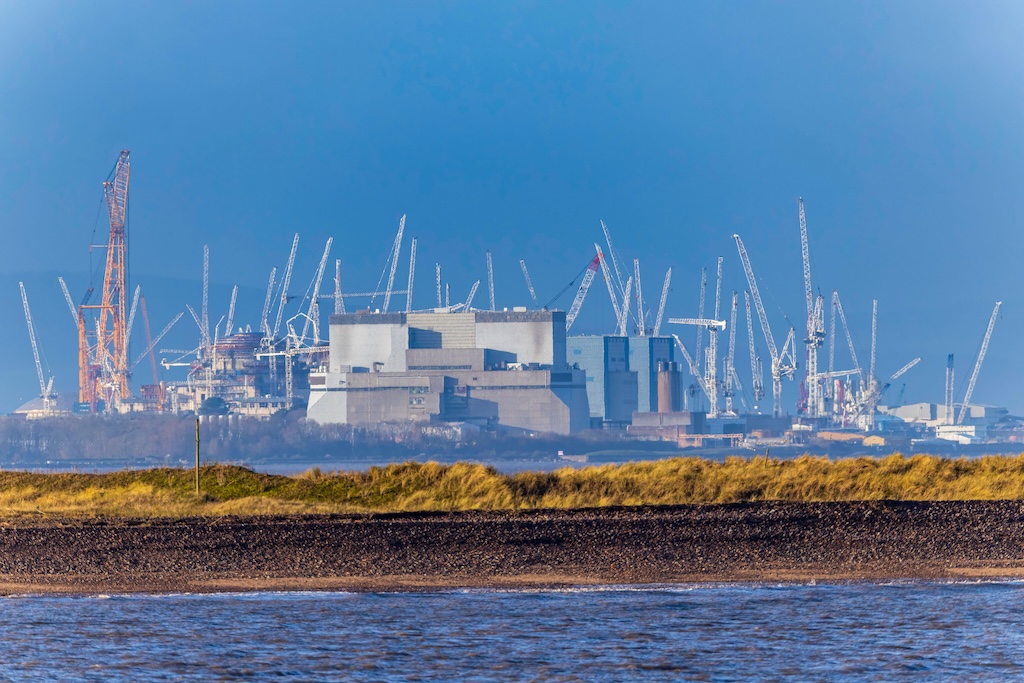
Historical Track Record: Hinkley Point C carries a contract strike price of £138/MWh (2030 indexation), while Sizewell C reached final investment decisions with estimated strike prices near £150/MWh.
CapEx Discrepancies: Modern nuclear installations in the UK run at construction costs near £14,724/kW (inflation-adjusted). The report assumes future nuclear construction costs will drop by £2,500/kW without defining a credible mechanism for such dramatic capital reductions.
Regulatory Asymmetry: The report incorporates cost savings from the 2025 Fingleton Review (nuclear regulatory overhaul) into its alternative scenario, but artificially excludes those same regulatory savings from the net-zero baseline model.
5. Grid Expansion and System Integration Anomalies
The largest single component of Onward’s claimed £320 billion saving is a £137 billion reduction in network infrastructure expenditure, paired with a £67 billion reduction in grid balancing costs.
                         THE DOUBLE-COUNTING DILEMMA
┌──────────────────────────────────────────────────────────────────────────┐
│                      National Energy Grid System                         │
└──────────────────────────────────────────────────────────────────────────┘
                      /
                     /
                    ▼                                ▼
   [Option A: Expand Network Infrastructure]   [Option B: Maintain Limited Grid]
   • High Initial Capital Spend (£137bn)       • Low Infrastructure Spend (£19bn)
   • Minimal Bottlenecks                       • Severe Regional Constraints
   • Low Balancing & Constraint Costs          • Skyrocketing Balancing Costs (£12.7bn/yr)
   ───────────────────────────────────         ───────────────────────────────────
   * The Onward Report incorrect claims low Capital Spend AND low Balancing Costs *
Network Investment Shortfall: The APP models spending just £19 billion on grid transmission between 2030 and 2050 (an 86% reduction compared to baseline), despite integrating 45 GW of gas, 20 GW of nuclear, 32 million EVs, and 62 TWh of new data center demand.
Double-Counting Fallacy: Energy market analysts point out that grid expansion and balancing costs exist in a direct trade-off. Expanding the physical grid eliminates transmission bottlenecks, thereby lowering balancing costs. By assuming both zero grid expansion and drastically reduced balancing costs, the report double-counts savings that are mutually exclusive in real-world grid operations.
System Integration Overstatement: Onward assigns a marginal integration cost of £125/MWh to all new wind and solar deployed after 2030. Peer-reviewed research in Nature demonstrates that system integration costs for high-renewable grids hover around €30/MWh (£26/MWh). The report achieves its inflated figure by incorrectly attributing historical legacy grid costs entirely to future renewable capacity additions.
6. Fiscal Impacts, Carbon Taxes, and International Trade
The model achieves £94 billion of its cost reductions by simply abolishing carbon pricing for power generators under the UK Emissions Trading Scheme (UK ETS) from 2031 onward.
Treasury Revenue Disappearance: Removing power producers from the ETS does not represent true economic savings; it merely transfers revenue away from public coffers. The resulting £94 billion fiscal deficit would require offset via broader tax increases or reductions in public spending.
Breach of Post-Brexit Trade Commitments: The UK-EU Trade and Cooperation Agreement (TCA) legally binds Great Britain to maintain a robust carbon pricing system equivalent to the EU ETS. Unilaterally exempting power generators would violate international law, exposing UK exports to punitive tariffs under the EU’s Carbon Border Adjustment Mechanism (CBAM).
Official Statements
Conservative Leadership Perspective
"In a new report, we set out a common-sense approach to lower energy bills… If we want emissions to fall, then we need people to want to use electric cars and electric heating—then our priority should be to make electricity cheap. Our plan means using our own oil and gas in the North Sea to drive down costs."
— Claire Coutinho, Shadow Secretary of State for Energy Security and Net Zero
"Net zero policies under the current framework are bankrupting the nation. Removing these arbitrary, burdensome targets will unlock hundreds of billions in savings, secure our energy independence, and put British consumers first."
— Kemi Badenoch, Leader of the Conservative Party
Academic & Industry Experts
"While the report tells a good story, the modeling underpinning it has more holes than a Swiss cheese. That £94 billion from removing carbon taxes isn’t saving the country any money; it’s just rearranging things on a spreadsheet… When you use credible baseline assumptions, the report’s conclusions are flipped on their head: renewables, not gas and nuclear, bring the lowest total costs."
— Dr. Iain Staffell, Associate Professor of Sustainable Energy, Imperial College London
"Onward assumes £137 billion of new transmission assets under business-as-usual, but only £19 billion under their plan—even though by 2050 their model still includes 32 million EVs, 6 million heat pumps, 45 GW of gas, 20 GW of nuclear, and 62 TWh of data center demand. This rests on an extraordinarily aggressive assumption about how little grid Britain will need."
— Tara Singh, Chief Executive, RenewableUK
"The gas price assumptions are hard to fathom and significantly at odds with future market expectations… On network and balancing costs, they are essentially saying ‘we are paying both to fix the problem and to have the problem.’ You can have one of the two, but you can’t have both. Decarbonization is not just an environmental prerogative—it achieves the lowest total cost for the energy system."
— Ashutosh Padelkar, Research Lead, Aurora Energy Research
"The report claims that electrification would happen even without specific policies, simply due to lower retail electricity prices. However, its own modeling indicates that the gas-electricity price ratio would actually rise in the early years and end up only marginally lower than today by 2050."
— Matt Elliott, Lead Economic Analyst, Energy and Climate Intelligence Unit (ECIU)
Future Outlook
The political debate surrounding the Onward report underscores a profound fork in the road for British energy strategy. However, translating the Conservative proposal into actionable policy presents severe structural, economic, and legal hurdles that could disrupt the broader investment environment.
                  POLICY IMPLICATIONS & MARKET RISKS
┌───────────────────────────┬─────────────────────────────────────────────────┐
│ Domain                    │ Primary Risk Vector                             │
├───────────────────────────┼─────────────────────────────────────────────────┤
│ Investor Confidence       │ Contract cancellation (RO/CfD) risks capital    │
│                           │ flight across nuclear and infrastructure sector.│
├───────────────────────────┼─────────────────────────────────────────────────┤
│ International Trade       │ ETS removal risks violating UK-EU TCA,          │
│                           │ triggering CBAM tariffs on UK exports.          │
├───────────────────────────┼─────────────────────────────────────────────────┤
│ Energy Security           │ Increased reliance on imported gas exacerbates  │
│                           │ exposure to global price shocks.                │
├───────────────────────────┼─────────────────────────────────────────────────┤
│ Industrial Electrification│ Lack of consumer subsidies delays EV/heat pump   │
│                           │ manufacturing scale, worsening carbon footprint.│
└───────────────────────────┴─────────────────────────────────────────────────┘
Risk of Capital Flight and Investor Paralysis
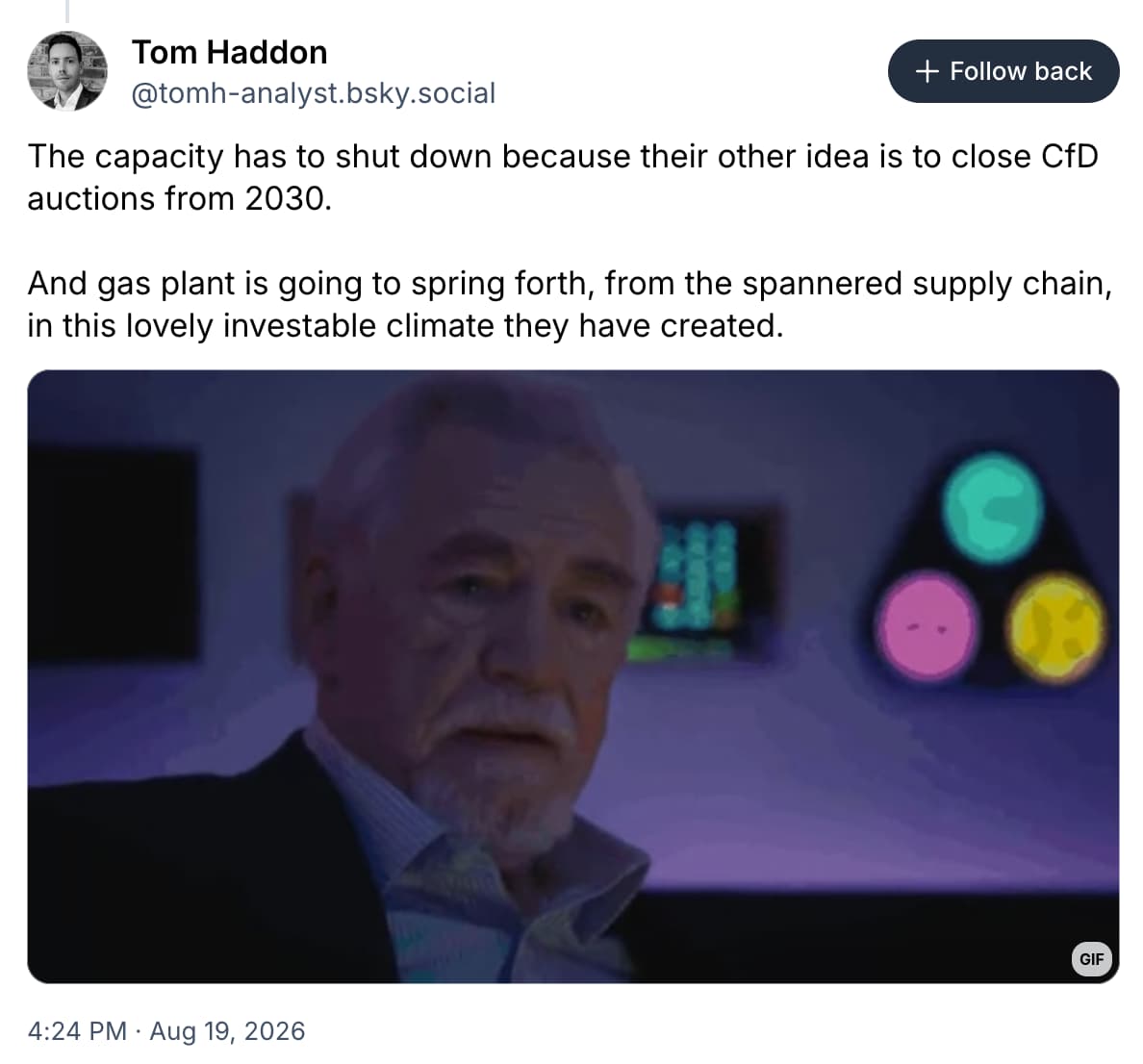
The APP proposes ending Contracts for Difference (CfD) auctions for renewables by 2030 and retroactively cancelling Renewables Obligation (RO) support payments from 2033—four years ahead of their legal expiration in 2037.
Energy sector financiers warn that retroactively reneging on state-backed contracts will severely damage sovereign credit credibility. Investors exposed to cancelled renewable contracts are unlikely to participate in the government-backed Regulated Asset Base (RAB) models required to fund new nuclear facilities. The resulting risk premium would elevate capital costs across all civil infrastructure projects.
Grid Modernization Bottlenecks
By severely underfunding grid infrastructure additions (£19bn vs £137bn), the APP scenario risks creating severe regional transmission constraints. As data center power consumption surges to fulfill artificial intelligence compute requirements, an un-expanded grid will be forced to curtail generation frequently, increasing reliance on local, expensive constraint management contracts.
International Regulatory Alignment
Abandoning the UK ETS and discarding carbon neutrality milestones by 2050 positions the UK outside the emerging regulatory frameworks of major trading partners, including the European Union and North American markets. If UK manufacturing becomes reliant on carbon-intensive grid power, domestic industrial exports will face carbon boundary taxes, offsetting theoretical reductions in domestic wholesale electricity bills.
Concluding Assessment
While the proposal to scrap net-zero policies is framed around lowering consumer costs, independent scrutiny demonstrates that the underlying economic model relies on unviable cost projections, accounting oversights, and unmitigated exposure to global fossil fuel markets. Credible market analysis demonstrates that maintaining investment momentum in domestic renewables, long-duration energy storage (LDES), and grid modernization remains the most effective, risk-averse framework to deliver low-cost electricity and security for the British economy.