

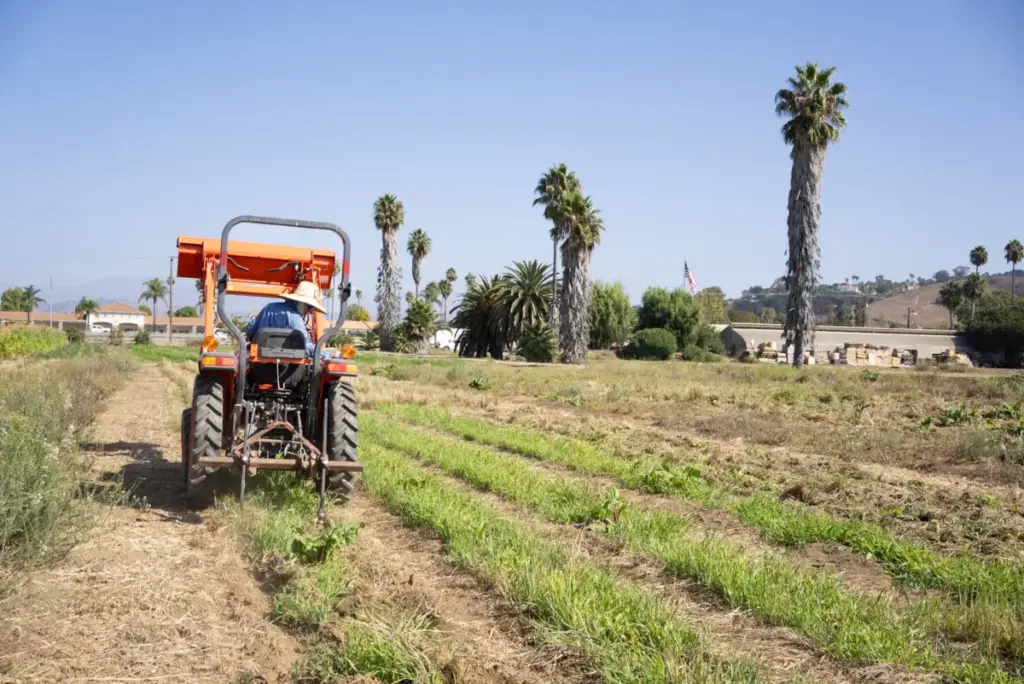
Executive Overview
In the rolling valleys of Ventura County, California—a region renowned globally for its agricultural bounty, yet historically plagued by heavy chemical and pesticide dependency—a quiet revolution is taking root. In April 2026, the Rodale Institute announced a milestone financial and strategic partnership renewal: Holdfast Collective, the nonprofit shareholder of outdoor apparel pioneer Patagonia, has approved a sweeping $1.55 million, three-year grant to accelerate the Regenerate Ventura project.
This major investment builds on an initial $1 million catalyst grant deployed in 2024, driving an ambitious vision: the total systemic transformation of Ventura County’s conventional agricultural footprint into a thriving model of organic and regenerative organic farming. Operating in one of California’s most pesticide-intensive agricultural zones, Regenerate Ventura is proving that the transition away from synthetic inputs is not merely an idealistic ecological dream, but a practical, economically viable roadmap for the future of American food production.
The stakes could not be higher. Agriculture occupies a central nexus in the global climate crisis, functioning simultaneously as a major contributor to greenhouse gas emissions and one of the sectors most vulnerable to extreme weather, soil degradation, and water scarcity. By marrying rigorous scientific research with boots-on-the-ground agronomic support, the Rodale Institute and Holdfast Collective are bypassing traditional bureaucratic bottlenecks. They are establishing a replicable blueprint for regional agricultural systems change—one designed to protect farm viability, restore biodiversity, sequester atmospheric carbon, and safeguard surrounding communities from toxic chemical exposure.
Detailed Chronology: From Concept to County-Wide Catalyst
The journey toward a regenerative Ventura County did not happen overnight; it is the culmination of deliberate strategic planning, grassroots mobilization, and measurable proof-of-concept execution.
The Genesis: 2024 Launch and Initial Investment
When the Regenerate Ventura project formally kicked off in 2024, it was backed by an initial $1 million investment from Holdfast Collective. At the time, the challenges facing Ventura County growers were clear. Conventional farming operations in the region were heavily reliant on synthetic fertilizers, herbicides, and pesticides to maintain yields in the face of tightening water supplies and shifting climatic norms. While many local farmers recognized the long-term ecological damage of these practices, the logistical hurdles, financial risks, and knowledge gaps associated with transitioning to organic systems often proved insurmountable.
Rodale Institute stepped in to fill this systemic void. Rather than offering generic advice from afar, the Institute deployed agronomists directly into the field to work side-by-side with growers. They focused on hyperlocal, farmer-first support, ensuring that producers never felt isolated during the notoriously stressful and financially precarious transition window.
Year One Validation and the 2026 Renewal
By early 2026, the success of the initiative’s first phase had shattered initial skepticism. The program demonstrated that when farmers are provided with comprehensive, wraparound support, adoption rates for regenerative practices soar.
Recognizing these compounding wins, Holdfast Collective’s leadership approved the $1.55 million grant renewal in April 2026. This funding infusion ensures that the momentum generated during the initial phase will not merely be sustained, but aggressively scaled. The partnership has transitioned from a proof-of-concept pilot into an entrenched, institutional force for regional transformation, setting the stage for the next critical phase of growth.
Supporting Context & Metrics: Measuring the Groundswell
Journalism often relies on promises and projections; however, the Regenerate Ventura initiative is defined by hard, verifiable data. The project’s metrics reveal a profound and rapid shift in local agricultural practices.
Scaling the Acres and the Pipeline
Ventura County boasts roughly 316,000 agriculturally productive acres—a massive landscape historically dominated by conventional paradigms. The ultimate vision of the Regenerate Ventura initiative is the total conversion of this footprint.
Since its inception, the project has achieved astonishing traction:
- Footprint Expansion: The initiative has actively expanded its influence to more than 10,000 acres currently in transition toward the ultimate 316,000-acre target.
- Active Farm Pipeline: A robust pipeline of 57 farms is now engaged in active transition protocols.
- Certification Milestones: Out of these engaged operations, 12 farms have progressed far enough to have formally submitted their organic certification applications, while an additional 40 farms have made binding commitments to begin their transition within an 18-month window.
Equitable Access and BIPOC Farmer Engagement
One of the most remarkable metrics of the Regenerate Ventura project is its intentional inclusivity. Historically, federal and academic agricultural extension programs have struggled to equitably serve marginalized or historically underserved growers. In stark contrast, Regenerate Ventura has achieved a remarkable nearly 39% engagement rate among Black, Indigenous, and People of Color (BIPOC) farmers.
By deliberately dismantling barriers to entry and tailoring outreach to diverse farming communities, the project ensures that the economic and health benefits of regenerative agriculture are shared equitably across the entire demographic spectrum of Ventura County.
Dismantling Barriers: The Holistic Support Model
Traditional agricultural extension offices often focus narrowly on crop science, leaving farmers to navigate the labyrinth of business planning, financial restructuring, and regulatory compliance entirely on their own. Rodale Institute’s model recognizes that a farmer cannot transition their soil if they cannot transition their business model.
The initiative provides comprehensive, wraparound support that covers:
- Agronomic Consultation: Direct, expert guidance on crop selection, cover cropping, crop rotation, and biological pest management.
- Financial and Material Assistance: Targeted equipment stipends that alleviate the upfront capital costs of specialized non-conventional machinery.
- Business & Legal Guidance: Professional mentorship in navigating market access, supply chain integration, and farm business financial restructuring.
- Certification Navigations: Hands-on assistance through the notoriously rigorous USDA organic certification process.
Official Statements: Voices from the Forefront
The alliance between Rodale Institute and Holdfast Collective represents a powerful convergence of legacy scientific research and corporate environmental activism. Leaders from both organizations emphasize that this partnership is not just about farming—it is about rewriting the rules of human survival on Earth.
Jeff Tkach, CEO of Rodale Institute
Reflecting on the April 2026 grant renewal, Rodale Institute CEO Jeff Tkach emphasized the systemic nature of the work:
"This renewal reflects what we’ve proven in Year One, that hyperlocal, farmer-first support works. With Holdfast’s partnership, we’re not just funding transition, we’re funding a systems shift. The full vision for county-wide transformation requires $10 million in total investment. We’re calling on others who are committed to this work to join us in making Ventura County a regenerative organic model for the nation."
Tkach’s call to action highlights the reality that while philanthropy and corporate stewardship can ignite a movement, scaling it to a regional or national level requires a coalition of willing investors, brands, and policymakers.
Greg Curtis, Executive Director of Holdfast Collective
Greg Curtis, Executive Director of Holdfast Collective—the 501(c)(4) nonprofit organization that owns 100% of Patagonia’s non-voting stock—underscored why Rodale Institute was chosen as the operational vehicle for Patagonia’s vision:
"Rodale Institute is filling a void. They’ve shown up with rigor, trust, and results. Their model proves that organic and regenerative organic agriculture is essential to climate resilience and farm viability in our own backyard and beyond."
The Collaborative Ecosystem
The success of Regenerate Ventura does not rest on Rodale and Holdfast alone. The initiative functions as a decentralized, deeply collaborative network, drawing strength from regional allies including:
- Leap Lab
- Project MILPA
- Saticoy Food Hub
- Ventura County institutions, food system stakeholders, and grassroots community organizations.
This ecosystem approach ensures that food grown regeneratively also finds local, regional markets, strengthening community food security alongside ecological health.
Future Outlook: The $10 Million Horizon and National Implications
As the Regenerate Ventura initiative moves past its foundational years into this new three-year funding cycle, its architects are casting their gaze toward a much larger horizon.
The Road to a $10 Million Investment
Achieving the ultimate goal of transforming Ventura County’s entire 316,000-acre agricultural economy requires resources far beyond current allocations. Rodale Institute has publicly established a $10 million total investment target for the region. The $1.55 million infusion from Holdfast Collective serves as a robust anchor, but the Institute is actively courting corporate partners, climate philanthropists, and impact investors who recognize that repairing the global food system starts at the county level.
A Blueprint for National Agricultural Transformation
If Ventura County—long characterized by intensive conventional pesticide use and high-value, high-stakes specialty crop production—can successfully transition to a regenerative organic model, it shatters the persistent myth that industrial chemical reliance is the only way to feed populations and maintain farm profitability.
The implications extend far beyond California’s borders. As extreme weather events, soil erosion, and water crises stress test agricultural systems worldwide, models like Regenerate Ventura offer a beacon of hope. By restoring soil biology, locking away carbon, protecting farmworker health, and ensuring rural economic viability, the partnership between Rodale Institute and Holdfast Collective is doing more than saving a single county. They are drafting the operating manual for the future of agriculture on a warming planet.
About the Partner Organizations
- Rodale Institute: A 501(c)(3) nonprofit dedicated to growing the regenerative organic agriculture movement through rigorous research, farmer training, and education. Named one of Fast Company’s Most Innovative Companies in 2025, Rodale has spent 78 years proving that organic farming is essential to humanity’s survival.
- Holdfast Collective: A 501(c)(4) nonprofit organization that owns 100% of Patagonia’s non-voting stock, dedicated to combating the environmental crisis, protecting nature and biodiversity, and supporting thriving communities.
- Patagonia: Founded by Yvon Chouinard in 1973 and based in Ventura, California, Patagonia is an outdoor apparel company operating under the radical premise that "Earth is our only shareholder." Profits not reinvested in the business are directed to the Holdfast Collective to protect the natural world.



