A high-profile political push by the UK’s opposition Conservative Party to abandon the nation’s legally binding Net Zero by 2050 target has ignited fierce debate across the energy, finance, and climate sectors. Grounded in a report titled Firm Foundations published by the centre-right think tank Onward and supported by economic modeling from Transira Energy, the Conservatives claim that scrapping climate targets in favor of an "Alternative Policy Pathway" (APP) will save the UK over £320 billion by 2050, lower electricity bills, and accelerate broader economic electrification through cheap, gas-and-nuclear-backed power.
However, an in-depth forensic investigation by energy economists, grid specialists, and industrial analysts reveals that the report’s conclusions rely on a fragile architecture of questionable assumptions, omitted consumer costs, and fundamental accounting errors. Far from delivering cheaper power and a cleaner environment, independent technical reviews indicate that the proposal would:
Increase cumulative UK carbon emissions by 524 million tonnes of CO₂ (MtCO₂) between 2030 and 2050—an addition equivalent to the total annual carbon output of South Africa.
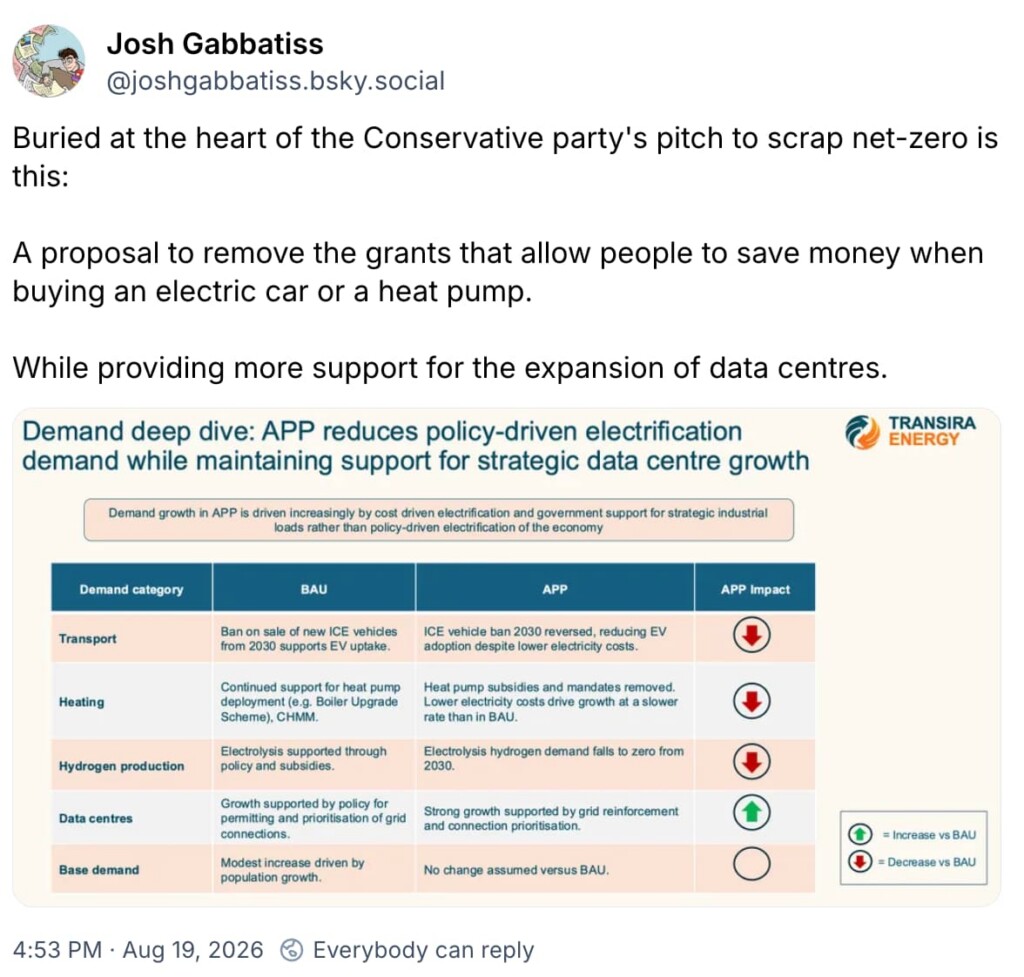
Slow the adoption of clean technology, as the removal of consumer subsidies and purchase mandates leads to lower heat pump and electric vehicle (EV) uptake, forcing households to spend an estimated £65 billion to £95 billion on imported petrol and diesel.
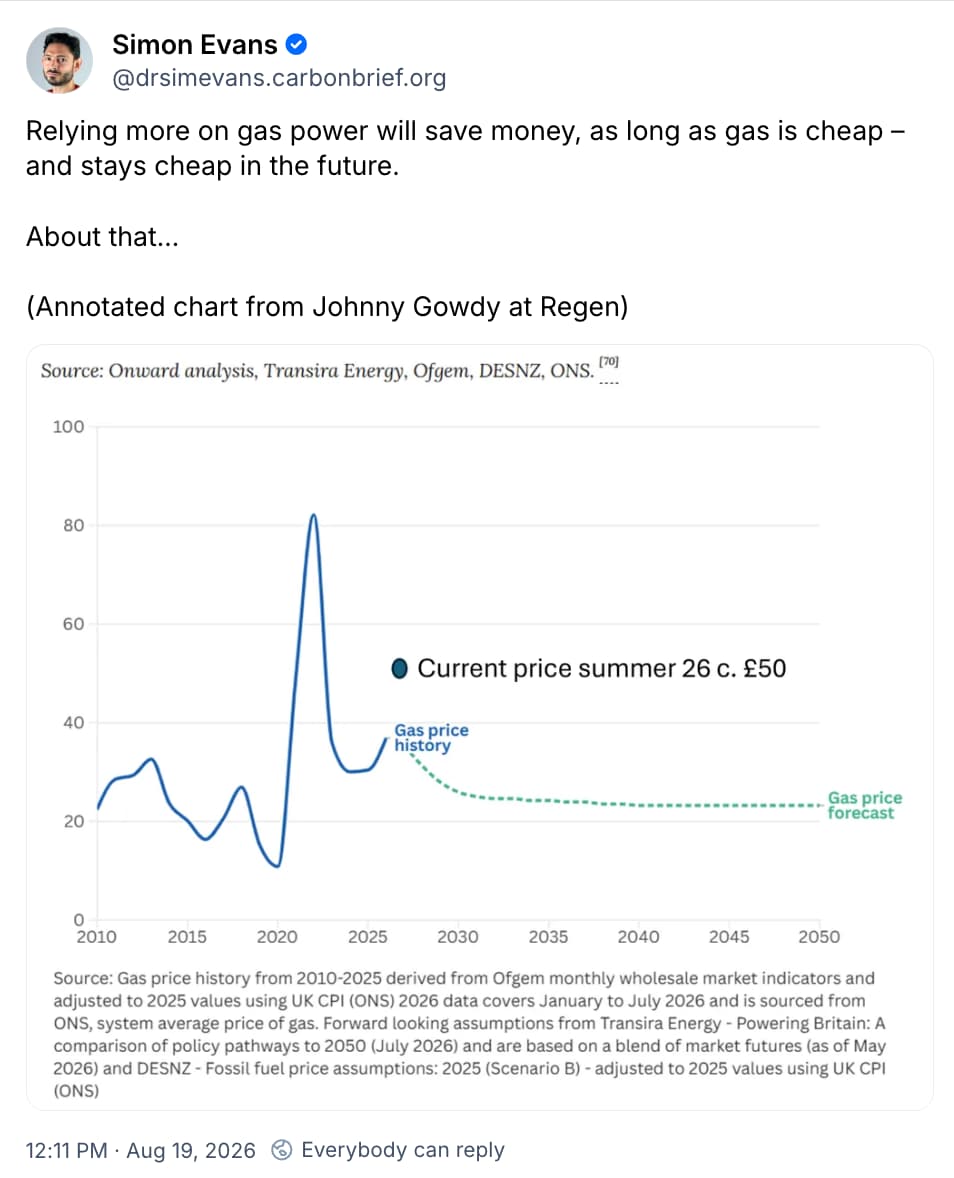
Depend on historically low and stable gas prices while assuming that gas turbine construction costs will remain at a fraction of current global market rates.
Distort grid modeling through "double counting," claiming simultaneously to cut grid expansion costs by 86% while reducing system-balancing expenditures—two metrics that move in opposite directions under constrained networks.
Severely damage investor confidence by unilaterally terminating legacy renewable energy contracts, while proposing carbon market changes that breach the post-Brexit UK-EU Trade and Cooperation Agreement.
Academic experts have characterized the modeling underpinning the proposal as conceptually flawed. As Dr. Iain Staffell, Associate Professor of Sustainable Energy at Imperial College London, observed: "While the report tells a good story, the modeling underpinning it has more holes than a Swiss cheese."
Detailed Chronology and Policy Context
                                  POLICY & REPORT CHRONOLOGY

    2019–2022                 2025                       2026                      2029–2030 (Proposed)
┌────────────────┐        ┌────────────────┐        ┌────────────────┐        ┌─────────────────────────┐
│ UK enacts Net  │───────>│ Energy crisis  │───────>│ Onward publishes│───────>│ Conservative APP Plan:  │
│ Zero 2050 into │        │ costs UK £183B │        │ "Firm Foundations"│       │ Abandon Net Zero 2050;   │
│ law; RAB model │        │ post-pandemic  │        │ report; Tory   │        │ cancel CfD auctions;    │
│ introduced.    │        │ & Ukraine war. │        │ pivot accelerates│      │ expand gas by 21 GW.    │
└────────────────┘        └────────────────┘        └────────────────┘        └─────────────────────────┘
The political context surrounding the Onward report marks a significant departure from the UK’s historical cross-party consensus on climate change.
2019: The UK became the first major global economy to pass a legally binding target to bring all greenhouse gas emissions to net zero by 2050.
2022–2025: A series of global energy shocks—triggered by post-pandemic demand spikes, Russia’s invasion of Ukraine, and escalating conflict in the Middle East—pushed British domestic electricity bills to record highs. Combined fossil-fuel price spikes cost the UK economy an estimated £183 billion over four years, according to joint figures from E3G and the Energy and Climate Intelligence Unit (ECIU).
Mid-2020s: Following their transition to opposition, Conservative leadership under Kemi Badenoch and Shadow Energy Secretary Claire Coutinho adopted a platform challenging current climate policy. They asserted that net-zero mandates were "bankrupting" the nation and artificially inflating energy bills.
Present Context: The Conservatives have championed Onward’s Alternative Policy Pathway (APP) as a "common sense" alternative to current statutory targets and the Labour government’s goal of achieving Clean Power by 2030.
The APP assumes that following the next general election (projected for 2029), the UK will officially abandon its economy-wide Net Zero 2050 statutory commitment. Instead, government policy would shift to expanding natural gas generation capacity by 21 gigawatts (GW)—a 70% increase over current levels—alongside 20 GW of nuclear power, while withdrawing market support mechanisms for offshore wind, onshore wind, solar, and long-duration energy storage.
Supporting Context & Metrics: Technical Breakdown of Report Flaws
A detailed technical examination reveals structural discrepancies, understated capital expenditures, and omitted costs within the APP framework.
                             KEY MODELING COMPARISONS
┌───────────────────────────────────┬─────────────────────────┬─────────────────────────┐
│ Metric / Assumption               │ Business-as-Usual (NZ)  │ Alternative Plan (APP)  │
├───────────────────────────────────┼─────────────────────────┼─────────────────────────┤
│ Cumulative CO₂ Emissions (2030–50)│ Baseline                │ +524 MtCO₂              │
│ Electricity Demand Growth         │ Standard Baseline       │ -7% lower overall       │
│ Additional Gas Capacity Built     │ Minimal / Peaking       │ +21 GW (70% increase)   │
│ New Gas Plant Capex Assumption    │ Real Market Rates       │ £650 / kW (Suppressed)  │
│ Real-World Gas Plant Construction │ £1,460–£2,050 / kW      │ £650 / kW               │
│ Grid Expansion Investment         │ £137 Billion             │ £19 Billion (-86%)      │
│ Marginal Renewable Integration    │ ~£26 / MWh (Academic)   │ £125 / MWh (Assumed)    │
│ UK Emissions Trading Scheme (ETS) │ Retained                │ Scrapped for Power      │
└───────────────────────────────────┴─────────────────────────┴─────────────────────────┘
1. Emissions Escalation and Stalled Electrification
The primary claim made by supporters of the APP is that cheap gas-fired power will naturally incentivize consumers to adopt electric heating and transport without the need for subsidies or mandates.
However, the report’s own data contradicts this premise:
Emissions Surge: The APP scenario results in 524 MtCO₂ of additional emissions between 2030 and 2050 due to an increased reliance on unabated gas power plants.
Lower Overall Electrification: Overall electricity consumption under the APP is 7% lower than under current net-zero policy pathways.
Policy Rollbacks: By removing the Boiler Upgrade Scheme and rescinding the 2030 phase-out of internal combustion engine (ICE) vehicles, consumer transition rates fall dramatically.
Omitted Consumer Costs: Tara Singh, Chief Executive of RenewableUK, highlighted that substituting EVs with fossil-fueled vehicles forces UK motorists to purchase petrol and diesel, amounting to an unmodeled external cost of £65 billion to £95 billion over two decades.
Data Centre Prioritization: The only sector experiencing accelerated electricity demand under the APP is data centres, driven by targeted grid-connection policies. However, the capital costs required to construct dedicated high-voltage infrastructure for these facilities are omitted from the report’s financial totals.
                           THE ELECTRIFICATION PARADOX

   Conservative Premise                          Model Reality
┌─────────────────────────┐               ┌─────────────────────────┐
│ Lower retail power      │               │ Scrap subsidies & ICE   │
│ prices (driven by gas)  │               │ vehicle phase-out dates │
└────────────┬────────────┘               └────────────┬────────────┘
             │                                         │
             ▼                                         ▼
┌─────────────────────────┐               ┌─────────────────────────┐
│ Rapid consumer uptake   │               │ Reduced EV/Heat Pump    │
│ of EVs and heat pumps   │               │ uptake; overall power   │
└─────────────────────────┘               │ demand drops by 7%      │
                                          └────────────┬────────────┘
                                                       │
                                                       ▼
                                          ┌─────────────────────────┐
                                          │ £65B–£95B extra fuel    │
                                          │ cost spent on oil/gas   │
                                          └─────────────────────────┘
2. Unrealistic Gas and Nuclear Cost Assumptions
The financial viability of the APP hinges on low capital expenditures and stable operating costs for fossil fuels and nuclear assets—assumptions that diverge significantly from current market trends.
Natural Gas Assumptions
Wholesale Volatility: The APP assumes wholesale natural gas prices will decline to pre-2021 levels and remain completely stable for 20 years, ignoring geopolitical risks in Europe and the Middle East.
Capital Costs (Capex): The report models the construction cost of new combined-cycle and open-cycle gas plants at £650 per kilowatt (kW).
Market Reality: Recent industry studies, including a 2025 GridLab evaluation, show new gas plant capital costs ranging from $1,116/kW (£819/kW) to over $2,800/kW (£2,054/kW). A global shortage of heavy industrial gas turbines, driven by demand from US data centres, has pushed turbine equipment costs to historical highs.
Nuclear Assumptions
Target Capacity: The APP proposes building 20 GW of nuclear power by 2050 backed by the Regulated Asset Base (RAB) model.
Levelised Cost of Electricity (LCOE): The report projects nuclear generation costs falling to £122–£138 per megawatt-hour (MWh) in the 2040s.
Market Benchmarks: Hinkley Point C currently carries a strike price of £138/MWh (2030 delivery), while Sizewell C secured a final investment decision framework targeting £150/MWh for 2039.
Upfront Capex Discrepancy: The report models nuclear capital expenditure at £10,000–£12,500/kW. However, inflation-adjusted cost projections from developer EDF for Hinkley Point C place current capital costs near £14,724/kW—roughly £2,500/kW higher than Onward’s estimate for a decade later.
3. Grid Network Accounting and Integration Cost Distortions
The largest share of the APP’s claimed £320 billion savings—amounting to £137 billion—comes from reduced spending on electricity network expansion, alongside £67 billion in claimed savings on system-balancing costs.
                          THE GRID BALANCING CONTRADICTION

            ┌────────────────────────────────────────────────────────┐
            │         APP Claim: Save £137B on Grid Expansion        │
            │                          AND                           │
            │         Save £67B on Network Balancing Costs           │
            └───────────────────────────┬────────────────────────────┘
                                        │
                                        ▼
                          ┌───────────────────────────┐
                          │   System Reality Check    │
                          └─────────────┬─────────────┘
                                        │
             ┌──────────────────────────┴──────────────────────────┐
             ▼                                                     ▼
┌───────────────────────────┐                         ┌───────────────────────────┐
│ OPTION A:                 │                         │ OPTION B:                 │
│ Do NOT build new grid     │                         │ Build new transmission    │
│ lines (Save Capex)        │                         │ infrastructure (High Capex)│
├───────────────────────────┤                         ├───────────────────────────┤
│ Bottlenecks persist.      │                         │ Bottlenecks resolved.     │
│ Balancing & congestion    │                         │ Balancing costs fall      │
│ costs rise to £12.7B/yr   │                         │ substantially.            │
│ (per NESO estimates).     │                         │                           │
└───────────────────────────┘                         └───────────────────────────┘
The Double-Counting Error: Energy analysts point out a fundamental structural conflict in these figures. According to data from the National Energy System Operator (NESO), failing to expand grid capacity causes network bottlenecks to persist, increasing constraint and balancing costs up to £12.7 billion annually. Expanding transmission infrastructure reduces balancing costs, but requires higher upfront capital expenditure. Claiming simultaneous reductions in both grid construction and balancing costs represents a logic flaw. As Ashutosh Padelkar of Aurora Energy Research observed: "You can have one of the two, but you can’t have both."
Exaggerated Integration Costs: The report assigns a marginal "system integration cost" of £125/MWh to all new wind and solar assets added after 2030. Academic literature published in Nature estimates integration costs for an 80% renewable grid at approximately €30/MWh (£26/MWh). Independent studies by engineering firm AFRY place the total generation and integration cost of renewables at £55–£75/MWh combined—significantly below Onward’s integration-only figure.
Allocation Error: Adam Bell, partner at consultancy Stonehaven, noted that Onward derived the £125/MWh figure by attributing all legacy and future network upgrades exclusively to post-2029 renewable additions, overstating system integration costs by roughly ten-fold.
Official Statements and Expert Commentary
Political Leadership
"If we want emissions to fall, then we need people to want to use electric cars and electric heating—then our priority should be to make electricity cheap… Our plan means using our own oil and gas in the North Sea."
— Claire Coutinho, Shadow Energy Secretary, & Kemi Badenoch, Conservative Party Leader
Academic and Industry Analysis
"While the report tells a good story, the modeling underpinning it has more holes than a Swiss cheese… [Removing the UK ETS] is £94bn no longer going into the government coffers, so it’s not saving the country any money; it’s just rearranging things on a spreadsheet."
— Dr. Iain Staffell, Associate Professor of Sustainable Energy, Imperial College London
"The report claims that electrification would happen even without specific policies, simply due to lower retail electricity prices driving consumer choice. However, its own modeling indicates that the gas-electricity price ratio would actually rise in the early years and end up only marginally lower than today by 2050."
— Matt Elliott, Lead Economic Analyst, Energy and Climate Intelligence Unit (ECIU)
"Onward assumes £137bn of new transmission assets under business-as-usual between 2030 and 2050, but only £19bn under their plan, even though by 2050 it still has 32m EVs/hybrids, more than 6m additional heat pumps, 45GW gas, 20GW nuclear and 62 TWh a year of datacentre demand. Is this grid figure credible?"
— Tara Singh, Chief Executive, RenewableUK
"You wouldn’t be able to say ‘yeah, not going to continue honoring this contract [for renewables], but I expect you to sign this new one for me [to build new nuclear]’. That just wouldn’t work."
— Ashutosh Padelkar, Research Lead, Aurora Energy Research
Strategic Implications and Future Outlook
                            RISK MATRIX: APP VS. NET ZERO

   Risk Category          Impact Under Alternative Plan (APP)
  ──────────────────────────────────────────────────────────────────────────────────
   Supply Volatility      HIGH ── Dependent on imported LNG and international gas prices.
   Legal & Trade          HIGH ── Violates UK-EU post-Brexit carbon pricing commitments.
   Investor Confidence    HIGH ── Canceling RO/CfD contracts early threatens infrastructure capital.
   Decarbonization        LOW  ── Fails to hit 2050 targets (+524 MtCO₂ added).
  ──────────────────────────────────────────────────────────────────────────────────
1. Contractual Breaches and Investor Risk
The APP framework proposes ending Contracts for Difference (CfD) auctions by 2030 and terminating legacy Renewables Obligation (RO) payments in 2033—four years ahead of their scheduled 2037 conclusion.
Canceling existing RO contracts threatens the financial stability of approximately 10 GW of operational renewable capacity. Energy market analysts caution that retroactively reneging on government-backed power purchase agreements would increase sovereign risk premiums across the entire UK infrastructure sector. Institutional investors would be hesitant to enter into long-term Regulated Asset Base (RAB) agreements for nuclear projects if prior clean-energy contracts were canceled prematurely.
2. Fiscal and Trade Complications
The report counts £94 billion in savings from removing power plants from the UK Emissions Trading Scheme (UK ETS) starting in 2031.
However, removing carbon pricing mechanisms does not represent a net economic gain; rather, it shifts funds by eliminating revenue that would otherwise flow to the Treasury.
Furthermore, under the post-Brexit Trade and Cooperation Agreement (TCA), the UK is legally bound to maintain a robust carbon pricing regime equivalent to the EU ETS. Unilaterally exempting power generation would conflict with TCA commitments and trigger retaliatory tariffs on UK exports via the EU’s Carbon Border Adjustment Mechanism (CBAM).
                          INTERNATIONAL TRADE & CARBON FLUIDITY

┌─────────────────────────┐                                 ┌─────────────────────────┐
│       UNITED KINGDOM    │                                 │     EUROPEAN UNION      │
├─────────────────────────┤                                 ├─────────────────────────┤
│ APP Plan:               │                                 │ TCA Legal Commitment:   │
│ Scrap UK ETS carbon     │                                 │ Maintain equivalent     │
│ tax on power generation │                                 │ carbon pricing system.  │
└────────────┬────────────┘                                 └────────────┬────────────┘
             │                                                           │
             │                 POTENTIAL TRADE CONFLICT                  │
             └────────────────────────────►◄─────────────────────────────┘
                                          │
                                          ▼
                            ┌───────────────────────────┐
                            │ EU CBAM Tariffs applied   │
                            │ to UK power & industrial  │
                            │ exports; TCA breach.      │
                            └───────────────────────────┘
3. Long-Duration Energy Storage (LDES) Disruption
The APP proposes canceling the national "cap-and-floor" scheme for Long-Duration Energy Storage (LDES) technologies, such as pumped hydro and large-scale battery banks. The report contends that the 16 projects recently shortlisted by Ofgem (totaling 136 GWh of capacity) would provide only five and a half hours of continuous national generation during periods of low wind and solar output.
Energy systems experts argue that this calculation misrepresents how LDES operates. Storage assets are not designed to supply 100% of national baseload demand simultaneously. Instead, they operate alongside nuclear and gas infrastructure to manage localized transmission constraints, absorb temporary excess generation, and shave peak demand spikes. Removing LDES support would increase overall constraint management costs and undermine grid reliability.
Summary Verdict
While the Alternative Policy Pathway presents an appealing narrative of reduced costs and market-led technology adoption, detailed examination reveals significant structural issues:
It relies on capital cost estimates for gas turbines that fall well below current global benchmarks.
It assumes long-term stability in international gas markets while underestimating the cost of nuclear expansion.
It incorporates contradictory network expansion and system-balancing cost calculations.
It excludes substantial consumer expenditures for imported fossil fuels.
Industry evaluations indicate that when realistic fuel costs, market-based capital expenditures, and correct network accounting are applied, the report’s conclusions invert. A pathway built around renewables, targeted grid expansion, and strategic energy storage remains the lower-cost, lower-risk strategy for the UK’s long-term energy transition.